
Exploration

CITE
We have made every effort to follow citation style rules, but there may be some minor differences. If in doubt, please refer to the appropriate citation style manual.
Round the world journeys. (2022). In Q-files Encyclopedia, History, Exploration. Retrieved from
https://www.q-files.com/history/exploration/round-the-world-journeys
"Round the world journeys." History, Exploration, Q-files Encyclopedia, 13 Sep. 2022.
https://www.q-files.com/history/exploration/round-the-world-journeys.
Accessed 21 Sep. 2026.
Round the world journeys 2022. History, Exploration. Retrieved 21 September 2026, from
https://www.q-files.com/history/exploration/round-the-world-journeys
History, Exploration, s.v. "Round the world journeys," accessed September 21, 2026.
https://www.q-files.com/history/exploration/round-the-world-journeys


Round the world journeys
In 1519, a fleet of ships organized by Ferdinand Magellan set off from Spain. In 1522, the last surviving ship of the fleet, captained by Juan Sebastián Elcano, made it home to Spain, having completed the first circumnavigation of the world. Magellan himself had been killed in the Philippines. Nearly 60 years was to pass before the feat was repeated, this time by Sir Francis Drake. Since then, people have sailed, flown, cycled or even walked around the world. In 1999, Bertrand Piccard and Brian Jones made the first non-stop balloon flight around the world in the Breitling Orbiter 3.
They completed the trip in just under 20 days.


Francis Drake
In 1580, Englishman Francis Drake became the second man, after Ferdinand Magellan, to circumnavigate the globe. He set off across the Atlantic Ocean in 1577, with a fleet of five ships. His flagship was the Pelican, which he renamed the Golden Hind mid-voyage. Drake successfully navigated the Strait of Magellan, near the tip of South America, then sailed up the west coast of South America, raiding many Spanish ports en route. Having stolen countless valuable treasures, he stopped near modern-day San Francisco (in Drakes Bay, California) to repair his ship—and claim the land, which he called Nova Albion, for the English Crown.
Rather than returning home via the ports that he had attacked, Drake then sailed across the Pacific Ocean, landing in the Spice Islands in Southeast Asia three months later. When he finally returned to England, he was knighted by Queen Elizabeth I.

Joshua Slocum
In 1898, Captain Joshua Slocum, in his tiny boat, Spray, became the first man to complete a solo circumnavigation of the world. The journey took just over three years. Despite his prowess as a sailor, Joshua Slocum had never learned to swim as he thought it was a useless skill. In November 1909 he disappeared without trace while sailing down the coast of the USA to the Caribbean. It is believed his boat overturned.


On a bicycle
In 1886, Englishman Thomas Stevens became the first person to travel around the world on two wheels. He set out from San Francisco on his Penny-farthing bicycle in 1884. His vehicle was ill-suited to such a long journey: the front wheel was much bigger than the rear wheel, which meant that it was very easy to tip over when cycling downhill. In fact, Stephens had to carry his bicycle almost as much as he rode it. He finally returned to California two years later, having cycled across America, Europe, Central Asia, India and Japan.
On foot
American Dave Kunst just needed 21 pairs of shoes for his journey: he was the first verified person to walk around the world. He made the journey between 1970 and 1974, crossing 13 countries. He survived being shot in the chest by bandits in Afghanistan. He met his future wife, Jenni Samuel, while walking across Australia.
However, Kunst may have been beaten to the record by Romanian adventurer Dumitru Dan, who entered a contest organized by the Touring Club de France in 1908. Between 1910 and 1923 and wearing native Romanian costume and sandals, Dan crossed five continents, walked through 76 countries and wore out 497 pairs of shoes.

First solo flight

The first aeroplanes took to the skies at the beginning of the 20th century. In 1933, American Wiley Post became the first person to fly solo around the world. His plane, the Winnie Mae, was fitted with an autopilot device. This enabled him to rest and eat while flying so he could complete his journey in just over seven days.
First space orbit
The ultimate round-the-world voyage was made by Russian cosmonaut Yuri Gagarin in April 1961. He became the first man to orbit Earth in a spacecraft when his Vostok 1 successfully completed the journey in 108 minutes. His flight consisted of just one orbit of the Earth (making it the shortest orbital manned spaceflight). This was also the first human spaceflight in history.

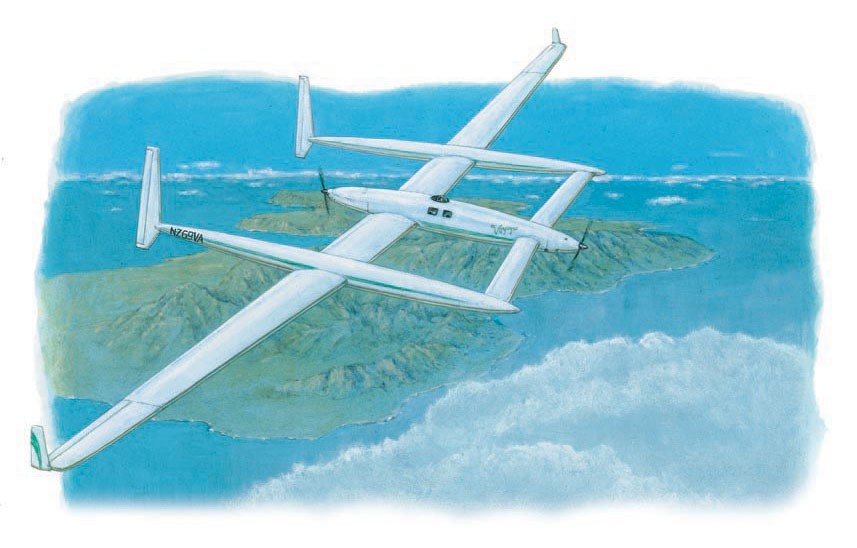
First non-stop flight
It took nearly six years to design, build and test Voyager, the aircraft used by Dick Rutan and Jeana Yeager for their non-stop, un-refuelled flight around the world in 1986, the first of its kind. Voyager left California on 14th December. During takeoff, the wings of the aircraft were damaged, but Rutan and Yeager still managed to complete their journey in just over 9 days.
First solar-powered flight
The first circumnavigation of the Earth by a piloted fixed-wing aircraft using only solar power was successfully achieved in 2016. The flight was made by Bertrand Piccard (who co-piloted the first balloon to circle the world non-stop) and fellow Swiss, André Borschberg. Their aircraft, called Solar Impulse 2, took off from Abu Dhabi, United Arab Emirates, on 9th March 2015, flying eastwards.
On the leg between Japan and Hawaii, the plane's batteries were damaged. Repairs took several months to complete, after which the aircraft flew on to California in April 2016, returning to Abu Dhabi via Spain and Egypt in July. For the duration of the flight, the pilots were permitted only small periods of sleep lasting 20 minutes.


With a wingspan of 72 metres (236 feet—wider than that of a Jumbo Jet), Solar Impulse 2 was built and first flown in 2014. It was fitted with 17,000 solar cells, which line the top of its wings along with a set of lithium-ion batteries used to power night-time flying. Its motors generated about half the power of a racing motorbike, but, unlike normal aircraft engines, which lose around 70% of their energy through heat, Solar Impulse's motors lost only 3%.
Youngest woman to fly solo
On 20th January 2022 19-year-old Belgian-Briton Zara Rutherford became the youngest woman to fly solo around the world when she touched down at Kortrijk-Wevelgem airport in Belgium, completing a 52,000-kilometre (28,100-nautical-mile) journey that took in 31 countries across five continents. Rutherford is also the first woman to fly solo around the world in a microlight plane, and the first Belgian to circumnavigate the globe solo by air. Inspired by the American aviator Amelia Earhart and the Russian cosmonaut Valentina Tereshkova, she started learning to fly at the the age of 14.

Rutherford took off from the same airport on 18th August 2021 in a tiny, propeller-driven Shark.Aero UL plane, planning to fly in stages and landing at small airports and airfields around the world, where she would rest at night and refuel. Fying west, she stopped off in the UK, before heading for Greenland, down the east coast of North America, across the Caribbean, up through Central America, Mexico and California, crossing from Alaska to Russia, looping down through Southeast Asia, then heading across India and the Middle East before arriving back to Europe.

Rutherford could only fly during clear daylight. On her flight, she experienced all weathers, including freezing temperatures in the far north, desert haze in Saudi Arabia, wildfires over California and smog over India. Siberia was her toughest challenge. She said: "It was minus 35 degrees on the ground … If the engine were then to stop, I’m hours away from rescue and I don’t know how long I could survive.” In fact, extreme weather forced a three-week stay in Ayan, a small town in Russia’s Far East, with few English speakers and no internet.
Consultant: Philip Parker
pics

Without in any way limiting Q-files Ltd’s exclusive rights under copyright, any use of this publication to “train” generative artificial intelligence (AI) technologies to generate text is expressly prohibited. Q-files Ltd reserves all rights to license use of this work for generative AI training and development of machine learning language models.