
Exploration

CITE
We have made every effort to follow citation style rules, but there may be some minor differences. If in doubt, please refer to the appropriate citation style manual.
Australian exploration. (2022). In Q-files Encyclopedia, History, Exploration. Retrieved from
https://www.q-files.com/history/exploration/australian-exploration
"Australian exploration." History, Exploration, Q-files Encyclopedia, 13 Sep. 2022.
https://www.q-files.com/history/exploration/australian-exploration.
Accessed 3 Nov. 2026.
Australian exploration 2022. History, Exploration. Retrieved 3 November 2026, from
https://www.q-files.com/history/exploration/australian-exploration
History, Exploration, s.v. "Australian exploration," accessed November 3, 2026.
https://www.q-files.com/history/exploration/australian-exploration


Australian exploration
Australia has been inhabited by the Aboriginal peoples for 50,000–60,000 years, but Europeans did not sight Australia until 1606. In 1788, Australia's first European settlers arrived, but they did not venture far inland. By the 1840s, men such as Charles Sturt had begun to explore the Australian interior, but the results were discouraging: the heart of Australia seemed to be a vast, hostile desert. That desert claimed many European explorers' lives, including those of the infamous Burke and Wills expedition.


First European discoveries
The first European to set eyes on Australia did so by accident. In 1606, Dutchman Willem Janszoon sailed into the Gulf of Carpentaria while en route to a trading post, Batavia (now Jakarta), in Java.
In 1642, the Governor General of the Dutch East Indies, Anthony van Diemen, sent explorer Abel Tasman on an official mission to the continent. He discovered the large island to the south of Australia, which is now known as Tasmania. He also landed on New Zealand, where four of his men were attacked and killed by Maoris. He made a second voyage along the northern coast of Australia in 1644. However, the Dutch found few trading opportunities in these territories and did little to explore them further.
In 1699, Englishman William Dampier set out to explore Australia, sponsored by the British government. His ship anchored in Shark Bay on Australia’s west coast, a barren and inhospitable place. Rather than heading south into what was a pleasant, fertile region, Dampier chose to sail north. He did not find any habitable land and his mission was declared a failure.


James Cook
In 1770, Captain James Cook anchored in Botany Bay on the eastern coast of Australia. His expedition to the South Pacific Ocean to discover Terra Australis Incognita, or “Unknown Southern Land” (what we now call Antarctica) had so far proven unsuccessful. He then set sail northwards up the eastern coast of Australia, which he claimed for Britain, naming it New South Wales.
British settlement
The British began to settle in Australia soon after James Cook's voyage of exploration. The first settlers were British convicts and their overseers, who in 1788 established a penal colony (where convicts are forced to labour as punishment for their crimes) at Botany Bay in southeastern Australia. They later founded the cities of Sydney (1788), Perth (1829) and Melbourne (1835).
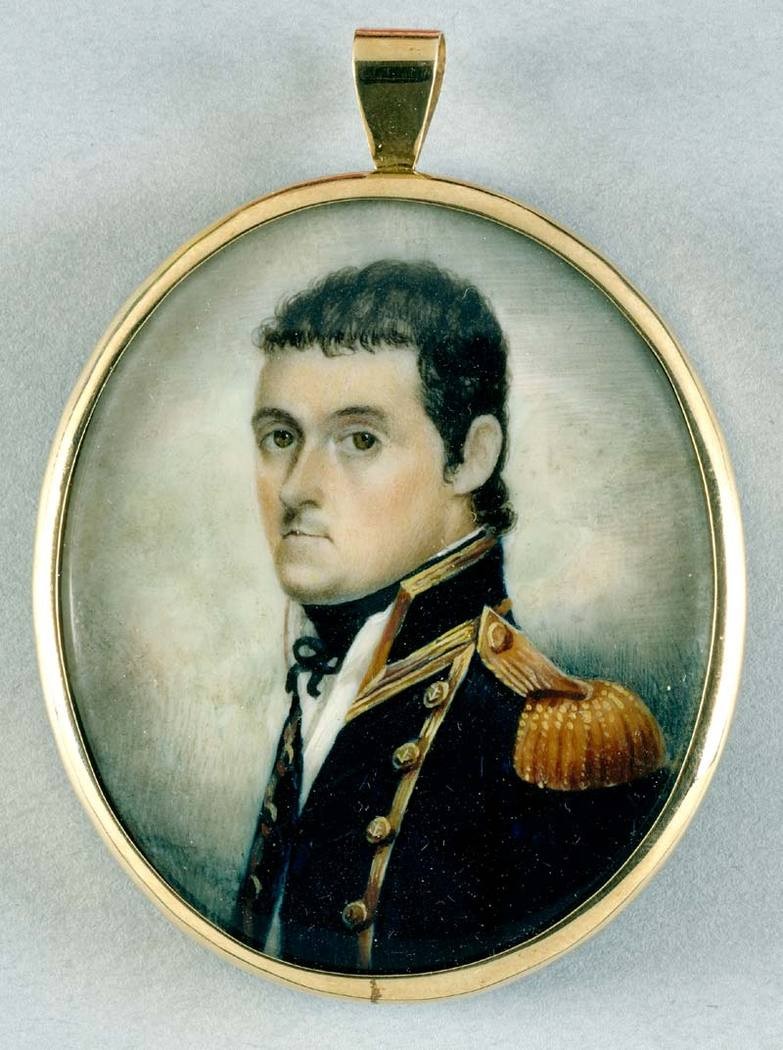
From 1801 to 1803, Englishman Matthew Flinders circumnavigated the continent, proving that it was a huge island.
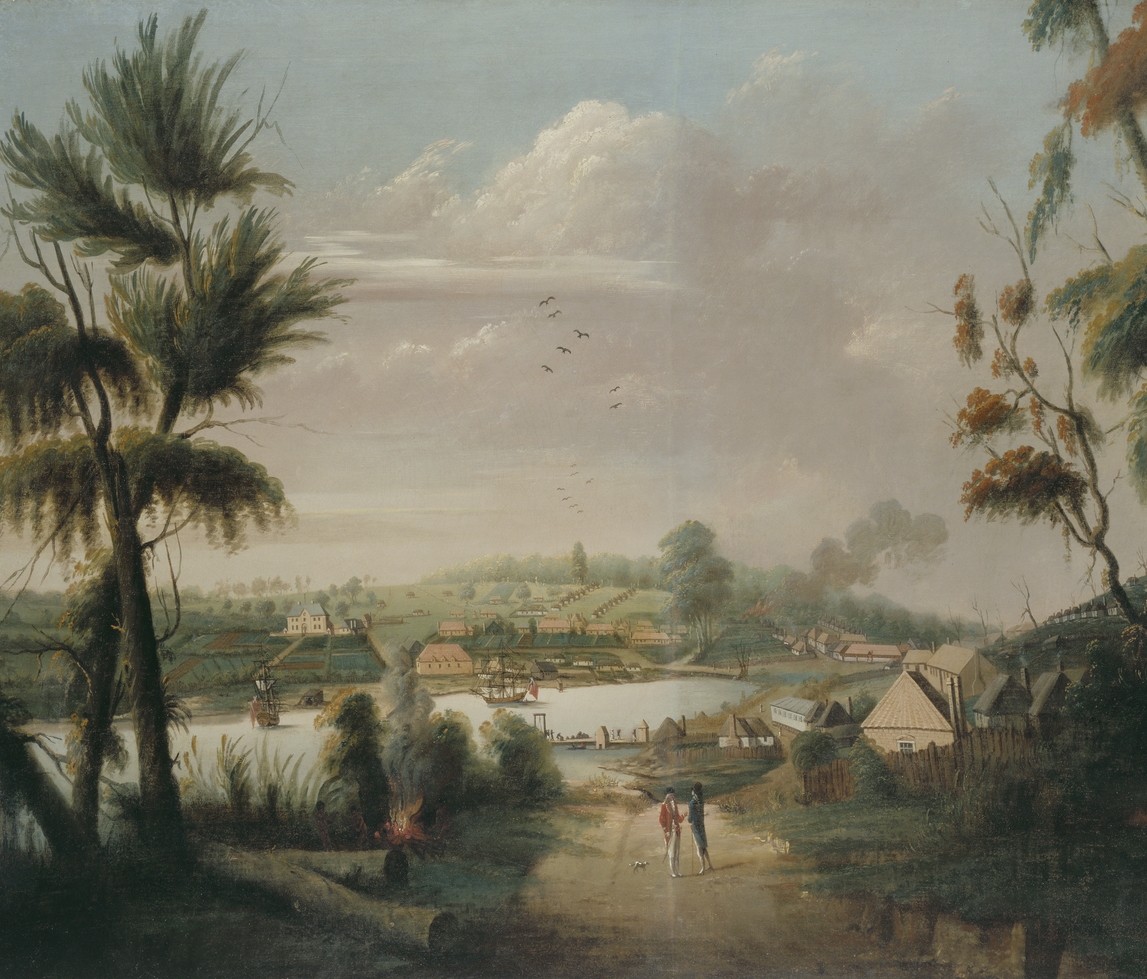

Mapping the interior
It took many more years to map the Australian interior. Many thought it contained a huge inland sea, but it turned out to be nothing but desert. In 1829–30, British explorer Charles Sturt discovered two major rivers in the southeast: the Darling and the Murray.
The south coast was charted by Englishman Edward Eyre, who trekked from Adelaide to Albany in 1840, accompanied by an Aboriginal guide named Wylie.
Ludwig Leichhardt
The German scientist Ludwig Leichhardt led a number of expeditions into Australia's interior from 1842 onward. He studied the plants, animals and geology of the regions he explored. On one expedition, in 1845, his party went missing for so long that they were supposed dead. Leichhardt returned to Sydney to a hero's welcome, although his companion John Gilbert did not return alive.
In 1848, Leichhardt attempted to cross the continent from east to west, but his expedition party vanished, probably somewhere in the Great Sandy Desert. Despite the efforts of numerous search parties, Leichhardt and his companions were never seen again.
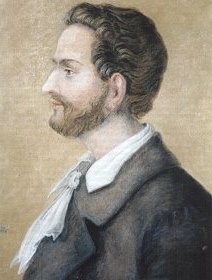

The Burke and Wills expedition
In 1859, the South Australia government offered a prize to the first person to cross the continent from south to north. An expedition led by Irishman Robert O’Hara Burke left Melbourne in August 1860. It included 23 camels that had been specially imported from India. By October 1860, many in the expedition party had returned, leaving only Burke and a few companions to press on.

Halfway across Australia, at a place called Cooper's Creek, one of their party, William Brahe, waited behind while Burke, his second-in-command William Wills, Charley Gray and John King headed north. On 10th February 1861, they finally reached the coast. Thick mangrove swamps prevented them from seeing the ocean itself. By the time Burke, Wills and King (Gray had already perished) returned to the camp at Cooper's Creek, Brahe had left. He had carved directions into a tree trunk, telling the men where to dig for their supplies. They found one month’s supplies and a note. They had missed Brahe by just a few hours. Weakened by hunger and with all of their camels dead, the three men did not have the strength to move on. Burke and Wills died in June 1862. King survived with the help of local Aboriginals.
From south to north
In 1861, John McDouall Stuart led another expedition attempting to cross the continent from south to north. He and his party set out from Adelaide in South Australia on 25th October 1861. He reached the north coast near modern-day Darwin on 24th July 1862, where he triumphantly raised the British flag. He was the first European to lead a party across the continent from south to north—and return. Stuart never recovered his health after his punishing journey, however, and he died in Britain in 1866.

Consultant: Philip Parker
Timeline
1606
Dutch captain Willem Janszoon sights Australia.
1616
Dutchman Dirk Hartog lands on Australia’s west coast.
1642–44
Abel Tasman sails to Tasmania, New Zealand and along the northern coast of Australia.
1699
The British Government sponsors William Dampier’s expedition to Australia.
1770
Captain James Cook claims Australia for Britain.
1788
The first British convicts are shipped to Australia.
1803
Matthew Flinders circumnavigates Australia, charting its coastline. On his way, he encounters Frenchman Nicolas Baudin, who is sailing around the continent from the opposite direction.
1829–30
Charles Sturt finds the Darling and Murray Rivers.
1840–41
Edward Eyre travels from Adelaide to Albany.
1844–48
Ludwig Leichhardt explores northeast Australia. He disappears on his last mission.
1860
Burke and Wills cross Australia from south to north, but do not return home.
1861–62
John McDouall Stuart crosses the continent from Adelaide to Darwin, then returns.
pics


Without in any way limiting Q-files Ltd’s exclusive rights under copyright, any use of this publication to “train” generative artificial intelligence (AI) technologies to generate text is expressly prohibited. Q-files Ltd reserves all rights to license use of this work for generative AI training and development of machine learning language models.