
Oceania

CITE
We have made every effort to follow citation style rules, but there may be some minor differences. If in doubt, please refer to the appropriate citation style manual.
Ancient Oceania. (2024). In Q-files Encyclopedia, History, Oceania. Retrieved from
https://www.q-files.com/history/oceania/ancient-oceania
"Ancient Oceania." History, Oceania, Q-files Encyclopedia, 10 Jun. 2024.
https://www.q-files.com/history/oceania/ancient-oceania.
Accessed 6 Aug. 2026.
Ancient Oceania 2024. History, Oceania. Retrieved 6 August 2026, from
https://www.q-files.com/history/oceania/ancient-oceania
History, Oceania, s.v. "Ancient Oceania," accessed August 6, 2026.
https://www.q-files.com/history/oceania/ancient-oceania


Ancient Oceania
Oceania consists of the islands of Australia, New Zealand and New Guinea, and the Melanesian, Micronesian and Polynesian island groups of the South Pacific. The first of these islands to be settled were Australia and New Guinea. Aboriginal Australians migrated to Australia from Southeast Asia between 60,000 and 50,000 years ago. Some also settled on New Guinea, which was then connected to Australia by land. The settlement of the other South Pacific islands did not begin until about 5000 years ago. New Zealand remained uninhabited until about 750 years ago.

Aboriginal Australians
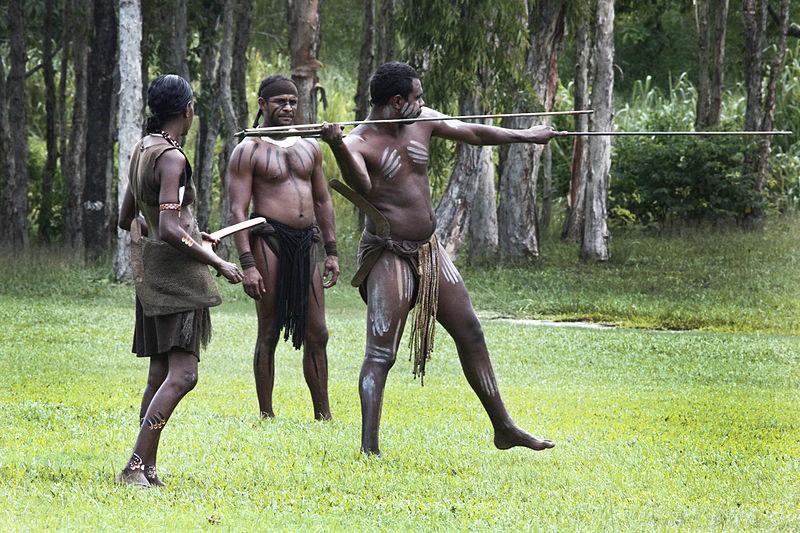
The earliest inhabitants of Australia probably reached the continent between about 60,000 and 50,000 years ago. European settlers in the 18th century called the native peoples "Aborigines", meaning “people from the earliest times”. When the colonizers arrived, the Aboriginal Australians lived by hunting and gathering their own food. They had no knowledge of metals so they used long wooden spears, tipped with stone or bone. They always knew where to find water, even in the driest desert. They knew which plants were safe to eat and which could be used to make medicine. But as the Aboriginal Australians were a nomadic people, with few possessions, it was easy for the Europeans to claim ownership of their land.
Aboriginal beliefs
Although the Aboriginal Australian way of life seemed "primitive" to the colonizers, it is based on a complex system of beliefs and traditions. They believe that the world was created by their animal, plant and human ancestors during a period known as Dreamtime.
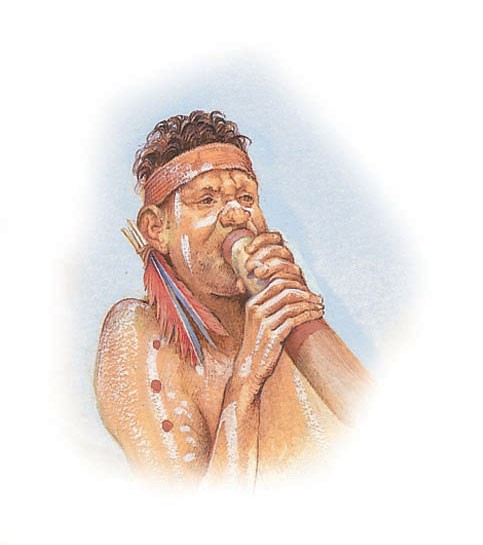
Aboriginals believe in an everlasting spiritual life known as “Eternal Dreaming”. Their music, poetry, dancing and sculpture are all inspired by their religious beliefs. One musical instrument is a long wooden tube called a didgeridoo. The weather is very important to them. Many of their rituals involve the fertility of the land and the growth of new plants.
Maori
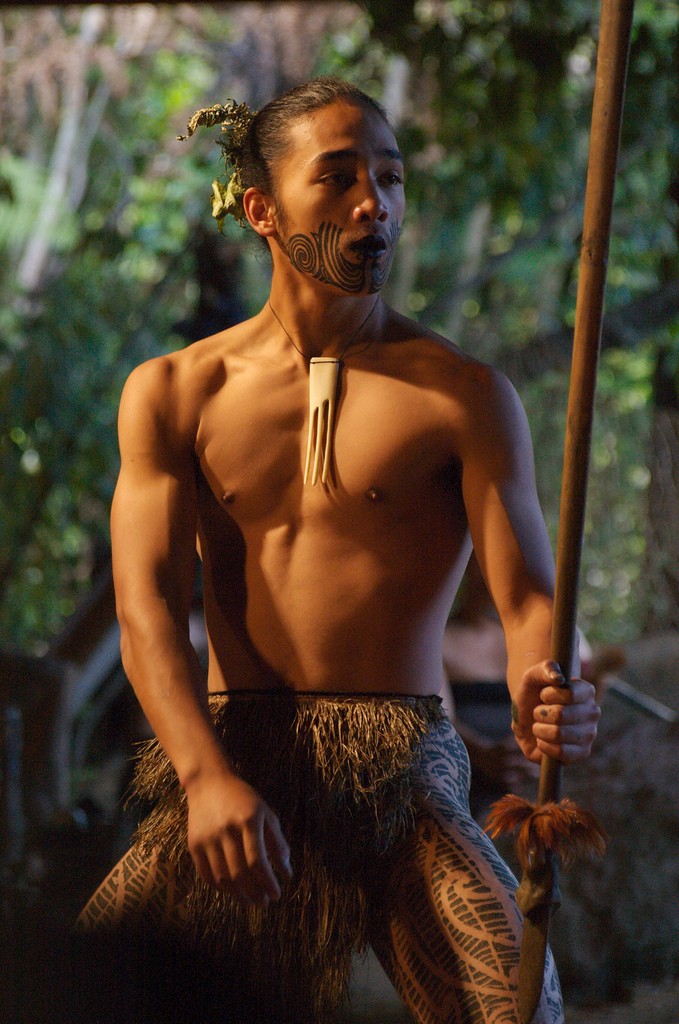
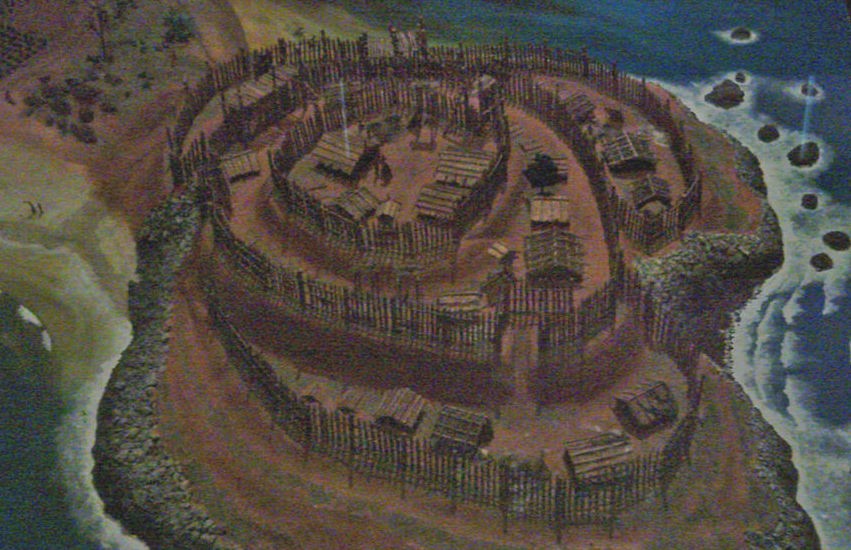
New Zealand was originally settled by Polynesians from Eastern Polynesia around 1250 AD. The descendants of these settlers became known as the Maori. New Zealand was then home to some giant flightless birds, such as the moa, and the Maori hunted them to extinction by about 1500. In the absence of game, the Maori turned to cultivation of sweet potatoes, taro, gourds, yams and cabbage trees, or, where this was not possible in the far south, gathering wild plants. Forced to compete with one another for land and resources, wars between Maori tribes (called iwi), broke out frequently. Family groups, called hapu, built pa (hillforts) to defend themselves and their lands.
New Guinea
The Aboriginal Australians remained hunter-gatherers, but the people who first settled in New Guinea became farmers about 10,000 years ago. There is evidence that they grew yams, coconuts, bananas and sugar cane.
Polynesian voyages
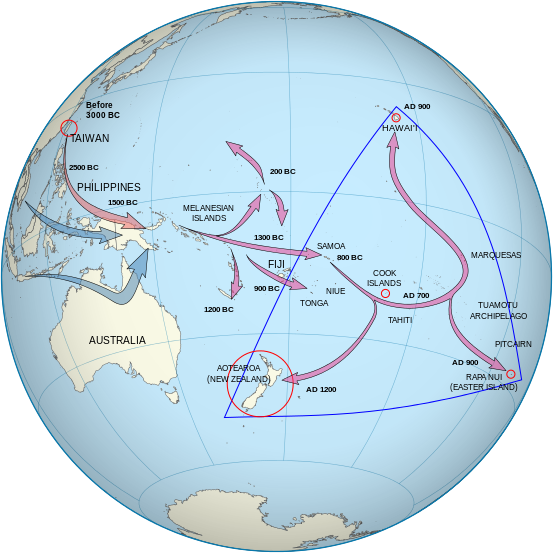
There are thousands of tiny islands spread thousands of kilometres apart across the South Pacific Ocean. Apart from New Zealand, most of them are very small. Finding these islands in ancient times involved the risky business of travelling very long distances in canoes. The Polynesians were the first people to inhabit these islands. They constructed large canoes, some big enough to hold 100 people, to explore and settle on them. Probably originating in Taiwan and Southeast Asia, they had reached Tonga by c.1000 BC. By AD 1000, they had gradually explored the other islands in the South Pacific Ocean.
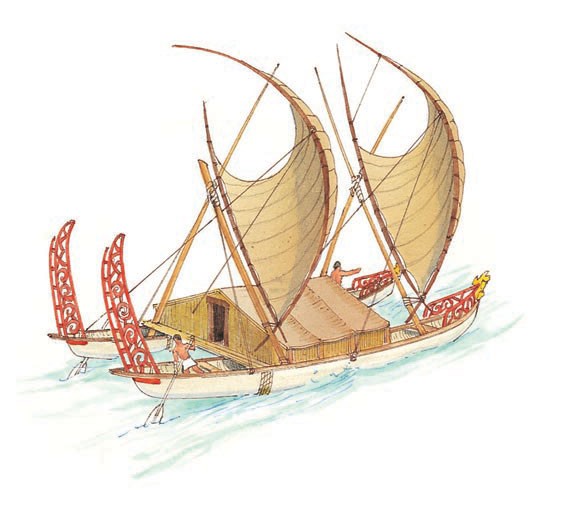
The Polynesians must have been expert seafarers in order to cover such vast distances without using maps or modern equipment. They navigated using the Sun, Moon and stars. They found new islands by following migrating birds. It is clear that they were among the greatest explorers in history.
Easter Island

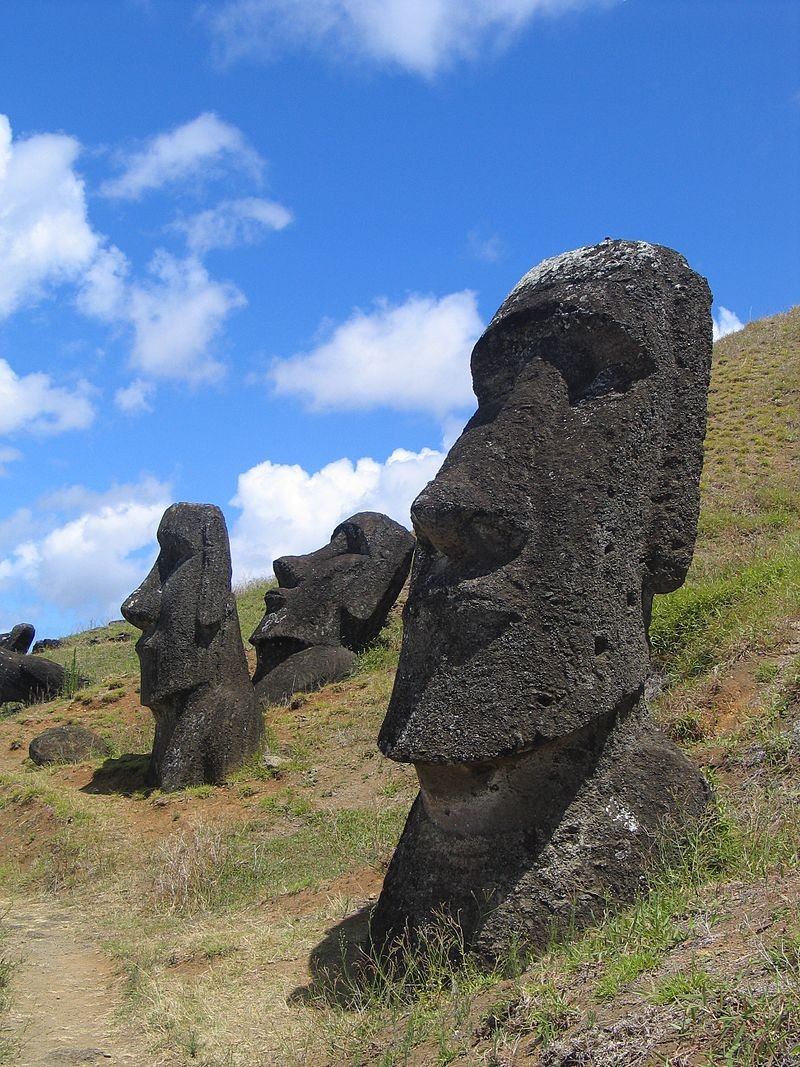
Easter Island (Rapa Nui in the local Polynesian language) lies 3700 kilometres (2300 miles) off the coast of Chile, in South America. There are nearly 900 massive stone heads, called moai, dotted about on the island, all that is left of a civilization that grew up on the island, created by settlers.
Settlers probably reached Easter Island between AD 700 and 1200. They built long altar platforms on the seashore where religious rituals took place. The heads were not carved till later, between AD 1250 and 1500. They stood on the altars, nearly all of them facing inland, but they were probably not statues of gods. They are more likely to be ancestors of the island’s inhabitants. The statues were carved at the quarries where the stone came from—only the eyes were added once the statues were in position.
No one really knows how these huge blocks of stone were put in place, although it is possible that tree trunks could have acted as rollers and ropes made from plant fibres could have been used as pulleys.
It is not known what happened to the Rapa Nui civilization. It may be that, because of the effort needed to build the moai (or because of cultivation) the island became deforested, meaning the islanders no longer had the wood they needed to build canoes for fishing. The introduction of the Polynesian rat, which ate saplings, may have contributed to the loss of trees. It is also possible that diseases carried aboard the first European ship to reach Easter Island in 1722, and to which the islanders had no resistance, may have wiped out much of the population in a short time.
Consultant: Philip Parker
pics


Without in any way limiting Q-files Ltd’s exclusive rights under copyright, any use of this publication to “train” generative artificial intelligence (AI) technologies to generate text is expressly prohibited. Q-files Ltd reserves all rights to license use of this work for generative AI training and development of machine learning language models.