
British history

CITE
We have made every effort to follow citation style rules, but there may be some minor differences. If in doubt, please refer to the appropriate citation style manual.
Spanish Armada. (2026). In Q-files Encyclopedia, History, British history. Retrieved from
https://www.q-files.com/history/british-history/spanish-armada
"Spanish Armada." History, British history, Q-files Encyclopedia, 30 Mar. 2026.
https://www.q-files.com/history/british-history/spanish-armada.
Accessed 21 Sep. 2026.
Spanish Armada 2026. History, British history. Retrieved 21 September 2026, from
https://www.q-files.com/history/british-history/spanish-armada
History, British history, s.v. "Spanish Armada," accessed September 21, 2026.
https://www.q-files.com/history/british-history/spanish-armada


Spanish Armada
The Spanish king, Philip II, had been married to Elizabeth I’s half-sister, Mary I, who had died in 1558. He expected good relations to continue between Spain and England after her death. But Elizabeth was a Protestant and Philip was a Catholic: she feared Spanish and Catholic power. Already angered by English privateers attacking Spanish treasure ships, after Elizabeth sent help to Dutch rebels fighting for independence from Spain, and executed her Catholic cousin, Mary Queen of Scots, Philip decided to act. In 1588, Philip sent a huge armada (navy) to invade England and overthrow Elizabeth.

The Armada sets sail
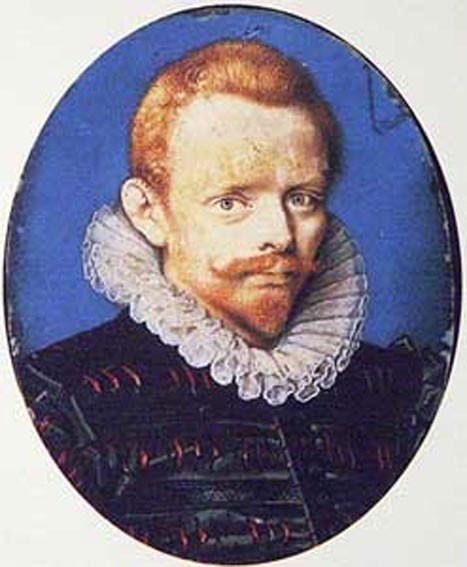
The preparation of the Armada took more than two years. In 1587, a raid by the English navy under its commander, Sir Francis Drake, on the Spanish ships in harbour at Cadiz delayed things further. Finally, the 130 ships of the Armada set sail in 1588. The English made two attempts to attack them as they emerged from port, but were turned back by storms. Back in harbour in Plymouth, the English fleet was then caught by surprise when the Armada appeared off the Lizard (a headland in Cornwall, southwest England) in late July 1588.
Gravelines
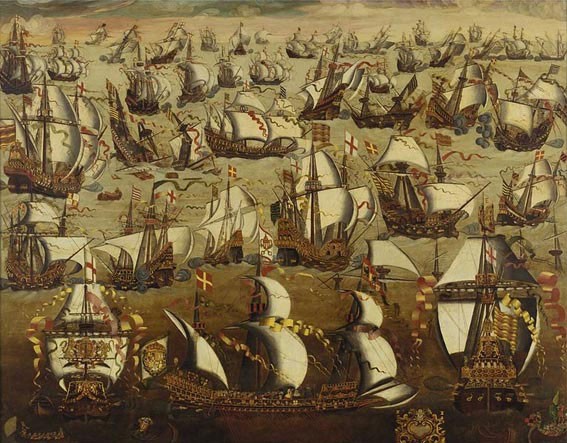
The ships of English navy, under the command of Lord Howard of Effingham, were faster and more manoeuvrable than the great Spanish galleons, which they harried as the Armada sailed up the English Channel. The Spanish admiral, the Duke of Medina Sidonia, was forced to anchor off Calais on 6th August. The plan was to transport an army from there across the English Channel to England. But before the invasion force was ready, the English launched a fireship attack (when flaming ships are steered towards the enemy) on the Armada ships, driving them from their anchorage and scattering them in confusion.
Medina Sidonia tried to regroup his ships off the port of Gravelines in Flanders, then part of the Spanish Netherlands. Here the English engaged them in battle, firing damaging broadsides into the huge ships. Strong winds then forced the Spanish into the North Sea. Only four Spanish ships had been lost by then, but the rest of the Armada had no choice but to sail northwards.
Victory
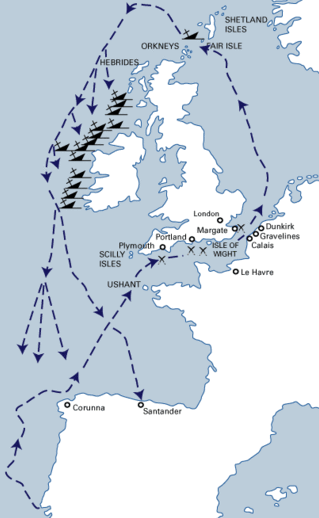
The Armada regrouped and sailed northwards up the east coast of England with the English fleet in pursuit. It sailed on around the northern coast of Scotland and into the Atlantic Ocean. Severe storms disrupted its course and more than 24 ships were wrecked off the coast of Ireland.
Out of its original 130 ships, only about 70 made it back to Spain. It was a great victory for English sailors against the superior might of Spain.

Consultant: Philip Parker
pics
Without in any way limiting Q-files Ltd’s exclusive rights under copyright, any use of this publication to “train” generative artificial intelligence (AI) technologies to generate text is expressly prohibited. Q-files Ltd reserves all rights to license use of this work for generative AI training and development of machine learning language models.