
British history

CITE
We have made every effort to follow citation style rules, but there may be some minor differences. If in doubt, please refer to the appropriate citation style manual.
Early British history. (2026). In Q-files Encyclopedia, History, British history. Retrieved from
https://www.q-files.com/history/british-history/early-british-history
"Early British history." History, British history, Q-files Encyclopedia, 30 Apr. 2026.
https://www.q-files.com/history/british-history/early-british-history.
Accessed 6 Aug. 2026.
Early British history 2026. History, British history. Retrieved 6 August 2026, from
https://www.q-files.com/history/british-history/early-british-history
History, British history, s.v. "Early British history," accessed August 6, 2026.
https://www.q-files.com/history/british-history/early-british-history


Early British history
The first people to arrive in Britain did so at least 850,000 years ago. At that time, Britain and Ireland were joined together with the continent of Europe (Ireland became a separate island about 14,000 years ago and Britain was linked to the continent until around 6500 BC). At this time, the world was in the grip of the Ice Ages: on eight occasions, most of Britain became covered in a deep layer of ice and was completely uninhabitable. Its people then moved south to live in warmer lands. Around 11,500 years ago, the climate warmed up once more, and people returned to Britain. By around 4500 BC, Britons had started to farm the land, make weapons and tools, and build permanent settlements.
The first Britons
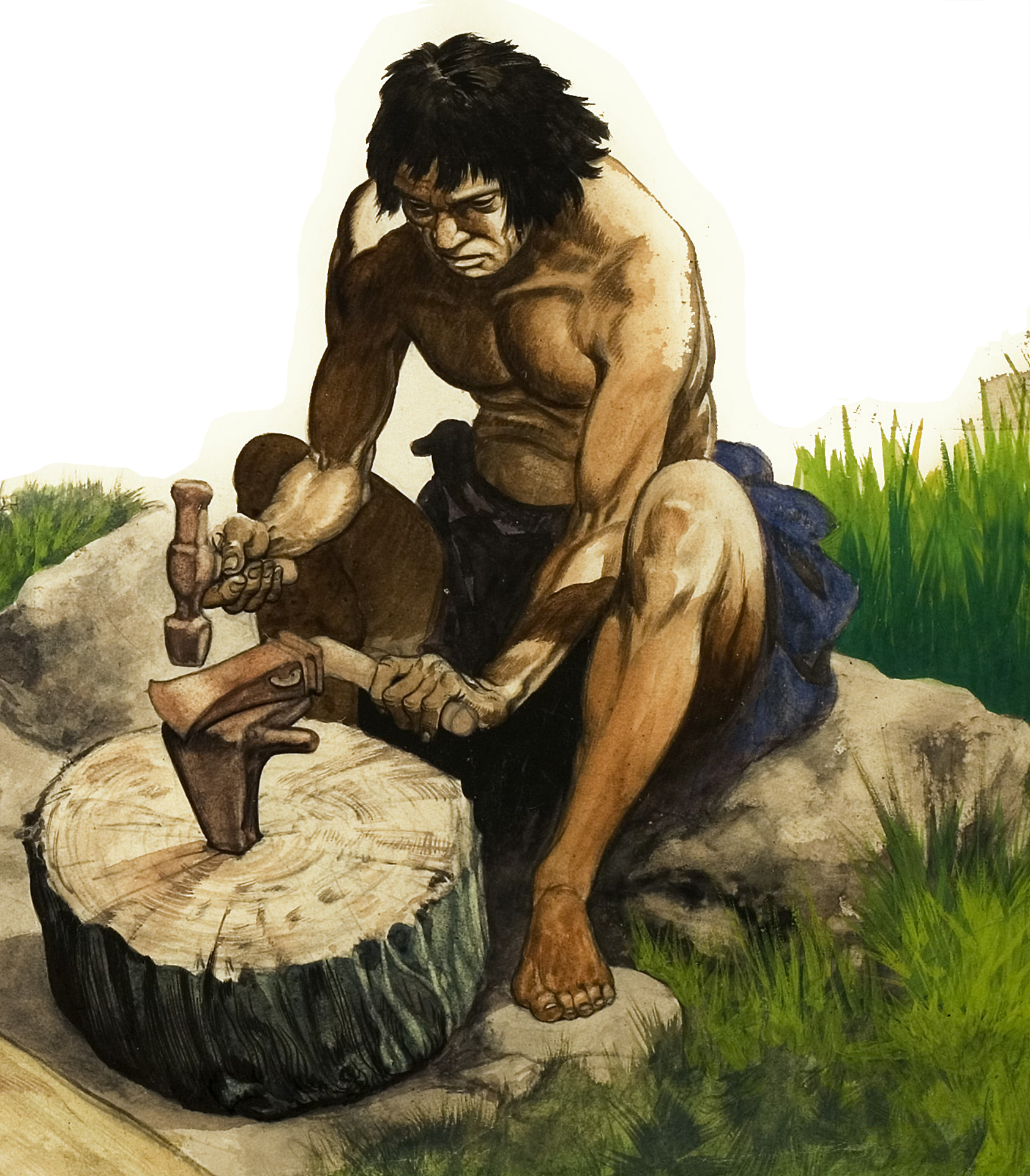
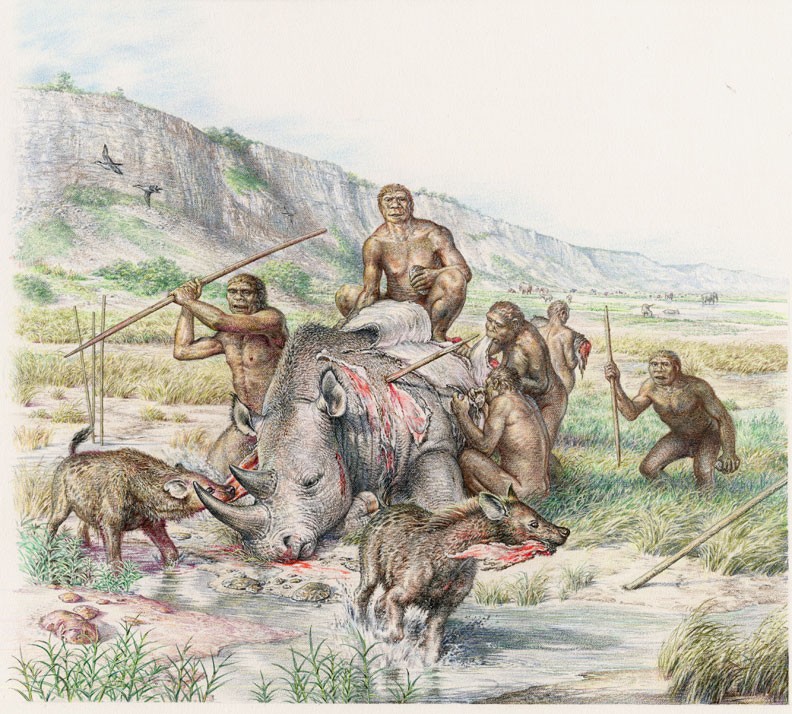
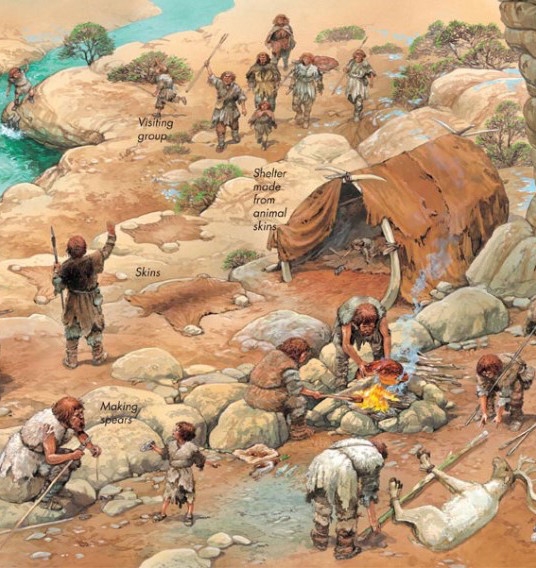
The first people to arrive in Britain walked across the land bridge from the European continent around 850,000 years ago. These early people—known from their fossilized footprints on a beach at Happisburgh in Norfolk—were a type of early human known as Homo antecessor (perhaps a relative of Homo heidelbergensis) and lived by hunting wild animals and eating fruits, berries, nuts and edible plants. They wore skins and lived in caves or simple shelters. Neanderthals first arrived in Britain possibly around 400,000 years ago, departing and returning on a number of occasions before finally going extinct about 40,000 years ago.
Modern humans, Homo sapiens, first reached Britain from the continental mainland 44,000 to 41,000 years ago, but were later driven away by the advancing ice sheet.
Mesolithic Britain
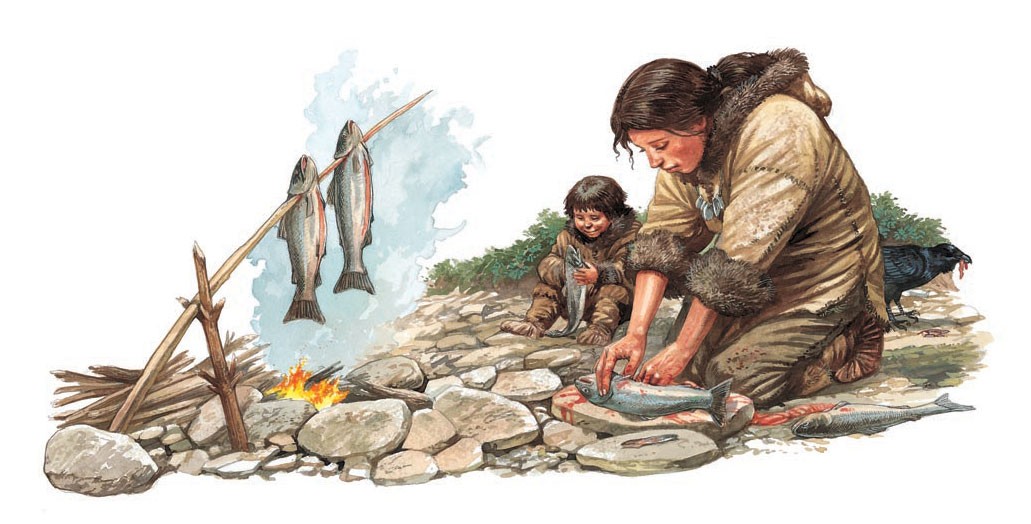
Around 26,500 years ago, much of Britain was under ice. Ice sheets had spread out from the North Pole and covered northern Europe. This was the most recent of the glacial periods of the Pleistocene Ice Ages. When the ice eventually retreated, about 11,700 years ago, people returned to Britain. This marks the start of the Mesolithic Period. They hunted the animals that migrated there across Doggerland, the area of dry land that linked Britain to the European continent. Sea levels were lower than they are today because a great deal of water was “locked up” in the great ice sheets that still covered vast areas farther north.
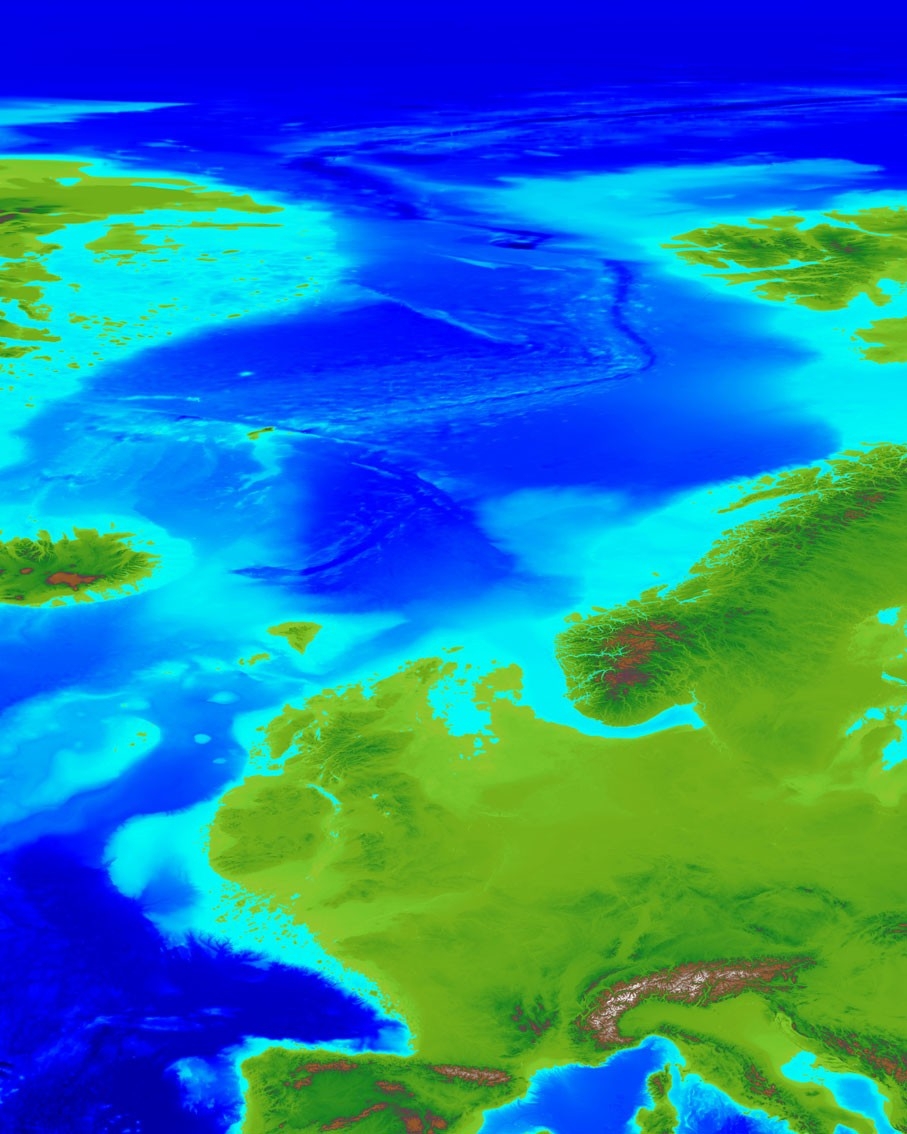
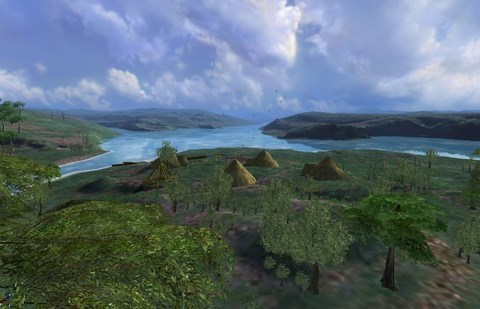
As the climate continued to warm, sea levels slowly started to rise. Over the centuries, more and more of Doggerland turned to salt marsh. Eventually, by around 6500 BC, it disappeared completely under shallow seas—possibly as a result of a devastating tsunami. Doggerland was land no more; Britain became an island. The few thousand individuals who lived in Britain at that time, roaming the land searching for food, were now cut off from the rest of Europe. These few bands of hunter-gatherers became the first modern Britons.
Neolithic Britain
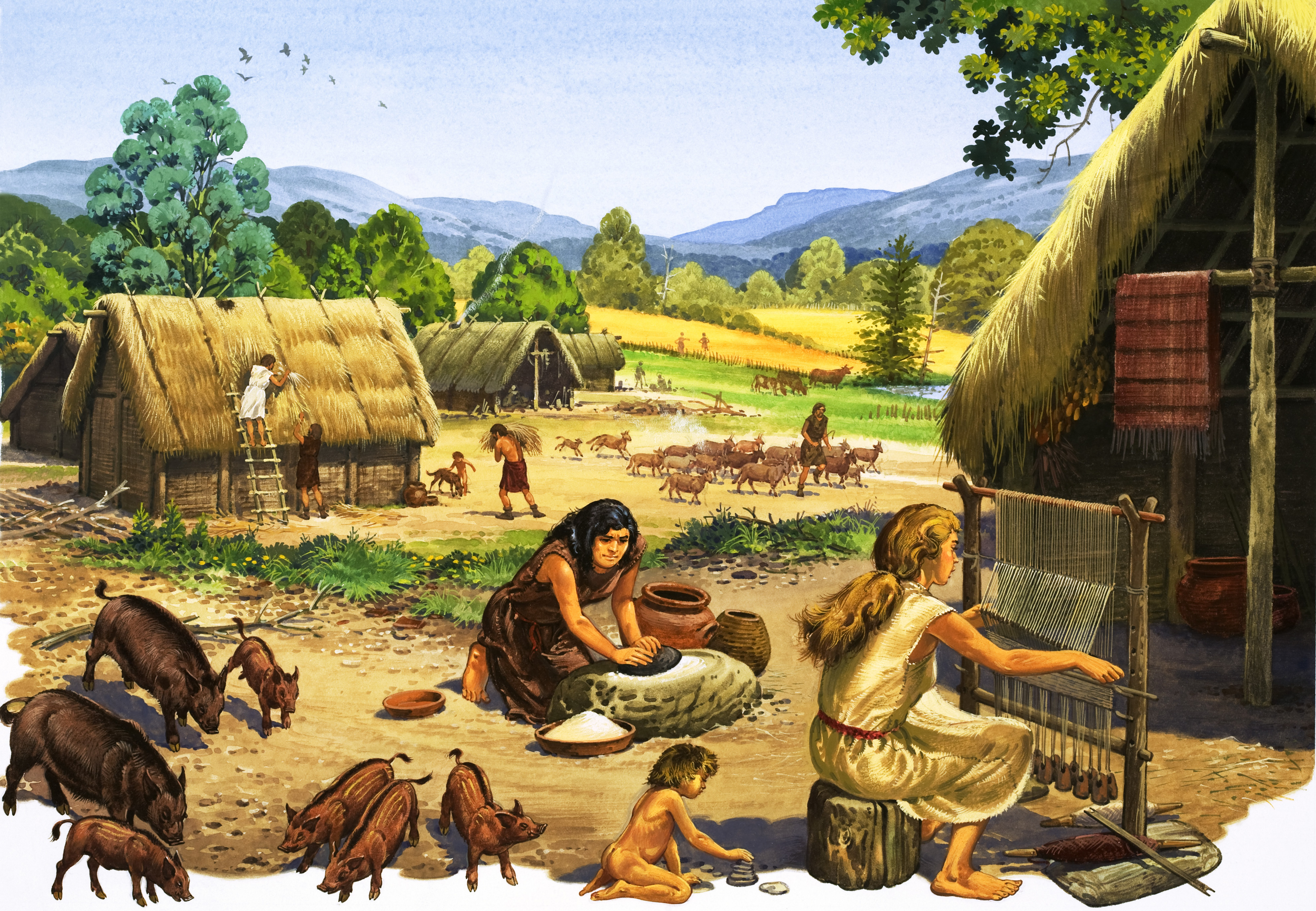
People began to farm in Britain around 4500 BC. This marks the beginning of the Neolithic period. It was not a rapid change—farming took about 2000 years to spread across all parts of the British Isles. To begin with, people "managed" the animals they hunted by making clearings in the woods around sources of drinking water, knowing they could ambush them more easily there.
Some of the first livestock farmers were immigrants from continental Europe. They brought the ancestors of cattle, sheep and goats with them. They also brought dogs, long ago domesticated from wolves, to help with herding cattle and sheep and to act as lookouts. Domestic pigs were bred from wild boar, which roamed British woodlands at the time. The immigrants also brought with them grains of wheat and barley, which had been bred thousands of years earlier from wild grasses that grew in the Fertile Crescent in the Middle East.
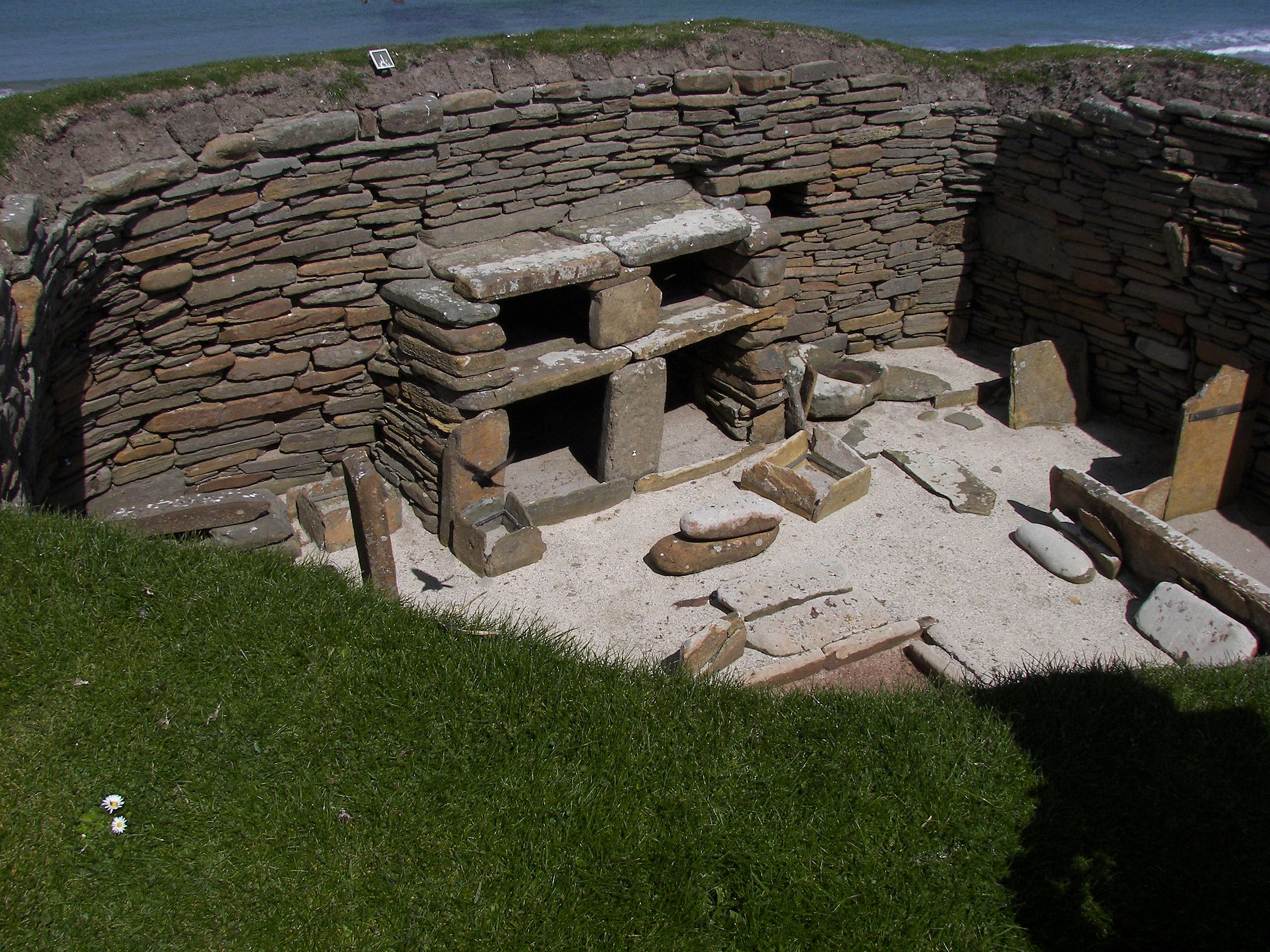
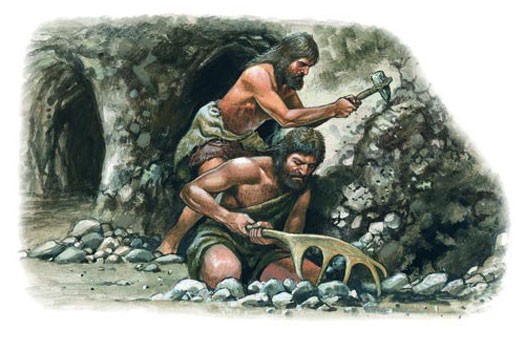
These early farmers settled in one place and built permanent dwelling places. They cleared the trees surrounding their settlements to provide pasture for their sheep, goats, cattle and pigs. They grew wheat and barley and harvested fruit and crops such as peas, beans and flax—first in "gardens", then in fields cultivated in nearby clearings.
They built simple wooden houses daubed with plaster made from clay, straw and cow dung. They made tools out of flint, wove reeds into baskets—used for gathering the harvest—and used clay to shape into pots for storing the grain, where it could be protected from pests.
Burials and religion
The Middle Neolithic began around 3800 BC. At this time, the first large communal tombs, earth-built mounds called long barrows, were built. Circular areas, known as causewayed enclosures, were also created during this period. Here, communities would gather to socialize and take part in religious ceremonies during which axe heads, pots or human skulls were buried in the surrounding ditch. Neolithic people started building stone circles, called henges, after about 3300 BC.
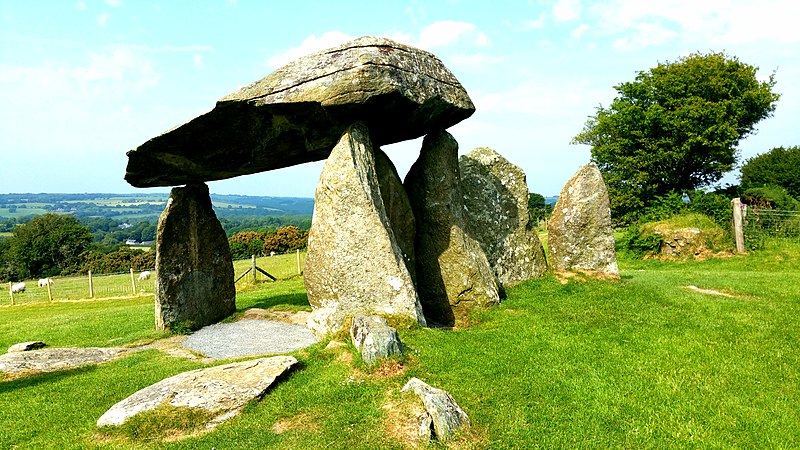
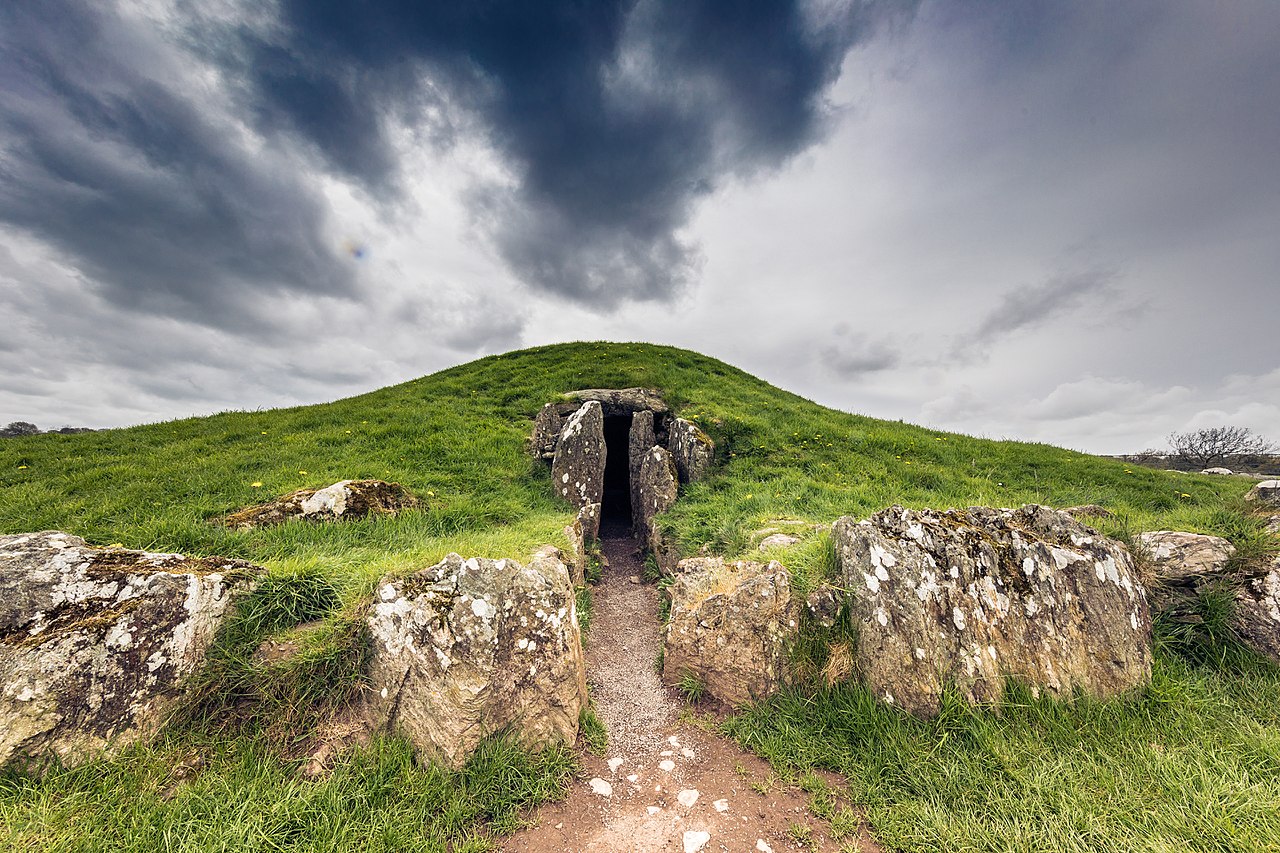
After about 3000 BC, passage graves started to replace long barrows. Built inside large round earth mounds, they consisted of a central stone-built burial chamber—along with three or more side chambers—reached by a long, low passage. The passage lined up with the position of the sun during the winter solstice so that any sunlight on the shortest few days of the year shone directly into the central burial chamber.
Stonehenge
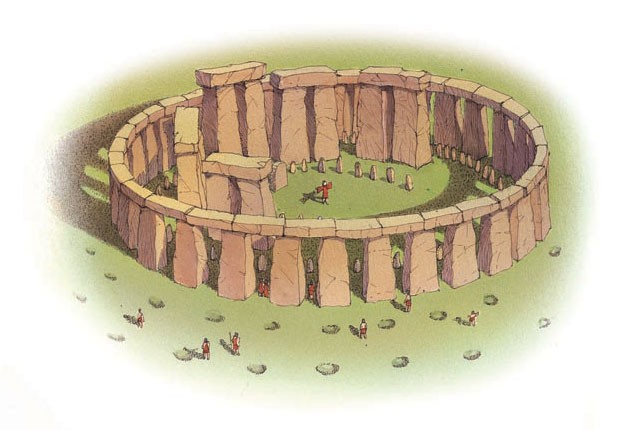
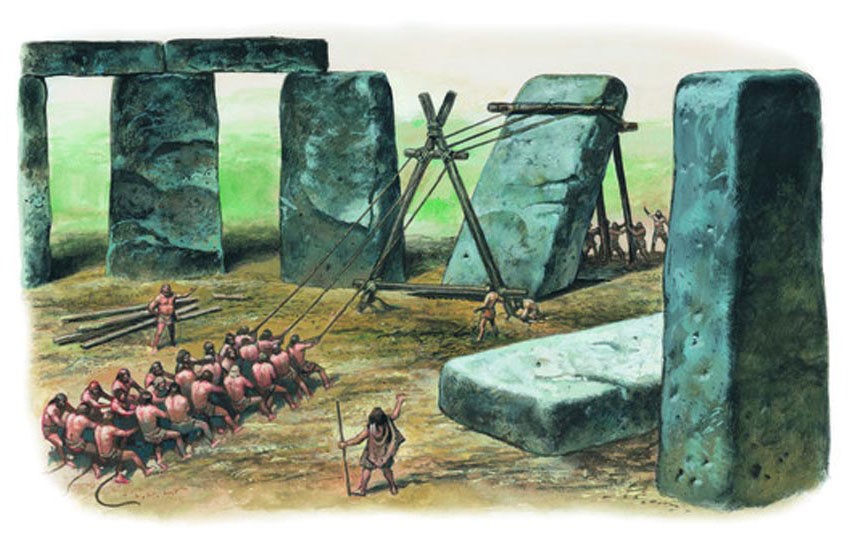
Work began on Stonehenge around 3000 BC and finally completed around 1500 BC. It is not known who ordered Stonehenge to be built or what exactly it was built for, although it was a major burial site. It is probable that the site had great religious significance and might well have served as some form of healing centre.
Stonehenge stands on Salisbury Plain in southern England. It originally consisted of of two circles of 82 standing stones, one circle inside another, with large capping stones on top. They are surrounded by circular ditch rimmed by an inner and outer bank. Some of the stones weigh up to 4 tonnes each and were transported all the way from the Preseli Mountains in southwest Wales, 240 kilometres (150 miles) away.
Beaker Culture
From around 2500 BC, a new culture (a way of life, especially the general customs and beliefs, of a particular group of people) arrived in Britain from continental Europe. It may have been brought by immigrants—not a conquest, but a steady trickle of people crossing the sea—or it may have been the adoption of practices that were spreading through Europe from the steppe grasslands of Eastern Europe and Central Asia. Called the Beaker Culture, it is named after the bell-shaped pots that date from this time.
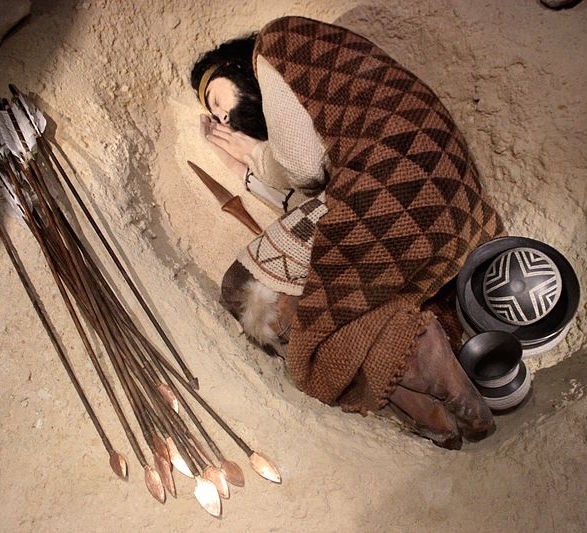
One of the migrants who came to Britain is known as the Amesbury Archer, after the place where his remains were discovered in 2002. He was buried near Stonehenge in around 2300 BC along with five beakers, gold hair ornaments, an archery wrist guard and a dagger.
The Beaker Culture people introduced modest-sized round barrows for their honoured dead, replacing the larger communal barrows built earlier. These round barrows were often clustered around earlier causewayed enclosures.
Bronze Age
Beaker Culture people also introduced metal-working to Britain, beginning what is known as the Bronze Age. It was made possible by the discovery that high temperatures could be produced in small furnaces using bellows made of hide. The earliest British metalwork was made of pure copper, bronze (an alloy of about 90% copper and 10% tin) or gold. Copper or bronze was used for weapons and tools including spearheads, axes and knives. Gold was used for ornaments and jewellery.
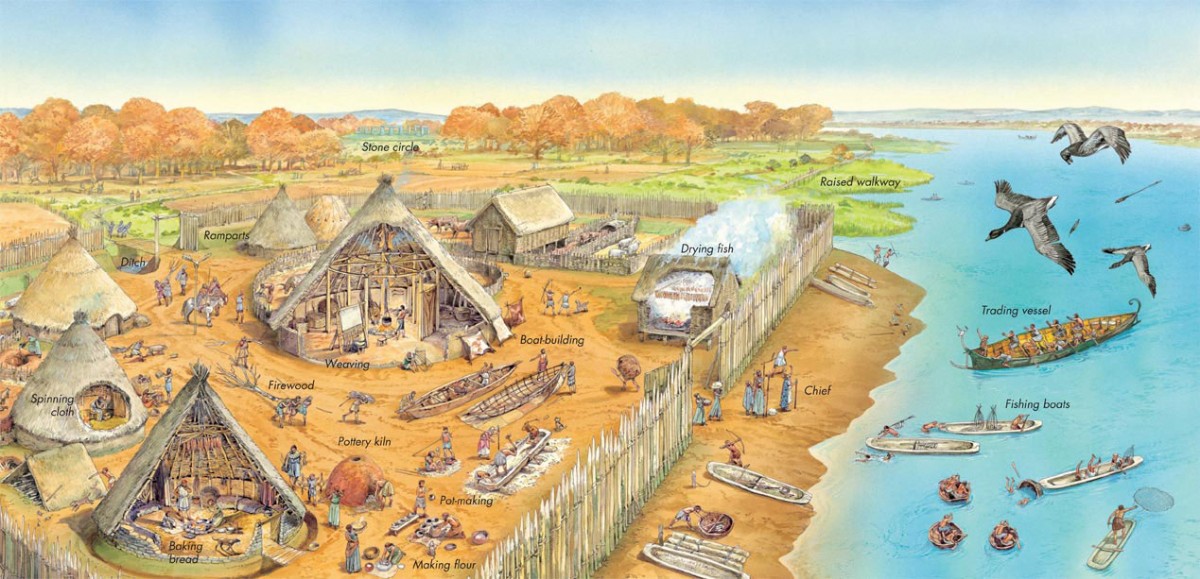
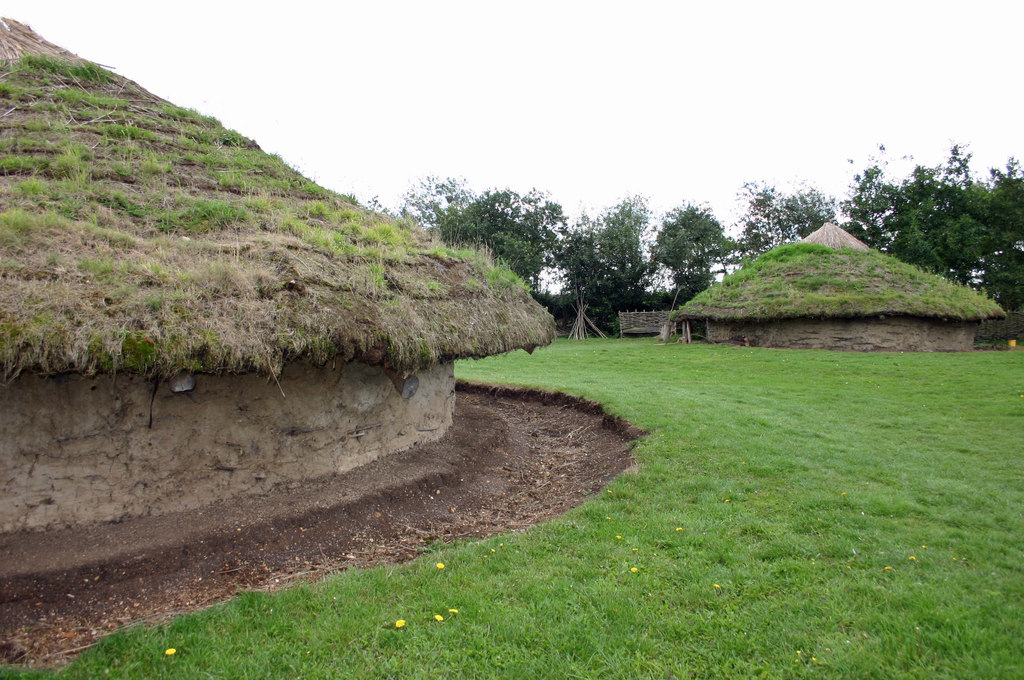
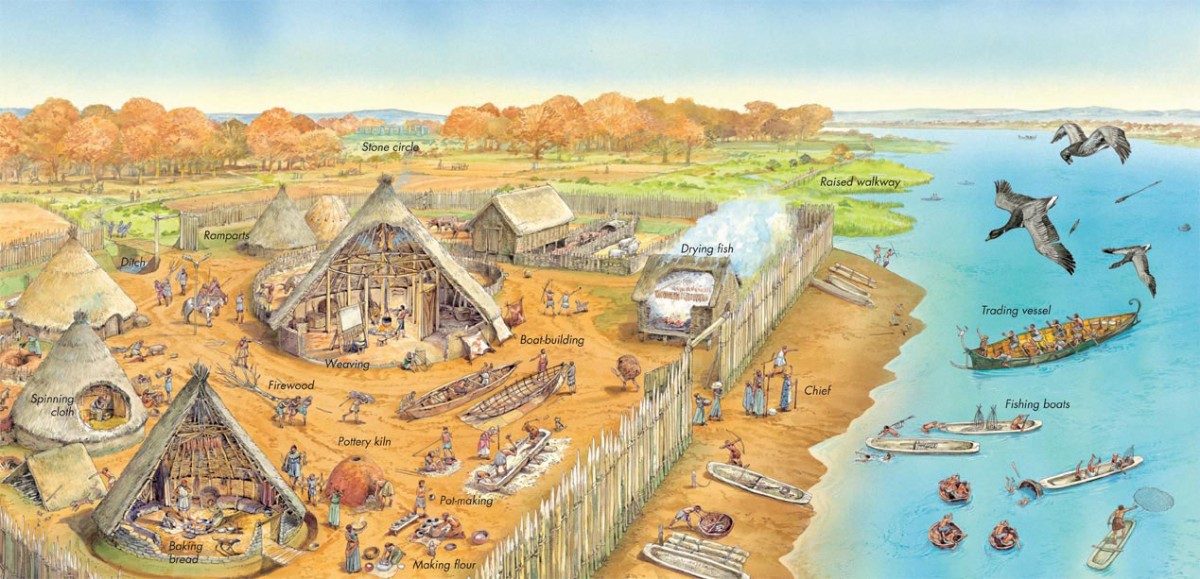
Bronze axes rapidly replaced stone ones, making tree felling much easier. Timber thus became the most important building material of the Bronze Age. Roundhouses were now the dominant form of dwelling, replacing the Neolithic-style rectangular houses of old.
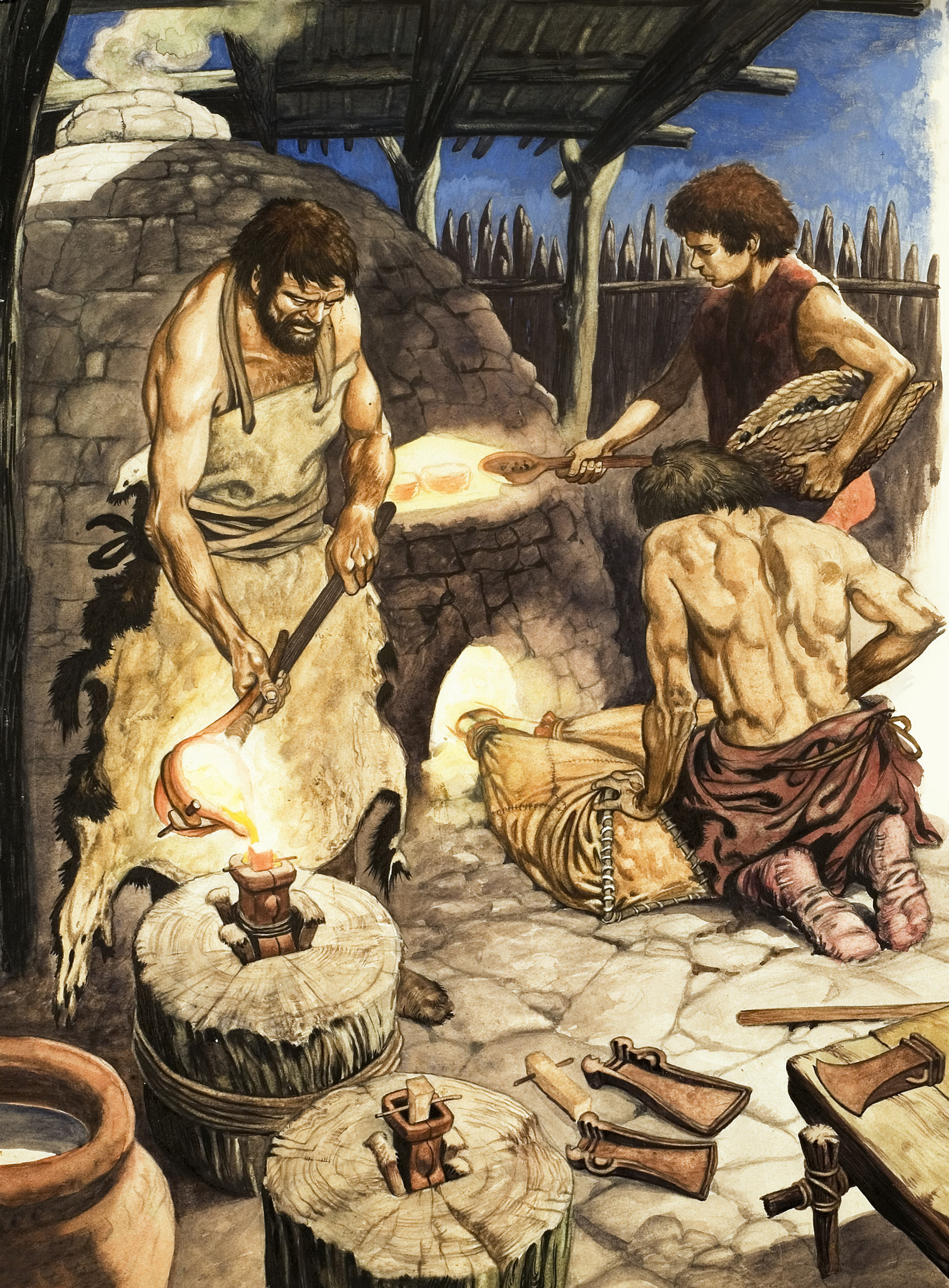
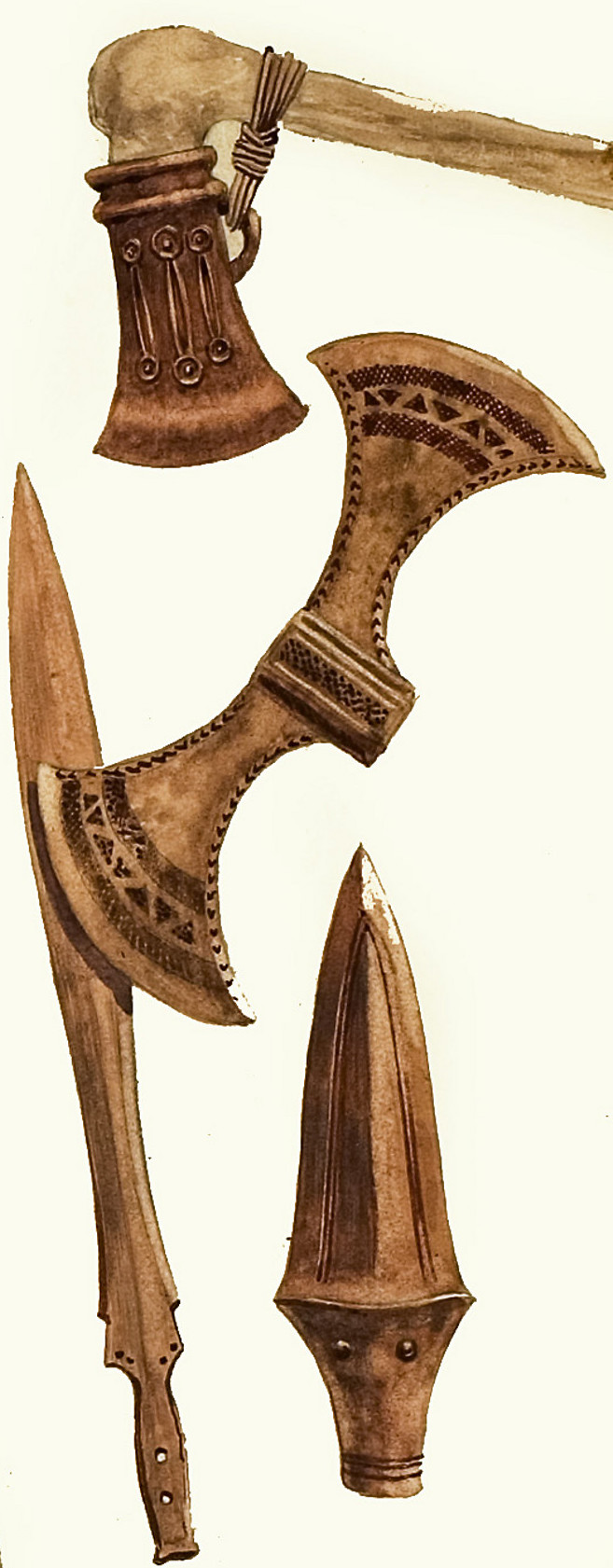
In the Late Bronze Age (after around 1200 BC) bronze metalworking technology developed rapidly. Workers fashioned smaller "socketed" axes, in which the axe head was attached to a shaft fitted into a socket at its hollow end. They also made swords with leaf-shaped blades, enabling them to be used for slashing.
It was during this period that the many tribes living across Britain started to combine into the larger groupings, led by powerful warrior chiefs. These became the tribal kingdoms of the Iron Age, a time beginning around 800 BC when Celtic culture first started to arrive in Britain.
Consultant: Philip Parker
pics
Without in any way limiting Q-files Ltd’s exclusive rights under copyright, any use of this publication to “train” generative artificial intelligence (AI) technologies to generate text is expressly prohibited. Q-files Ltd reserves all rights to license use of this work for generative AI training and development of machine learning language models.