
British history

CITE
We have made every effort to follow citation style rules, but there may be some minor differences. If in doubt, please refer to the appropriate citation style manual.
Medieval England. (2026). In Q-files Encyclopedia, History, British history. Retrieved from
https://www.q-files.com/history/british-history/medieval-england
"Medieval England." History, British history, Q-files Encyclopedia, 30 Mar. 2026.
https://www.q-files.com/history/british-history/medieval-england.
Accessed 2 Sep. 2026.
Medieval England 2026. History, British history. Retrieved 2 September 2026, from
https://www.q-files.com/history/british-history/medieval-england
History, British history, s.v. "Medieval England," accessed September 2, 2026.
https://www.q-files.com/history/british-history/medieval-england


Medieval England
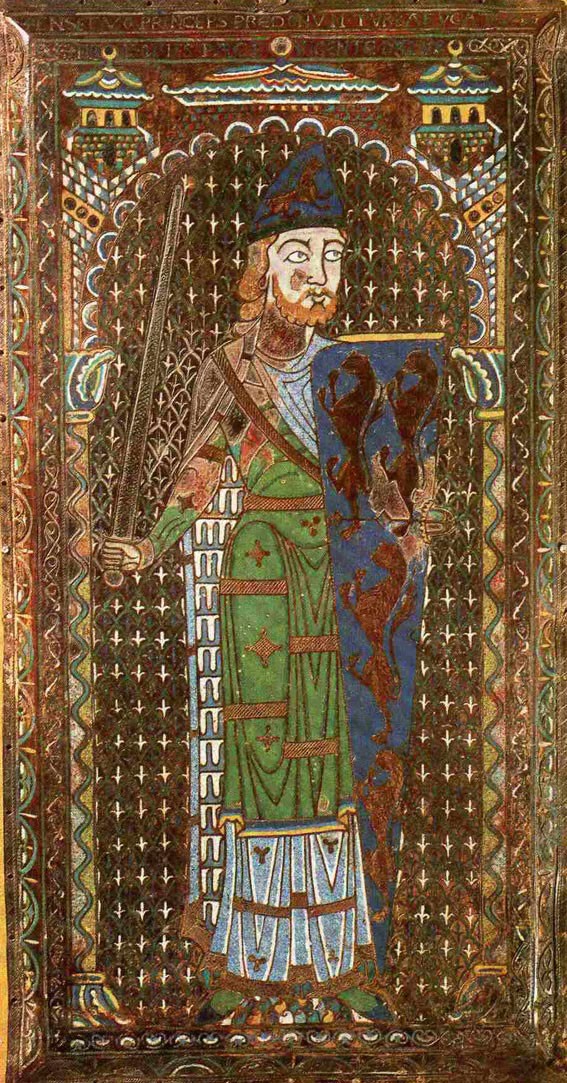
During the medieval period, England faced the death and destruction of the Black Death and the Wars of the Roses, but it also saw the birth of parliament and the ground-breaking Magna Carta. The 14 Plantagenet kings (including the later Lancastrian and Yorkist kings) ruled England from 1154 to 1485. They took their family name from the nickname of Geoffrey, Count of Anjou and father of the first Plantagenet king, Henry II. Geoffrey used to wear a sprig of flowering broom—Planta genista is its Latin name—as a badge after he scooped up a handful of the yellow flowers while picking up his hat from the ground.
The Angevin Empire
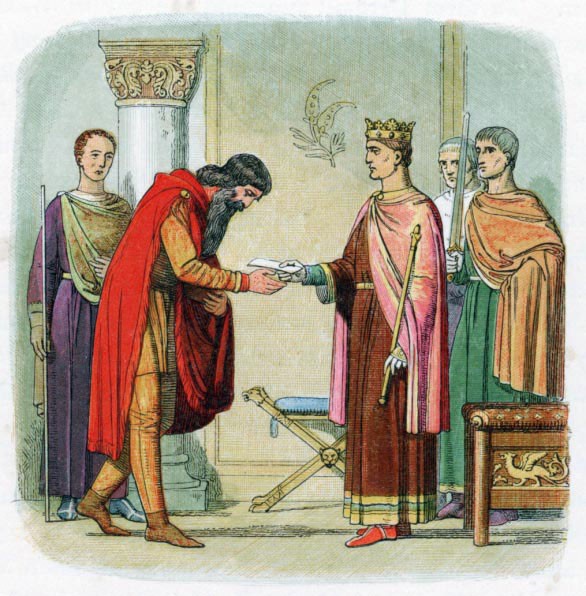
The first Plantagenet king, Henry II, ruled England from 1154 to 1189. When he became king, he already owned much of northern and western France and so now ruled an empire that stretched from the border with Scotland in the north to the Pyrenees in southwest France. This empire was known as the Angevin Empire because the French county of Anjou lay at its centre. Henry II and his sons Richard I (ruled 1189–1199) and John (ruled 1199–1216) had to fight to keep this empire from falling into French hands, but almost all of it was eventually lost in 1204.
Cathedral building
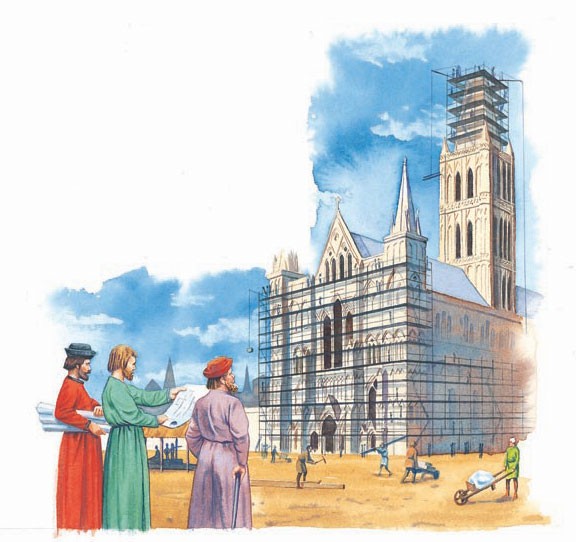
Throughout the medieval period, cathedrals were built in the English cities. These great buildings took years to construct and were by far the biggest and tallest buildings in England at that time. Cathedrals such as those of Salisbury and Ely were designed to impress on people the power of God and his Church on earth. They were built of stone and were heavily decorated with stone and wood carvings and statues, wooden screens and choir stalls, and beautiful stained-glass windows.
Thomas Becket
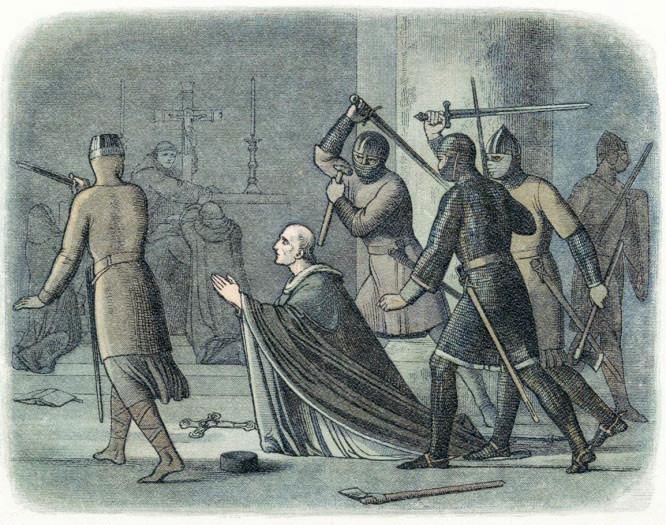
Thomas Becket was appointed Archbishop of Canterbury, the leader of the Church of England, by King Henry II in 1162. Before his appointment, Becket had been Lord Chancellor, one of the king's most important ministers. The two men had become close friends. Previously a pleasure-loving man, on his appointment to Archbishop, Becket became more serious-minded and stood up to Henry over the rights and privileges of the Church. Realising how he had angered the king, Becket fled to France in 1164 in fear for his life. However, he returned to England in 1170 and was murdered by four knights, followers of the king, in Canterbury Cathedral.
Richard the Lionheart
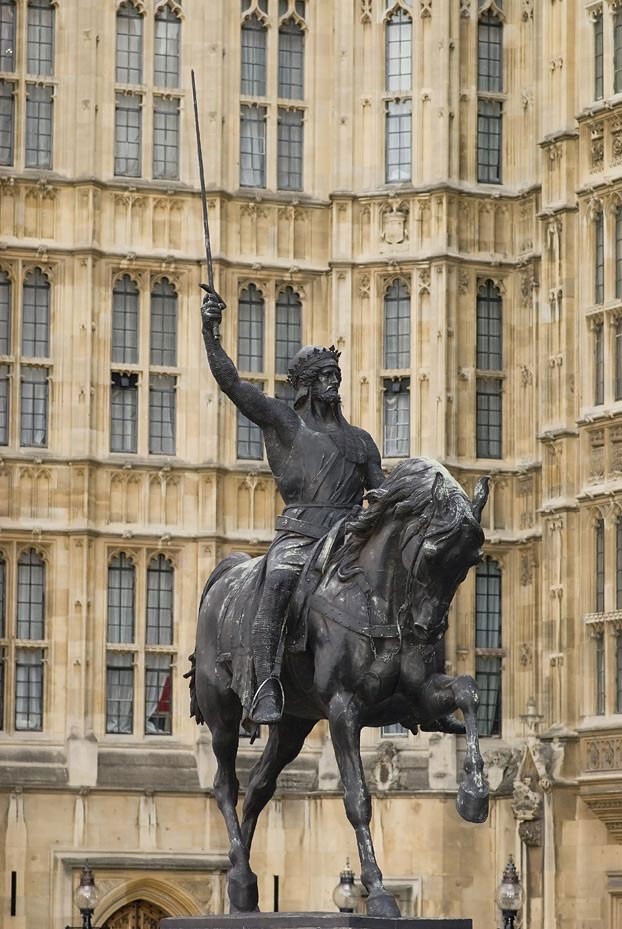
Richard I ruled England for ten years from 1189 but was only in the country for seven months. The rest of the time he spent either on crusade, attempting to regain the Holy Land from Muslim control, or fighting to keep hold of his lands in France. Richard was known as Coeur de Lion, "the Lionheart", because he was brave in battle.
On his way home from crusade in 1192, Richard was captured in Austria and handed over to Henry VI, Emperor of Germany, who demanded and received a ransom of 150,000 marks from England for the king’s release.
Magna Carta
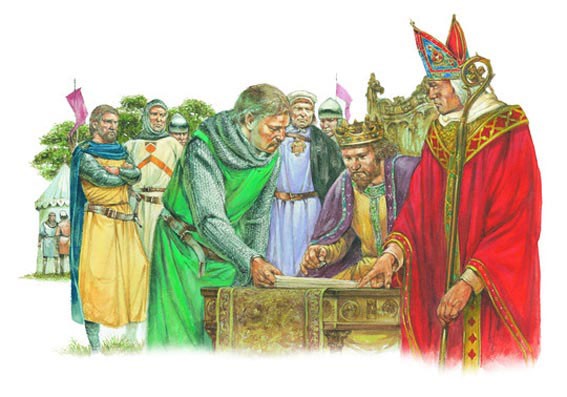
King John (ruled 1199–1216) was unpopular with the leading noblemen of his day. They objected to his high levels of taxation and the loss of English power in France after 1204. They were also displeased by John’s bitter quarrel with the Pope over who was to be Archbishop of Canterbury, a dispute that led to many church services being banned. In 1215 the nobles drew up a list of complaints in a Magna Carta, or "Great Charter", and forced John to sign it.
The "Great" in its title refers to the wide range of its contents, not its length. The charter defined the rights and responsibilities of the Crown and its subjects, guaranteed the rights of the Church and the City of London, and stated that no free man should be arrested or imprisoned without trial. Today, Magna Carta is considered to be one of the most important documents in English history.
The birth of parliament
The British parliament began in Anglo-Saxon times as the Witenagemot or Witan, which was a council of important landowners, churchmen and royal officials called together to advise the king. The Norman kings had a similar body known as the Great Council. Gradually, this council began to be referred to as a parliament.
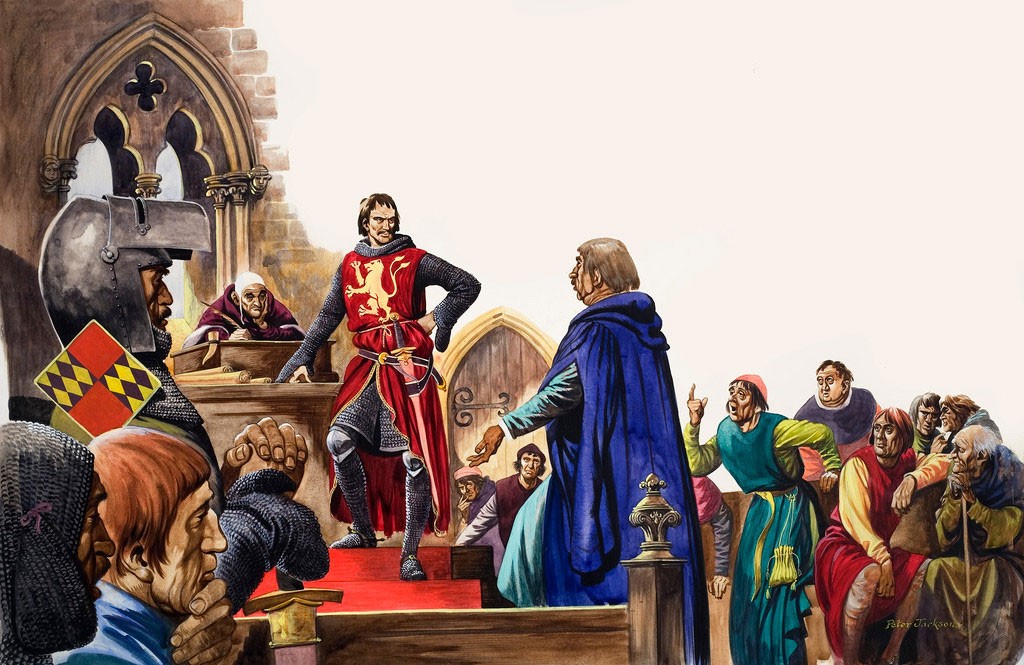
In 1265 a major development took place when Simon de Montfort, who had rebelled against the government of Henry III (ruled 1216–72), called together a parliament that included not just the lords and churchmen but also four knights from each county and two citizens from each major town, called burgesses. Over the next century, parliament gained the power to make laws and raise taxes. The knights and the citizens began to sit by themselves in a separate body known as the House of Commons. The lords and clergy sat in the House of Lords.
Edward I
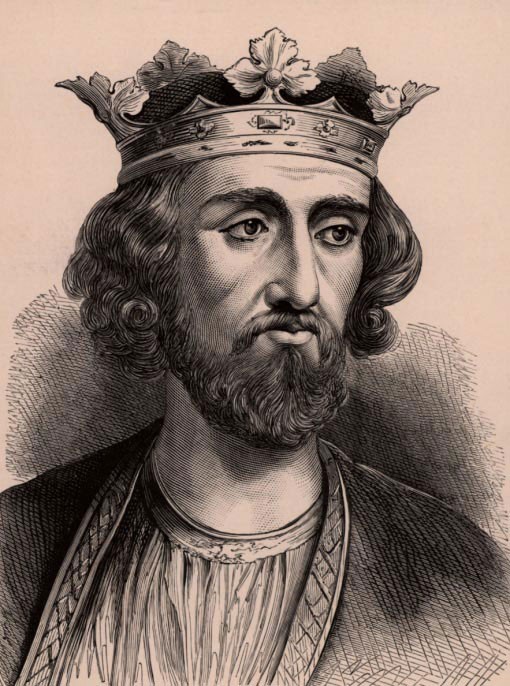
Edward I ruled England from 1272 to 1307. He was a great legal reformer who dismissed corrupt judges, appointed the first Justices of the Peace, or magistrates, to hear local law cases, and gave people the responsibility to police their own communities. He also settled many disputes about who owned which lands.
Edward also extended English power by conquering Wales and attempting to take over Scotland, for which he was known as "the Hammer of the Scots".
Edward III
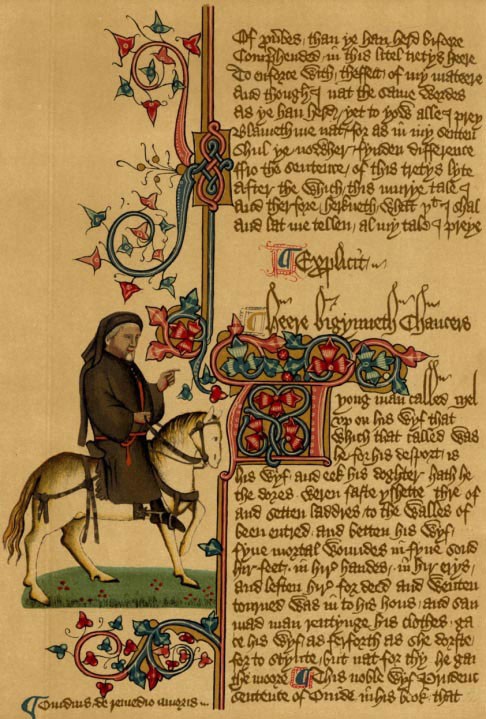
Edward III came to the throne in 1337 after his father, Edward II, had been killed in a brutal way on the orders of his wife and her lover. During his reign, Edward III made a number of lasting changes. He agreed laws that made it illegal to raise new taxes without the agreement of parliament and approved a new law that defined high treason, or crimes against the state. In 1362, English replaced French as the official language of parliament and the courts. During his reign, Windsor Castle in Berkshire became the principal country residence of the English kings. Geoffrey Chaucer worked for the king, later becoming famous for his story of pilgrims journeying to Canterbury, The Canterbury Tales. Edward III died in 1377.
Hundred Years’ War
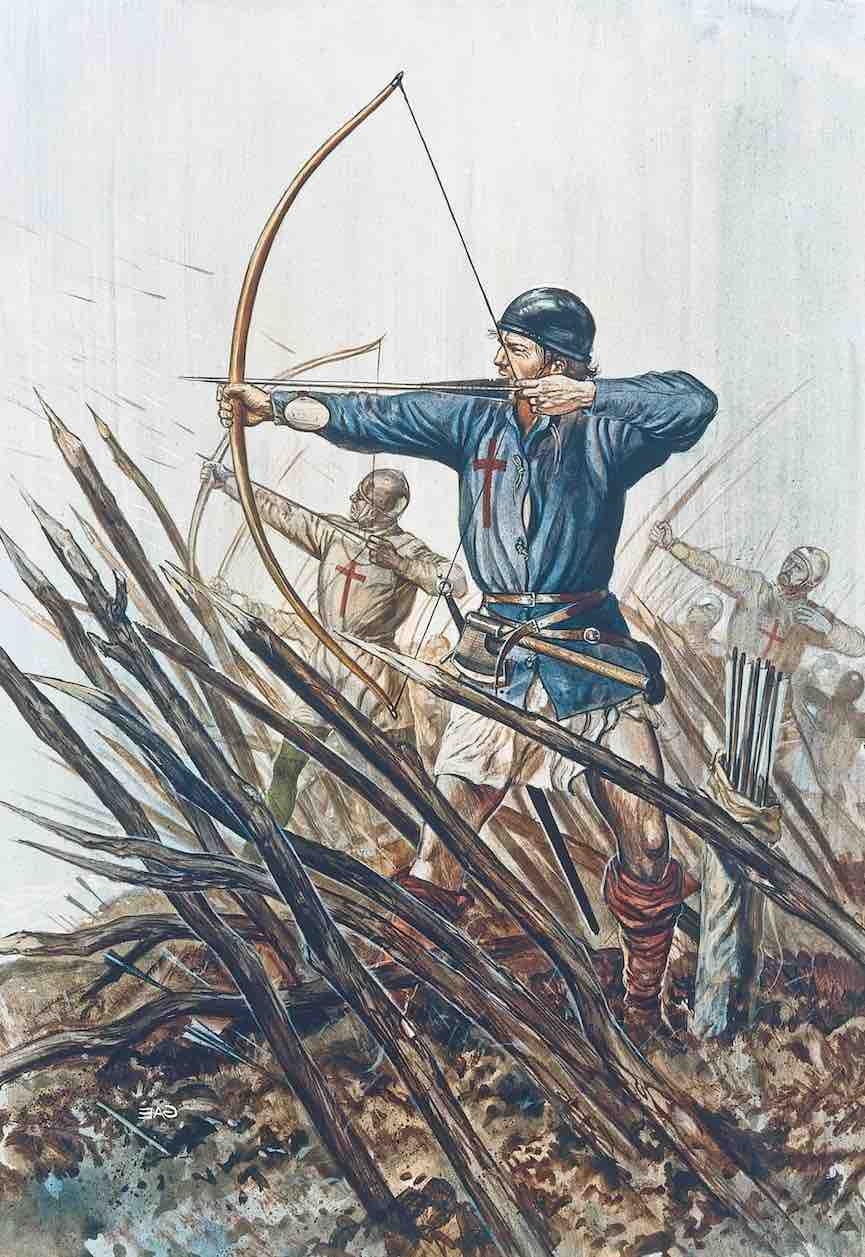
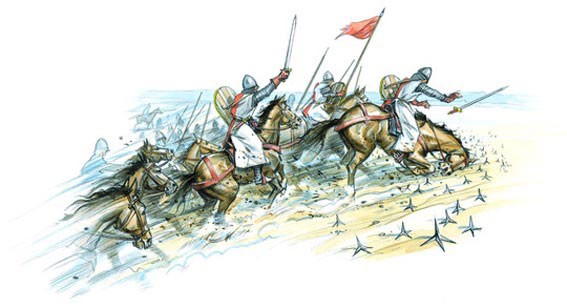
In 1337 Edward III claimed the throne of France through his mother, Isabella of France, and declared war on France. This war became known as the 100 Years’ War. It lasted until 1453, in fact a total of 116 years, although there were long periods of peace in between fighting. English armies won notable victories at Crécy in 1346 and Poitiers in 1356, until Edward made peace in 1360. After that, England slowly lost most of its lands in France.
In 1415, Henry V renewed his claim to the French throne and invaded France, winning a superb victory at Agincourt. In 1420 he married the daughter of the French king and was set to inherit the French throne but died before this could take place. Led by Joan of Arc, the French began to recapture land previously lost to the English, finally throwing them out of the whole of France except Calais in 1453.
Black Death
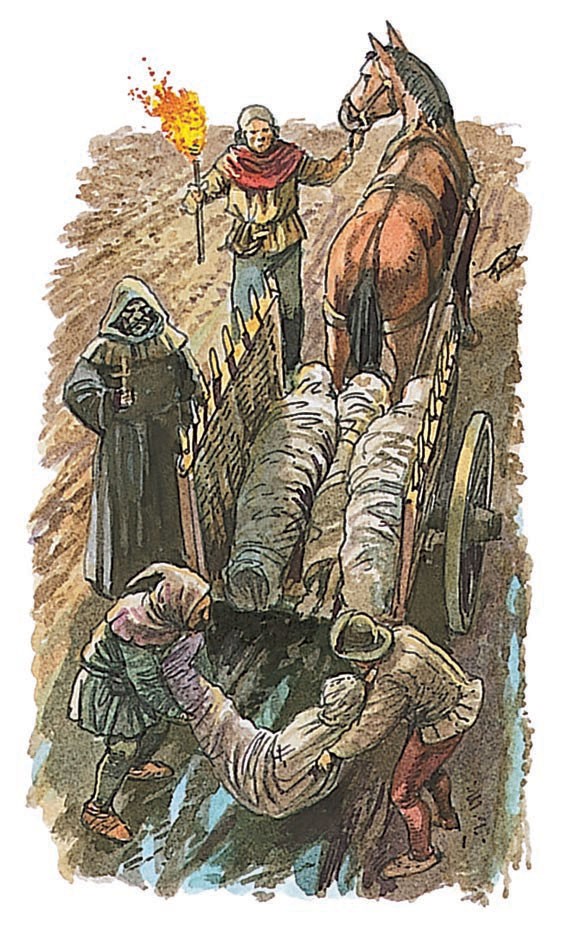
In 1347 the bubonic plague, known as the Black Death, arrived in Europe from Asia. The plague was caused by bacteria carried by rat fleas that feasted on people's blood. The disease killed almost everyone it infected. Perhaps 50 million people throughout Europe perished. The plague first reached England in 1348, claiming the lives of about 3.6 million people, more than half of the population. Further outbreaks occurred in 1361 and 1369. The plague massively reduced the working population. This enabled workers to demand more money from their employers for their labour because so few labourers were available for work.
The Peasants’ Revolt
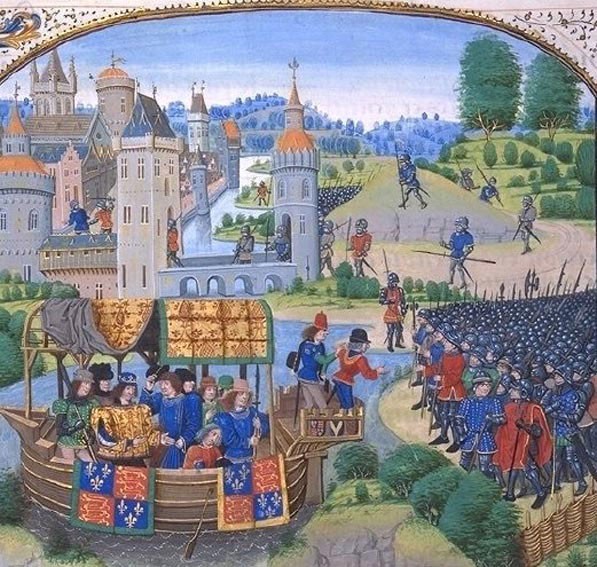
In 1381, peasants throughout England rose in revolt against the government of Richard II (ruled 1377–1399). They were protesting against a new poll tax (meaning "head" tax) levied on everyone regardless of their wealth, and against the law that forbade them to change jobs in search of higher pay. More than 100,000 men from Kent, led by Wat Tyler, and Essex, marched on London. On the way, they burned the court rolls on which the poll tax was based, attacked the houses of the rich and murdered both the Archbishop of Canterbury and the king’s treasurer.
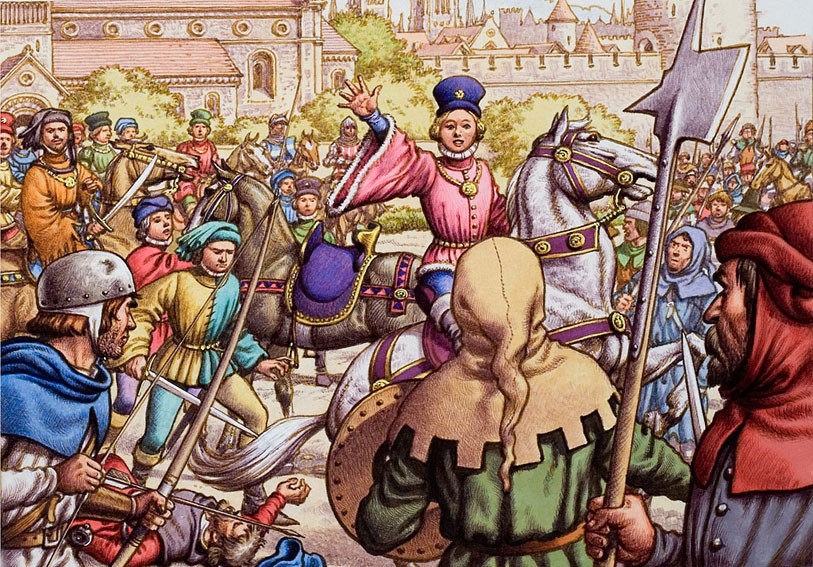
The protesters were met by the king, who agreed to their demands. Once the peasants had left London, however, the king changed his mind and suppressed the revolt with great severity. Some 200 protesters were hanged, although the poll tax was later abolished.
The Wars of the Roses
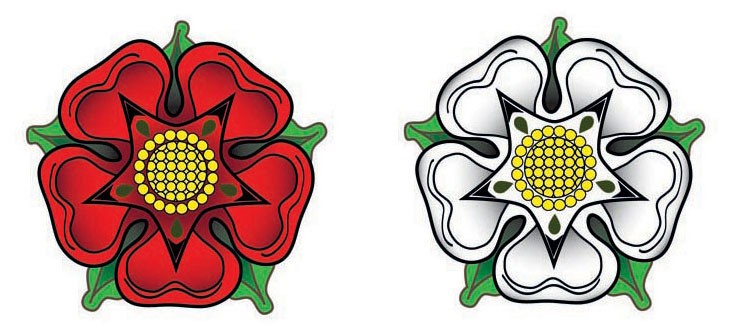
In 1399, Richard II was deposed (replaced as king) by his cousin, Henry Duke of Lancaster, the first of three Plantagenet kings from the Lancastrian branch of the family, all called Henry. In 1454, his grandson Henry VI suffered a mental breakdown and handed over power to his relative, Richard, Duke of York. After Richard was dismissed the next year, civil war between the Lancastrians and Yorkists broke out. This conflict was known as the Wars of the Roses, after the Lancastrian red rose and Yorkist white rose that the two sides used as badges.
Edward IV, the son of Richard, Duke of York, became king in 1461, and, although Henry VI was restored to the throne in 1470, his reign lasted only a few months, before being imprisoned and left to die. Edward IV was crowned once again, and remained king until his death in 1483. The Wars of the Roses lasted for another two years until 1485, when its last battle, the Battle of Bosworth Field, would be fought.
The Princes in
the Tower
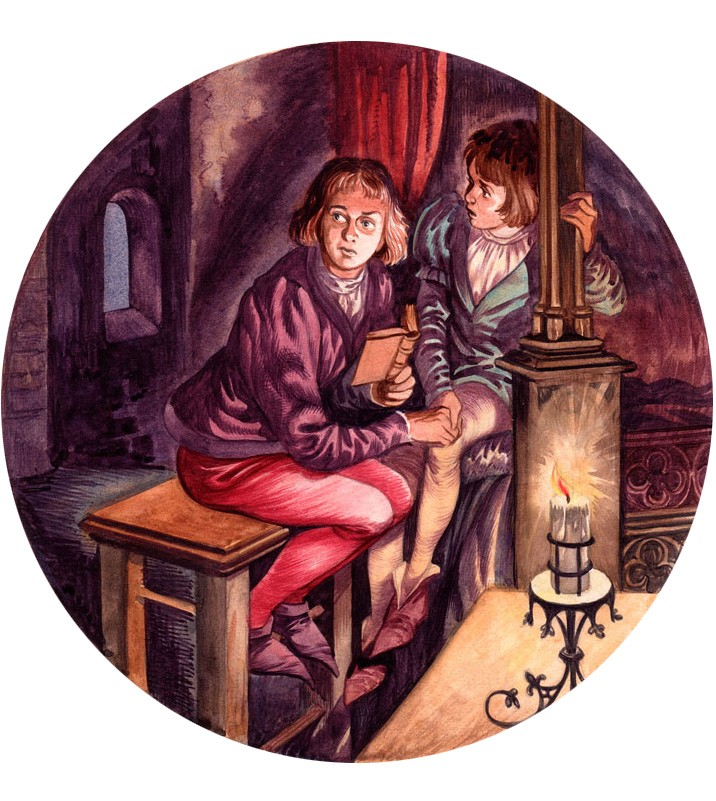
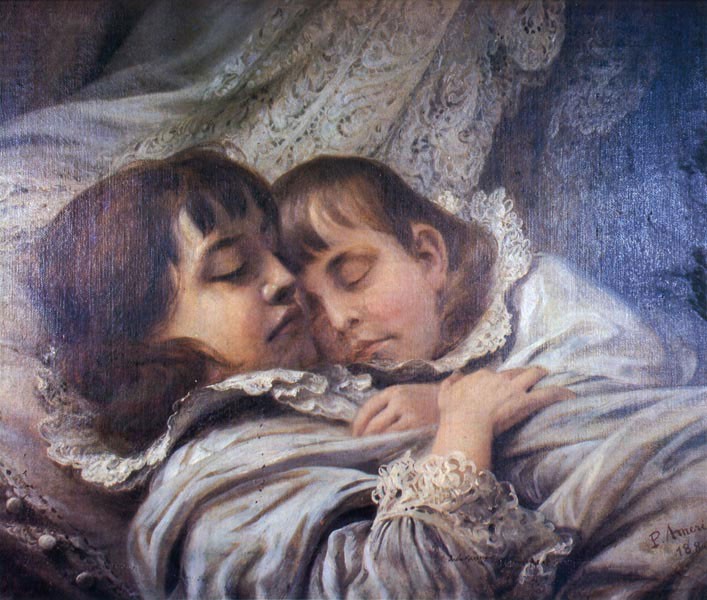
When Edward IV died in April 1483, his brother Richard, Duke of Gloucester was named Lord Protector for Edward's son and heir, the 12-year-old King Edward V. Richard arranged for both the young king and his 10-year-old brother Richard to take up lodgings in the Tower of London. But before the young king could be crowned, Richard claimed that the children were illegitimate and neither would be able to become king. Richard himself was crowned on 6th July 1483 as Richard III of England. The young princes were never seen again, giving rise to rumours that the boys, the "Princes in the Tower", had been murdered on Richard's orders.
The Battle of Bosworth Field
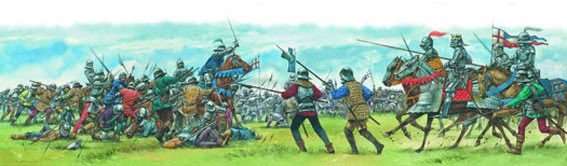
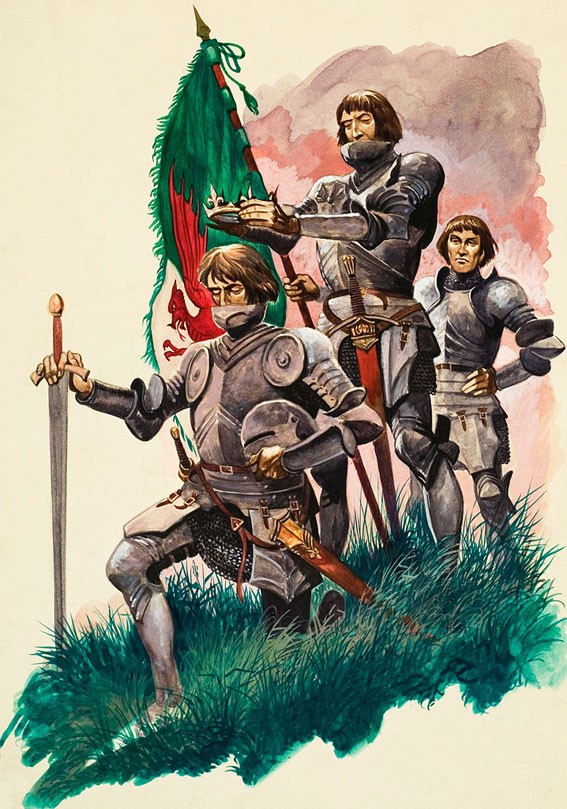
Henry Tudor (1457–1509) was descended from the independent princes of Wales and was the Lancastrian claimant to the throne of England occupied by Richard III, a member of the rival Yorkist family. In 1485 Henry sailed from France to Wales and gathered 8000 supporters together. On 22nd August he met the 12,000-strong army of Richard III at Bosworth Field, Leicestershire.
Richard fought bravely, but one of his key allies deserted him: Lord Stanley and his brother refused to commit their forces until they saw which way the battle was going. When it became clear that Henry was winning, the Stanleys attacked Richard, surrounding and killing him. After the battle, Henry was crowned king as Henry VII, the first Tudor king of England.
Consultant: Philip Parker
pics
Without in any way limiting Q-files Ltd’s exclusive rights under copyright, any use of this publication to “train” generative artificial intelligence (AI) technologies to generate text is expressly prohibited. Q-files Ltd reserves all rights to license use of this work for generative AI training and development of machine learning language models.