
History of London

CITE
We have made every effort to follow citation style rules, but there may be some minor differences. If in doubt, please refer to the appropriate citation style manual.
Medieval London. (2026). In Q-files Encyclopedia, History, History of London. Retrieved from
https://www.q-files.com/history/history-of-london/medieval-london
"Medieval London." History, History of London, Q-files Encyclopedia, 24 Apr. 2026.
https://www.q-files.com/history/history-of-london/medieval-london.
Accessed 6 Aug. 2026.
Medieval London 2026. History, History of London. Retrieved 6 August 2026, from
https://www.q-files.com/history/history-of-london/medieval-london
History, History of London, s.v. "Medieval London," accessed August 6, 2026.
https://www.q-files.com/history/history-of-london/medieval-london


Medieval London
By the end of the 6th century, the London area formed part of the kingdom of the East Saxons. While the old Roman city lying within the crumbling walls remained empty, a new settlement grew up just to the west, around a port on the Thames. It was called Lundenwic (the Old English ending -wic, found in names like Ipswich and Harwich, usually means a port or trading town). But the town became a target for Viking raiders, who sacked it several times: in 842, 851 and 871.
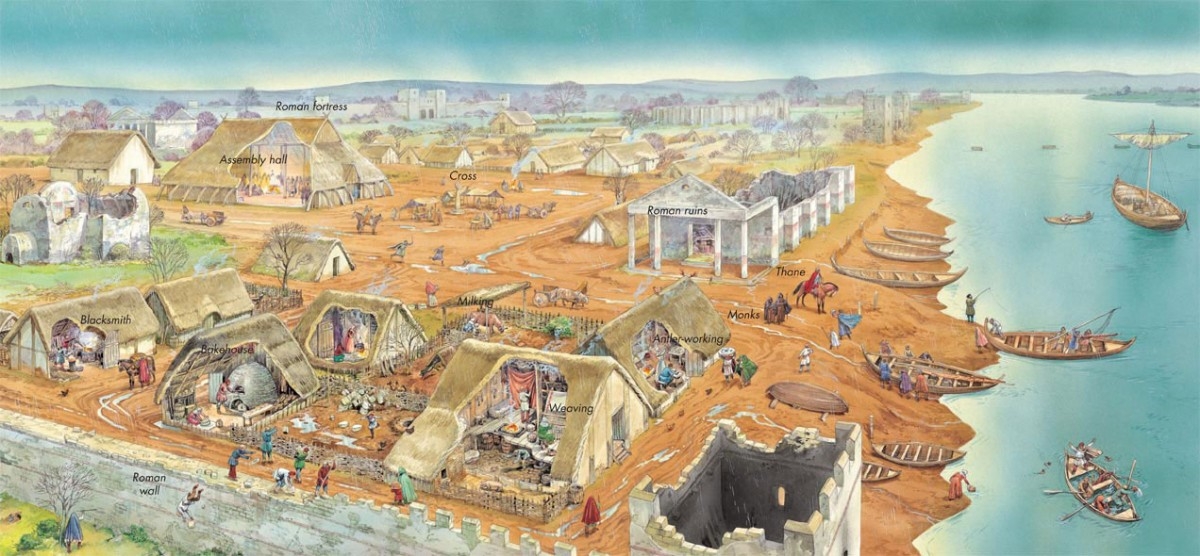
Saxon London
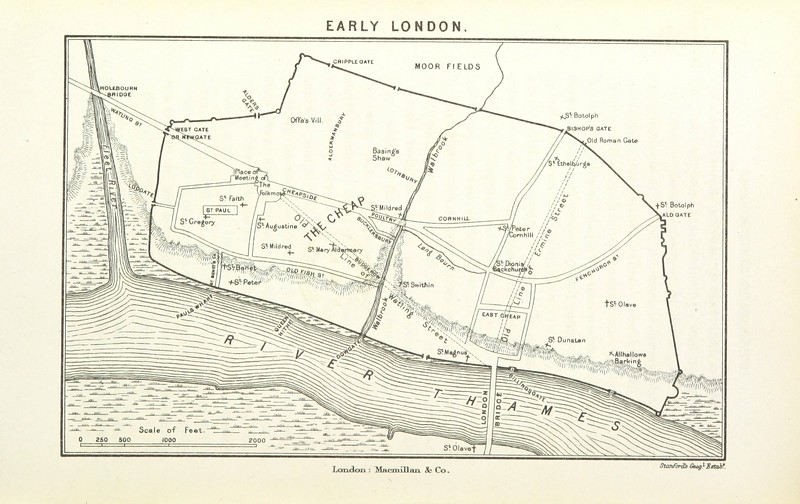
King Alfred drove the Vikings out in 886 and the old Saxon town of Lundenwic was soon abandoned. (It later became known as Ealdwic, meaning the "old settlement", a name which survives today as Aldwych.) Under Alfred's guidance, London was re-established within the Roman walls—newly repaired—and new streets were laid out. The ruins of Roman buildings became part of the townscape. The new town became known as Lundenburgh. It marked the beginning of what would later come known as the City of London.
Alfred also established a burgh, a fortified town, on the south bank of the Thames to guard the river crossing. This was named Southwark.

Viking raiders, led by Sweyn Forkbeard of Denmark, returned to attack London in 994. After numerous raids and a long siege, they succeeded in capturing it from the Saxon king Aethelred the Unready in 1013. Although Aethelred soon retook London, it passed into Danish Viking hands when Cnut became king of all England in 1016 and remained so until the Saxon line of kings was restored with the accession of Edward the Confessor in 1042.
Westminster
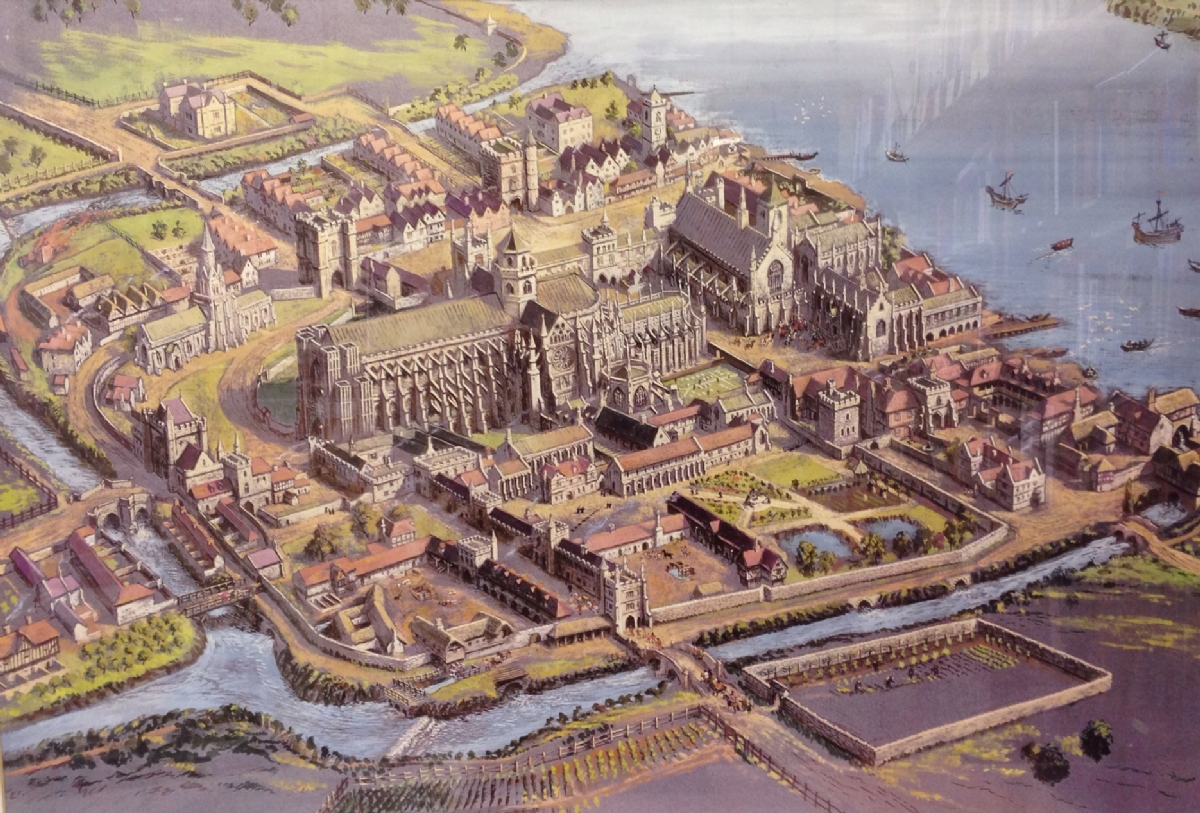
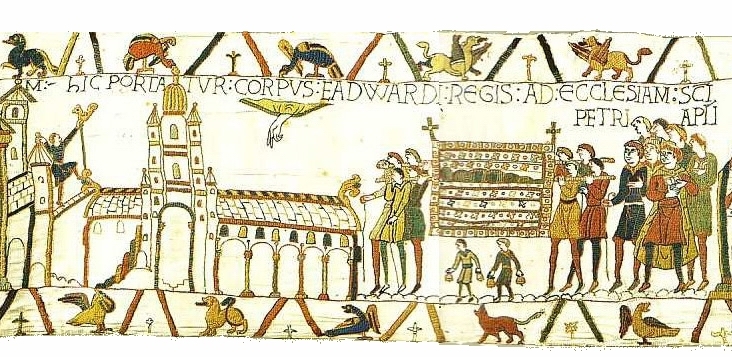
Saxon London was a bustling port. A new bridge was built to replace the old Roman crossing and a number of small parish churches were founded. In the mid 1000s, Edward the Confessor decided to build a monastery on an island in the marshes a little way upstream from London: Westminster Abbey. Between the abbey and the river he built a royal palace. This meant that while London—the area we know today as the City of London—remained a commercial and industrial centre, the seat of English government would, from now on, be at Westminster.

Norman London
After the Norman invasion of England in 1066, William the Conqueror quickly took control of London. He established a new set of laws and citizens’ rights for the city, and built castles along the River Thames to defend it. One of these was the White Tower, the central keep of the Tower of London, which still stands today.
Work also began on a new church to replace the Saxon minster (an important church) of St Paul, which burned down in 1087. When it was finally completed in 1240, St Paul's Cathedral had one of the tallest church spires (149 metres or 489 feet) in the world. The spire was destroyed by lightning in 1561, but the cathedral itself survived until it was burned to the ground during the Great Fire of London in 1666.

London's population
Over the 12th and 13th centuries, London gradually achieved self-government. A Royal Charter providing for a Mayor of London was issued by King John in 1215. The Mayor has been elected by Londoners, rather than appointed by the monarch, ever since. The title "Lord Mayor" came into use after 1354.
During the Middle Ages, the population grew fast, reaching a peak of about 80,000 people in the early 1300s—before declining sharply following the arrival of the Black Death in 1348. But it was not long before London's population started to rise once more, partly because England generally was becoming more populous, but also because of immigration. Many migrants came from northern France, hoping to make money from London's profitable wool trade and other businesses. Until they were expelled in 1290, Jews also came in significant numbers. They settled in the area around the street still called Old Jewry today.

Medieval houses
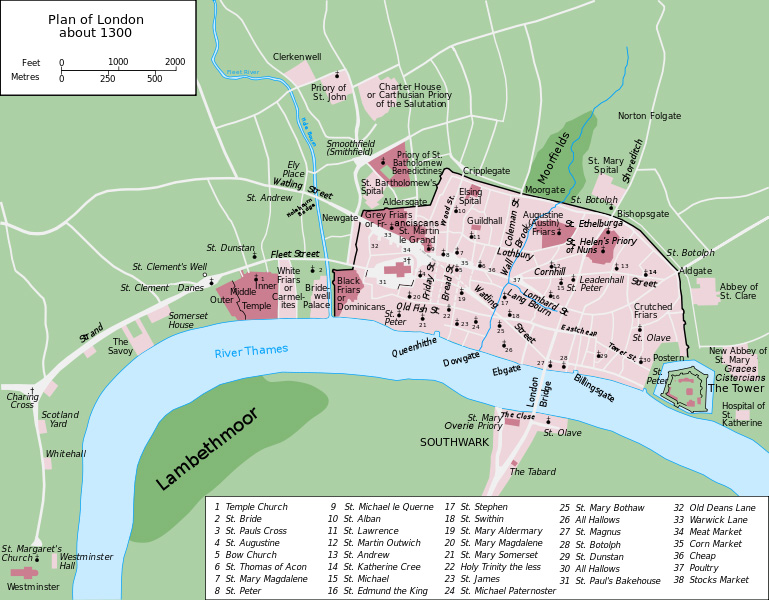
Despite the growing number of inhabitants, London was still largely hemmed in within the old Roman walls. New building took place only in the separate settlements of Westminster and Southwark. As London’s population rose, its streets became more and more crowded with buildings, many of them quite narrow—but several stories high. Even the new London Bridge, completed in 1209, was crammed with houses and shops.
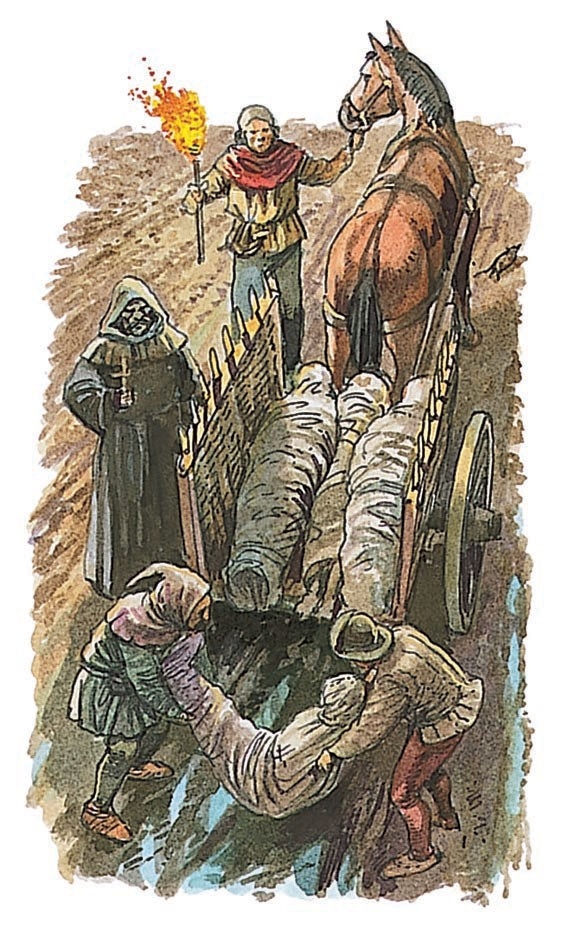
Medieval houses were built from timber and clay, with thatched roofs. People spread straw on their floors to make them comfortable. Fires were common, spreading quickly between the buildings’ thatched roofs. Poor living conditions helped the Black Death to spread quickly. It claimed the lives up to a half of the city’s population.
Consultant: Philip Parker
pics
Without in any way limiting Q-files Ltd’s exclusive rights under copyright, any use of this publication to “train” generative artificial intelligence (AI) technologies to generate text is expressly prohibited. Q-files Ltd reserves all rights to license use of this work for generative AI training and development of machine learning language models.