
Jewish history

CITE
We have made every effort to follow citation style rules, but there may be some minor differences. If in doubt, please refer to the appropriate citation style manual.
The Jews in the Middle Ages. (2022). In Q-files Encyclopedia, History, Jewish history. Retrieved from
https://www.q-files.com/history/jewish-history/the-jews-in-the-middle-ages
"The Jews in the Middle Ages." History, Jewish history, Q-files Encyclopedia, 10 Feb. 2022.
https://www.q-files.com/history/jewish-history/the-jews-in-the-middle-ages.
Accessed 6 Aug. 2026.
The Jews in the Middle Ages 2022. History, Jewish history. Retrieved 6 August 2026, from
https://www.q-files.com/history/jewish-history/the-jews-in-the-middle-ages
History, Jewish history, s.v. "The Jews in the Middle Ages," accessed August 6, 2026.
https://www.q-files.com/history/jewish-history/the-jews-in-the-middle-ages


The Jews in the Middle Ages
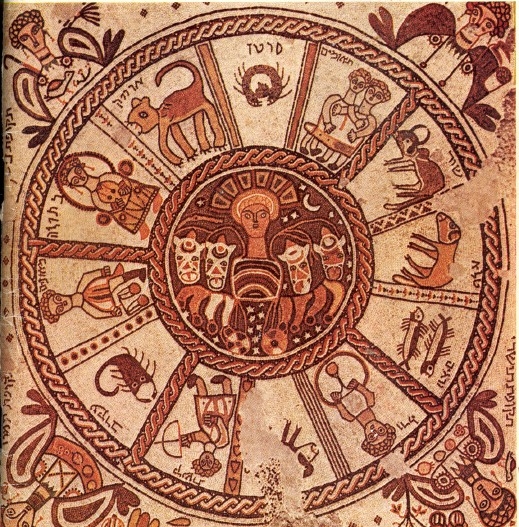
By the time Emperor Constantine I had founded a new capital of the Eastern Roman Empire at Byzantium (later Constantinople) in 324 CE (Common Era, equivalent to AD), Jews were widespread throughout the Roman Empire. Christianity was adopted as the official religion of the empire. Jewish communities across Europe and North Africa fell victim to religious intolerance. Jerusalem, the former Jewish capital, became a Christian city. In 380, Emperor Theodosius I issued a set of decrees directed against Jews: they were forbidden to own slaves, to build new synagogues, to hold public office, or to marry non-Jews. Later Byzantine emperors, including Justinian, further restricted the civil rights of Jews.
Islamic period
Byzantine rule in the Levant lasted for just over 300 years. Following their victory at the Battle of Yarmouk in 636, Muslim Arab forces of the Rashidun caliphate swept the defeated Byzantines from the lands of Mesopotamia, Syria, Palestine and Egypt. The Arab Islamic Empire under Caliph Umar encouraged the Jews to return to Jerusalem—after a lapse of 500 years. Jewish communities began to grow and flourish. Many Jews fled the remaining Byzantine territories to live in the Arab Empire.
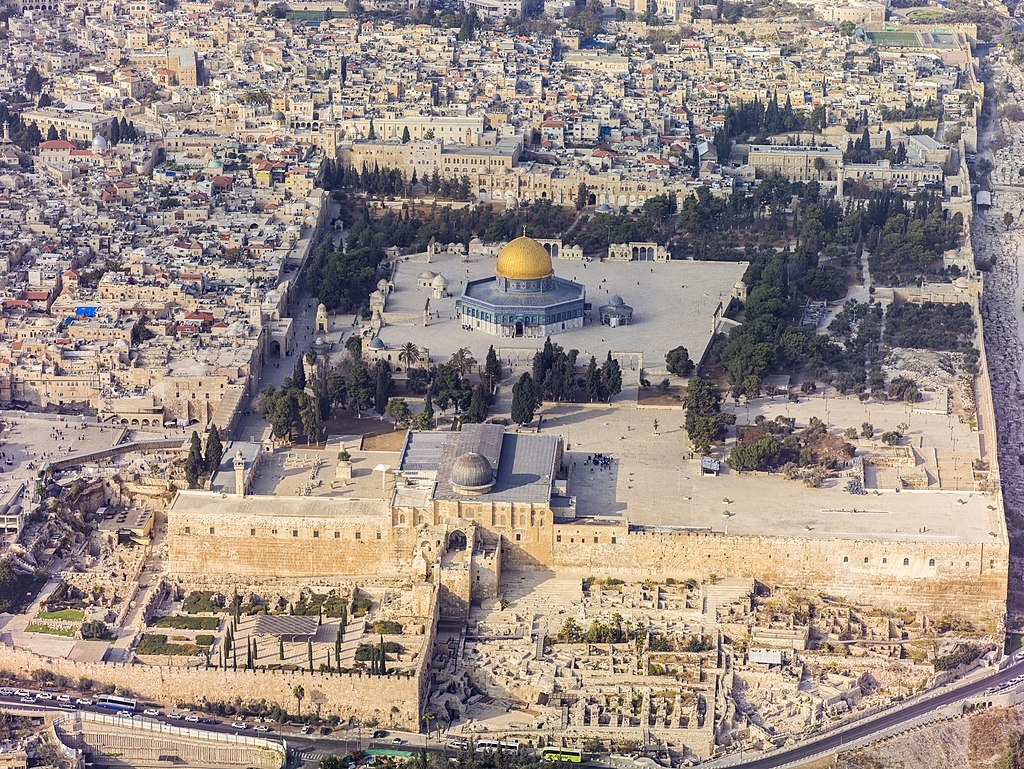
But with the construction of the Dome of the Rock in 691 and the Al-Aqsa Mosque in 705, the Muslims established the Temple Mount in Jerusalem as an Islamic holy site. The caliphs banned the Jews from worshipping on the Temple Mount, a policy that remained in place for the next 1000 years of Islamic rule.
Golden Age in Spain
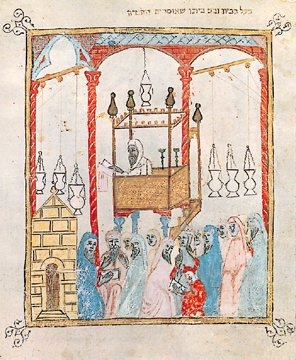
The Arab Empire, ruled by the Umayyad dynasty, conquered Spain in 711, beginning a long period of Muslim rule throughout much of the Iberian Peninsula. It also ushered in a Golden Age for the Jews who lived there already, or who migrated there from North Africa. During that time, Jewish religious, cultural and economic life prospered.
However, the fortunes of the Jews all over the Arab Empire started to change in the 11th century. Muslims in Spain carried out pogroms (anti-Jewish violence) in Cordoba in 1011 and in Granada in 1066. Elsewhere, synagogues were destroyed and some Jews were forced to convert to Islam or face death.
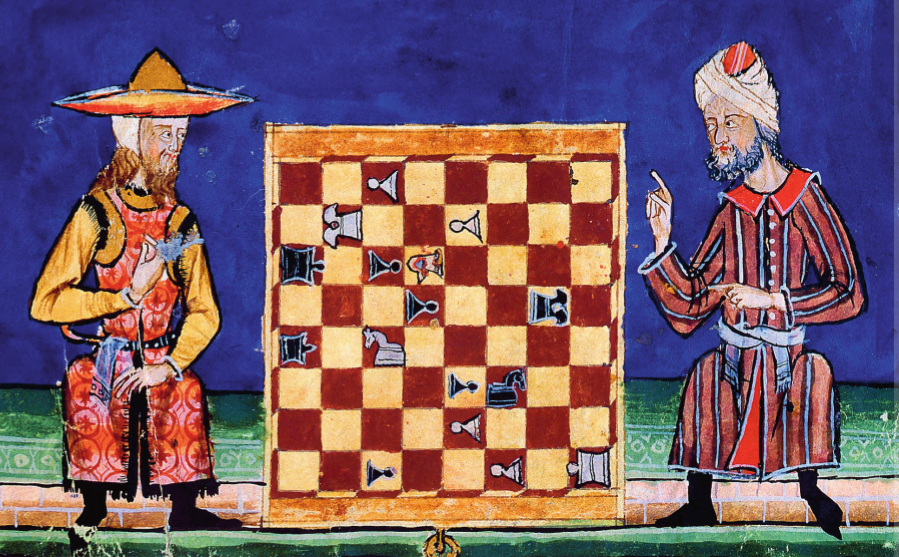
The Golden Age came to an end with the invasion and conquest of Muslim Spain (al-Andalus) by the Almohad caliphate between 1146 and 1172. The Almohads, a Berber people from Morocco, were highly intolerant of religious minorities. They expelled both Jews and Christians from Morocco and Muslim Spain. Some Jews fled south and east to the more tolerant Muslim lands of Africa, while others went northwards to settle in the growing Christian kingdoms of Europe.
Crusaders and Mamluks
The Arab Empire came under attack when the Crusaders fought to reclaim Jerusalem for Christianity. In 1099, Jews fought alongside the Arabs to defend the city. When it fell, the Crusaders rounded up around 6000 Jews in a synagogue and set it on fire. In Haifa, the Jews almost single-handedly defended the town against the Crusaders, holding out for a month.
The Crusaders ruled the Levant (the area of modern Israel, Jordan, Lebanon and Syria), losing and recapturing it over a period of almost 200 years. During this time, the Jewish population were banned once more from Jerusalem and prohibited from owning land.
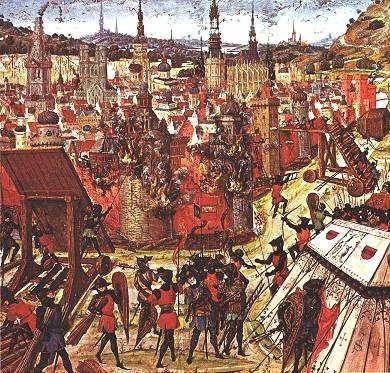
Finally defeated in 1260, the Crusaders departed and the Levant came under the rule of Mamluk Empire, who ruled from Egypt. Under the Mamluks, Jews suffered persecution and humiliation, until rule of the Land of Israel changed hands once more, this time to the mighty Ottoman Empire in 1517.

Medieval Europe
Jewish populations existed all over Europe, especially in the area of the former Roman Empire, since the first century AD. Early medieval society was tolerant towards Jews and their religion. Between 800 and 1100, some 1.5 million Jews lived in Europe. When the Church forbade Christians to lend money for interest, some Jews became moneylenders and bankers—and received protection from kings, princes and bishops.
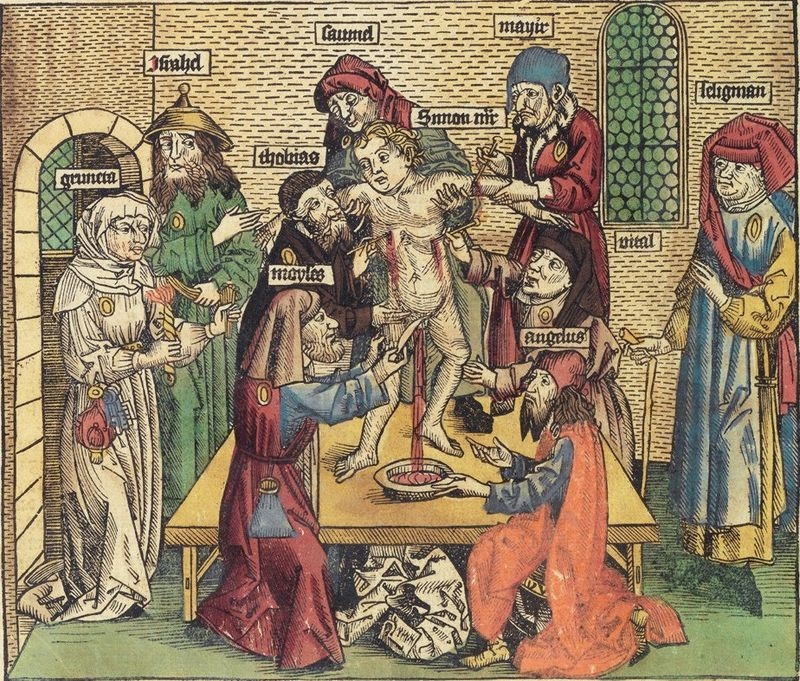
From the 1100s onwards, the vast majority of Jewish people in Christian Europe became the subject of anti-Jewish preaching and suffered persecution. Some Jews were falsely accused of the murder of Christian children in order to use their blood as part of their religious rituals (“blood libels”). Others suffered from appalling massacres. Many were forced to convert to Christianity or be expelled. The Crusaders destroyed flourishing Jewish communities in Germany and France as they made their way to the Holy Land.
After the final defeat of the Crusades in the Holy Land in the late 13th century there were massive expulsions of Jews: from England in 1290, France in 1394 and from Austria in 1421. Over this time, many Jews in Europe migrated to Hungary or Poland, where they would prosper in another Golden Age.

Consultant: Philip Parker
pics
Without in any way limiting Q-files Ltd’s exclusive rights under copyright, any use of this publication to “train” generative artificial intelligence (AI) technologies to generate text is expressly prohibited. Q-files Ltd reserves all rights to license use of this work for generative AI training and development of machine learning language models.