
Romans

CITE
We have made every effort to follow citation style rules, but there may be some minor differences. If in doubt, please refer to the appropriate citation style manual.
Roman history timeline. (2025). In Q-files Encyclopedia, History, Romans. Retrieved from
https://www.q-files.com/history/romans/roman-history-timeline
"Roman history timeline." History, Romans, Q-files Encyclopedia, 7 Jan. 2025.
https://www.q-files.com/history/romans/roman-history-timeline.
Accessed 22 Sep. 2026.
Roman history timeline 2025. History, Romans. Retrieved 22 September 2026, from
https://www.q-files.com/history/romans/roman-history-timeline
History, Romans, s.v. "Roman history timeline," accessed September 22, 2026.
https://www.q-files.com/history/romans/roman-history-timeline


Roman history timeline
Roman Republic
753 BC The founding of Rome by, according to legend, the brothers Romulus and Remus. The building of the city of Rome begins around this time.
509 BC The Etruscan, Tarquin (Lucius Tarquinius Superbus), the last king of Rome, is driven out and Rome becomes a republic. It is ruled by the Senate, a group of men from wealthy Roman families.
390 BC Gauls sack Rome after their victory at the Battle of Allia.
343–290 BC Samnite Wars: three wars fought by Rome in which it defeated the Samnites and other peoples of central Italy, the Etruscans, Umbrians and Picenti.

341–338 BC Latin War: Rome defeats a rebellion by their neighbouring Latin allies.
264–241 BC First Punic War is fought between Rome and the North African city of Carthage over control of the island of Sicily. Rome is victorious after a series of naval battles and gains its first overseas possession.

225 BC Roman army defeats the Gauls at the Battle of Telamon.
219 BC Carthaginian general Hannibal conquers the city of Saguntum, a Roman ally, in Iberia (modern-day Spain).

218–201 BC Second Punic War: Rome declares war on Carthage. Hannibal invades Italy, leading a massive army, including 37 elephants, across Iberia, the Pyrenees and the Alps. After a string of defeats, including the Battle of Cannae in 216 BC, Roman forces led by Gnaeus and Publius Cornelius Scipio finally emerge victorious. They also conquer Carthaginian Iberia.
215–168 BC Macedonian Wars: a series of conflicts fought by Rome against several major Greek kingdoms. They result in Roman control over lands of the eastern Mediterranean.
149–146 BC Third Punic War. Rome destroys Carthage and annexes all remaining Carthaginian territory.
146 BC Achaean War: following the Sack of Corinth, Greece becomes Roman territory
91–88 BC Social War is fought between Rome and other cities and tribes of Italy, previously allies of Rome. Following its victory, Rome grants Roman citizenship to all of inhabitants of Italy.
88–63 BC Mithridatic Wars: three conflicts fought by Rome against the Kingdom of Pontus and its allies, following the annexation the Roman province of Asia (Asia Minor, present-day Turkey) by King Mithridates VI of Pontus.
88–86 BC Civil War between factions competing for power in Rome: the Optimates led by Sulla, and the Populares led by Gaius Marius. Sulla marches on Rome and defeats Marius in battle. When the Populares once again seize power, Sulla crushes the Populares at the Battle of the Colline Gate. Sulla then rules as a dictator until 79 BC.
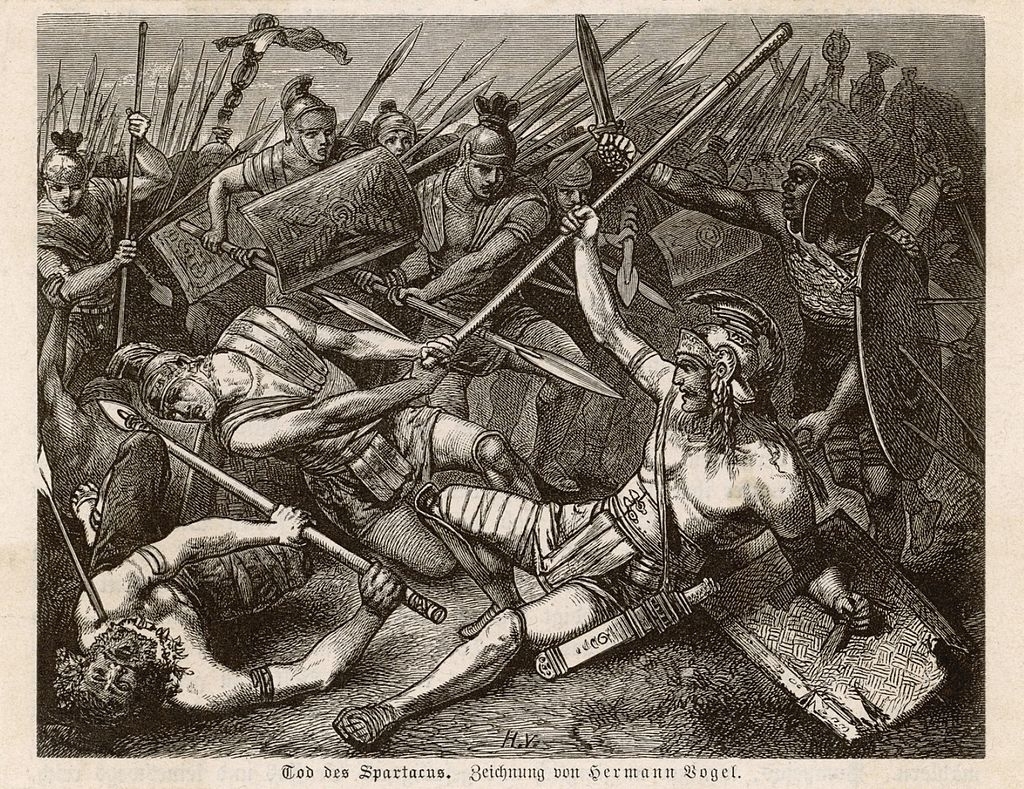
73–71 BC The gladiator Spartacus leads a revolt of 90,000 slaves against the Republic. After several victories, the revolt is finally put down by the Roman army led by Crassus. Spartacus is killed in battle, and many of his followers crucified.
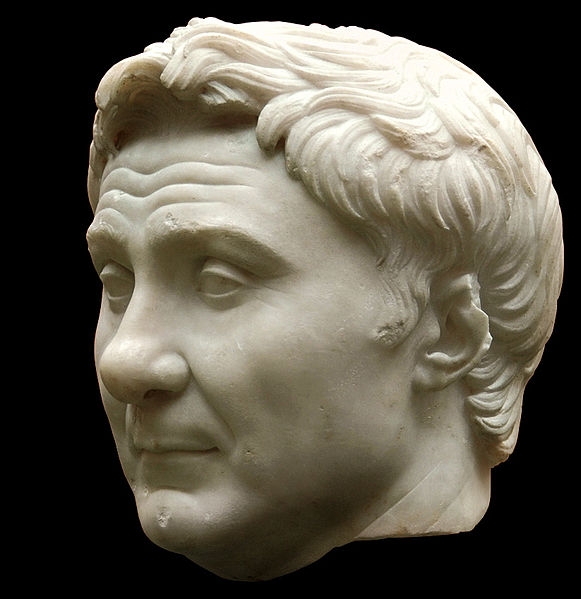
67–62 BC Pompey crushes pirates in eastern Mediterranean Sea, then defeats Mithridates. He establishes two new provinces, Syria and Bithynia et Pontus, and greatly enlarges a third, Cilicia.

The rise of Caesar
60–53 BC First Triumvirate: a secret alliance between Crassus, Pompey and Julius Caesar to rule the Roman Republic between them. It ends with the death of Crassus in 53 BC.
59 BC Julius Caesar serves as consul.
58–51 BC Julius Caesar conquers Gaul (modern France) and becomes popular in Rome.
49 BC Caesar crosses the River Rubicon and marches on Rome, marking the beginning of civil war between Caesar and Pompey.
48 BC Caesar defeats Pompey at Battle of Pharsalus. Pompey flees to Egypt, where he is assassinated.
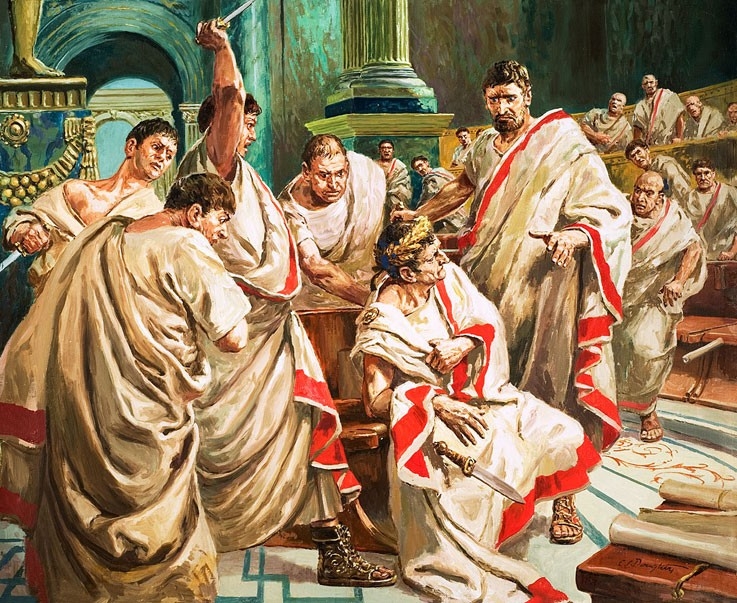
44 BC Julius Caesar is made life-long dictator but is assassinated shortly afterwards on the steps of the Senate by a group of senators wishing to limit Caesar's power and restore the Republic.
43–33 BC Second Triumvirate: a political alliance is formed by Mark Antony, Octavian and Lepidus.
32–30 BC Final War of the Roman Republic, fought between Octavian and Antony, assisted by his lover Cleopatra, Queen of Egypt.
31 BC Battle of Actium: after a decisive victory for Octavian, Antony and Cleopatra withdraw to Alexandria. Octavian besieges the city and both Antony and Cleopatra commit suicide. Egypt becomes a Roman province.
Roman Empire
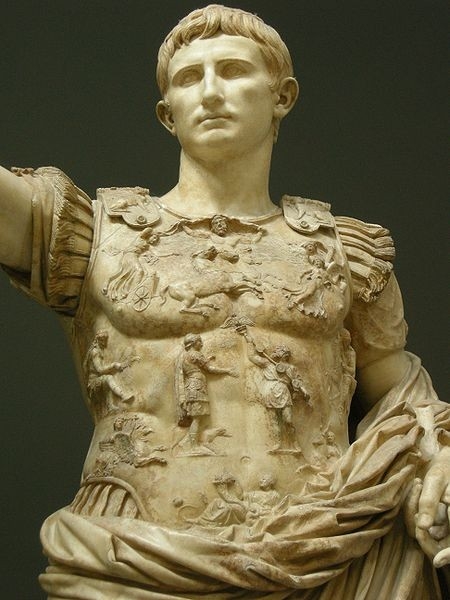
27 BC Octavian becomes the first emperor of Rome, marking the beginning of the Roman Empire. He takes the name Augustus. He dies in AD 14. During Augustus's period of rule, Tiberius conquers Pannonia, Dalmatia, Raetia, and parts of Germania (temporarily) for the Roman Empire.
27 BC–AD 180 Pax Romana (Latin for "Roman Peace"): a long period of peace and stability in the early Roman Empire. It begins with the rule of Augustus and ends in 180 with the death of Marcus Aurelius, the last of the "Five Good Emperors".
AD 14–37 Rule of Emperor Tiberius.
37–41 Rule of Emperor Caligula.
41–54 Rule of Emperor Claudius.
43 Conquest of Britain begins.
54–68 Rule of Emperor Nero.
60 British leader Boudicca, Queen of the Iceni tribe, rebels against Roman rule, but is defeated.
64 Great Fire of Rome: most of the city is destroyed. Emperor Nero is said to have blamed Christians and had them burned alive. Many Romans at the time believe that the fire was started by Nero himself to clear the way for his planned palace.
66–70 Great Revolt: A rebellion by Jews against the Roman rulers of Judea is put down by Roman troops.
69 Year of the Four Emperors: Following the suicide of Nero (in 68), the generals Galba, Otho and Vitellius take the throne within months of each other. Vespasian is victorious. He founds the Flavian dynasty.

70 Siege of Jerusalem, during which the Romans destroy Herod's Temple, sacred to the Jews.
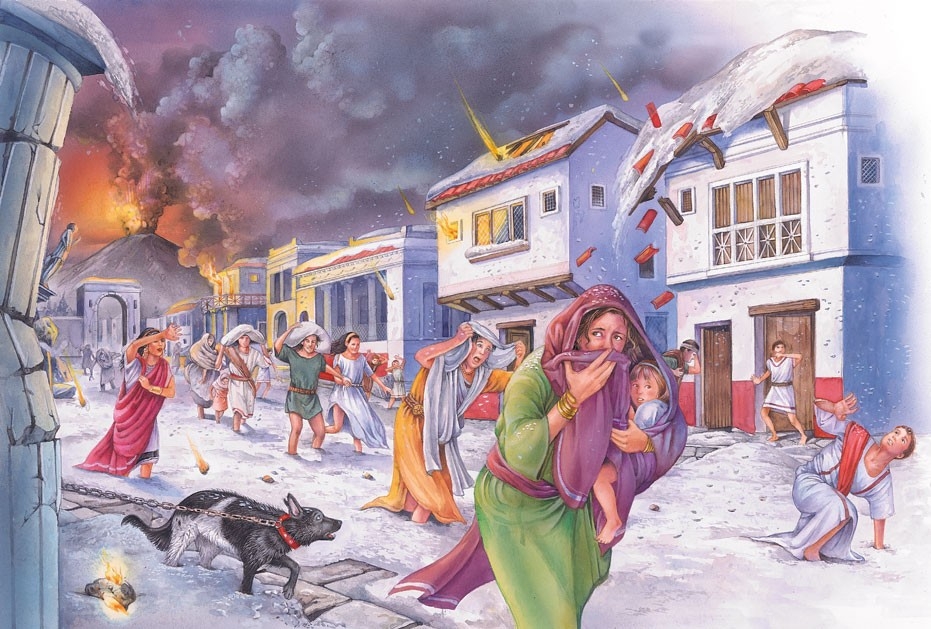
79 Mount Vesuvius erupts and buries the Roman towns of Pompeii and Herculaneum under hot ash.

80 Completion of the Colosseum in Rome.
96–192 Nerva-Antonine dynasty of emperors. It includes the “Five Good Emperors”, Nerva, Trajan, Hadrian, Antoninus Pius and Marcus Aurelius, and ends with the rule of Commodus.
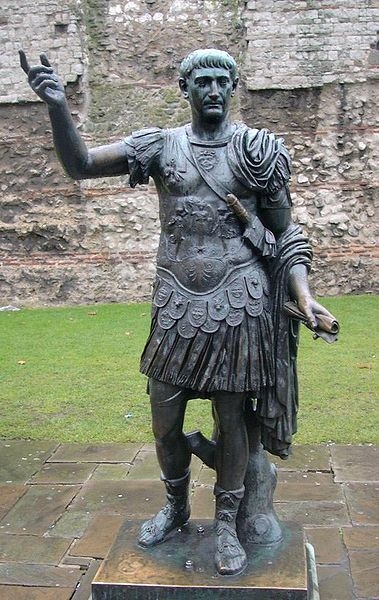
101–106 Dacian Wars: two military campaigns fought between the Roman Empire and Dacia during Emperor Trajan's rule. Triggered by Dacian attacks on the province of Moesia, the conflicts end in a decisive victory for Trajan.
112 Trajan’s Forum constructed in Rome.
113–117 Parthian War, fought between Emperor Trajan and the Parthian Empire in Mesopotamia. The war is initially successful for the Romans, with the annexation of Armenia and Northern Mesopotamia for the empire, but after large-scale rebellions in the Eastern Mediterranean and Trajan's death in 117, the Romans withdraw. The empire reaches its largest extent.
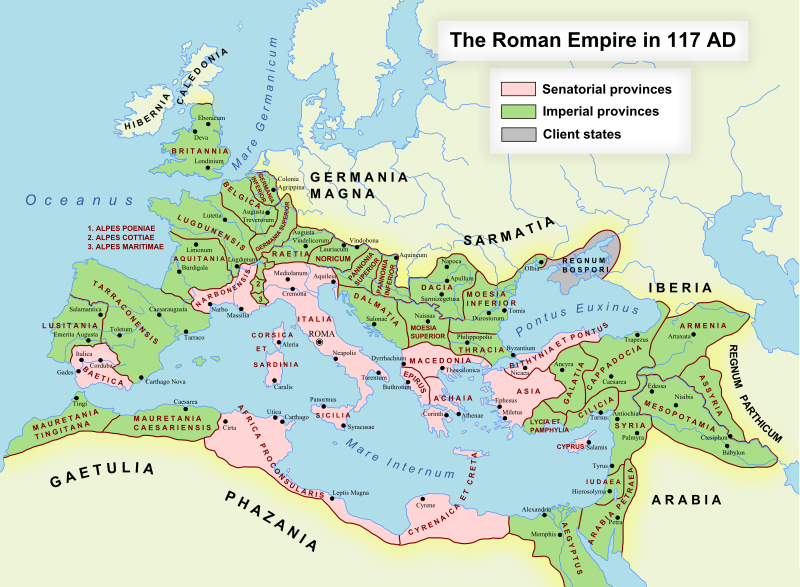
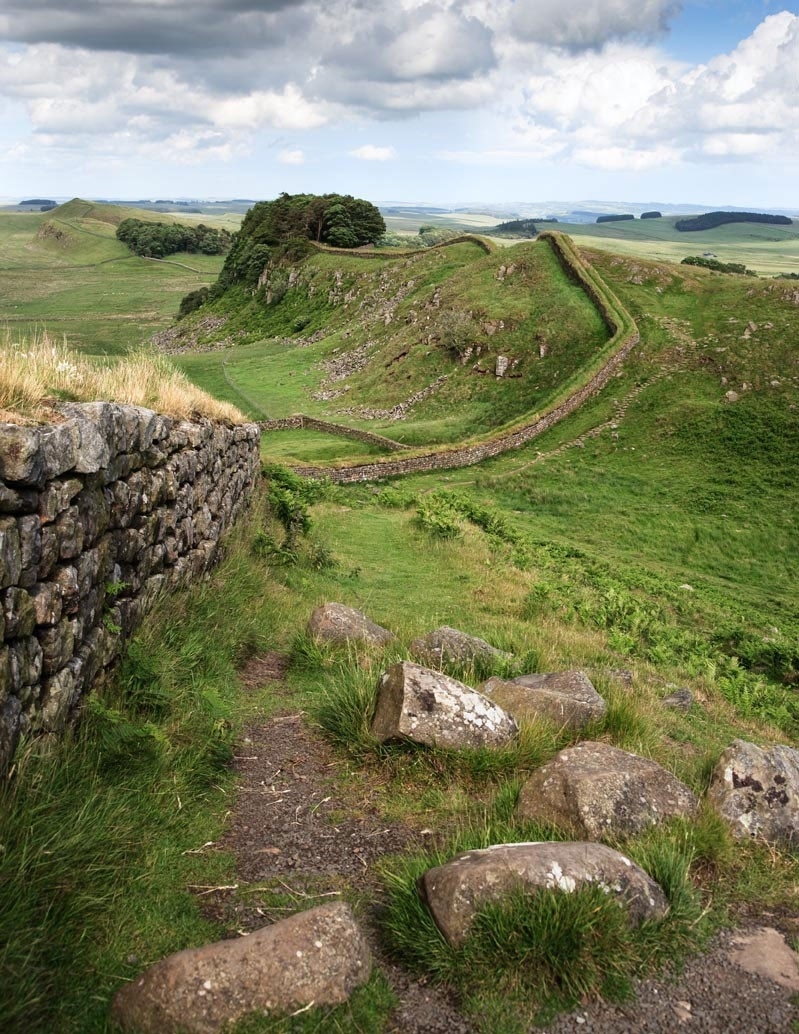
122 Building of Hadrian’s Wall in Britain, marking the northern boundary of the Roman Empire.
125 Building of Pantheon in Rome is completed.
132–136 Bar Kokhba Revolt in Judea: Emperor Hadrian inflicts severe punishment on the Jews, including their banishment from Jerusalem.
193 Year of the Five Emperors: Pertinax, Didius Julianus, Pescennius Niger, Clodius Albinus and Septimius Severus. The year, beginning with the assassination of Commodus (the last of the Nerva-Antonine emperors), starts a Civil War, when a number of rulers vie to become emperor. Septimius Severus defeats his rivals and rules until 211.

193–235 Rule of the Severan Dynasty emperors: Septimius Severus, Caracalla and Severus Alexander.
212 Emperor Caracalla grants citizenship to all free men in the Roman provinces.
Crisis and Christianity

235–284 Crisis of the Third Century: the Roman Empire nearly collapses due to assassinations, civil wars, plague, peasant rebellions, invasions and economic crisis. The crisis begins with the assassination of Emperor Severus Alexander by his own troops in 235. There are many claimants to the title of emperor, leading to the formation of two breakaway empires: the Gallic Empire in the west and the Palmyrene Empire in the east.
249 The Plague of Cyprian, a deadly viral disease (possibly similar to Ebola), spreads across the empire and lasts for at least the next two decades. With thousands perishing, the plague is thought to have caused widespread manpower shortages needed for food production and the Roman army.
273–274 Emperor Aurelian conquers the Gallic and Palmyrene empires, reuniting the Roman Empire.
293 Emperor Diocletian creates the Tetrarchy: a government of four rulers—himself, Maximian, Galerius and Constantius—in which each co-emperor rules over a quarter-division of the empire. Together, they defeat Rome's enemies. This marks the end of the Crisis of the Third Century and the recovery of Roman rule over its empire.

306 Constantine the Great is acclaimed as emperor by the army at Eboracum (modern-day York). He rules in competition with co-emperors Flavius Severus, Maximian, Maxentius and Licinius.
313 Edict of Milan declares tolerance for Christian worship throughout the Roman Empire.
324 Constantine emerges victorious after civil wars against rival emperors Maxentius and Licinius to become sole ruler of Roman Empire. He founds the city of Constantinople on the site of the ancient Greek city, Byzantium. It is dedicated in 330.
325 Constantine summons the First Council of Nicaea, which produces the statement of Christian belief known as the Nicene Creed.
337 Constantine converts to Christianity just before he dies.
Decline and fall
370–410 Roman Empire is invaded by Huns from Asia and Barbarians from the north and east. Roman forces withdraw from Gaul and Britain.
376 Visigoths defeat the Romans at the Battle of Adrianipole.
379–395 Rule of Theodosius the Great, last ruler of the united Roman Empire.
380 Theodosius declares Christianity the official religion of the empire.
395 Following the death of Theodosius, the Eastern Empire is ruled by his son Arcadius and the Western Empire by his son Honorius.
402 The capital of Western Empire moves from Rome to Ravenna.
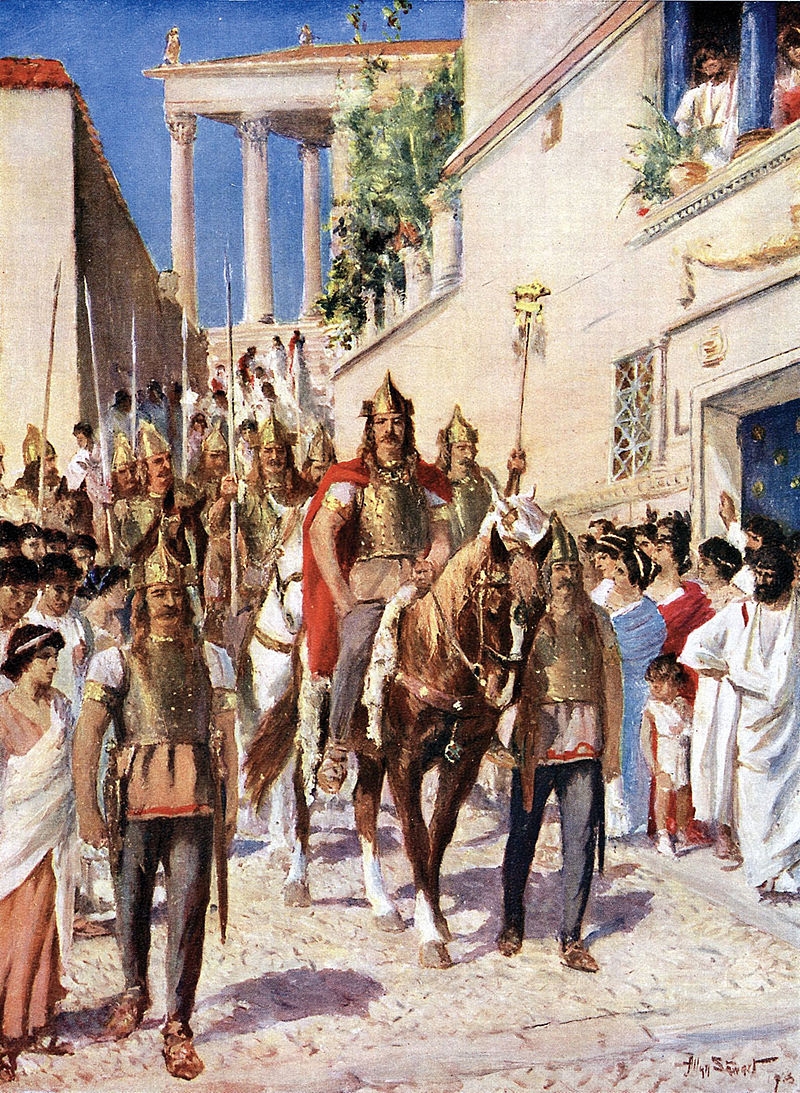
410 Barbarian Visigoths, led by Alaric, sack Rome. The event marks the beginning of the weakening of Rome that will lead to its downfall.
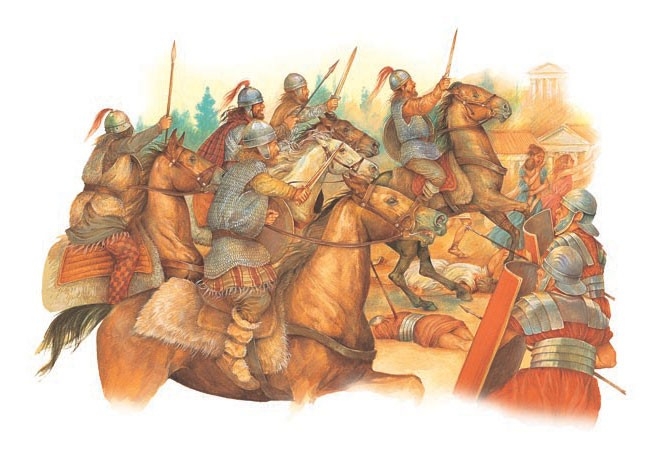
441 Huns, Ostrogoths and Alans, Barbarian peoples led by Attila the Hun, successfully invade the Eastern Roman Empire. Attila attempts to conquer Gaul, crossing the Rhine in 451 and marching as far as Aurelianum (modern-day Orléans) before Roman forces defeat him.
455 Barbarian Vandals sack Rome.
476 Western Roman Emperor Romulus Augustus, a boy of 16, is forced to abdicate by Germanic leader Odoacer, who becomes King of Italy. This event marks the end of a thousand years of Roman power in Western Europe.
Consultant: Philip Parker
pics



Without in any way limiting Q-files Ltd’s exclusive rights under copyright, any use of this publication to “train” generative artificial intelligence (AI) technologies to generate text is expressly prohibited. Q-files Ltd reserves all rights to license use of this work for generative AI training and development of machine learning language models.