
Romans

CITE
We have made every effort to follow citation style rules, but there may be some minor differences. If in doubt, please refer to the appropriate citation style manual.
Roman ships. (2022). In Q-files Encyclopedia, History, Romans. Retrieved from
https://www.q-files.com/history/romans/roman-ships
"Roman ships." History, Romans, Q-files Encyclopedia, 10 Feb. 2022.
https://www.q-files.com/history/romans/roman-ships.
Accessed 23 Sep. 2026.
Roman ships 2022. History, Romans. Retrieved 23 September 2026, from
https://www.q-files.com/history/romans/roman-ships
History, Romans, s.v. "Roman ships," accessed September 23, 2026.
https://www.q-files.com/history/romans/roman-ships


Roman ships
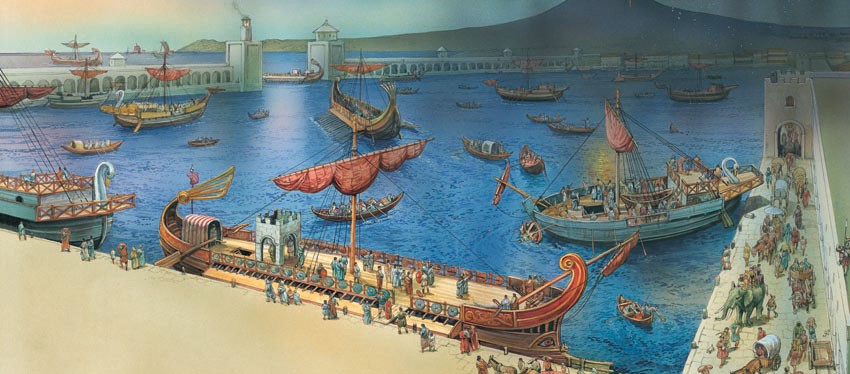
Ships were vital to Rome's power. It was often cheaper and quicker to transport goods or troops by boat than any other form of transport. Shipping in the Mediterranean was always busy—slow merchant vessels and great quinquereme warships jostled for position outside the port of Ostia, near Rome. The largest ships were the oar-driven warships (galleys) which were named after the number of banks of oars on each side: triremes had three banks, while quadriremes had four.

Quinquereme
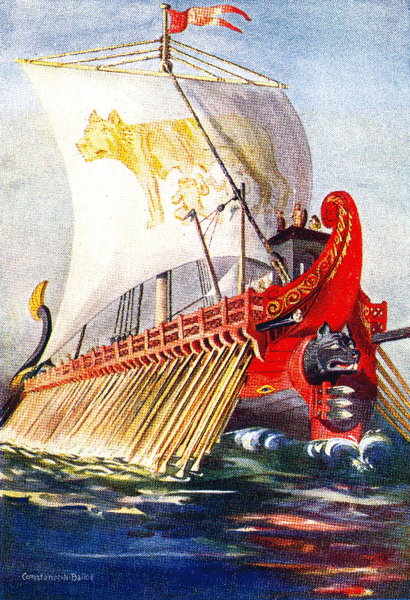
A quinquereme was the largest type of Roman warship, with up to 300 oarsmen in all. Oarsmen were free men, who trained hard before setting out. Slaves were only put to the oars in times of emergency. A warship and troop carrier, the quinquereme was equipped with a battering ram, a ballista crossbow, and a corvus, a platform that could be stabbed into the deck of an enemy ship for boarding. It could transport 120 soldiers. It did not carry much in the way of stores, as voyages were normally short. Eyes were painted on ships to “guide” them.

Merchant ships
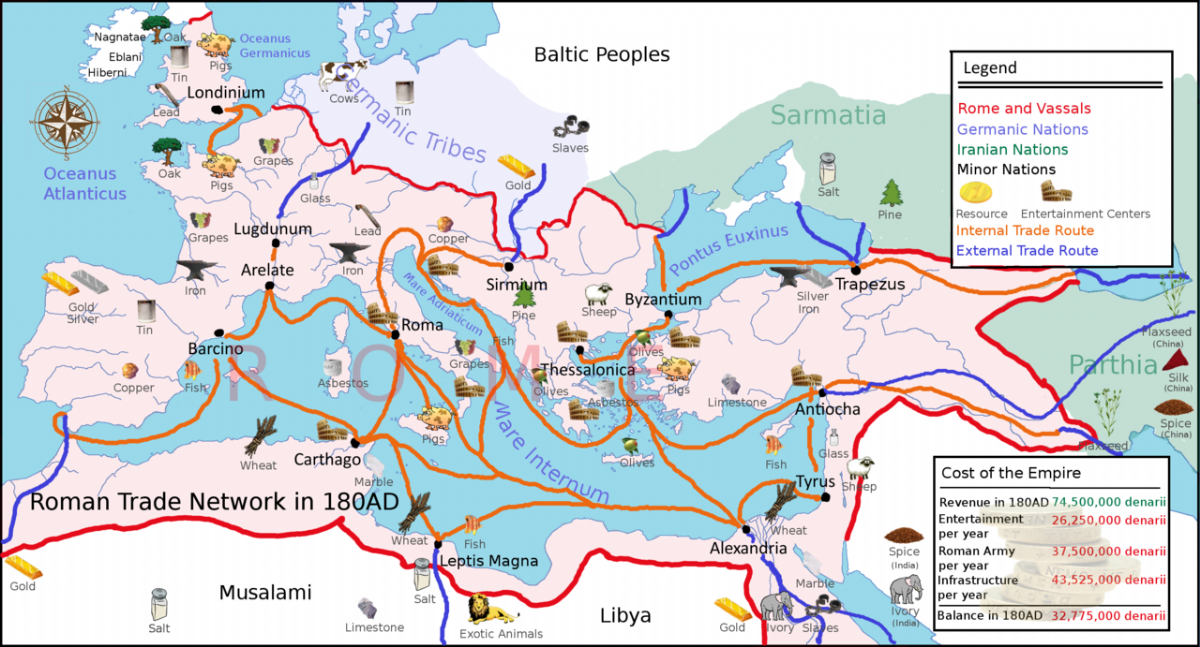
Rome imported foodstuffs and natural resources—such as copper, tin and iron—as well as slaves, from all over its empire by sea using its fleet of merchant ships. These ships were bulky and slow compared to a sleek and powerful warship. They often had to survive storms in the Mediterranean Sea. They were steered using two large oars, or sweeps, at the back.

Consultant: Philip Parker
pics
Without in any way limiting Q-files Ltd’s exclusive rights under copyright, any use of this publication to “train” generative artificial intelligence (AI) technologies to generate text is expressly prohibited. Q-files Ltd reserves all rights to license use of this work for generative AI training and development of machine learning language models.