
Romans

CITE
We have made every effort to follow citation style rules, but there may be some minor differences. If in doubt, please refer to the appropriate citation style manual.
Punic Wars. (2022). In Q-files Encyclopedia, History, Romans. Retrieved from
https://www.q-files.com/history/romans/punic-wars
"Punic Wars." History, Romans, Q-files Encyclopedia, 10 Feb. 2022.
https://www.q-files.com/history/romans/punic-wars.
Accessed 6 Aug. 2026.
Punic Wars 2022. History, Romans. Retrieved 6 August 2026, from
https://www.q-files.com/history/romans/punic-wars
History, Romans, s.v. "Punic Wars," accessed August 6, 2026.
https://www.q-files.com/history/romans/punic-wars


Punic Wars
By 264 BC, the rapidly growing Roman Republic controlled most of Italy. The Romans started to look further afield, and fought Carthage, a rival city on the coast of North Africa, to win control of the lands around the Mediterranean Sea. Battles between the Romans and Carthaginians were bloody and bitter—both had well-trained armies. The wars between Rome and Carthage were called the Punic Wars, after Punicus (Poenicus), the Roman word for Carthaginians, who were descended from the Phoenicians of the eastern Mediterranean.
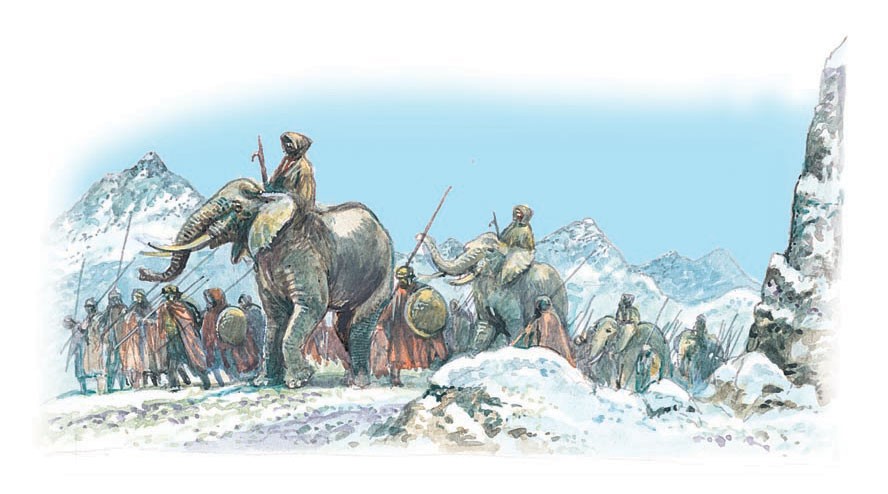

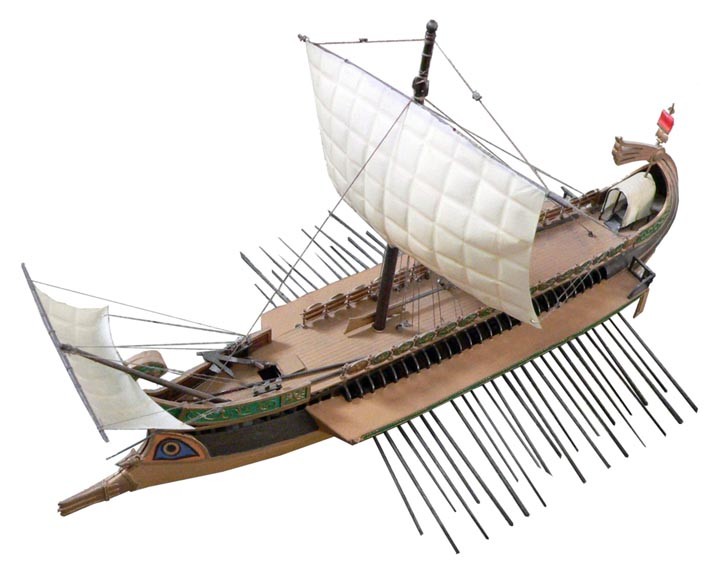
First Punic War
The first war between Rome and Carthage broke out in 264 BC over the island of Sicily, which lay directly between Italy and Carthage. Much of the fighting took place at sea, and at first a victory for Carthage looked certain. Then the Romans built a massive fleet, which finally defeated Carthage in 241 BC. But that was not the end of the story.
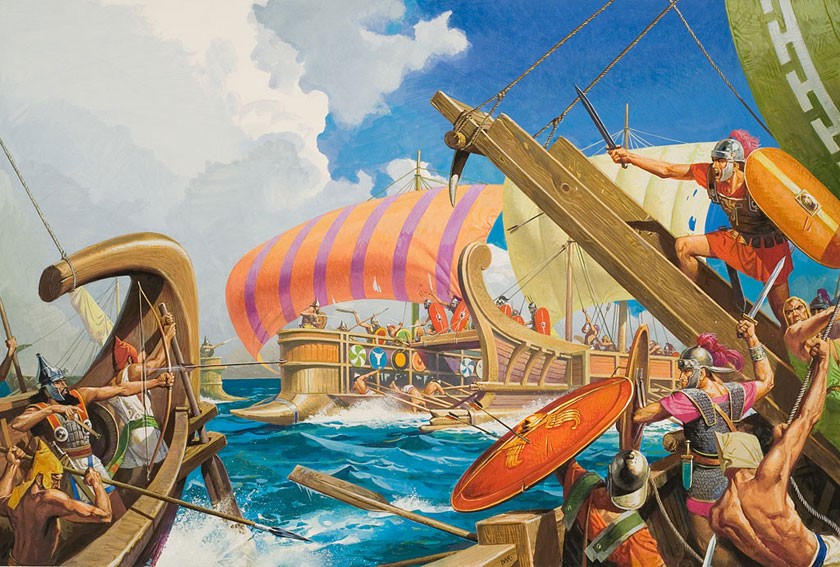
Second Punic War
In 219 BC war between Rome and Carthage broke out again when Carthage attacked a Spanish city, Saguntum, that was an ally of Rome. Carthage then set about invading Italy.
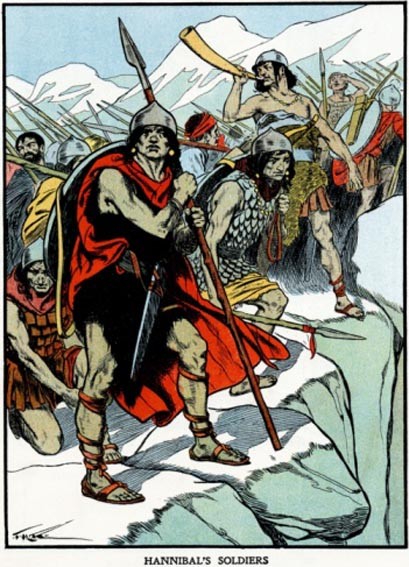
Carthage had a brilliant general, called Hannibal, who marched his army, including 37 elephants, across the Alps and into northern Italy. The bloody battles that ensued are known as the Second Punic War. Despite his victories, Hannibal was defeated in 202 BC, and Carthage fell to the Romans in 146 BC.
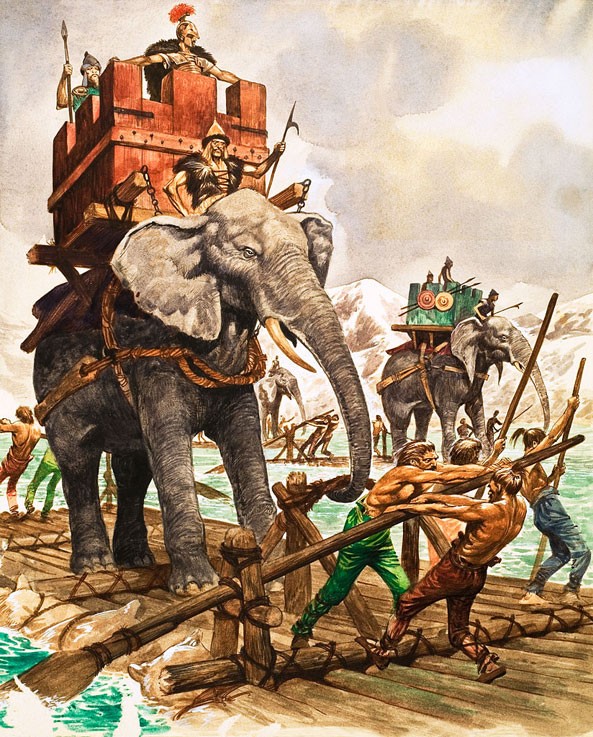
War elephants
One of the most fearful weapons Carthage had in its armoury was its fighting elephants: they were immensely large and strong. The elephants’ trunks and tusks were highly dangerous, and there was the ever-present risk of being trampled underfoot. Towers and castles to carry soldiers were fastened to the elephants’ backs by ropes or chains. This gave the riders a great advantage, being high up above the action and protected from arrows and other missiles. The towers made the elephants look even bigger.
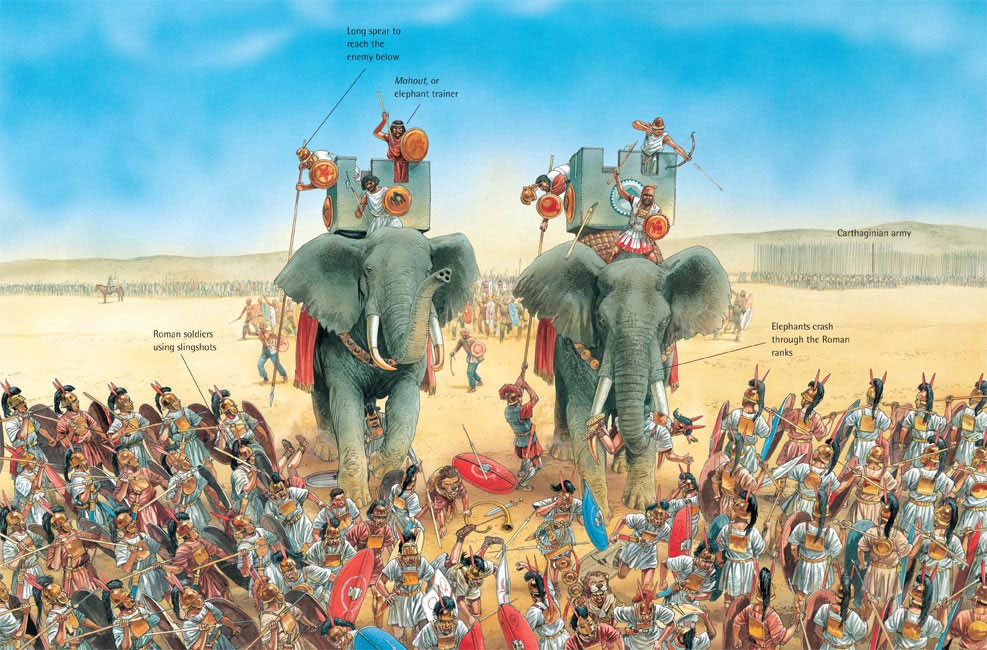
Facing the elephants with a solid wall of shields as if they were an opposing army of soldiers was the wrong tactic for the Romans. Like modern tanks, the elephants could easily force their way through a line of soldiers. Then all the Carthaginian forces had to do was flood into the gaps the elephants had created and wreak havoc among the Roman ranks.
Consultant: Philip Parker
pics
Without in any way limiting Q-files Ltd’s exclusive rights under copyright, any use of this publication to “train” generative artificial intelligence (AI) technologies to generate text is expressly prohibited. Q-files Ltd reserves all rights to license use of this work for generative AI training and development of machine learning language models.