
Romans

CITE
We have made every effort to follow citation style rules, but there may be some minor differences. If in doubt, please refer to the appropriate citation style manual.
Roman fort. (2022). In Q-files Encyclopedia, History, Romans. Retrieved from
https://www.q-files.com/history/romans/roman-fort
"Roman fort." History, Romans, Q-files Encyclopedia, 10 Feb. 2022.
https://www.q-files.com/history/romans/roman-fort.
Accessed 6 Aug. 2026.
Roman fort 2022. History, Romans. Retrieved 6 August 2026, from
https://www.q-files.com/history/romans/roman-fort
History, Romans, s.v. "Roman fort," accessed August 6, 2026.
https://www.q-files.com/history/romans/roman-fort


Roman fort
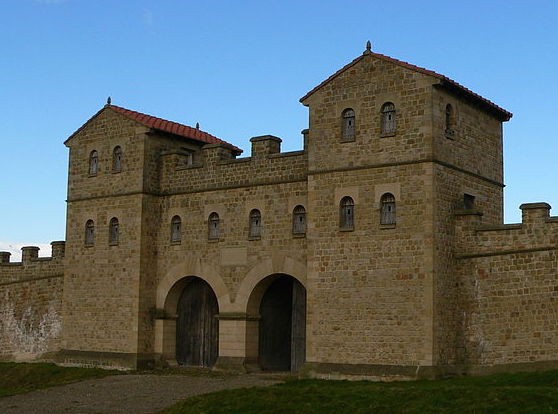
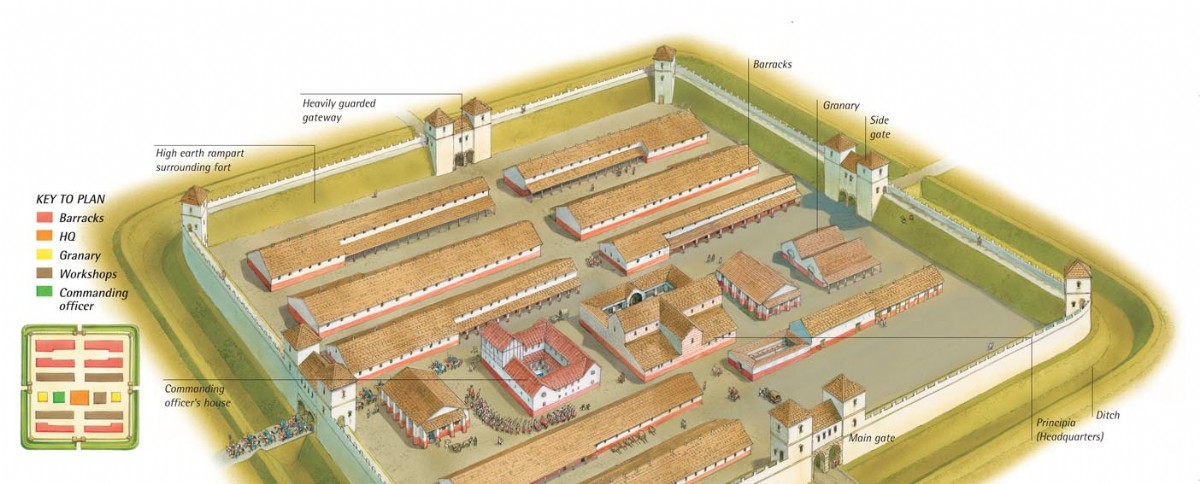
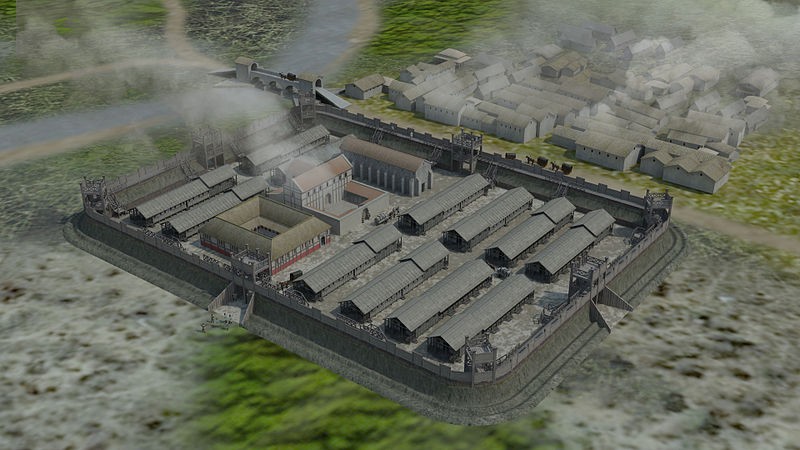
At the farthest reaches of the empire, where the Roman army had conquered new territory, it needed to keep it under control. The army built frontier forts housing up to 800 men. From these the army was able to supervise a large area. The fort, protected by a surrounding ditch and wall, included a hospital, bathhouse, granary (for storing grain), barracks (where the soldiers slept) and stables. An area outside the fort was levelled to make a parade ground.

Construction
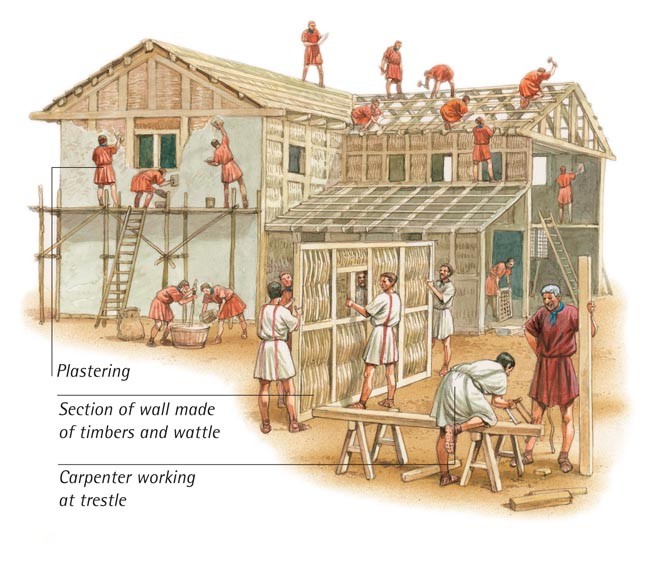
First, ditches were dug and turf stripped from the site. The rubble and earth were used to build the ramparts (defensive walls). The walls of the buildings were built in sections. Each had a wooden “skeleton” filled in with wattle (interwoven sticks) and daub (rough plaster). The walls were fixed to posts and given a coating of smooth plaster. They were painted to weatherproof them and to make them look like stone blocks. Later, many wooden forts were replaced with stone.
Main buildings
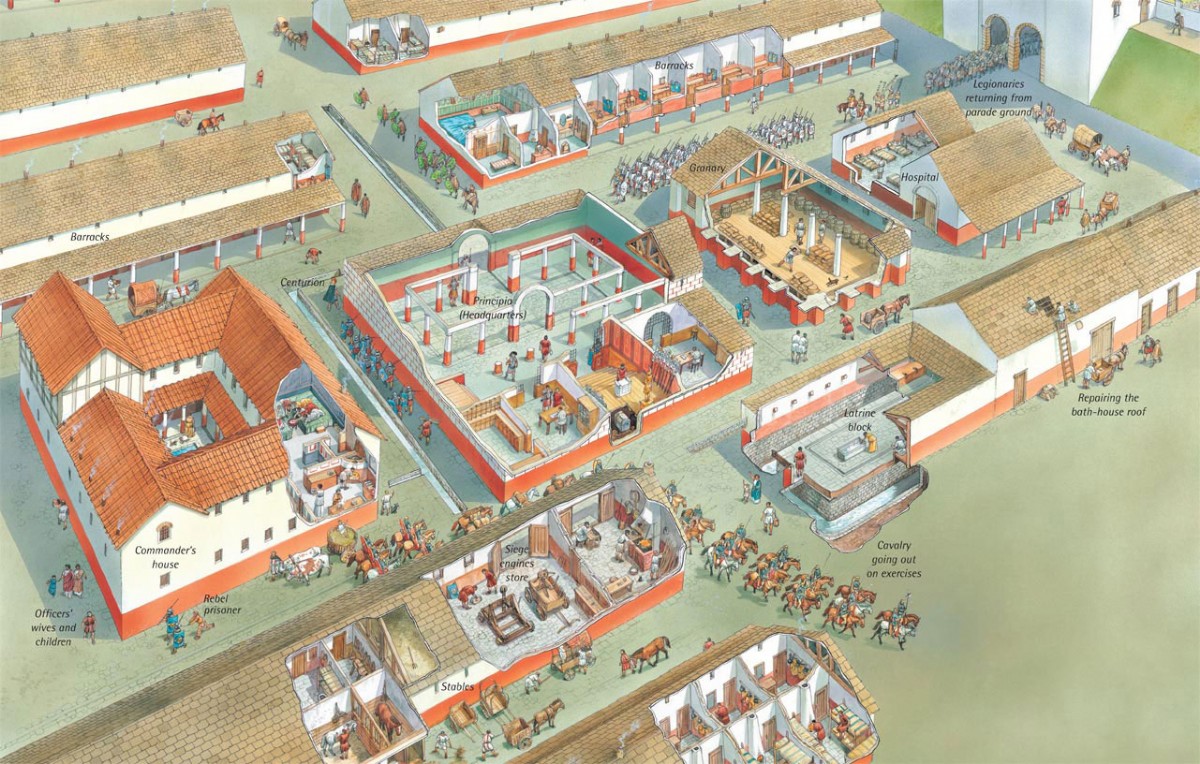
The praetorium was the house of the commanding officer. It was a grand building and could take up as much as a tenth of the area of the fort. It was luxuriously furnished and had underfloor hypocaust heating and its own bathhouse. The commander lived there with his family. The principia, or headquarters of the fort, housed the chapel, an underground strongroom and offices for the standard bearers, who were also the army’s treasurers.
Daily life
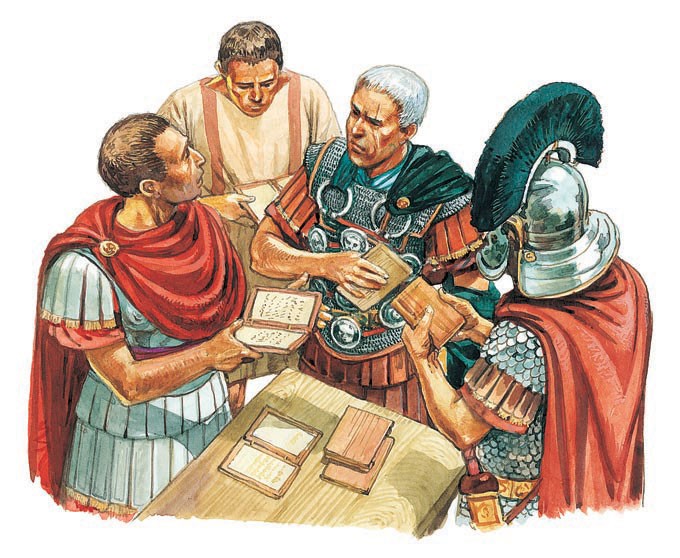
Each day would start with a morning report. All commanding officers (centurions) would give the camp commander a written account listing how many men were available for work and what tasks had been given out. Then the duties for the day would be allocated between the army units.
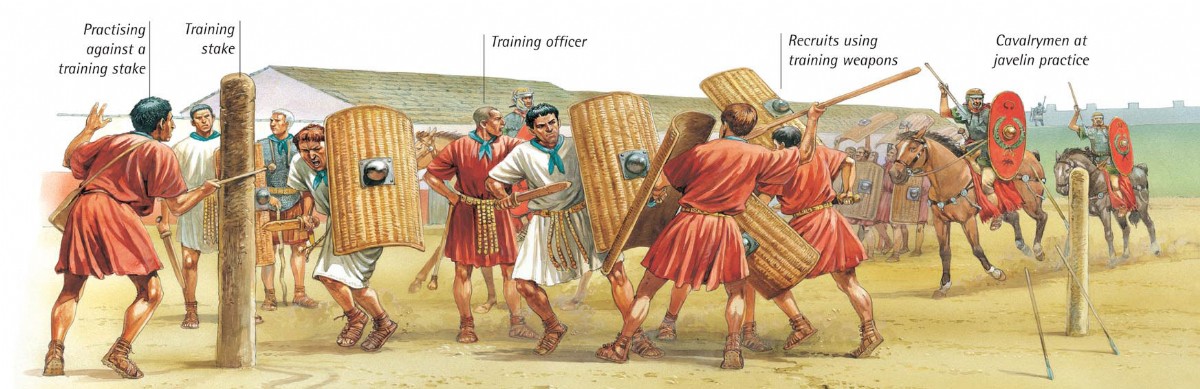
Basic footsoldiers, called legionaries, would train every day. New recruits would spend several hours a day in practice. Until they learned how to control their weapons, trainees would use wooden swords and practise moves against a stake. They could easily injure each other if they used real weapons too soon.
Discipline
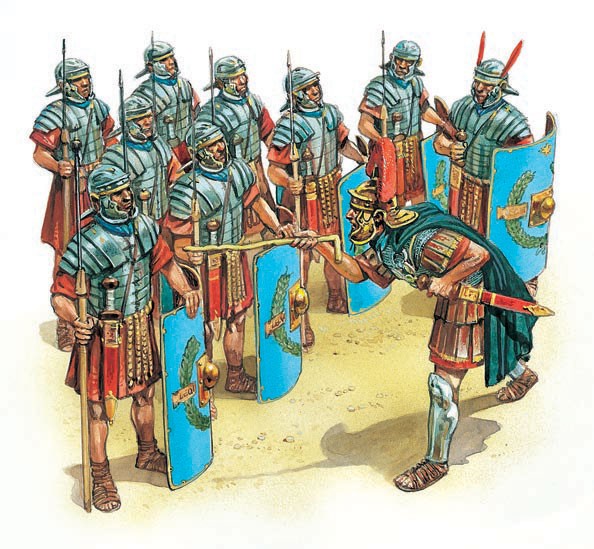
Soldiers were expected to obey orders instantly. A centurion would beat any soldier who stepped out of line. If a century (unit of 100 men) deserted, then one out of every ten men would be executed as punishment. This is where we get the word "decimate" (meaning to kill a large portion of), from the Latin for "removal of a tenth".
Medical care
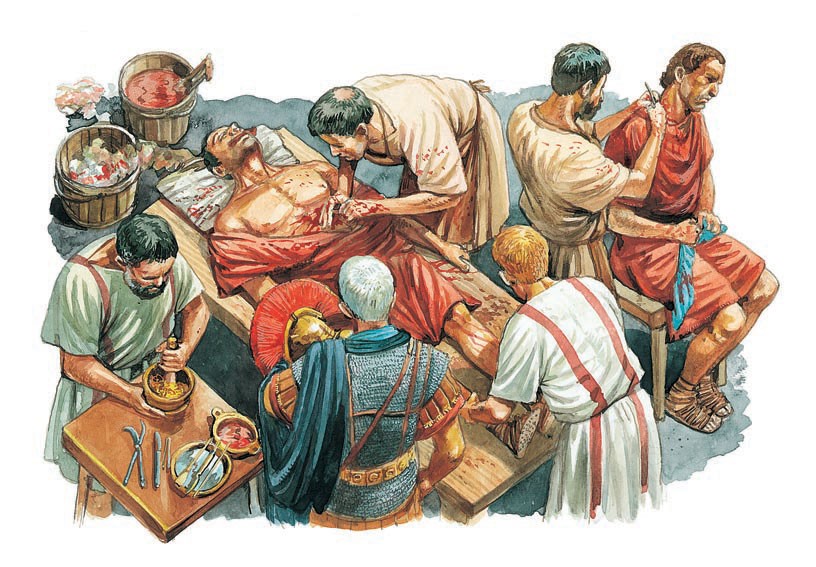
Medical aid in the camp hospital was basic. Wounds were cauterized (burnt to seal them) or sewn up, and broken bones put in a splint. If necessary, the surgeon would amputate badly injured limbs. The medical staff would use wine to dull the pain and herbal remedies to aid healing.
Consultant: Philip Parker
pics
Without in any way limiting Q-files Ltd’s exclusive rights under copyright, any use of this publication to “train” generative artificial intelligence (AI) technologies to generate text is expressly prohibited. Q-files Ltd reserves all rights to license use of this work for generative AI training and development of machine learning language models.