
Romans

CITE
We have made every effort to follow citation style rules, but there may be some minor differences. If in doubt, please refer to the appropriate citation style manual.
The Etruscans. (2022). In Q-files Encyclopedia, History, Romans. Retrieved from
https://www.q-files.com/history/romans/the-etruscans
"The Etruscans." History, Romans, Q-files Encyclopedia, 10 Feb. 2022.
https://www.q-files.com/history/romans/the-etruscans.
Accessed 22 Sep. 2026.
The Etruscans 2022. History, Romans. Retrieved 22 September 2026, from
https://www.q-files.com/history/romans/the-etruscans
History, Romans, s.v. "The Etruscans," accessed September 22, 2026.
https://www.q-files.com/history/romans/the-etruscans


The Etruscans
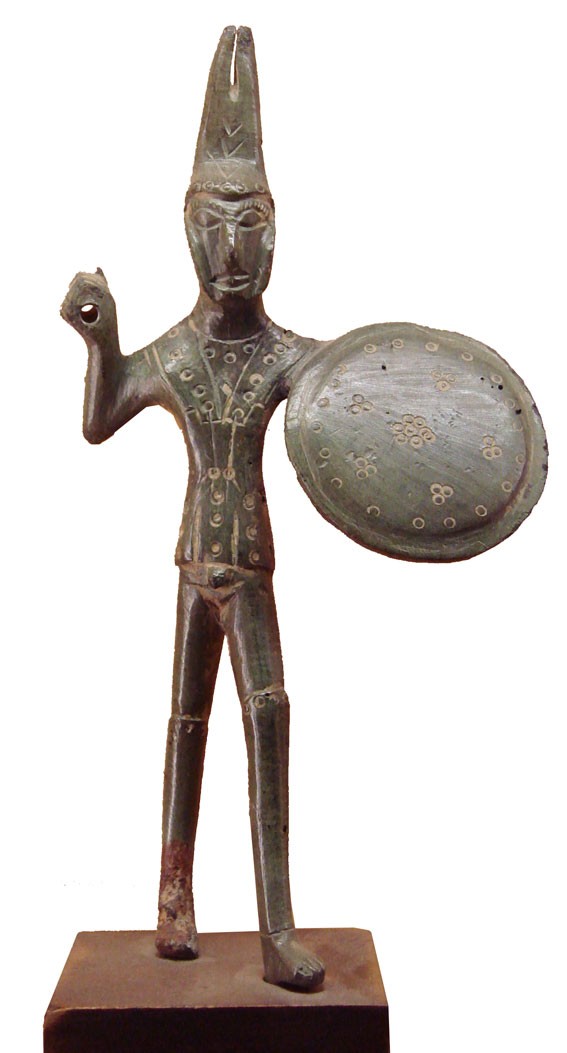
The Etruscans were an ancient people whose culture flourished in central Italy from around 800 BC to around 250 BC. The Etruscans have given their name to the modern Italian region of Tuscany and to the wider region of Etruria, although they called themselves the Rasenna. Our knowledge of the Etruscans is very incomplete, as their language is unrelated to any other European language and is still largely unread. What little we know about them is from their art and the objects they left behind in graves.
Origins
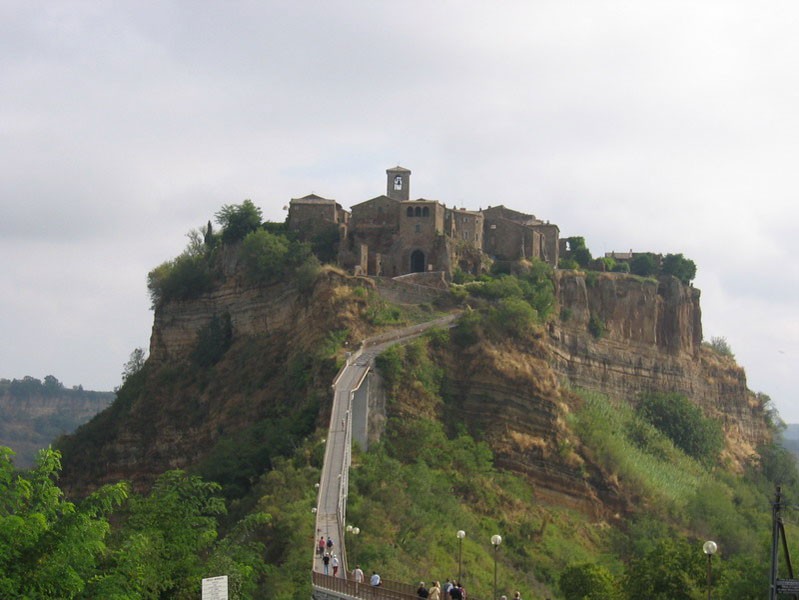
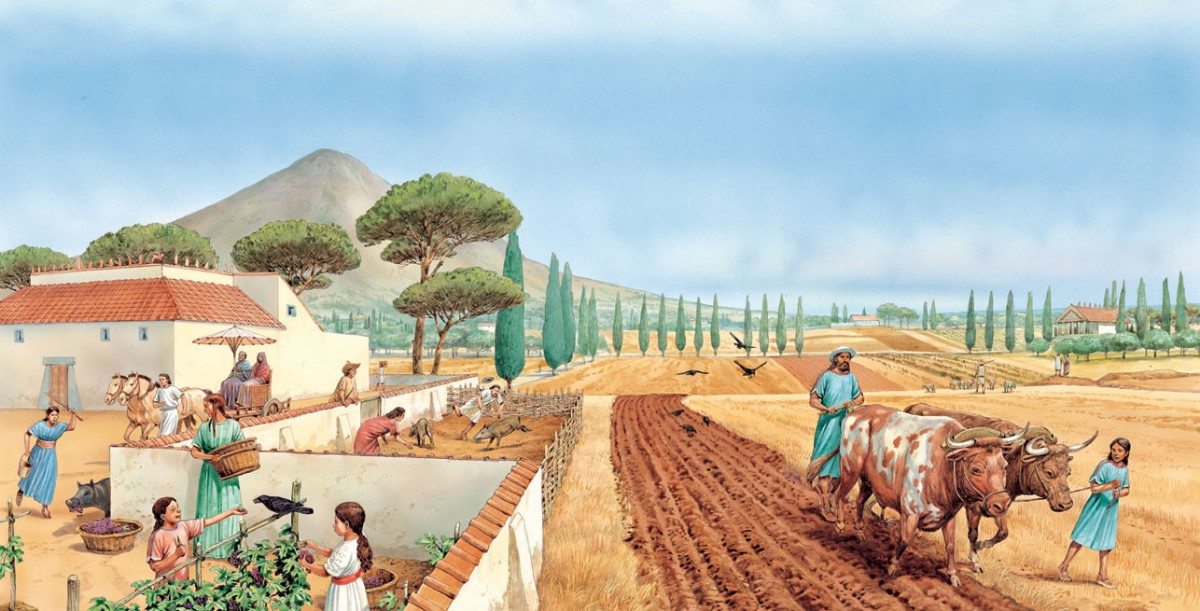
Historians used to think the Etruscans came from Anatolia in western Turkey around 5000 years ago, but the evidence suggests they emerged from early farming peoples of Italy. From around 800 BC, the Etruscans began to build hilltop settlements in central Italy—some of which still survive today. The settlements were surrounded by high walls. The Etruscans mined and traded metals, especially copper and iron, as well as bronze vessels and pottery, across the western Mediterranean Sea, and became increasingly prosperous. They were a warlike people and raided neighbouring areas during the summer to gain land, goods, and slaves. At first they were ruled by kings, but appear to have formed republics during the 6th century BC.
Alliances and enemies
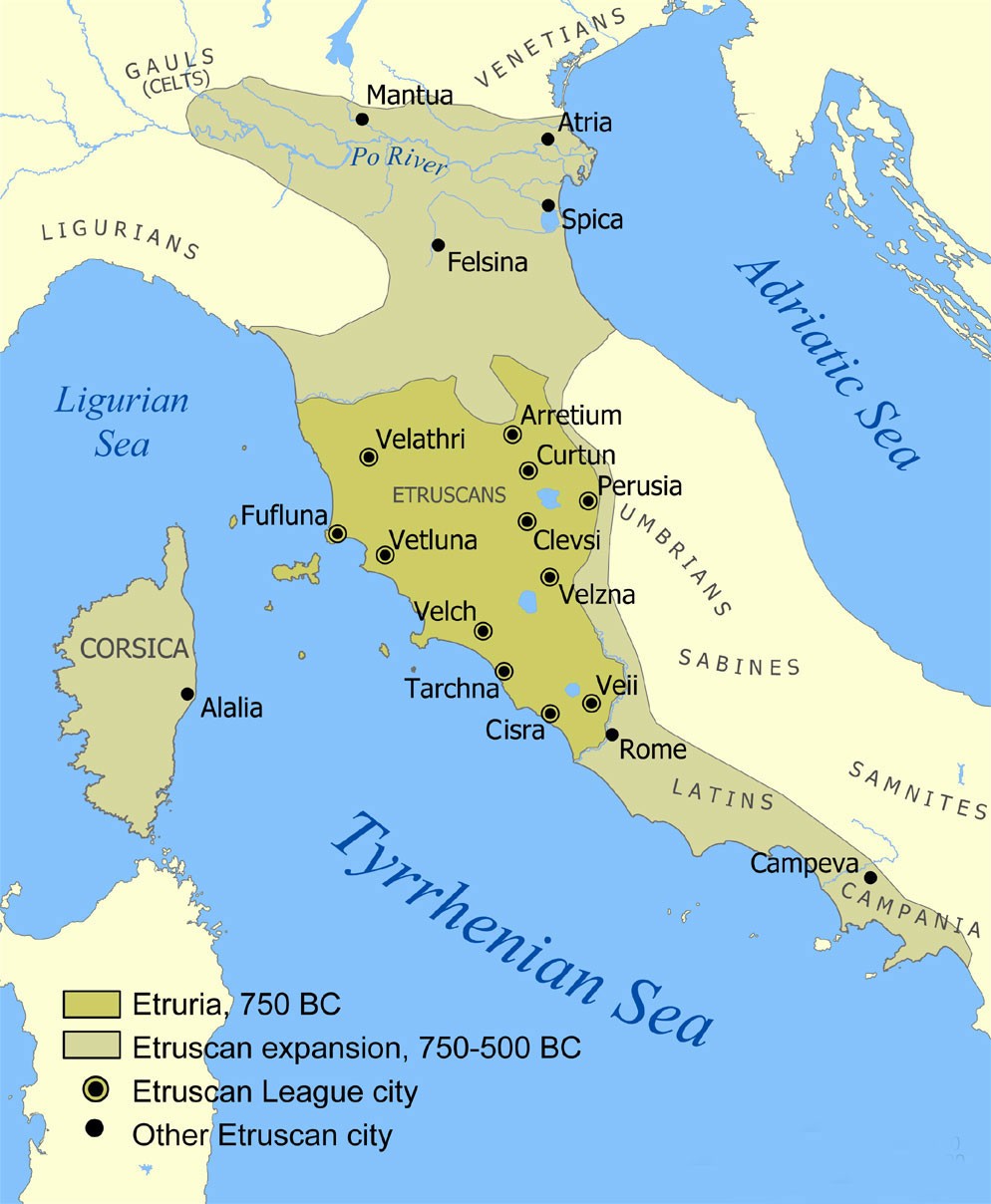
Around 600 BC, a group of 12 settlements came together to form the Etruscan League. Their leaders met once a year to chose one of their number to represent them. The Etruscans formed an alliance with the Carthaginians of North Africa, but in around 540 BC both powers were challenged by a hostile Greek fleet off the coast of Corsica near Alalia. Neither side was victorious, but the Etruscans gradually lost control of much of their territory to a range of hostile forces, including the Greek city of Syracuse in Sicily, Celts invading from the north, and the local Samnite people.
The Romans
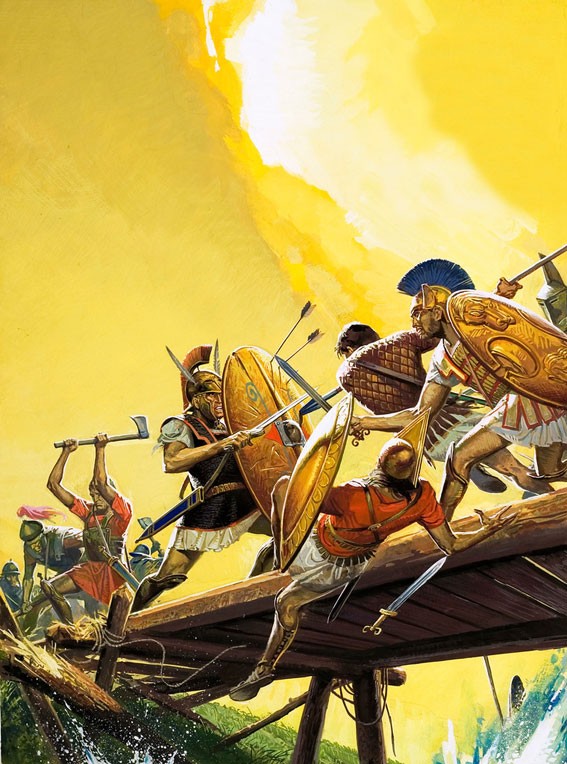
The Etruscans were also threatened by the rise of Rome. In around 616 BC, the Etruscan Tarquin family had taken control of the hilltop village of Rome and had begun to enlarge it into a bustling city. Etruscan kings continued to rule Rome until 510 BC, when the last Etruscan king, Tarquin the Proud, was driven out after Rome became a republic. Rome then gradually took over much Etruscan land, seizing the important city of Veii in 396 BC and conquering the rest later in the century.
Religion and culture
Like the Greeks and Romans, the Etruscans worshipped many gods, including Tin or Tinia, god of the sky, his wife Uni and Cel, goddess of the Earth. Later, Greek gods, such as Artemis and Minerva, joined them. Greek heroes that featured in the stories of Homer, appeared in Etruscan paintings. The Etruscans believed their gods were active in their own lives and could influence their own lives—but only their priests knew how.
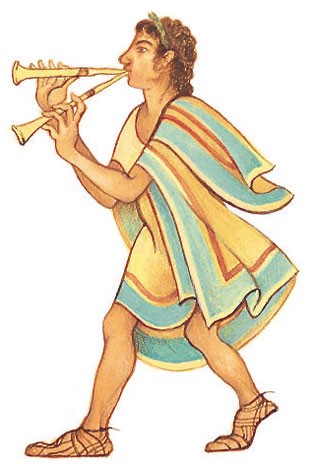
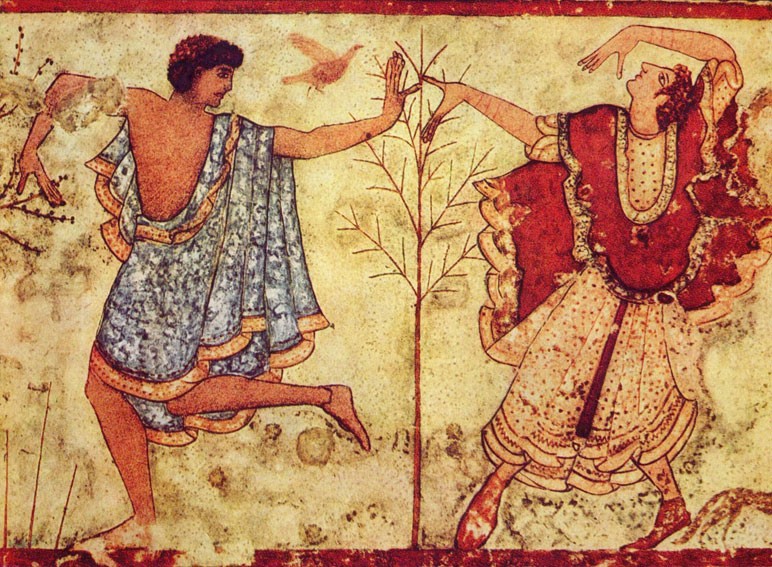
The Etruscans also believed in the Afterlife and filled their family tombs with terracotta sculptures, bronze figures and mirrors and other items. We know music was important to the Etruscans, as their wall paintings show many different instruments such as the double pipes.
Consultant: Philip Parker
pics
Without in any way limiting Q-files Ltd’s exclusive rights under copyright, any use of this publication to “train” generative artificial intelligence (AI) technologies to generate text is expressly prohibited. Q-files Ltd reserves all rights to license use of this work for generative AI training and development of machine learning language models.