
British kings and queens

CITE
We have made every effort to follow citation style rules, but there may be some minor differences. If in doubt, please refer to the appropriate citation style manual.
Alfred the Great. (2026). In Q-files Encyclopedia, History, British kings and queens. Retrieved from
https://www.q-files.com/history/british-kings-and-queens/alfred-the-great
"Alfred the Great." History, British kings and queens, Q-files Encyclopedia, 30 Mar. 2026.
https://www.q-files.com/history/british-kings-and-queens/alfred-the-great.
Accessed 24 Oct. 2026.
Alfred the Great 2026. History, British kings and queens. Retrieved 24 October 2026, from
https://www.q-files.com/history/british-kings-and-queens/alfred-the-great
History, British kings and queens, s.v. "Alfred the Great," accessed October 24, 2026.
https://www.q-files.com/history/british-kings-and-queens/alfred-the-great


Alfred the Great
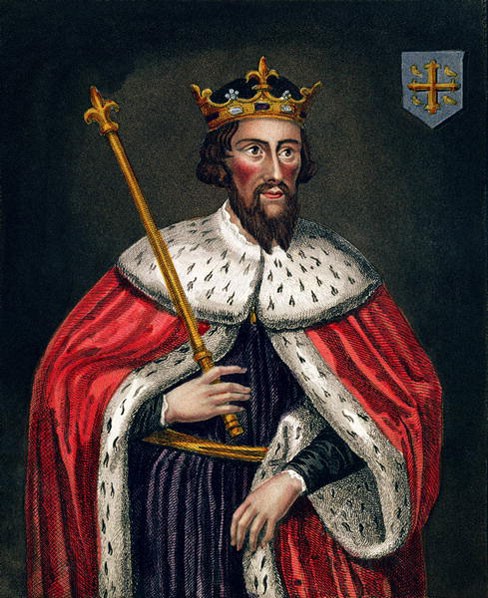
Alfred (ruled 871–899) was born in Wantage, Berkshire, in 849. He was the fifth son of King Aethelwulf, who had insisted that each of his sons become king of Wessex in turn after him, rather than risk allowing young children to accede to the throne and weaken the monarchy. In 870, the Danes, a Viking people, attacked the only remaining independent Anglo-Saxon kingdom, Wessex, whose forces were commanded by King Aethelred, Alfred’s older brother. At the Battle of Ashdown in 871, Alfred routed the Danish army. However, Wessex suffered several defeats after that, and Aethelred himself died of battle injuries. On becoming king, Alfred managed to secure four years of peace with the Danes, before they attacked Wessex again in 876.


Athelney
Following a new Danish onslaught, Alfred was forced to retreat to a small island of Athelney in the Somerset Levels in 878. It was from here that he masterminded his comeback (and, according to legend, burning cakes he had been asked to mind while deep in thought). Summoning an army of men from the counties of Wiltshire, Somerset and Hampshire, Alfred waged a kind of guerrilla warfare against the Danes. Victory at Edington followed in May of the same year.
Alfred’s biographer Bishop Asser wrote: “Alfred attacked the whole pagan army fighting ferociously in dense order, and, by divine will, eventually won the victory, made great slaughter among them, and pursued them to their fortress. After fourteen days …they sought peace”.
Division of England
Fully aware that he lacked the forces to drive the Danes out of the rest of England, Alfred decided to make peace with them. He made an agreement (known as the Treaty of Wedmore) with the Danish leader, Guthrum, some time between 878 and 890. By this agreement, England was divided in two along a line from London to Chester, the line of the old Roman road, Watling Street. Alfred ruled the land to the south and west, but was recognized as overlord of the Viking-run territory, later known as the Danelaw, to the north and east. Alfred thereby gained full control of West Mercia and Kent, as well as his own kingdom of Wessex.


In an effort to build alliances to protect Wessex against the Danes in future years, Alfred had one of his daughters, Aethelflaed, marry the ealdorman (high-ranking official) of Mercia and another, Aelfthryth, the Count of Flanders. Alfred himself had married Ealhswith, a Mercian noblewoman.
Defence of Wessex
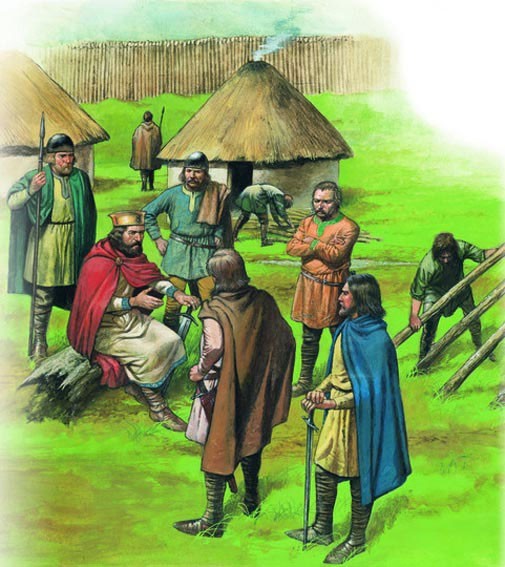
Ever aware of the Viking threat, Alfred organized his army, consisting of his thegns (noble followers) and fyrd (fighting men) on a rota basis. This meant he would be able to raise an army rapidly, yet not disrupt the majority of the landowners and peasants, who needed to tend their farms. He also ordered a fleet of new fast ships to be built—England’s first navy.
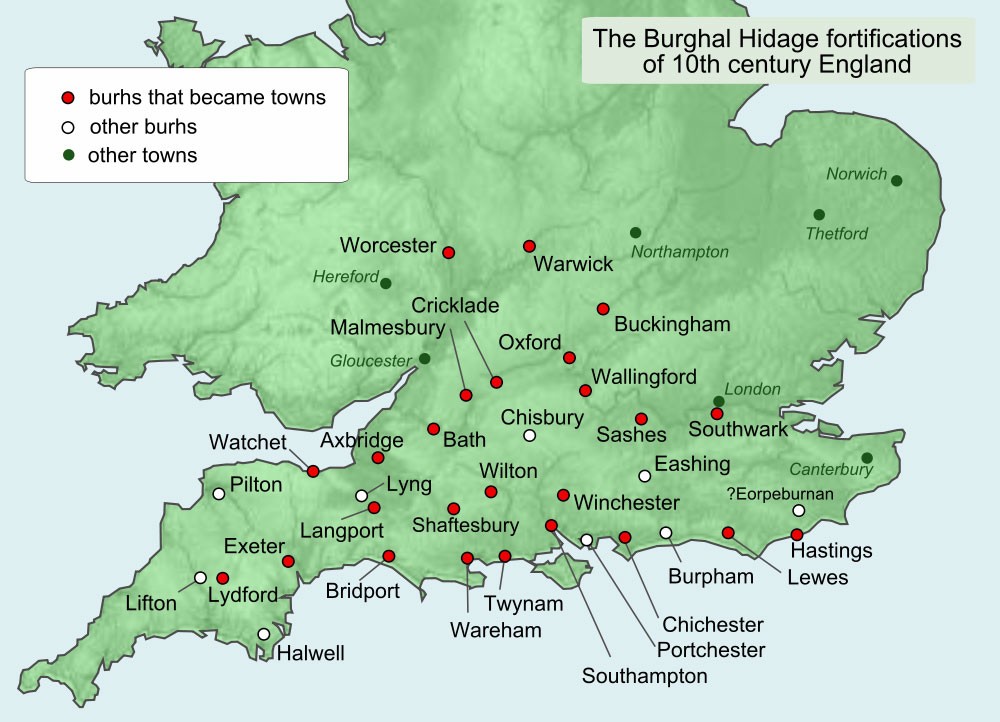
Alfred began a building programme of fortified settlements across southern England. Centred on Alfred’s palace at Winchester, these burhs (an Old English word meaning “fortresses”), later called “boroughs”, were founded. Many were built on main river crossings. No part of Wessex was more than 20 miles (32 kilometres) from one of them. The 33 burhs were listed in a document called the Burghal Hidage. With both his army and navy reformed and strengthened, Alfred's kingdom could now defend itself against any Viking invading force.
Alfred the scholar
Alfred was a devout man who learnt Latin in his late thirties. Troubled that the the Vikings' destruction of monasteries had caused a general deterioration in learning, he arranged for the translation of several important historical works in Latin into Anglo-Saxon, and supported the establishment of new schools and monasteries. He reformed the law and brought it all together into one set of documents. In 891, Alfred ordered work to begin on the Anglo-Saxon Chronicle, a yearly account of political, social and economic events in England. This continued until the 1150s.
Last years
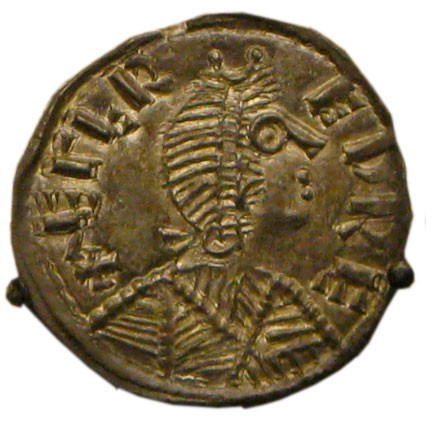
By the 890s, coins referred to Alfred as “king of the English”. The Welsh kings sought to make alliances with him. Alfred died in 899, aged 50, and was buried in his stronghold at Winchester. For the defence of his kingdom against a stronger enemy, and for his far-sighted reforms in reconstructing Wessex after the wars against the Vikings, Alfred—alone of all the English kings and queens—became known as “the Great”.
Consultant: Philip Parker
pics
Without in any way limiting Q-files Ltd’s exclusive rights under copyright, any use of this publication to “train” generative artificial intelligence (AI) technologies to generate text is expressly prohibited. Q-files Ltd reserves all rights to license use of this work for generative AI training and development of machine learning language models.