
British kings and queens

CITE
We have made every effort to follow citation style rules, but there may be some minor differences. If in doubt, please refer to the appropriate citation style manual.
House of Stewart. (2026). In Q-files Encyclopedia, History, British kings and queens. Retrieved from
https://www.q-files.com/history/british-kings-and-queens/house-of-stewart
"House of Stewart." History, British kings and queens, Q-files Encyclopedia, 30 Mar. 2026.
https://www.q-files.com/history/british-kings-and-queens/house-of-stewart.
Accessed 13 Sep. 2026.
House of Stewart 2026. History, British kings and queens. Retrieved 13 September 2026, from
https://www.q-files.com/history/british-kings-and-queens/house-of-stewart
History, British kings and queens, s.v. "House of Stewart," accessed September 13, 2026.
https://www.q-files.com/history/british-kings-and-queens/house-of-stewart


House of Stewart
Robert II (1371–1390)
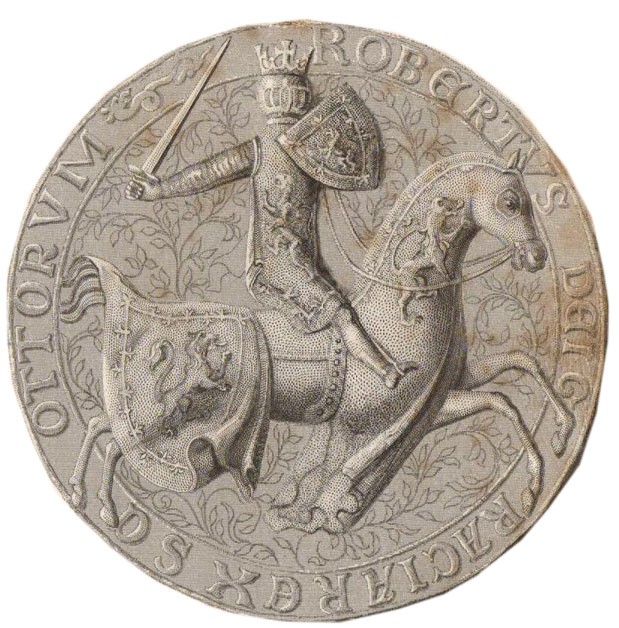
The son of Marjorie, daughter of Robert the Bruce, and Walter the Steward, Robert used the spelling “Stewart” for his surname and was the first monarch from the House of Stewart. He had little interest in government or warfare, handing over responsibility for law and order to his sons. He struggled to control his nobles, who were eager to make war on England. Robert married twice and fathered at least 20 children, eight of whom were illegitimate.

Robert III (1390–1406)
Upon succeeding to the throne, Robert II’s son John decided to take the name Robert III. A weak ruler, he was dominated by his younger brother, the Duke of Albany. He died soon after hearing that his 11-year-old son had been captured at sea by English pirates. He had married Annabella Drummond in 1367 and had seven children with her, including his eventual successor, James. Painfully aware of his own failings, he told Anabella that he wished to be buried in a dung heap with the epitaph: “Here lies the worst of kings and the most wretched of men”.
James I (1406–1437)
After falling into English hands on his way to France in 1406, James, the son of Robert III, was held captive by Henry IV. The Duke of Albany, ruling in his stead, made no attempt to obtain James's release. James eventually returned to Scotland in 1424 after agreeing to pay a ransom of 50,000 marks himself. After he was crowned at Scone, he set about paying off his ransom by raising taxes and confiscating estates from nobles. An educated man who wrote poetry, James I was determined to restore law and order to his kingdom—and curb the power his rivals, mostly descendants of Robert II, had built up in his absence. Eventually, a group of conspirators broke into his bedchamber and assassinated him.


James II (1437–1460)
James became king after the murder of his father when he was only six. He began to rule for himself following his marriage in 1449 to Mary of Guelders. Throughout his reign, the powerful Douglas family posed the main threat to his throne. In 1452 James himself stabbed the Earl of Douglas to death during a violent quarrel in Stirling Castle. He was accidentally blown up and killed by one of his own siege guns during a siege of Roxburgh Castle, which had been held by the English.
James III (1460–1488)
James III was proclaimed king at the age of eight following the death of his father, James II. His reign was marked by power struggles with ambitious nobles. His preference for the company of scholars and artists infuriated them—and incurred the jealousy of his own brothers, Alexander, Duke of Albany, and John, Earl of Mar. After Albany was forced into exile, some nobles seized the king’s eldest son and defeated James at the Battle of Sauchieburn, near Stirling, in 1488. As he fled for his life, James fell from his horse. He was later stabbed to death.

James IV (1488–1513)
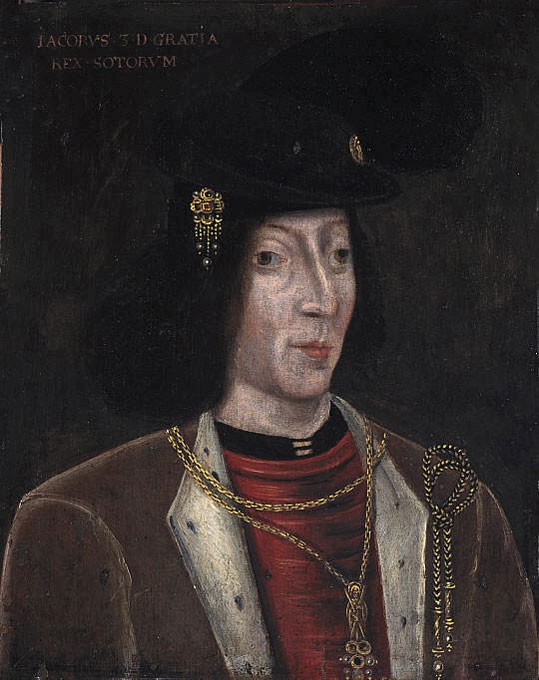
The son of James III and Margaret of Denmark, James IV spoke several languages and took an active interest in literature and the law, even trying his hand at dentistry. For the first time in a century, Scotland had a king who was able to start ruling for himself on acceding to the throne. James led expeditions into the Highlands to assert his authority and developed Edinburgh as his capital. He married Henry VIII's daughter Margaret Tudor in 1503 (an act that would unite the two kingdoms a century later), but the union did not improve relations between Scotland and England immediately. When Henry attacked France in 1513, James invaded Northumberland to assist France under the “Auld Alliance”. His army was, however, crushed by the English at the Battle of Flodden. James and many of his nobles died fighting.
James V (1513–1542)
A one-year-old infant at the time of his father's death at Flodden, James's early years were dominated by struggles between his mother, Margaret Tudor, who ruled on his behalf, and the Scottish nobles, who refused to accept an Englishwoman as ruler. James began his own rule in 1528. His uncle, Henry VIII, urged him to break with Rome as he had done, but James refused and, in 1542, failed to attend an arranged meeting with Henry at York. Furious, Henry launched an invasion of Scotland in response, routing a Scottish army at the Battle of Solway Moss in November. James suffered a nervous collapse after hearing of the defeat of his forces and died soon after.

Mary, Queen of Scots (1542–1567)
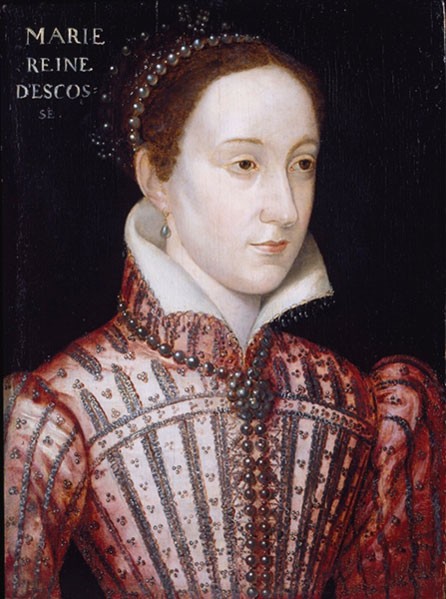
Mary became queen when she was just six days old. She was sent to France in 1548—at the age of 6—to marry the Dauphin, the young French prince, in order to forge a Catholic alliance against England. (The spelling of the name “Stewart” changed to “Stuart” at this time, to fit with French pronunciation). But when the Dauphin died in 1561, Mary returned to Scotland, which was now a Protestant country after the religious reforms led by John Knox. The Catholic Mary married her Protestant cousin Henry Stewart, Lord Darnley. But Darnley became jealous of Mary's adviser, David Rizzio (Riccio). Along with others, he murdered Riccio in front of the pregnant Mary. Her son (the future King James VI) was baptized a Catholic, causing alarm amongst the Protestants. Then Darnley was himself murdered at Kirk o' Field in 1567, and it was rumoured that Mary and her new lover, James Hepburn, Earl of Bothwell, were responsible for the deed.

Mary’s marriage to Bothwell was the final straw. The Protestant nobility rose against Mary and she was imprisoned at Lochleven Castle. Mary was forced to abdicate in favour of her infant son, James. She escaped and fled south to England, believing that Queen Elizabeth I would support her. Instead, she was imprisoned for 19 years. The focus of a series of Catholic plots against Elizabeth, culminating in the Babington Plot to assassinate the English queen, Mary was found guilty of treason and was beheaded at Fotheringhay in 1587.


James VI (1567–1625)
James became king of Scotland aged just 13 months, following the abdication of his mother, Mary Queen of Scots. Brought up a Protestant, he assumed power in 1583. He quickly established his authority, shrewdly making peace among the nobility’s warring factions. He married Anne of Denmark in 1589. As the great-grandson of Henry VII, James was the heir to the throne of England. He achieved his lifelong ambition to succeed Queen Elizabeth I, becoming King James I of England when she died in 1603. He moved south immediately. James wanted a single parliament for England and Scotland and styled himself "King of Great Britain and Ireland". The two kingdoms remained separate, however, and Scotland kept its own parliament, Church and legal systems.
Charles I (1625–1649)
Charles I was the second son of James VI. Brought up in England after his father inherited the English throne in 1603, Charles lacked James' first-hand knowledge of Scottish affairs. His marriage to the French Catholic Henrietta Maria and his efforts to impose a new Prayer Book and other changes on the Presbyterian Church provoked opposition in Scotland. Civil War broke out in England in 1641 between supporters of Charles and supporters of Parliament.
After his defeat at the Battle of Naseby, Charles surrendered to the Scots in 1646 and entered into negotiation with them. But he refused to establish Presbyterianism in England, so the Scots handed him over to his English enemies. The “Engagement” of 1647 gave the Scots what they wanted and they agreed to provide him with an army to fight the English Parliamentarian forces. This led to the outbreak of the Second Civil War in the spring of 1648, which ended in Oliver Cromwell's victory at Preston. Charles was tried and executed in Westminster on 30th January 1649.
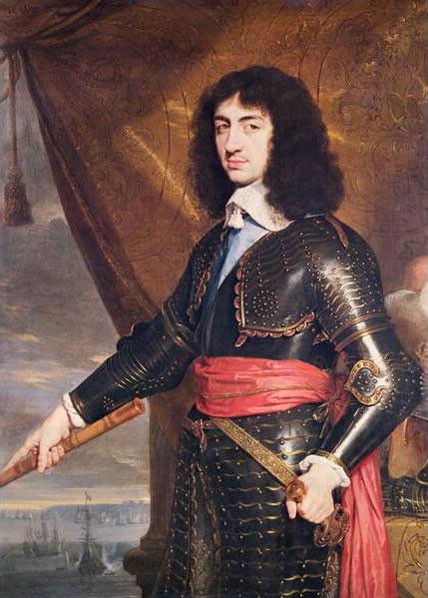
Charles II (1649–1651 and 1660–1685)
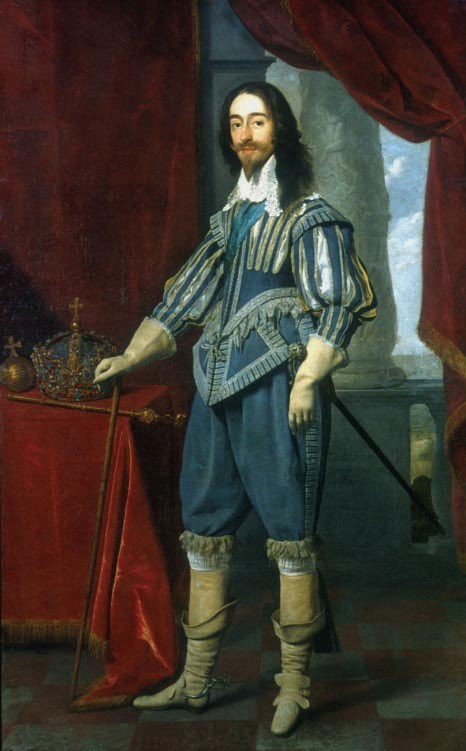
The eldest surviving son of Charles I, Charles went into exile in France in 1646, during the Civil War. When the victorious English Parliament executed his father in 1649, the Scots proclaimed Charles II king, and invited him to come to Scotland, which he did. Oliver Cromwell then marched north and defeated the Scots at the Battle of Dunbar in 1650. Undaunted, the Scots crowned Charles II at Scone on 1st January 1651. The Scottish forces were defeated for a second time at the Battle of Worcester in September that year. Charles escaped and fled to France once more. England, Scotland and Ireland became a Commonwealth under the rule of Cromwell as Lord Protector. Charles spent the next nine years in exile in France and the Netherlands until 1660 when he was restored to the throne. He ruled until his death from a stroke in 1685.
James VII (1685–1689)
James was the younger brother of Charles II. He, too, escaped to the continent during the Civil War. A staunch Catholic, James inherited the throne on Charles II's death in 1685 with little opposition in Scotland. He was crowned James VII of Scotland and James II of England. The “Glorious Revolution” and James’s flight from England in 1688 had little impact north of the border. James remained king in Scotland until April 1689. Defeated at the Battle of the Boyne in Ireland in 1690, James spent the rest of his life in exile in France, where he died in 1701.


William II (1689–1702) and Mary II (1689–1694)
William of Orange was the son of Princess Mary, daughter of Charles I. He married his cousin, another Princess Mary, the daughter of James VII by his Protestant first wife Anne Hyde. William and Mary accepted the crown in May 1689, but never visited Scotland. James VII's supporters, the Jacobites, rose against the Crown in 1689, but were crushed in battle. William's severe measures against them made him unpopular in Scotland. William and Mary had no children. Mary died of smallpox in 1694 while William died in 1702, after a fall from his horse.
Anne (1702–1714)
The younger daughter of James VII by his first wife, Anne Hyde, Queen Anne inherited the throne in 1702. She was married to Prince George of Denmark but none of their children lived beyond childhood. In 1701, the English Parliament established the succession of the Protestant Sophia of Hanover, granddaughter of James VI (James I of England), but the Scots declared that they were free to choose their own candidate—even the exiled Jacobite claimant, James VII's son. The situation could not continue. The Scottish Parliament eventually agreed that the kingdoms of Scotland and England would be united as the United Kingdom, with a single government. Scotland would be represented in Parliament by 45 MPs and 16 elected peers. The Treaty of Union came into effect on 1st May 1707. The Jacobites continued to support the exiled Prince James Francis Edward. In 1714, Queen Anne, the last Stuart monarch, died. Her successor was George I, son of Sophia, Electress of Hanover.

Consultant: Philip Parker
pics
Without in any way limiting Q-files Ltd’s exclusive rights under copyright, any use of this publication to “train” generative artificial intelligence (AI) technologies to generate text is expressly prohibited. Q-files Ltd reserves all rights to license use of this work for generative AI training and development of machine learning language models.