
British kings and queens

CITE
We have made every effort to follow citation style rules, but there may be some minor differences. If in doubt, please refer to the appropriate citation style manual.
Elizabeth I. (2026). In Q-files Encyclopedia, History, British kings and queens. Retrieved from
https://www.q-files.com/history/british-kings-and-queens/elizabeth-i
"Elizabeth I." History, British kings and queens, Q-files Encyclopedia, 30 Mar. 2026.
https://www.q-files.com/history/british-kings-and-queens/elizabeth-i.
Accessed 13 Sep. 2026.
Elizabeth I 2026. History, British kings and queens. Retrieved 13 September 2026, from
https://www.q-files.com/history/british-kings-and-queens/elizabeth-i
History, British kings and queens, s.v. "Elizabeth I," accessed September 13, 2026.
https://www.q-files.com/history/british-kings-and-queens/elizabeth-i


Elizabeth I
Elizabeth I (1558–1603) was the daughter of Henry VIII and his second wife, Anne Boleyn. She succeeded to the throne on the death of her half-sister Mary and proved to be a strong, shrewd and very popular monarch. During Elizabeth’s reign, trade expanded overseas and England became rich. The Elizabethan era (as this period is called) was a Golden Age in art, theatre and music. England also became a Protestant nation again. After Elizabeth sent help to Dutch rebels fighting for independence from Catholic Spain, and executed her Catholic cousin, Mary, Queen of Scots, for treason, Philip II of Spain send a huge Armada (fleet) to invade England in 1588. It was successfully repelled in a great victory for the English navy. Despite having a number of suitors, Elizabeth decided never to marry. When she died in 1603 without any children, the English throne passed to James VI of Scotland.


Early life
Elizabeth was born at Greenwich on 7th September 1533, the daughter of Henry VIII and his second wife, Anne Boleyn. Princess Elizabeth had a difficult early life. Her mother had been executed when she was only three, and her half-sister, Mary, had imprisoned her during her reign. Roman Catholics always considered Elizabeth to be illegitimate and she only narrowly escaped being executed following a failed rebellion by Protestant sympathizers against Mary in 1554. Elizabeth, however, survived to succeed to the throne of England on her half-sister's death in November 1558.
Church settlement
During Elizabeth’s reign, a secure Church of England was established. By the 39 Articles of 1563, a compromise was reached between Roman Catholicism and Protestantism. Most of her subjects accepted this as the basis of their faith. The settlement probably saved England from the religious wars suffered by other European countries in the late 16th century.

A popular monarch
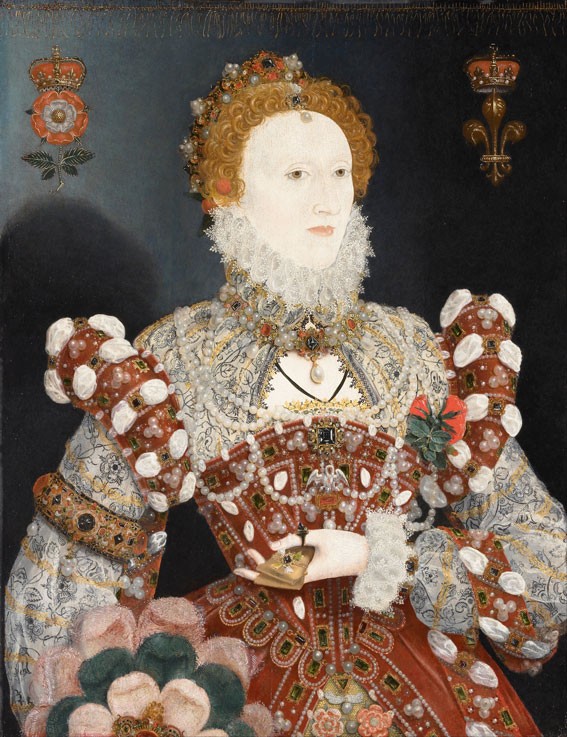
Elizabeth was a shrewd woman who spoke six languages fluently. Her reign was one of triumph and success. The queen herself was referred to as “Gloriana”, “Good Queen Bess” and “The Virgin Queen”. Wearing expensive clothes and jewellery, she boosted her popularity across the land by touring England in what were known as “progresses”. Elizabeth would often ride on horseback rather than by carriage, so people could see her better. During her reign Elizabeth made at least 25 progresses.
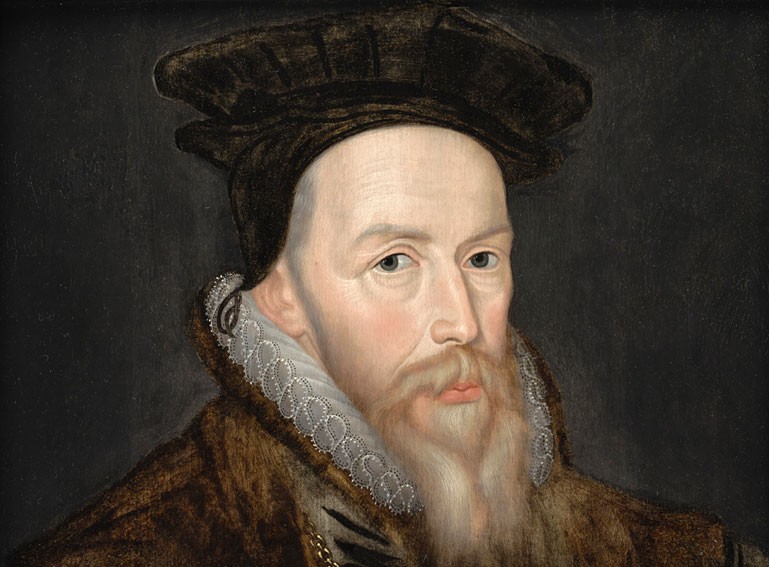
Elizabeth had sound political judgment and chose highly able ministers carefully, including William Cecil, Lord Burghley (1520–98), who was her closest adviser almost throughout her reign, and Sir Francis Walsingham (1532–90), who held the official title of principal secretary, but, as head of her secret service, is commonly referred to as her "spymaster". He found out the Spanish plans for the Armada attack, uncovered a number of plots against Elizabeth and secured the execution of Mary, Queen of Scots.

A Golden Age
The arts flourished during Elizabeth's reign. A number of country houses, including Longleat and Hardwick Hall, were built and composers such as William Byrd and Thomas Tallis worked in Elizabeth's court. Theatre thrived in Elizabethan times. New laws encouraged actors to join touring companies such as Lord Sussex’s Men, Queen Elizabeth’s Men—and Lord Chamberlain’s Men, for whom William Shakespeare wrote and performed. They performed in taverns and then in purpose-built theatres in London, with the Queen herself attending performances at court.
Voyages of discovery
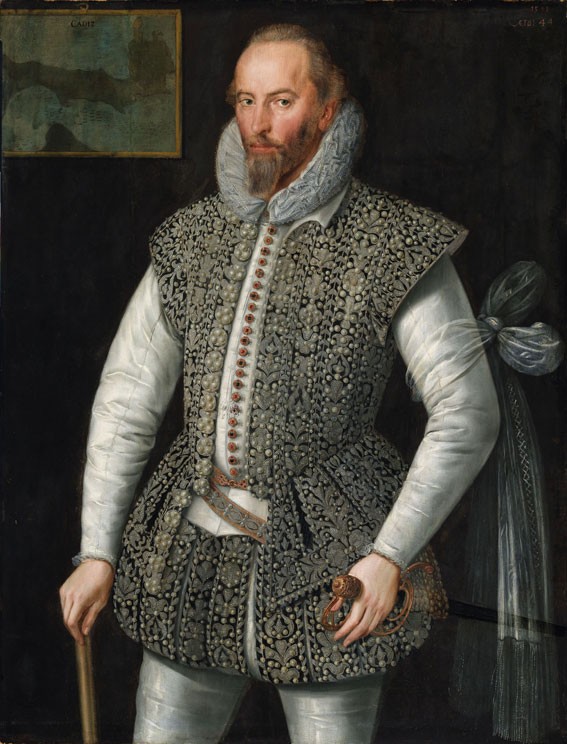
Elizabeth's reign also saw many voyages of discovery, including those of Francis Drake (1540–96), Walter Raleigh (1554–1618) and Humphrey Gilbert (1539–83)—particularly in the Americas. In 1585 Raleigh set up a colony of about 100 men on the east coast of North America, which he named Virginia after Elizabeth, “the Virgin Queen”. These expeditions prepared England for colonizing lands overseas and expanding trade, both of which laid the foundations of the British Empire. The East India Company, which came to rule large parts of India in later centuries, was established by a Royal Charter from Elizabeth in 1600.


Mary, Queen of Scots
Elizabeth's reign was under constant threat of invasion from Spain and France. Much of northern England rose in rebellion in 1569–70. The queen's life itself was in danger from several assassination plots. One involved her cousin Mary, Queen of Scots (1542–87), who had fled to England in 1568. As a potential successor to Elizabeth, Mary became the focus for rebellion and plots, such as the Babington Plot of 1586. As a result, Elizabeth had her imprisoned for 19 years. Despite Elizabeth's reluctance to take further action, on the insistence her advisers, Mary was tried, found guilty of plotting to assassinate Elizabeth and beheaded at Fotheringay Castle in 1587.
The Spanish Armada
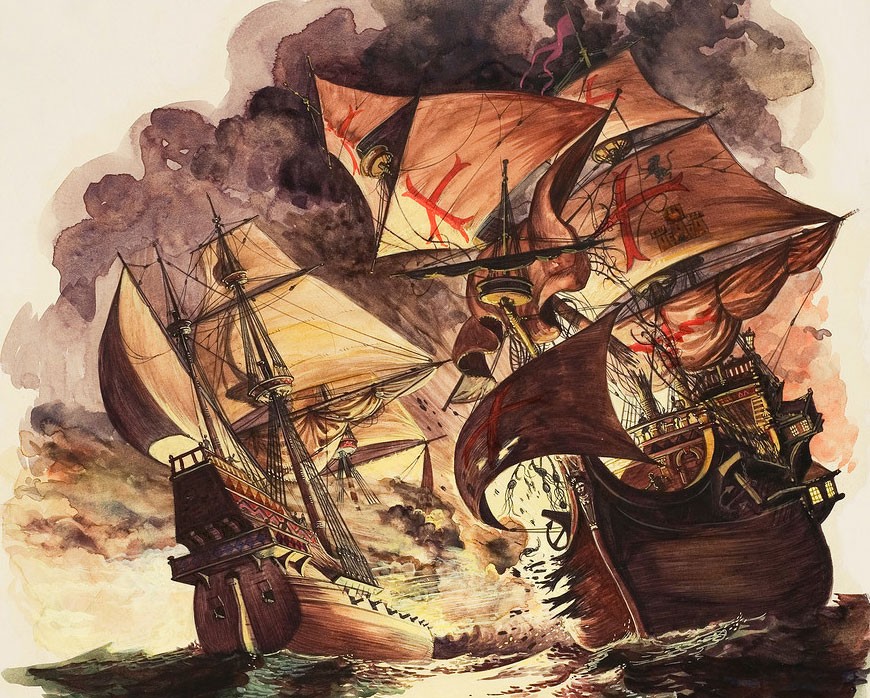
After Elizabeth sent help to Dutch rebels fighting for independence from Spain, King Philip II of Spain launched a huge fleet of around 130 ships to invade England in 1588. Philip believed he had a claim to the English throne through his marriage to Elizabeth’s half-sister Mary. The fleet, known as the Spanish Armada, was intended to pave the way for the conquest of England and re-establish Roman Catholicism.
Elizabeth was adamant that she would keep her crown and that England would remain free from Spanish rule and the influence of Rome. She addressed her troops encamped at Tilbury, declaring she would fight by their side. Aided by bad weather, the English navy, under the command of Lord Howard and Sir Francis Drake, scored a great victory over the Armada. The Spanish ships were scattered at Gravelines and pursued around the northern coast of Britain where many were wrecked. It was a great victory for Elizabeth.


Later life
Though she kept a tight rein on government expenditure, Elizabeth left large debts to her successor. Wars during Elizabeth's reign cost vast sums. Despite the financial strains, Parliament, which was needed to raise taxation, was only rarely summoned.
Queen Elizabeth chose never to marry, and remained childless. She preferred, it was said, to sacrifice her personal happiness for the good of the nation, to which she declared was “married”. In her Golden Speech of 1601 she told Members of Parliament: “There is no jewel, be it of never so high a price, which I set before this jewel; I mean your love.” She died at Richmond Palace on 24th March 1603 at the age of 69.
As Elizabeth left no heir, James VI of Scotland, the son of Mary, Queen of Scots, was named king. The Tudor dynasty that had ruled England for 118 years thus came to an end.
Consultant: Philip Parker
pics
Without in any way limiting Q-files Ltd’s exclusive rights under copyright, any use of this publication to “train” generative artificial intelligence (AI) technologies to generate text is expressly prohibited. Q-files Ltd reserves all rights to license use of this work for generative AI training and development of machine learning language models.