
British kings and queens

CITE
We have made every effort to follow citation style rules, but there may be some minor differences. If in doubt, please refer to the appropriate citation style manual.
Houses of Saxe-Coburg and Windsor. (2026). In Q-files Encyclopedia, History, British kings and queens. Retrieved from
https://www.q-files.com/history/british-kings-and-queens/houses-of-saxe-coburg-and-windsor
"Houses of Saxe-Coburg and Windsor." History, British kings and queens, Q-files Encyclopedia, 30 Mar. 2026.
https://www.q-files.com/history/british-kings-and-queens/houses-of-saxe-coburg-and-windsor.
Accessed 31 Oct. 2026.
Houses of Saxe-Coburg and Windsor 2026. History, British kings and queens. Retrieved 31 October 2026, from
https://www.q-files.com/history/british-kings-and-queens/houses-of-saxe-coburg-and-windsor
History, British kings and queens, s.v. "Houses of Saxe-Coburg and Windsor," accessed October 31, 2026.
https://www.q-files.com/history/british-kings-and-queens/houses-of-saxe-coburg-and-windsor


Houses of Saxe-Coburg and Windsor
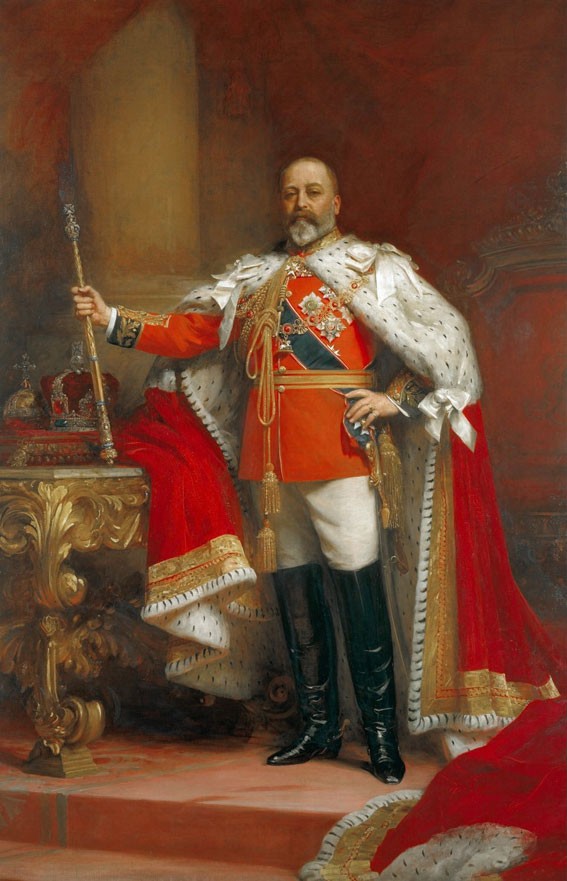
Edward VII (1901–1910)
Edward VII was 59 when he became king, having been heir for longer than anyone else before in British history. As a young prince, he was subjected to a strict upbringing. Although his parents, Queen Victoria and Prince Albert, were keen to ensure he was prepared to rule, Edward was given almost no opportunity to become involved in affairs of state until Victoria was an elderly woman in 1897. So Edward joined London society instead, spending his time eating, drinking, gambling, shooting and watching horse-racing. In 1863, he married Princess Alexandra of Denmark and they had six children, five of whom survived to adulthood. Edward also had a series of mistresses, including the actress Lily Langtry. Edward succeeded to the throne as Edward VII on the death of Victoria, in 1901. Related to most European royalty, for which he was known as the “Uncle of Europe”, Edward was able to assist in foreign policy negotiations. He died in May 1910 and was succeeded by his son, who became George V.

George V (1910–1936)
George was the second son of the Prince of Wales. The death of his elder brother Albert in 1892 meant he had to give up a career in the navy, as he was now heir to the throne. He married Albert’s fiancée, Princess Mary (“May”) of Teck in 1893. Happily devoted to one another, they had six children. George’s reign began in 1910 at a time when the Liberal government was attempting to curb the power of the House of Lords. The Parliament Bill was eventually passed by the Lords in 1911.
During World War I, George V made many visits to the front line, hospitals and dockyards, gaining the respect of his subjects. In 1917 anti-German feeling led him to adopt the family name of Windsor, replacing the German name of his father, Saxe-Coburg-Gotha. The Statute of Westminster of 1931 gave the Dominions of the British Empire the freedom to pass their own laws, increasing the monarchy's importance, since the Dominions were now linked to Britain only through the Crown. Shortly after celebrating his Silver Jubilee in 1935, George died in January 1936, and was succeeded by his son Edward.
Edward VIII (1936)
In January 1936, George V died and his son, Prince Edward, became king as Edward VIII. As Prince of Wales (and known to his family as David), he undertook many visits, particularly in the empire, but also to areas of high unemployment and deprivation in Britain during the the early 1930s, the depression years. These made him very popular. Edward wanted to marry Wallis Simpson, a twice-divorced American, but the government objected, saying that the country would not accept a divorcee as queen. This provoked a major political crisis until Edward chose to abdicate (give up the throne) after less than 11 months as king. He went into exile in France, where he was created Duke of Windsor and married Wallis. His brother Prince Albert became king in his place as George VI. During World War II, Edward was appointed governor of the Bahamas. He spent the rest of his life with his wife in France, where he died in 1972.

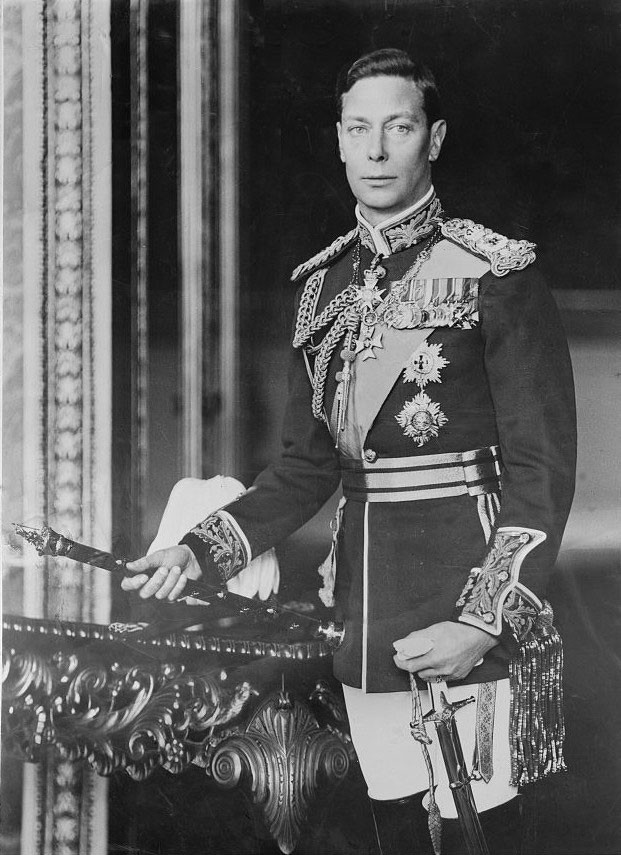
George VI (1936–1952)
Born in 1895, George (christened Albert, and known to his family as “Bertie”) was the second son of the Duke of York, later George V. In 1920, he was created Duke of York. In 1923, he married Lady Elizabeth Bowes-Lyon, and they had two daughters, Elizabeth and Margaret. Reserved by nature, George suffered from ill health throughout his life. For many years, he struggled with public speaking because of a stammer. Following the abdication of his elder brother, Edward VIII, he ascended to the throne as George VI on 11th December 1936.
World War II broke out in September 1939. When Prime Minister Neville Chamberlain resigned in May 1940, George wished to replace him with Lord Halifax, but he was persuaded to accept Winston Churchill. The two men quickly formed a close working relationship, however. During the war, George visited Allied armies on many occasions. He also created the George Cross, an award for courage for acts of bravery. The Royal family's active involvement in the war effort on Britain won them many admirers. From 1948, George’s health worsened, and he died in February 1952. His elder daughter Elizabeth succeeded him as monarch.
Elizabeth II (1952–2022)
Elizabeth was born on 21st April 1926, and acceded to the throne on the death of her father in 1952. She also became Queen of the United Kingdom, Canada, Australia and New Zealand (and later to a number of countries that became independent since her accession) as well as Head of the Commonwealth. She began to undertake public duties during World War II, serving in the Auxiliary Territorial Service. In 1947, she married Philip, Duke of Edinburgh, with whom she had four children: Charles, Anne, Andrew and Edward.
Elizabeth celebrated her Silver, Golden, Diamond and Platinum jubilees in 1977, 2002, 2012 and 2022 respectively. In 2015 she surpassed the reign of her great-great-grandmother, Queen Victoria, to become the longest-reigning British monarch—and the longest-reigning queen in world history. She occasionally faced criticism of the royal family, most notably after the death of Diana, Princess of Wales in 1997, but support for the monarchy along with her personal popularity remained high throughout her reign. Queen Elizabeth II died on 8th September 2022 at the age of 96. Her son Charles succeeded her as monarch.


Consultant: Philip Parker
pics
Without in any way limiting Q-files Ltd’s exclusive rights under copyright, any use of this publication to “train” generative artificial intelligence (AI) technologies to generate text is expressly prohibited. Q-files Ltd reserves all rights to license use of this work for generative AI training and development of machine learning language models.