
British kings and queens

CITE
We have made every effort to follow citation style rules, but there may be some minor differences. If in doubt, please refer to the appropriate citation style manual.
William the Conqueror. (2026). In Q-files Encyclopedia, History, British kings and queens. Retrieved from
https://www.q-files.com/history/british-kings-and-queens/william-the-conqueror
"William the Conqueror." History, British kings and queens, Q-files Encyclopedia, 10 Apr. 2026.
https://www.q-files.com/history/british-kings-and-queens/william-the-conqueror.
Accessed 13 Sep. 2026.
William the Conqueror 2026. History, British kings and queens. Retrieved 13 September 2026, from
https://www.q-files.com/history/british-kings-and-queens/william-the-conqueror
History, British kings and queens, s.v. "William the Conqueror," accessed September 13, 2026.
https://www.q-files.com/history/british-kings-and-queens/william-the-conqueror


William the Conqueror
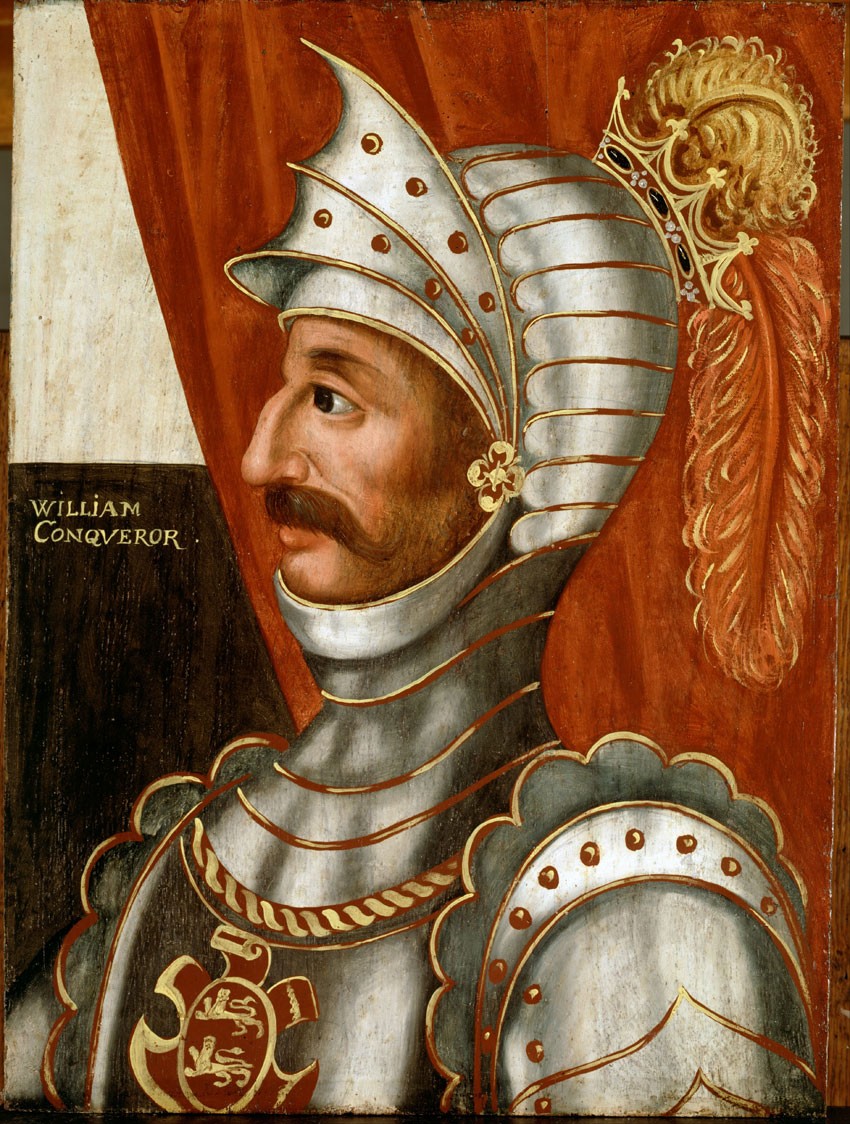
As the young Duke of Normandy, William led a highly-trained army, which he used to put down rebellions in his Duchy and defend it against the King of France. In 1066, William launched an invasion of England to seize the crown, which he believed had been promised to him by Edward the Confessor. At the Battle of Hastings, he defeated and killed Harold, who had been elected king after Edward’s death. William became William I (ruled 1066–87) of England. It took him six years to control his kingdom. He crushed uprisings in the west and drove both Danes and Scots out of the north of the country, making peace treaties with both. To impose Norman power on his new subjects, William had more than 80 stone castles built across the land during his reign.
Early life
Known as “William the Bastard” as a young man, William was the illegitimate son of Robert, Duke of Normandy and Herleve. Born in around 1028, he was only seven or eight years old when his father died in 1035 and he succeeded to the Duchy of Normandy. His great uncle looked after the Duchy while William was still a boy. William grew up to become a skilled military commander who never lost a battle.
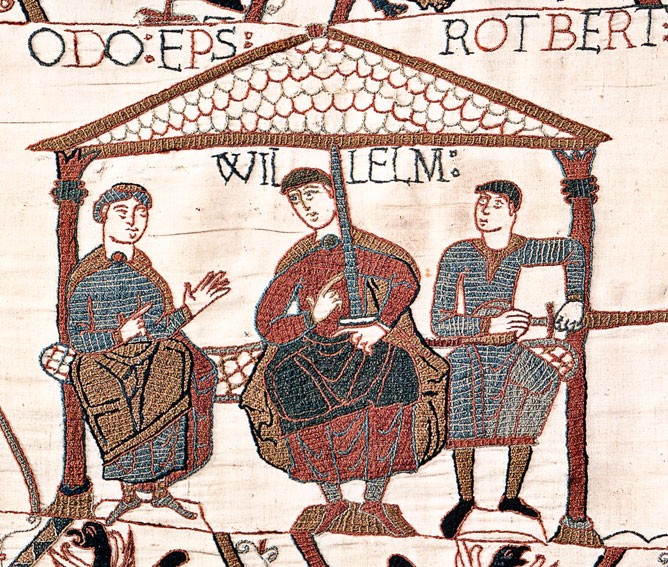
William showed ruthlessness in dealing with rebellions inside Normandy and attempted invasions of the Duchy by King Henry I of France in 1054 and 1057, using his feared and highly-trained army built around his powerful cavalry (horse-borne soldiers). In 1053, William married Matilda of Flanders. They had nine children, seven of whom survived into adulthood.
The promised crown
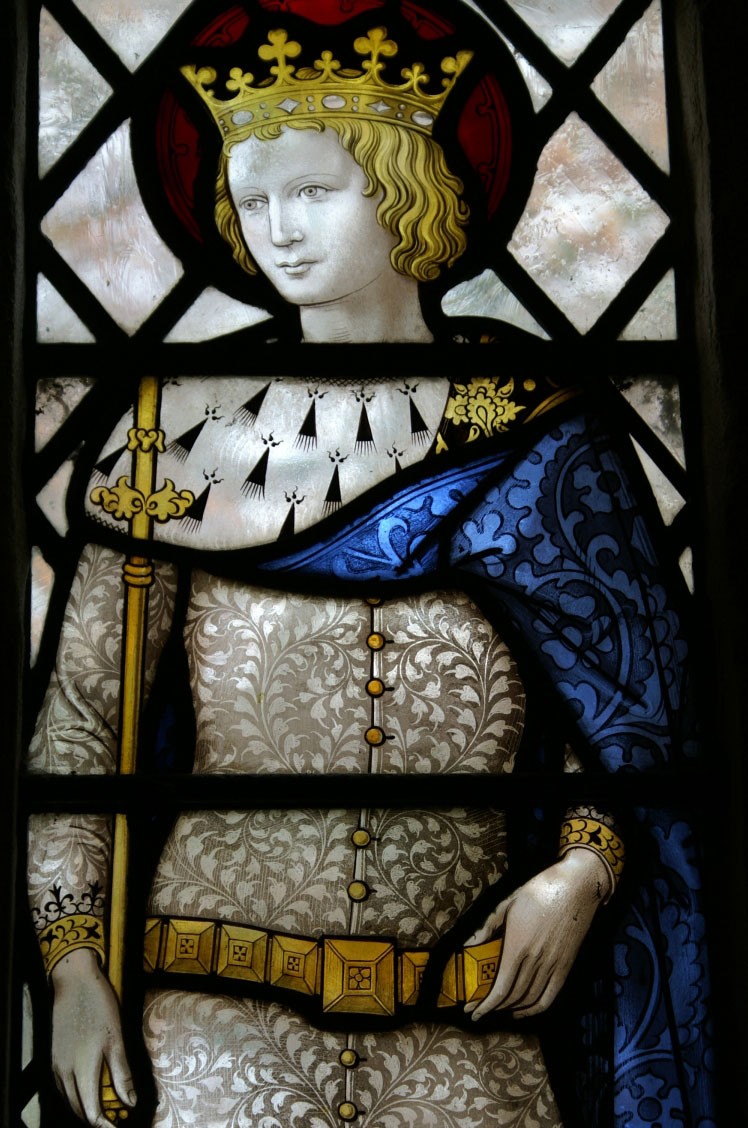
In 1051 the childless Saxon king of England, Edward the Confessor, son of Aethelred and his Norman second wife, Emma, promised the crown of England to William—according to William. But on his deathbed in 1066, Edward apparently changed his mind and gave the crown to his brother-in-law, Harold Godwinson.
Two years earlier, In 1064, Harold had been held in Normandy after a shipwreck and was only allowed to return to England in return for a promise that he would support William’s claim to the throne of England when Edward died. But Harold claimed that this “promise” had been forced out of him and had no basis in law.
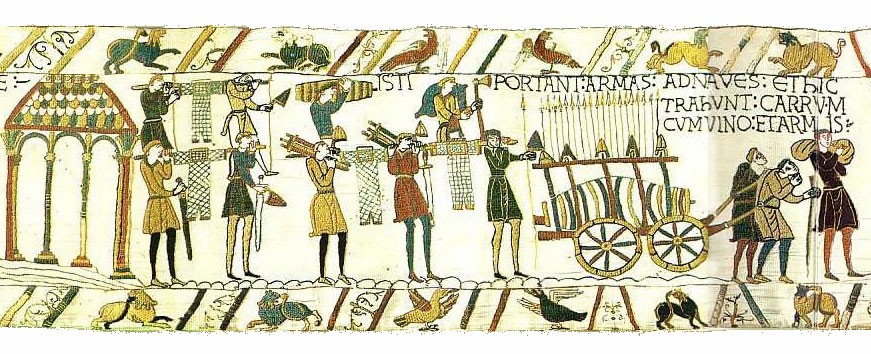
In response, a furious William decided to launch an invasion of England to gain the crown by force. He took seven months to prepare his invasion army, using about 600 ships to carry around 7000 men, including up to 3000 cavalry, across the English Channel.
Battle of Hastings
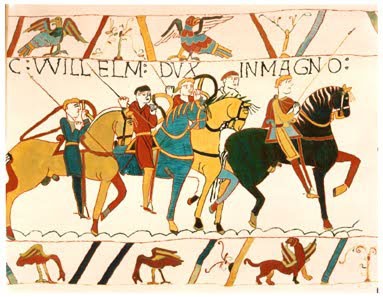
When William and his Norman army landed at Pevensey Bay on the south coast of England, Harold and his English army were hundreds of kilometres further north in Yorkshire. They had just defeated an invading Viking army led by Harold Hardrada, who also claimed the English crown, at Stamford Bridge. Harold rushed south in nine days to face William. The two armies met 10 kilometres (6 miles) north of Hastings on 14th October 1066.
The English army, also consisting of around 7000 men, lined up on top of a ridge at Senlac near Hastings, meaning the Norman army had to fight up the hill towards them. William could call on archers and cavalry, both of which the English lacked—although the English infantrymen were equipped with fearsome, twin-bladed battle-axes. After two unsuccessful advances, the Normans pretended to flee the battlefield. The English army rushed after them, but were overwhelmed when the Normans turned to attack them. Harold himself was (possibly) hit in the eye by an arrow then slain by the sword of a mounted knight. William had won a decisive victory and claimed the crown. England would now fall under Norman rule.

Consolidation
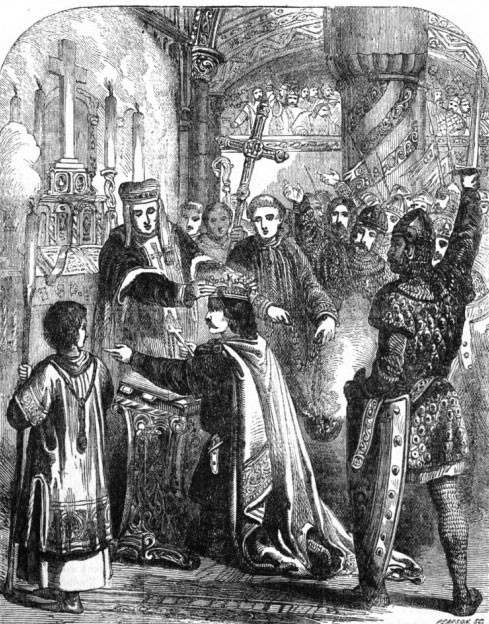
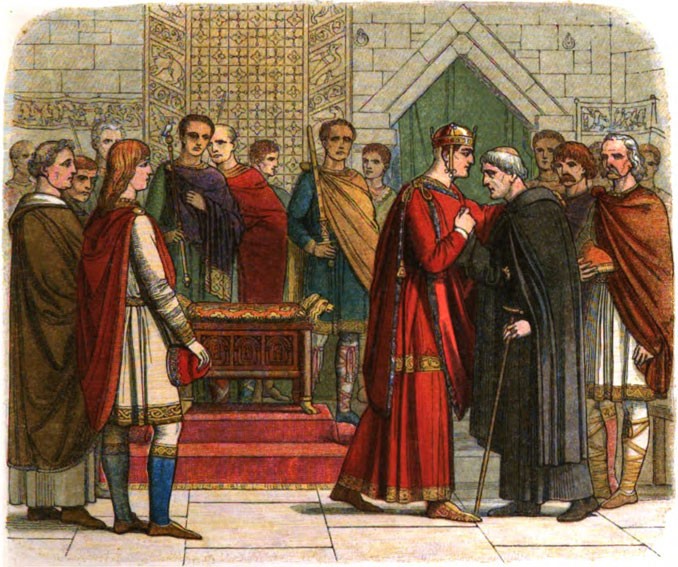
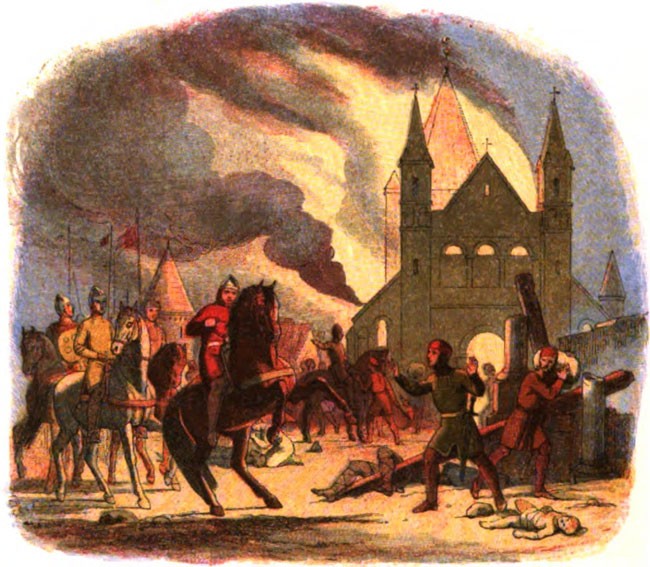
William was crowned on Christmas Day 1066 in Westminster Abbey. But it took William six years to consolidate his conquest. He appointed earls to guard England’s frontiers. In 1068, they withstood raids by Harold’s sons along the southwest coast as well as uprisings in the Welsh Marches, Devon and Cornwall. In 1069, the Danes, in alliance with English nobles, invaded the north and took York. William himself drove the Danes back to their ships on the River Humber. To crush any future resistance, William then proceeded to devastate Mercia and Northumbria in what was known as the "Harrying of the North", burning down churches and monasteries and laying farmland to waste, spreading famine among the peasant population.
Hereward the Wake
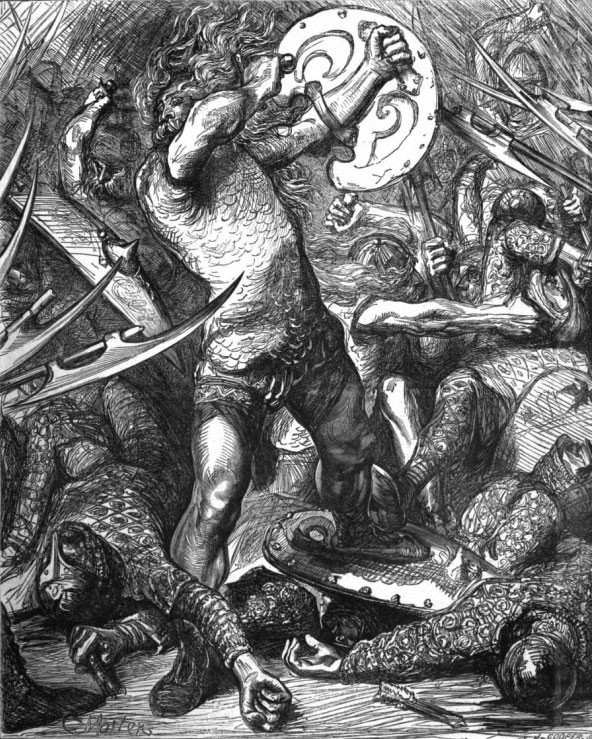
Hereward the Wake (c.1035–c.1072) was a leader of English resistance to the Norman conquest of England. His base was in the Isle of Ely in East Anglia. According to legend, Hereward roamed the Fens, stirring up opposition to William the Conqueror. The Danish king, Sweyn Estrithson, made an alliance with him, sending an army to support a rebellion. But William bribed Sweyn to withdraw his forces, and defeated Hereward in 1071, forcing him to live the life of an outlaw. A year later, William made a treaty with Scotland after driving the army of King Malcolm III back over the border.
Castle-building
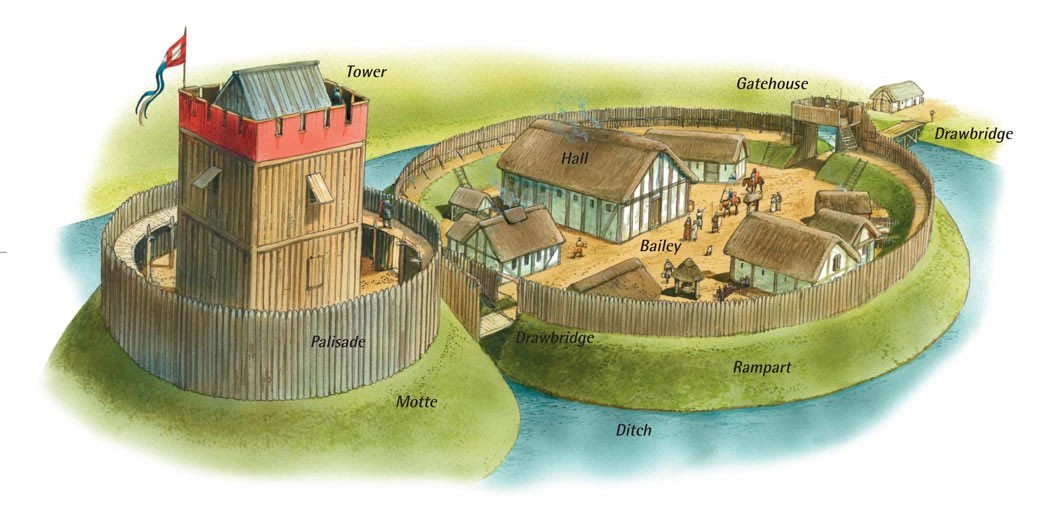
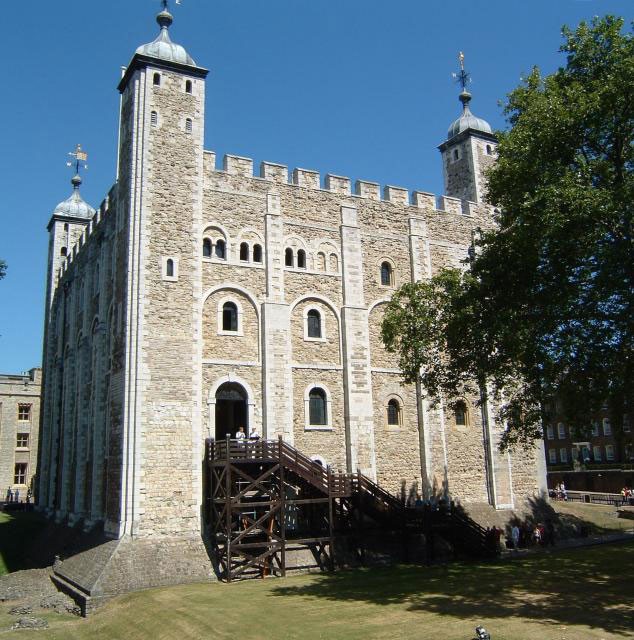
William started a castle-building programme to protect Norman nobles from attack and to control the surrounding countryside. At first, these castles, called motte-and-baileys, consisted of a simple wooden tower on top of an earth mound surrounded by wooden walls and ditches. From the 1070s, castles were built entirely of stone. A castle served as a home for the lord and his family. It was also used both as a military headquarters and a place where taxes were collected and justice handed down. One of the most famous Norman castles in England is the Tower of London. Its White Tower (begun 1078) is the earliest stone keep (fortified tower) in England.
By the end of William's reign, more than 80 castles had been built throughout his kingdom. They stood as a permanent reminder of Norman power to the people of England.
Domesday Book
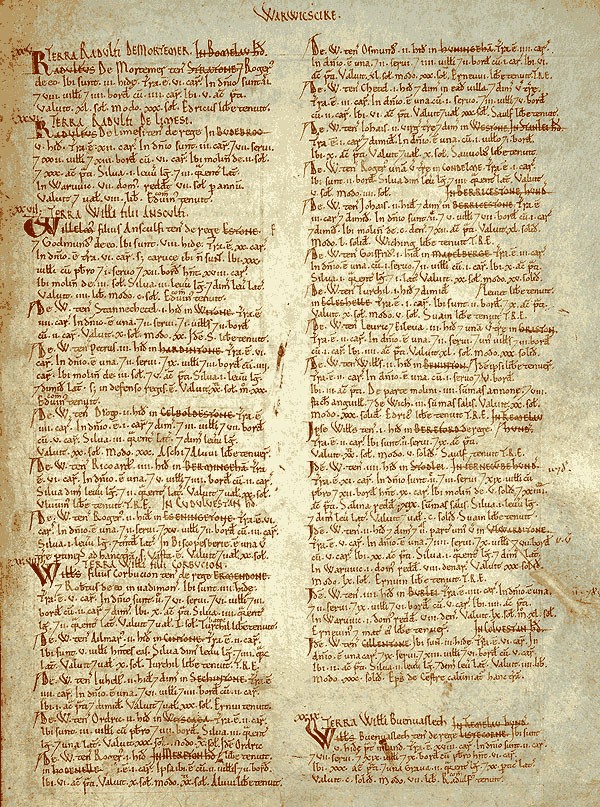
In 1085, William decided to find out just what his new kingdom of England was worth and what taxes should be paid. He sent out commissioners to record the total population, the size, ownership and value of all the land, and the amount of livestock each landowner owned. The results were written down in 1086 in two books, one covering Norfolk, Suffolk and Essex, the other the rest of the country (except the far north). The books were legal documents against which there was no appeal and so became known as Domesday, or the Day of Judgement. They recorded that the population of England was around 2 million.
Last days
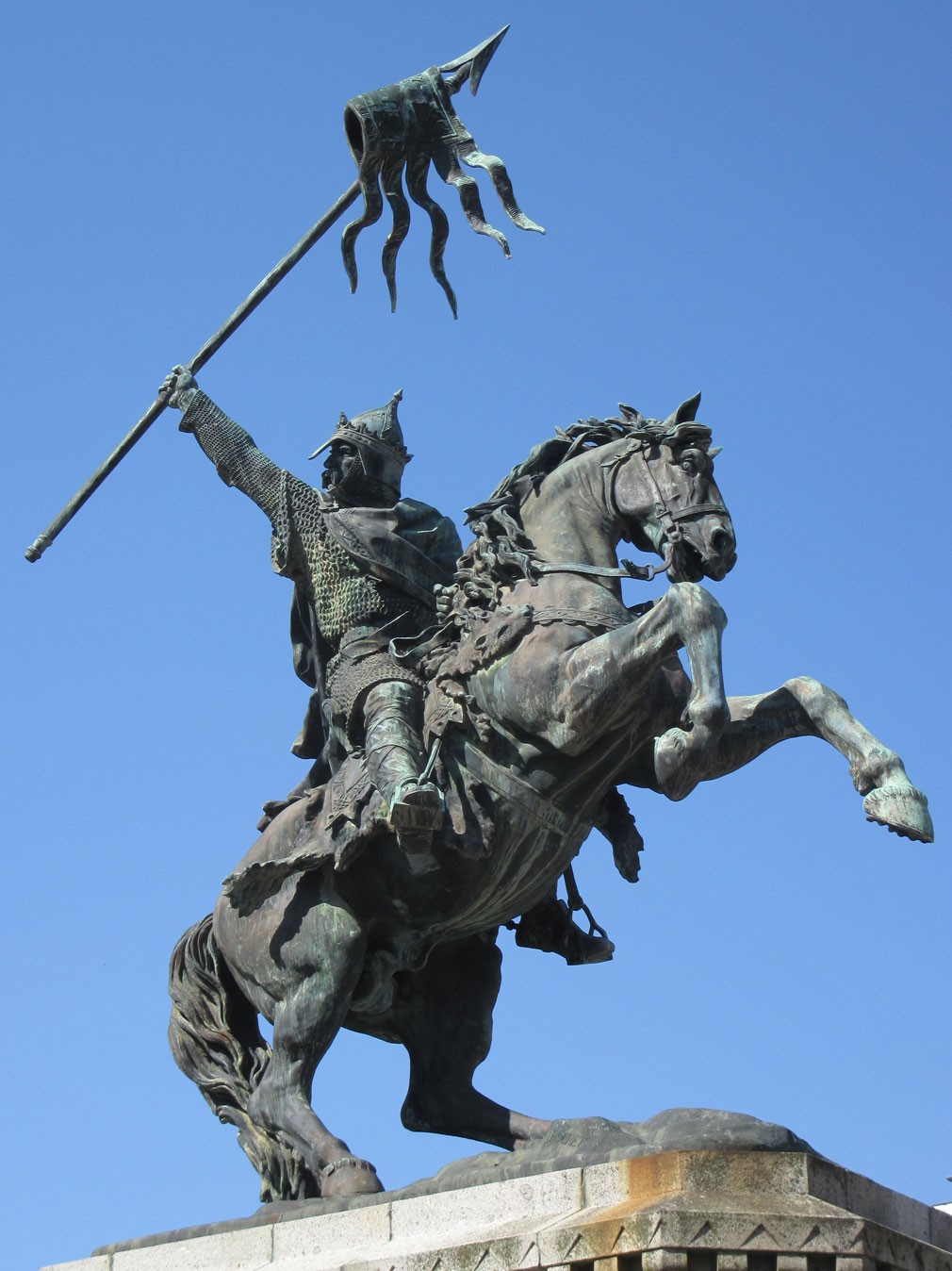
William spent the last days of his reign in Normandy, fighting against King Philip's attempt to grab Norman territory. He died from internal injuries after a fall from his horse whilst besieging the French city of Nantes in 1087. Before his death, William had divided his “Anglo-Norman” kingdom between his sons. His eldest son Robert inherited the Duchy of Normandy, while his second son, William Rufus, succeeded his father as king of England. (His fourth son, Henry, would eventually also succeed to the throne of England as Henry I.)
Consultant: Philip Parker
pics
Without in any way limiting Q-files Ltd’s exclusive rights under copyright, any use of this publication to “train” generative artificial intelligence (AI) technologies to generate text is expressly prohibited. Q-files Ltd reserves all rights to license use of this work for generative AI training and development of machine learning language models.