
British history

CITE
We have made every effort to follow citation style rules, but there may be some minor differences. If in doubt, please refer to the appropriate citation style manual.
History of Scotland. (2026). In Q-files Encyclopedia, History, British history. Retrieved from
https://www.q-files.com/history/british-history/history-of-scotland
"History of Scotland." History, British history, Q-files Encyclopedia, 30 Mar. 2026.
https://www.q-files.com/history/british-history/history-of-scotland.
Accessed 6 Aug. 2026.
History of Scotland 2026. History, British history. Retrieved 6 August 2026, from
https://www.q-files.com/history/british-history/history-of-scotland
History, British history, s.v. "History of Scotland," accessed August 6, 2026.
https://www.q-files.com/history/british-history/history-of-scotland


History of Scotland
Scotland has a proud history of independence, but throughout its history, it has had to fight for that independence against England to its south. The border between the two countries has often been disputed, while many English kings have tried to conquer Scotland. A long-standing alliance with England’s traditional enemy, France, led Scotland to invade England several times. Yet it was a Scottish king who united the two countries in 1603, and they have lived together peacefully ever since.

The coming of Christianity
Christianity first came to Scotland in the 390s. St Ninian, an English scholar, set up a church at Whithorn in Galloway. About 150 years later, Columba, an Irish monk from Derry, set up a monastery on Iona off the west coast of Scotland. From here, missionaries set out to convert the Picts and the Scots, the Celtic peoples who inhabited Scotland. By the time Columba died in 597, Christianity was well established throughout Scotland.
Uniting Scotland
At around the time St Columba founded his monastery on Iona, Scotland was divided into four warring kingdoms: the Picts ruled the north and Scots from Ireland ruled Dalraida in the west, while the two independent kingdoms of Strathclyde ruled the southwest and Bernicia or Lothian the east. In 843, Kenneth MacAlpin crushed the Picts and became the first king of Scotland, ruling the whole of the country north of the River Forth.
For the next 200 years, the Vikings raided Scotland, settling on many of the western islands. In 1018, Malcolm II won a huge victory against the Northumbrians at Carham in Lothian. His victory brought the southeast kingdom of Lothian into Scotland. The western kingdom of Strathclyde joined soon after, uniting the whole of Scotland within roughly its present boundaries for the first time.
Wars with England
Throughout their history, Scotland and England have fought each other. From 937 onwards, Scottish kings have invaded England in an attempt to kill an English king or seize the northern English counties, while English kings have invaded Scotland to claim overlordship over the Scottish kings or conquer the country. In 1286, Alexander III of Scotland died, leaving as his heir a four-year-old granddaughter, Margaret, who herself died four years later. Scotland now had no king, so the Scottish lords asked King Edward I of England to decide. He chose John Balliol, but when Balliol refused to join Edward fighting in France—instead going into an alliance with France, called the Auld Alliance—Edward invaded Scotland in 1296, deposed Balliol and ruled the country himself.
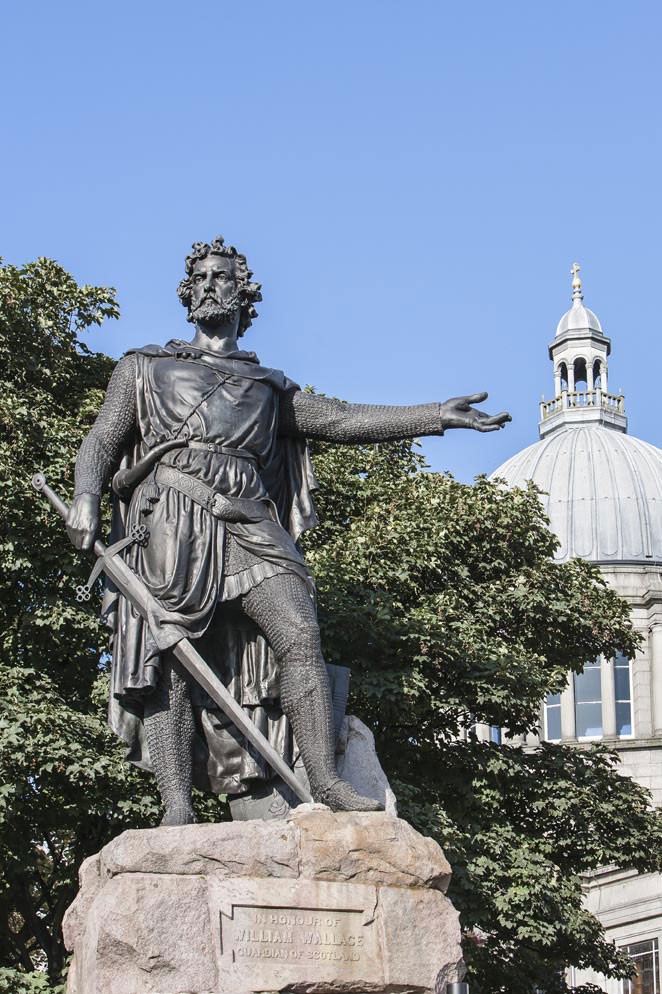
A rebellion led by William Wallace rose in revolt the next year. After an early success against the English army at the Battle of Stirling Bridge in 1297, he suffered defeat at Falkirk the following year and was captured and killed in 1305.
Robert Bruce
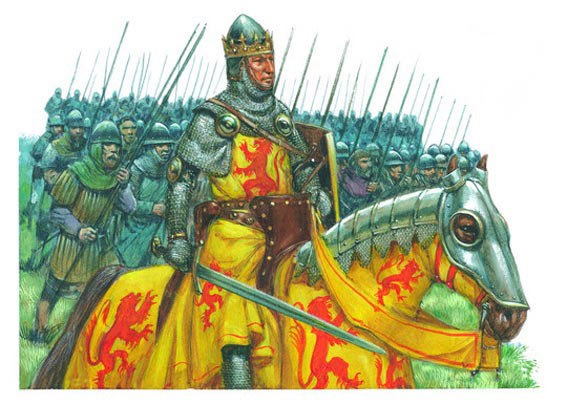
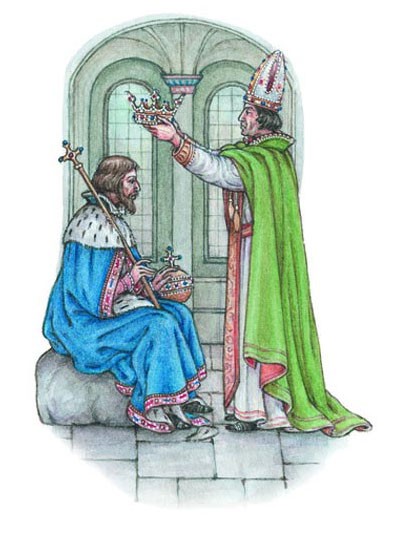
In 1306 a new opponent of English rule claimed the throne of Scotland. Robert the Bruce was crowned king of Scotland at Scone Abbey, the traditional coronation place for Scottish kings, but was immediately driven into hiding by the English army occupying Scotland. Taking refuge in a cave on Rathlin Island off the north coast of Ireland, it is said that Bruce watched a spider try and try again to spin a web and eventually succeed. He took heart from the spider’s determination. He returned to Scotland and launched a successful campaign to evict the English. In 1314 he besieged the English in Stirling Castle. An English army led by Edward II to relieve the siege was heavily defeated at Bannockburn.


In 1320 a group of Scottish lords and bishops met at Arbroath and wrote to Pope John XXII in Rome insisting that he recognize Scottish independence. The Declaration of Arbroath is one of the most important documents in Scottish history. Warfare between the two countries continued, however, until in 1327 Bruce invaded England to force the new English king, Edward III, to recognize Scottish independence. This the English did by the Treaties of Edinburgh and Northampton, signed in 1328. Bruce was now formally king of an independent Scotland, but died a year later.
The Stewart kings
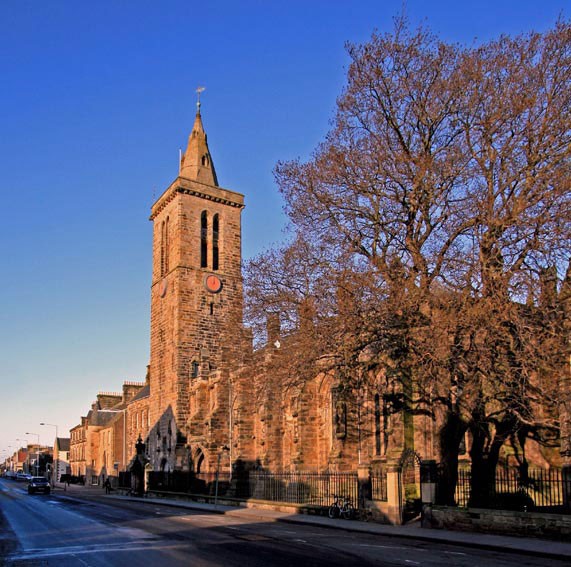
In 1371, Robert Stewart came to the throne as Robert II. He was the grandson of Robert Bruce and the first of the Stewart kings, who were to rule Scotland—and, after 1603, England as well, where they were known as Stuarts—until 1714. The first two Stewarts were weak rulers, but then a series of kings called James began in 1406. These were all ambitious men who held on to power with skill and ruthlessness. Under their rule, the first Scottish university, St Andrews, was established in 1413, and Glasgow University was founded in 1451.
The Stewarts extended Scottish power, finally ending Norwegian rule over the Shetland and Orkney islands in 1471. However, two invasions of England in support of Scotland’s French allies led to disaster, with James IV and most Scottish nobles dying at Flodden Field in 1513, and then his son James V dying soon after another disastrous battle at Solway Moss in 1542.
The Reformation
Ever since it became Christian, Scotland had been part of the Roman Catholic Church. In the 1540s, Protestants began to campaign for a new, reformed church that was independent of Rome. John Knox, a Calvinist priest, promoted a Scottish Reformation in 1559. The Scottish parliament decided in 1560 that Scotland was to become a Protestant nation. The Scottish Reformation ended the Auld Alliance with France and made union with Protestant England much more likely.
Mary Queen of Scots
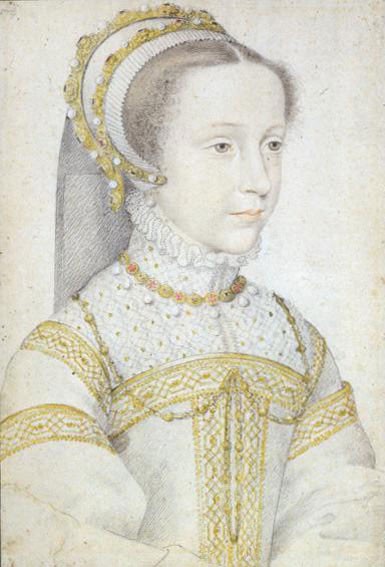
When James V died in 1542, the Scottish throne passed to his one-week-old daughter, Mary. Mary was brought up by her mother’s family in France and in 1558 married François, the heir to the French throne. When François became king in 1559, Mary became Queen of France. François died in 1560, and so Mary returned home to a country she did not know.
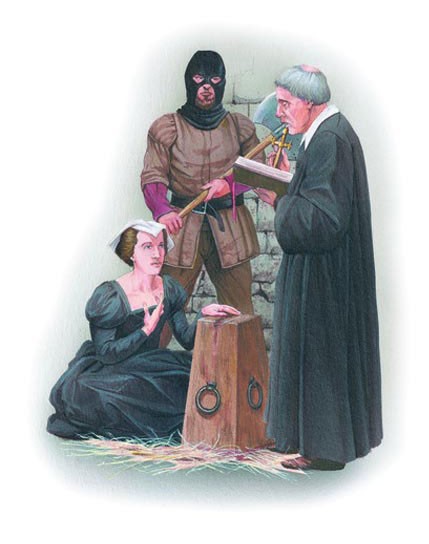
In 1565 Mary married her cousin, Lord Darnley, but he was killed two years later in an explosion in a house in Edinburgh. Mary was accused of his murder, although nothing was proved. She quickly married another suspect in the murder, the Earl of Bothwell. This marriage proved too much for the Scottish nobles, who rebelled against her and forced her to give up her throne for her young son, James VI. Mary fled to England, where she was imprisoned by her cousin, Elizabeth I of England. Elizabeth was a Protestant, but Mary had remained a Roman Catholic even though Scotland was now Protestant. She was also Elizabeth’s heir, and posed a threat to her throne. In 1587 she was accused of plotting to remove Elizabeth from the English throne and was tried for treason. She was found guilty and executed at Fotheringhay Castle in Northamptonshire.
Jacobites
When Elizabeth I of England died in 1603, she had no children, so the throne passed to her distant cousin, James VI, the son of Mary, Queen of Scots. James had been on the Scottish throne since 1567 and now became James I of England. The monarchs of the House of Stewart (now called Stuart) ruled both countries. Although the crowns of Scotland and England were now united in one monarch, the two countries kept their own parliaments, laws, churches and customs.
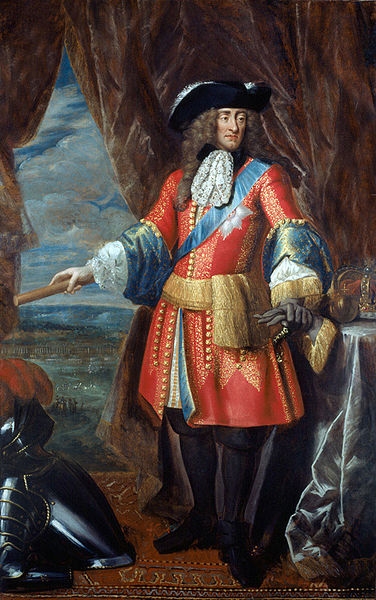
James VII (James II of England), who had intended to restore Catholicism to Britain, was deposed in 1688 in what was called the Glorious Revolution. James was replaced by his daughter Mary II, ruling jointly with her husband William III. A movement emerged that aimed to restore James and his heirs to the throne. Its followers were known as Jacobites (taking their name from the Latin form of James, Jacobus).
The strongholds of Jacobitism included the Scottish Highlands as well as other parts of Scotland, Ireland and northern England. The Jacobites rose against the Crown in 1689, but their army, made up chiefly of Highlanders, was crushed at the Battle of Dunkeld that year.
Union with England
In 1701, the English Parliament passed the Act of Settlement. It established the succession of the Protestant Sophia of Hanover, granddaughter of James VI (James I of England). The Scots declared that they should be free to choose their own candidate—even the Jacobite claimant, James VII's son, Prince James, who was now in exile. The Scottish Parliament was eventually persuaded that the kingdoms of Scotland and England should be united as the United Kingdom of Great Britain, with a single government based in London. Scotland would be represented in Parliament by 45 MPs and 16 elected peers. The Treaty of Union came into effect on 1st May 1707.

Clans
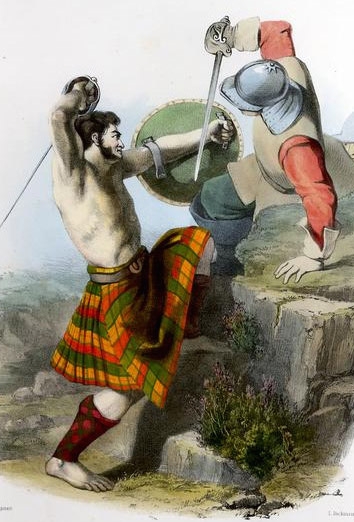
At the beginning of the 18th century, many people in the Scottish Lowlands were living in towns and were English-speaking. In contrast, most of the inhabitants of the Highlands and Western Isles were rural dwellers, eking out a living from farming. Their culture and language were mostly Scots Gaelic.
The Highlanders still followed a centuries-old clan system, in which a chief and his family effectively ruled over a local region. They leased land to tenant farmers in return for their personal allegiance and an obligation to fight for him—often against neighbouring clans.
Rebellions
The Union with England was unpopular with many Scots, both Highlanders and Lowlanders. Queen Anne had many relatives with stronger claims to the throne than her successor, George I, but they were barred by the Act of Settlement on the grounds that they were Catholics. Among these claimants was the exiled James Francis Edward Stuart, son of James VII. Known as "The Old Pretender”, he led a series of attempts by his supporters, the Jacobites, to put him on the British throne. In 1715, a Jacobite army under John Erskine, Earl of Mar, fought its way into England before being defeated at the Battle of Preston. James fled back to France.

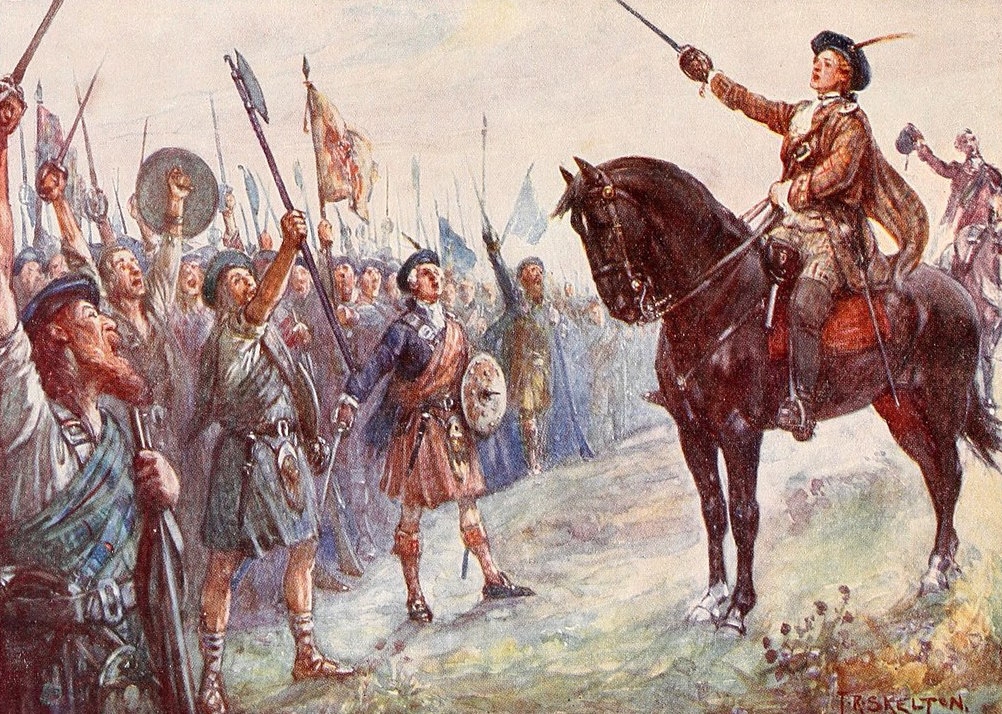
Another Jacobite rebellion broke out in 1745 when Charles Edward Stuart (known as “Bonnie Prince Charlie” or the “Young Pretender”), landed in Scotland. Having advanced as far south as Derby, he was forced to retreat to Scotland, where he was defeated by the Duke of Cumberland at the Battle of Culloden in April 1746.
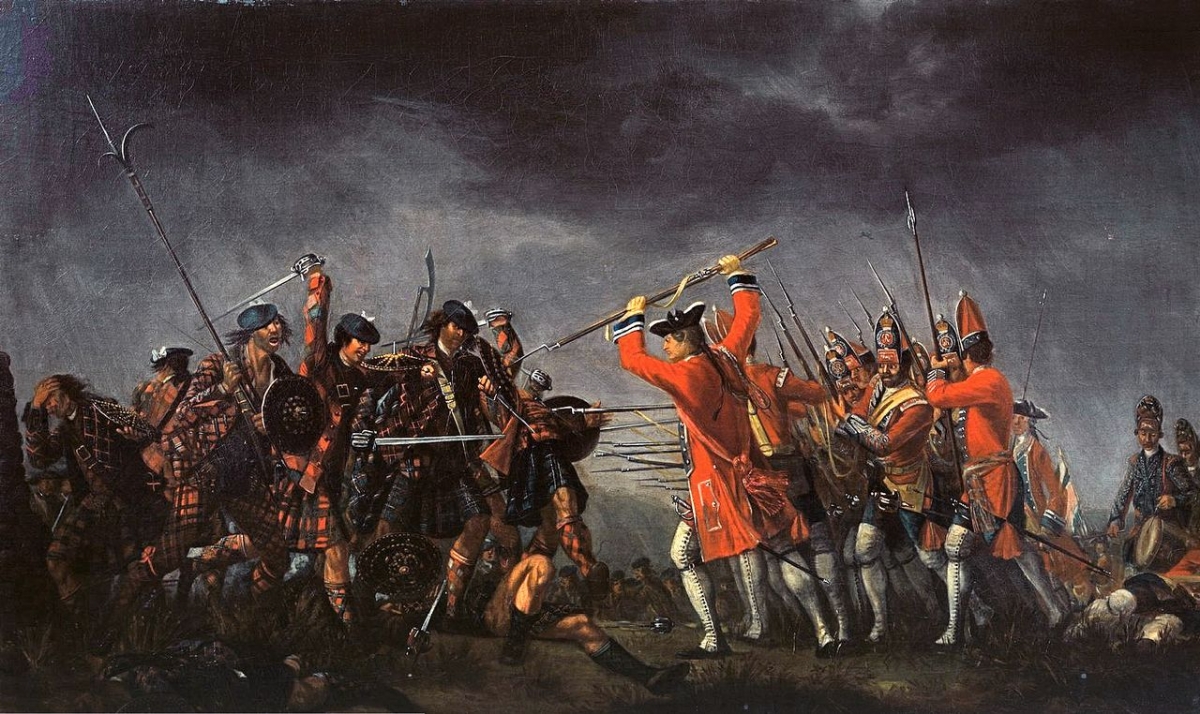
The end of the clans
After Culloden, the British government declared the Jacobite leaders to be traitors and had most of them executed. Many of the rebel soldiers were shipped to the colonies overseas. With thousands of Highlanders having been killed during or after Culloden, or gone into exile, whole Highland clans were lost. The British government also set about banning Highland culture, including the use of the Scots Gaelic language, the wearing of tartans and the playing of bagpipe music. The days of the Scots Gaelic clans were over.
Highland Clearances
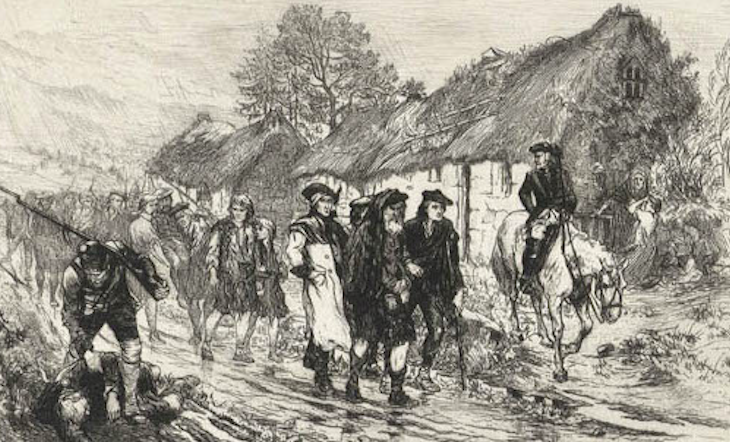
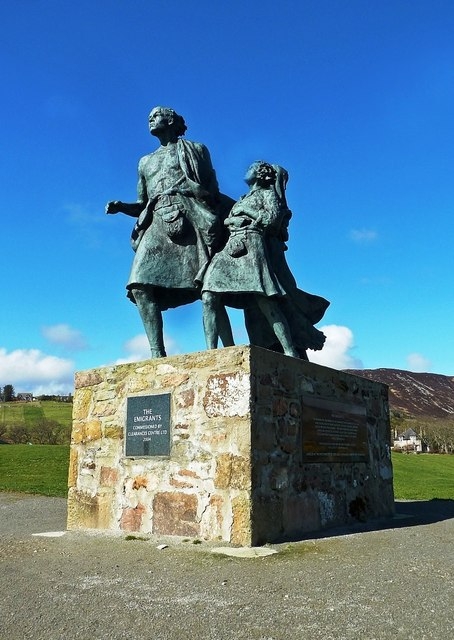
The British government also allowed the old clan chiefs to acquire land in the Highlands.These aristocratic landowners were known as lairds. Over the decades between the 1760s and the 1850s, in order to improve the profitability of their new lands, the lairds evicted the tenant farmers, most of whom had lived there for many years. The evictions were often brutal: some lairds, such as the Duke of Sutherland, had their tenants’ cottages burnt to the ground. The lands were then enclosed (made no longer common land) for grazing sheep. This process became known as the Highland Clearances. Many of the evicted tenants were resettled in tiny rented farms, called crofts, on the coast of Scotland. The crofters were forced to supplement their livelihoods by smelting kelp (a type of seaweed), or by fishing.
The Potato Famine in the Highlands, which began in 1846, devastated the crofters. Some died from disease and starvation. Many decided to leave their Highland homes and seek a better life in the towns and cities of the Lowlands or further afield.

Industrialization
In the middle of the 18th century, Scotland was still a mostly poor, rural country with a population of 1.3 million. Its economy depended on the sales of cattle and linen to England. The Union with England—and the defeat of the Jacobites—began its transformation into a rich, industrial nation over the next century.
Glasgow, on the River Clyde, became the centre for the tobacco and sugar trade. New industries, such as textiles, and the production of glass, beer and soap, emerged after around 1815. Edinburgh, meanwhile, became a centre of banking. Universities sprung up across Scotland.
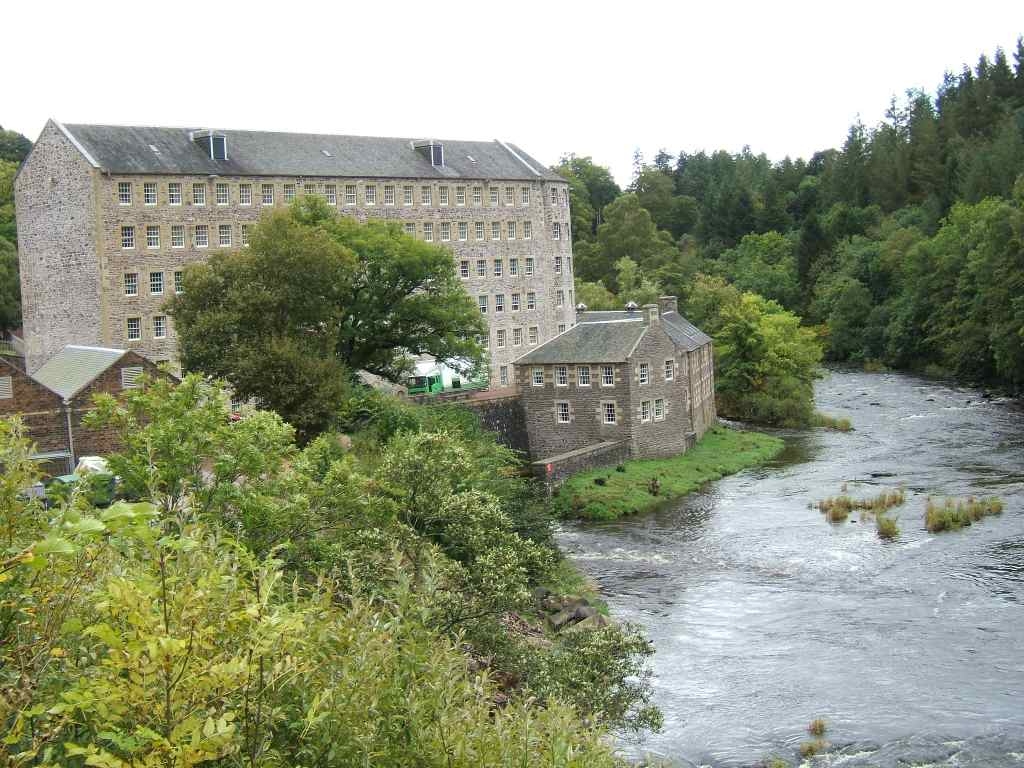
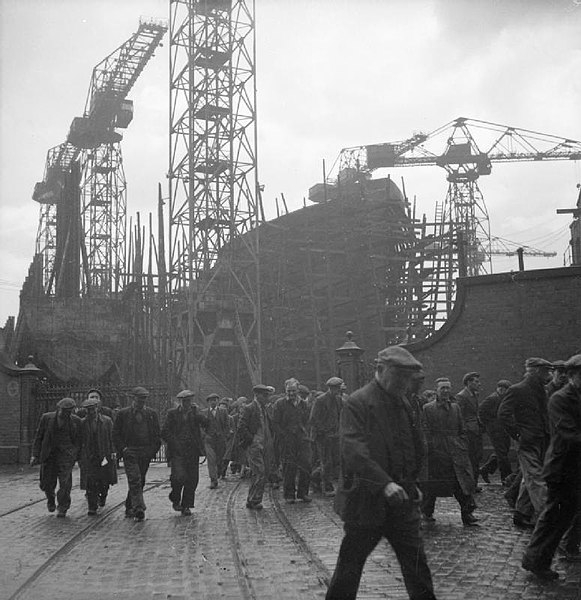
The population grew steadily in the 19th century, reaching nearly 3 million by 1851. Scotland’s textile industry declined after 1861 when the American Civil War cut off supplies of raw cotton. But thanks to its large reserves of easily mined coal and iron, Scotland became a centre for steel production, engineering, shipbuilding and locomotive construction.
Glasgow grew to be one of the largest cities in the world, known as "the Second City of the Empire” after London. Industry attracted rural workers, as well as immigrants from Catholic Ireland, to move to Scottish cities.
But even with the rapid growth of industry, there was not enough work for people abandoning their homes in rural Scotland. Between 1841 and 1931, about 2 million Scots migrated to North America, Australia and New Zealand, while another 750,000 Scots relocated south of the border to England.
Scotland today
In the 1970s and 80s, Scotland's economic situation dipped as industries such as shipbuilding and coalmining went into steep decline. At the same time, the production of North Sea oil and gas became a major new industry. A new service-based economy emerged to replace the traditional heavy industries. This included financial services and the electronics companies setting up in what was known as "Silicon Glen".
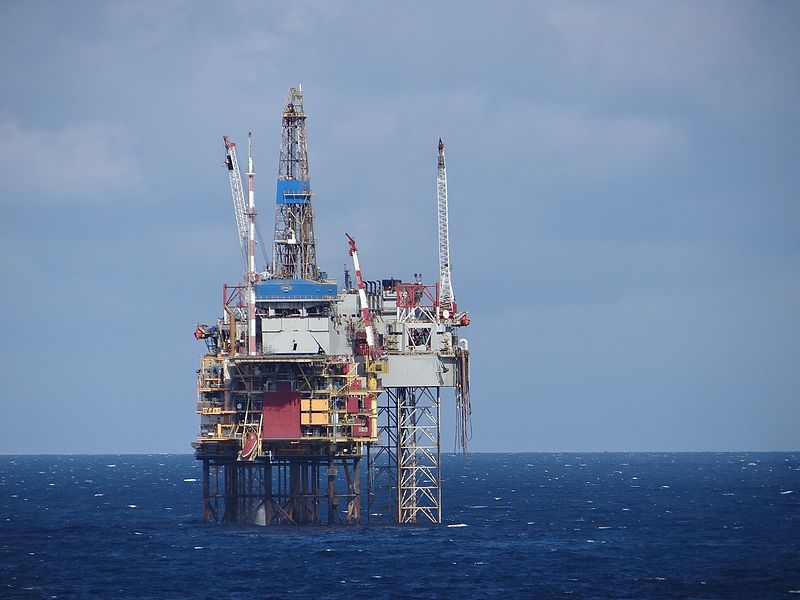

This period also saw the emergence of movements calling either for the devolution of government from the British parliament in Westminster or full Scottish independence. A devolved Scottish Parliament was established in 1999; the new Scottish Parliament Building, adjacent to Holyrood House in Edinburgh, opened in 2004. A national referendum to decide on Scottish independence was held on 18th September 2014. By a margin of about 55% to 45%, Scottish voters chose to remain in the United Kingdom.
Consultant: Philip Parker
pics
Without in any way limiting Q-files Ltd’s exclusive rights under copyright, any use of this publication to “train” generative artificial intelligence (AI) technologies to generate text is expressly prohibited. Q-files Ltd reserves all rights to license use of this work for generative AI training and development of machine learning language models.