
Europe

CITE
We have made every effort to follow citation style rules, but there may be some minor differences. If in doubt, please refer to the appropriate citation style manual.
United Kingdom. (2026). In Q-files Encyclopedia, Geography, Europe. Retrieved from
https://www.q-files.com/geography/europe/united-kingdom
"United Kingdom." Geography, Europe, Q-files Encyclopedia, 31 Mar. 2026.
https://www.q-files.com/geography/europe/united-kingdom.
Accessed 13 Sep. 2026.
United Kingdom 2026. Geography, Europe. Retrieved 13 September 2026, from
https://www.q-files.com/geography/europe/united-kingdom
Geography, Europe, s.v. "United Kingdom," accessed September 13, 2026.
https://www.q-files.com/geography/europe/united-kingdom


United Kingdom
The United Kingdom (UK) consists of England, Scotland and Wales (which together make up Great Britain) and Northern Ireland. The country is often called "Britain" for short. In the past, Britain ruled the largest empire the world had ever seen, and it still plays a big part in world affairs today. One of the world's leading industrial nations and financial centres, Britain has the third largest economy in Europe, after Germany and France. Lying on the same latitude as southern Canada, Britain is warmed by the Gulf Stream, which gives the country a temperate climate. Southwesterly winds from the Atlantic Ocean bring a high yearly rainfall, mild winters and warm summers. Central and southern England are generally low-lying, while Northern England, Wales and Scotland have larger expanses of upland.


Glaciation
In the last 500,000 years, there have been periods of extremely cold climate in Britain. During some of these glacial periods, or Ice Ages, great ice sheets advanced south from the North Pole, spreading over much of the country, and reaching as far south as the River Thames in southern England at their greatest extent. In places, the ice was up to 1000 metres (more than 3000 feet) thick. The most recent glacial period ended just 10,000 years ago.

During the Ice Ages, what are now the North Sea and Irish Sea became an expanse of dry land, looking like the Arctic tundra today. As the ice sheet melted, sea levels rose, filling the North Sea and Irish Sea and making the British Isles into islands. Glaciers carved wide, U-shaped valleys in upland areas such as Scotland, the Lake District and north Wales. On Scotland’s west coast, these deep valleys filled with water from the sea to form sea lochs.
As the ice sheets retreated north, they left behind deposits of clay from the rocks that had been crushed by the weight of the ice. This boulder clay, as these deposits are known, became overlain by fertile soils that today cover much of the Midlands and East Anglia.


People
Modern-day humans first arrived in Britain from mainland Europe between 41,000 and 44,000 years ago. Most British people today are descended from these settlers, along with the various ethnic groups that settled in the country before the 11th century AD: the Celts, Romans, Anglo-Saxons, Norse (Vikings) and the Normans.
The port city of Liverpool has the oldest black population in Britain. It dates back to at least the 1730s and the period of the African slave trade. Liverpool also has as long-established Chinese community, dating to the arrival of Chinese seamen in the 19th century.
Since 1948, a number of immigrants to the UK have come from the Republic of Ireland and from countries of the former British Empire, especially India, Bangladesh, Pakistan, the Caribbean, South Africa, Kenya and Hong Kong. From the 1990s, migrants to the UK have come from a much wider range of countries, among them refugees and asylum seekers. People also came from the European Union, especially Poland.


Multiculturalism
The UK has long been home to people from many different cultures. In the 19th and early 20th centuries, Germans and Russian Jews formed significant immigrant communities. Since World War II, people from the Indian subcontinent, Africa, the Caribbean and Eastern Europe have come to live there. The largest ethnic populations are found in the UK’s major cities. About 37% of Leicester's population is of Asian ancestry, for example, while Muslims of Pakistani descent make up 16% of Bradford’s population. More than 300 languages are spoken in London. Aside from people born in the UK, London's largest ethnic groups are from India, Poland and Ireland.
Since Poland joined the European Union (EU) in 2004, Polish has become the UK's third most spoken language, after English and Welsh.
Agriculture

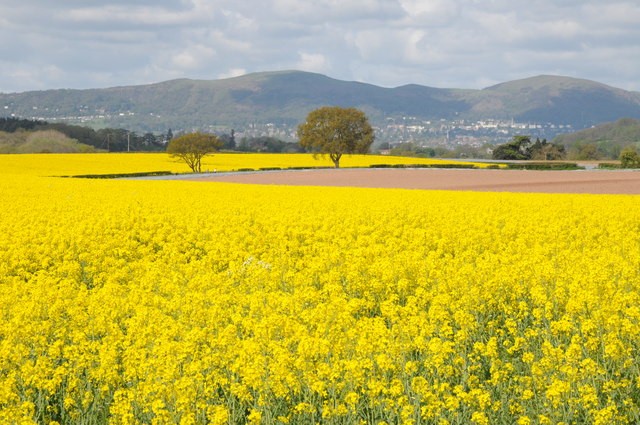
Around 70% of the UK’s land is used for agriculture, but efficient modern farming methods mean that agriculture employs under 2% of the workforce. Just under half the UK's land is arable land, used for growing crops such as wheat, barley or maize, while the rest is used for raising livestock or left as woods or moorland. The main areas of arable farmland are found in the south and east of England, while further west and north, a higher proportion of land is given over to pasture.
In recent years there has been an increase in organic farming: around 10% of Europe’s organic farms are found in the UK. Certain crops, such as oilseed rape, are grown for use as fuel.
Fishing off the west coast of Scotland and in the North Sea accounts for around 5% of the UK’s food production.

Industry
The UK was once dominated by heavy industries such as coal mining, textiles and shipbuilding. In the late 18th and early 19th century, these industries helped to shape cities and communities in South Wales, the Midlands, Northern England and Scotland, fuelling the Industrial Revolution and helping to make Britain the richest and most powerful country in the world.
Today, pharmaceuticals, aerospace and electronics have become some of the UK’s major industries. The majority of the workforce is employed in service industries, such as banking, retail, tourism and transport. In the 1970s oil reserves were discovered in the North Sea, and oil drilling began off the coast of Scotland. Although oil production is now in decline, oil and gas products still make up 11% of UK exports (as of 2023).

Wales

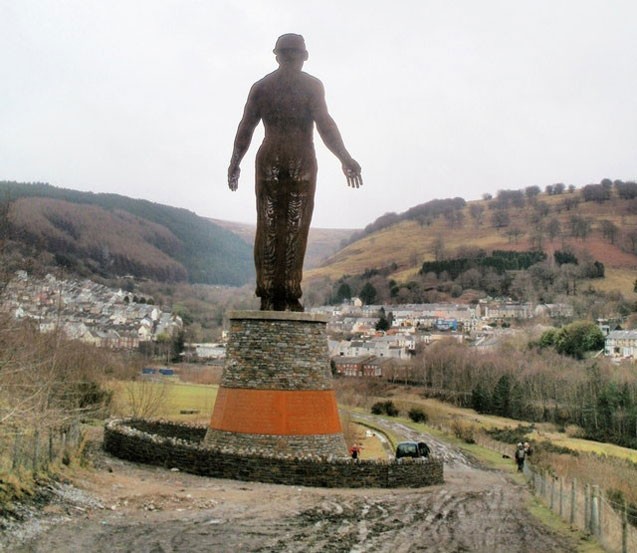
Much of Wales is upland, with its highest mountains found in Snowdonia in the north. Three National Parks protect the landscape and wildlife of Wales’ mountains and coasts. Although part of the UK, Wales has its own Assembly, which makes certain laws for Wales alone. Most of Wales’s population is concentrated around the south, once a region of coal mining and steel manufacture. Around a fifth of the people speak Welsh as well as English, while for many north and west Walians, Welsh is their first language.
Scotland
Scotland occupies around a third of the British mainland. North of the Central Belt lie the wild and remote Scottish Highlands. Britain’s highest mountain range, the Grampians, includes its highest peak, Ben Nevis (1343 metres / 4406 feet). The ancient Caledonian Forest once covered vast areas of the Highlands. Today, only small areas remain in the Cairngorms, with most of the land now covered by heather moorland or planted coniferous forest. Nearly 800 islands belong to Scotland, of which 93 are inhabited.

Scotland's population is concentrated in the cities of the Central Belt and east coast. Edinburgh is Scotland's capital and home to the Scottish parliament, while the port city of Glasgow is the main centre of industry. South towards the border with England lie the Southern Uplands.


Northern Ireland
Northern Ireland remained part of the UK after the rest of Ireland became independent in 1921. It is a land of mountains, valleys and lakes. In the west are the Sperrin Mountains; the mountains of Antrim lie in the northeast, the mountains of Mourne in the southeast. In the centre lies the UK’s largest lake, Lough Neagh.
Over a third of Northern Ireland’s population lives in or around the capital, Belfast. Once known for ship and textile manufacturing, Belfast is now a cultural centre. Most of its people work in services such as tourism and finance. Northern Ireland has its own Assembly and is largely self-governing.


Northern England
The Pennine hills run down the centre of northern England. To the west lies the Lake District, an area of mountains and lakes created from the meltwaters of Ice Age glaciers. In upland areas across the north the soil is peat, a dark, rich soil formed from the decaying remains of ancient plants.
Between Liverpool and Leeds is a densely populated region. Many towns and cities, including Manchester and Sheffield, grew up as centres of manufacturing during the days of the Industrial Revolution. Today they have become centres of business and culture.


Midlands
The Midlands is another of England's industrial heartlands. At the centre of the region lies the UK’s second largest city, Birmingham. Stretching to the west of the city is a densely populated area called the Black Country. Coal and iron deposits here led to the development of this area as an important industrial region in the 19th and 20th centuries. Although precision engineering and vehicle manufacture are still important, many more people now work in the service industries, such as retail and administration. Birmingham has become known for its thriving arts scene.

Southern England
The area southeast of a line drawn from the Bristol Channel to the Wash is mostly low-lying, apart from the mostly hilly southwestern peninsula. Southern England experiences slightly warmer average temperatures than the rest of the UK. Where not built over for cities and their sprawling suburbs, most of the land is intensively farmed, with arable dominating in the east—especially East Anglia—and the low hills or slightly rainier areas in the west given over to pasture for livestock.


The southeast region is well connected with London and many people live here so that they can commute into the city for work. A number of international airports are also located here, as well as some of the UK's largest ports and the Channel Tunnel link with continental Europe.
London

Two thousand years ago, the Romans bridged the River Thames, establishing the town of Londinium. Over the centuries, the town grew to become London, the UK's most important city and its capital. During the 19th century, as the hub of an empire, London was the world's most populous city. Today, London is home to around a seventh of the UK’s population.
London is built on the tidal River Thames. The risk of flooding has become greater over the years, leading to the construction of the Thames Barrier in 1982. To prevent London from expanding any further into the surrounding countryside, an area protected from further building development, called the Green Belt, encircles Greater London.


Consultant: Lloyd Jenkins
Facts about UK
Population (UK) 68,265,209 (2023 estimate)
Population (England) 57,106,398 (2022 estimate)
Population (Scotland) 5,490,100 (2023 estimate)
Population (Wales) 3,164,000 (2023 estimate)
Population (Northern Ireland) 1,920,400 (2023 estimate)
Area 241,533 sq km (93,256 sq miles)
Highest point Ben Nevis 1344 m (4408 ft)
Capital London (population 9,787,428)
Other major cities Manchester (2,553,379), Birmingham (2,440,986), Leeds (1,777,9340), Glasgow (1,199,629), Liverpool (864,122) (Figures are for urban areas)
Languages English, Welsh
Religions Christian (including Anglican, Presbyterian, Methodist) 51%, Christian (Roman Catholic) 9%, Muslim 3%, Hindu 1.3%, other 10%, none 25.7%
Ethnicity White 87.2%, black/African/Caribbean/black British 3%, Indian/British Indian 2.3%, Pakistani/British Pakistani 1.9%, mixed 2%, other 3.7%
Currency British pound sterling (GBP)
Chief exports Cars and vehicle parts, medicines, chemicals, petroleum products, electrical equipment


History of UK
c.850,000 BC
The first people arrive in Britain from Europe.
c.40,000 BC
Modern-day Homo sapiens arrive from Europe.
c.15,000 BC
The climate warms up, allowing people to settle permanently in Britain.
c.6500 BC
Britain and Ireland become islands and separate from the rest of Europe.
c.4500 BC
People first farm in Britain.
c.3000–2200 BC
Stonehenge is constructed.
c.500 BC
Celtic speakers settle in Britain.
55 BC
Julius Caesar sends a mission to punish Celtic tribes of England.
54 BC
Julius Caesar returns with a large army to attack Britain.
AD 43
Emperor Claudius sends a large army to conquer Britain. Four years later, most of southern England is under Roman rule.
60/61
The Iceni tribe under Boudicca rises in revolt against Roman rule.
122
Works begins to construct Hadrian’s Wall on the border between Roman Britain and the lands to the north.
390s
St Ninian brings Christianity to Scotland.
410
The Romans tell the Britons to defend themselves as Roman legions leave.
400s
Angles, Saxons and Jutes invade England.
560s
St David sets up monasteries in Wales.
597
St Augustine brings Christianity to England.
613
King Aethelfrith of Northumbria defeats the Britons at Chester.
600s
Seven English kingdoms of the Heptarchy established.
617
King Raedwald is buried at Sutton Hoo in East Anglia.
793
Vikings make their first raids against England.
829
Ecgberht of Wessex is recognized as king of all England.
843
Kenneth MacAlpin crushes the Picts and unites northern Scotland for the first time.
871–899
Alfred the Great rules.
876
Vikings settle in northern England and East Anglia, marking the beginning of the Danelaw.
1013–14
The Danish king Sweyn Forkbeard rules England.
1016–35
Canute rules a vast empire in England and Scandinavia.
1018
Malcolm II of Scotland wins the Battle of Carham and unites the whole of Scotland.
1035
William becomes Duke of Normandy.
1042–66
Edward the Confessor rules as one of the last Anglo-Saxon kings of England.
1066
William of Normandy defeats King Harold of England at Hastings and wins the crown.
1066–87
William I, William the Conqueror, rules England.
1086
The Domesday Book is compiled.
1087–1100
William II, William Rufus, rules England.
1100–35
Henry I rules England.
1120
Henry I’s son and heir, William, dies in the White Ship in the English Channel.
1135–54
Stephen engages in a lengthy civil war throughout his reign with the rightful queen, Matilda.
1154–1485
Plantagenet kings rule England.
1154–89
Henry II rules England.
1171
Henry II invades Ireland and becomes Lord of Ireland.
1176
The First Welsh Eisteddfod is held in Wales.
1189–99
Richard I, Richard the Lionheart, rules.
1199–1216
John rules England.
1200s
Wales is united under Llywelyn Fawr.
1215
King John is forced to sign the Magna Carta.
1216–72
Henry III rules England.
1265
Simon de Montford calls a new parliament.
1272–1307
Edward I rules England.
1282
Edward I invades Wales: the last Welsh prince is killed.
1284
Welsh independence is ended by the Statute of Rhuddlan.
1295
The Scots sign the Auld Alliance with France.
1296
Edward I invades Scotland.
1301
The future Edward II is created first Prince of Wales.
1306
Robert the Bruce rebels against English rule in Scotland.
1307–27
Edward II rules England.
1314
The Scots win a huge victory over the English at Bannockburn.
1320
The Scots ask the Pope to recognize their independence in the Declaration of Arbroath.
1327–77
Edward III rules England.
1328
England recognizes the independence of Scotland.
1337–1453
England fights the 100 Years’ War against France.
1348
Black Death kills millions.
1362
English replaces French as the official language of England.
1371
Robert II becomes first the Stewart king of Scotland.
1377–99
Richard II rules England.
1381
The Peasants’ Revolt takes place.
1399
Richard II is deposed by his Lancastrian cousin, Henry IV.
1401
Owain Glyndwr rises in revolt in Wales.
1455-85
The Wars of the Roses are fought between the houses of Lancaster and York.
1485
Richard III is defeated by Henry Tudor at Bosworth Field. The Tudor dynasty begins.
1485–1509
Henry VII rules England.
1509–47
Henry VIII rules England.
1534
The Act of Supremacy makes Henry VIII Supreme Head of the English church.
1535–42
Wales is united with England.
1536–39
The monasteries are dissolved in England.
1542–67
Mary, Queen of Scots rules Scotland.
1547–53
Edward VI rules England.
1553–58
Mary I attempts to restore Catholicism to England.
1558–1603
Elizabeth I rules England.
1560
Scotland becomes Protestant.
1583
Newfoundland becomes England’s first colonial possession.
1587
Mary, Queen of Scots is executed for treason.
1588
The Spanish Armada is defeated in the English Channel.
1603
James VI of Scotland becomes the first Stuart king of England as James I.
1607
Jamestown becomes the first British colony in North America.
1620
The Pilgrim Fathers establish a colony in Plymouth, Massachusetts.
1625–49
Charles I rules England and Scotland.
1639–49
Civil wars are fought in Scotland and England.
1649
Charles I is executed as England becomes a republic.
1649–50
Oliver Cromwell suppresses Ireland.
1653
The Protectorate is established under Oliver Cromwell.
1660
The Restoration of the monarchy: Charles II becomes king.
1661
The East India Company establishes its first trading base in India.
1665
Plague strikes London.
1666
The Great Fire of London takes place.
1685-88
James II is king of England and Scotland.
1688
The Glorious Revolution overthrows James II.
1689
Parliament offers throne jointly to William of Orange and Mary, daughter of James II.
1689
James II is defeated at the Battle of the Boyne in Ireland.
1701–1713
The War of the Spanish Succession is fought against France.
1701
The Act of Settlement settles the royal succession on the Protestant Hanoverian family.
1702–1714
Anne is queen of England and Scotland.
1707
Union of Scotland with England as Scottish parliament is abolished.
1714–27
George I of Hanover is king of Great Britain.
1715
The Jacobite Rebellion of the Old Pretender takes place.
1721
Robert Walpole becomes the first prime minister of Great Britain.
1727–60
George II is king of Great Britain.
1745
The Jacobite Rebellion of the Young Pretender takes place.
1756–63
Victory in the Seven Years’ War brings Canada and eastern India under British control.
1760–1820
George III is king of Great Britain.
1775–83
Wars against France end in British victory at Waterloo.
1807
The slave trade is abolished in the UK.
1811–20
The Regency of George, Prince of Wales.
1820–30
George IV is king of the United Kingdom.
1825
The world’s first passenger railway opens between Stockton and Darlington.
1830–1837
William IV is king of the United Kingdom.
1832
The Great Reform Act gives more men the vote.
1833
The Factory Act begins to tackle working conditions in factories.
1834
Slavery is abolished in the British Empire.
1837–1901
Victoria is queen of the United Kingdom.
1851
The Great Exhibition is held in London.
1857–58
The Indian Mutiny takes place against British rule.
1861
Prince Albert dies.
1870
The Education Act provides primary education for all.
1876
Victoria becomes Empress of India.
1887
Queen Victoria celebrates her Golden Jubilee.
1899–1902
The Boer War is fought in southern Africa.
1901–10
Edward VII is king of the United Kingdom.
1910–36
George V is king of the United Kingdom.
1911
The Parliament Act restricts the powers of the House of Lords.
1914–18
World War I.
1918
Women over 30 get the vote for the first time.
1922
The Irish Free State, independent from the UK, is established.
1926
General Strike takes place in support of the miners.
1928
Everyone aged 21 or over gets the vote.
1929
The Wall Street crash leads to economic slump in Britain.
1936
Edward VIII abdicates to marry Wallis Simpson.
1936–52
George VI is king of the United Kingdom.
1939–45
World War II.
1940
Winston Churchill becomes prime minister.
1945–51
The Labour government introduces widespread reforms.
1947
India and Pakistan gain their independence.
1948
The National Health Service is set up.
1948
The Olympic Games are held in London.
1952
Elizabeth II becomes queen of the United Kingdom.
1957
Ghana becomes the first black African colony to gain independence.
1969
The Troubles break out in Northern Ireland.
1971
Britain introduces decimal currency.
1973
Britain joins the European Economic Community (now European Union).
1979–90
Margaret Thatcher is the first woman prime minister.
1997
Hong Kong is handed back to China.
1998
The Good Friday Peace agreement is signed in Northern Ireland.
1999
Devolution to Scotland and Wales
2001–2014
UK forces take part in War in Afghanistan
2003–2009
UK forces take part in Iraq War
2011
Queen Elizabeth II celebrates 60 years on the throne.
2012
The Olympic Games are held in London.
2014
Voters in a referendum in Scotland reject independence
2016
British citizens vote to leave the European Union (Brexit) in a referendum
2020
UK leaves the European Union (January)
2022
Death of Queen Elizabeth II. She is succeeded by her son as King Charles III.
pics


Without in any way limiting Q-files Ltd’s exclusive rights under copyright, any use of this publication to “train” generative artificial intelligence (AI) technologies to generate text is expressly prohibited. Q-files Ltd reserves all rights to license use of this work for generative AI training and development of machine learning language models.