
Europe

CITE
We have made every effort to follow citation style rules, but there may be some minor differences. If in doubt, please refer to the appropriate citation style manual.
Western Europe. (2026). In Q-files Encyclopedia, Geography, Europe. Retrieved from
https://www.q-files.com/geography/europe/western-europe
"Western Europe." Geography, Europe, Q-files Encyclopedia, 31 Mar. 2026.
https://www.q-files.com/geography/europe/western-europe.
Accessed 13 Sep. 2026.
Western Europe 2026. Geography, Europe. Retrieved 13 September 2026, from
https://www.q-files.com/geography/europe/western-europe
Geography, Europe, s.v. "Western Europe," accessed September 13, 2026.
https://www.q-files.com/geography/europe/western-europe


Western Europe
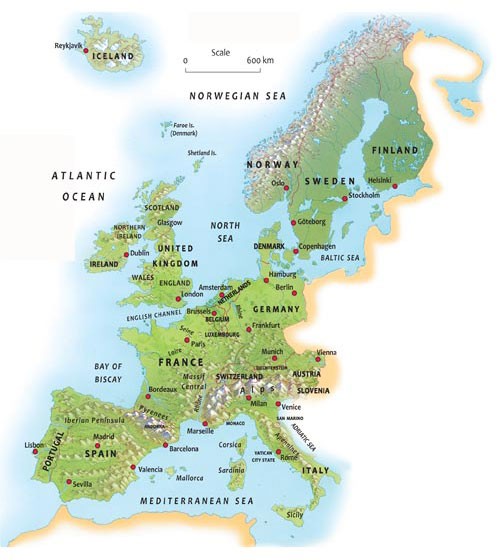
The term "Western Europe" refers to the westernmost countries of Europe, one of the world's most prosperous—and densely populated—regions. Four Western European nations are among the world's top ten largest economies: Germany, UK, France and Italy. The United Nations classifies all the Western European countries as having "very high human development". This means that, compared to other countries in the world, these countries have high levels of education, literacy (ability to read and write), life expectancy and overall quality of life.


United Kingdom
The United Kingdom (UK) consists of England, Scotland and Wales (which together make up Great Britain) and Northern Ireland. Scotland, northern England and Wales have large areas of upland. Central and southern England are more low-lying, a mixture of rolling farmland, towns and cities. The UK was once dominated by heavy industries such as coal mining, steelmaking and shipbuilding. Today, pharmaceuticals, aerospace, electronics, oil and gas, as well as tourism, communications and financial services, have become much more important.
Once the hub of a worldwide empire, Britain still plays a leading role in international affairs. Its language, English, is spoken as a second language all over the world, and is dominant on the internet and in other areas of international communication.
Ireland

Because of its mild, wet climate, Ireland, a land of mountains, bogs, pastures and farmland, is famous for its lush green landscape. Most of its people are English-speakers, although some, particularly in the west, speak Gaelic, an ancient Celtic language. Ireland has a modern economy based on services (such as finance and telecommunications) and high-tech industries, as well as on manufacturing. Between 1995 and 2000, the Irish economy grew so fast that it was named the Celtic Tiger ("tiger" being the name given to countries that experience rapid economic growth).

France
France is the largest country in western Europe. Apart from the hills of Brittany, most of northern and western France is fairly flat. This rich agricultural land is crossed by the Seine, Loire and Garonne rivers and their tributaries. Central, eastern and southern France are mostly hilly or mountainous. The ancient volcanic mountains of the Massif Central are separated from the French Alps by France’s fourth great river, the Rhône.
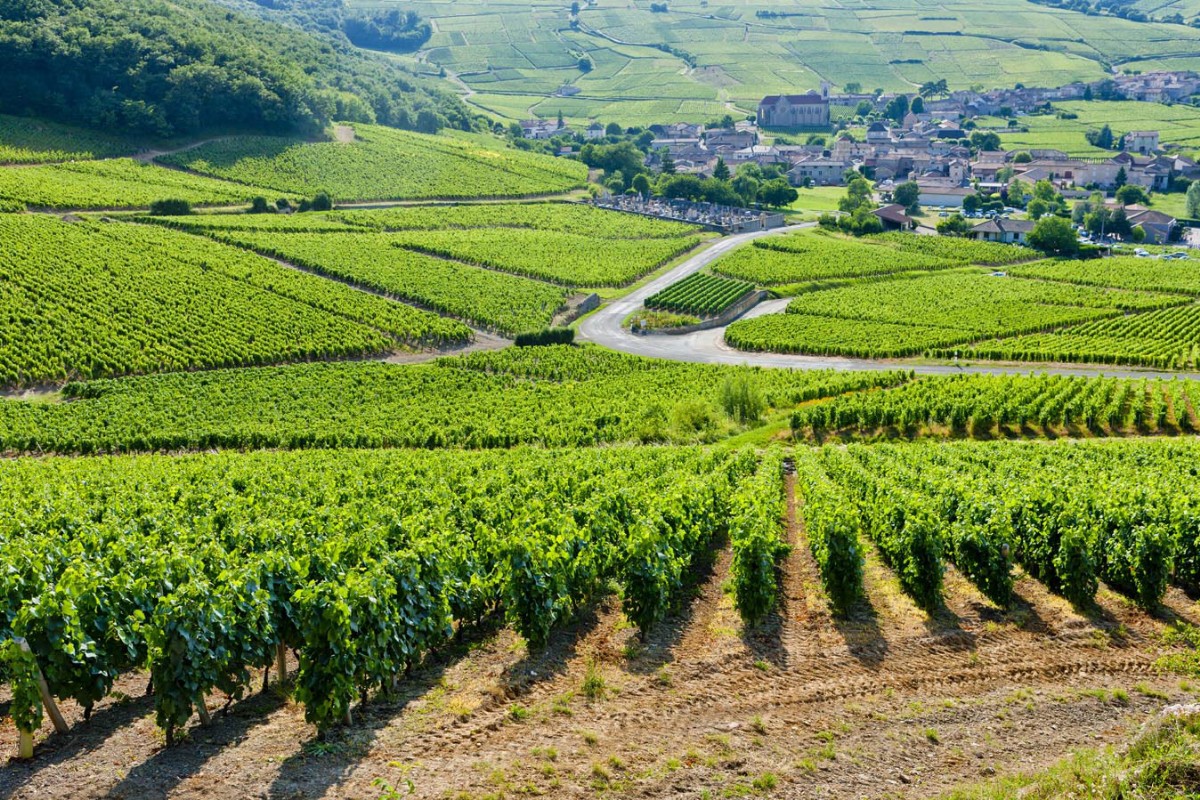
France has three different climates. The west often has quite wet weather, good for the lush pastures and orchards of Brittany and Normandy. The centre and east, where wheat, maize and sugar beet are grown, are cold in winter and hot in summer. Close to the Mediterranean in the south and on the island of Corsica, the year-round warmth allows citrus fruit and olive trees to grow. The warm climate makes the southeast cost, the Côte d'Azur, or Riviera, a popular destination for tourists. France is famous for the many fine wines it produces, especially those made from grapes grown in Burgundy, the region near Bordeaux, and in Champagne. It also has modern service, manufacturing and chemical industries. Nuclear power provides much of the country’s electricity supplies.

The Netherlands
Nestled between France and Germany are the Low Countries: The Netherlands, Belgium and Luxembourg. The Netherlands, sometimes known as Holland (although this name really refers only to one part of the country), is one of the most densely populated countries in the world. In between the farmland and famous bulbfields, large industrial cities have grown up.
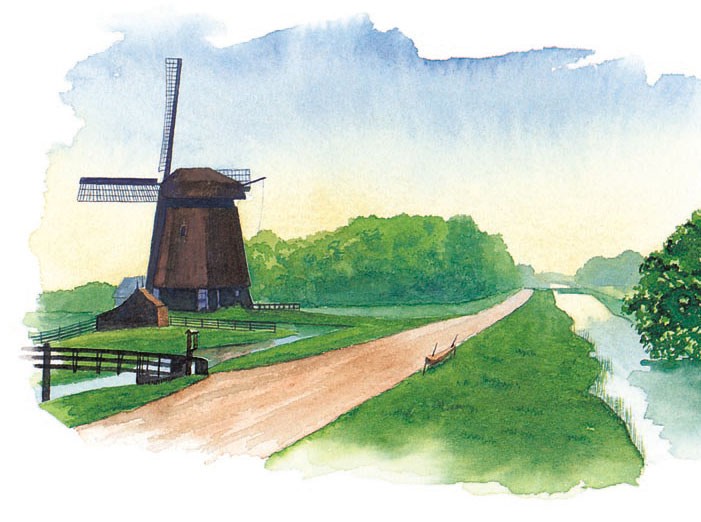
One quarter of the Netherlands (the name means "low-lying lands") lies below sea level. Some areas, called polderlands, were actually once covered by water and have been "reclaimed" for use as farmland. Windmills pumped water away along canals, leaving dry, fertile land. For centuries, the Dutch have fought to protect their land from the sea. Behind the low wall of sand dunes which runs along the west coast and the Frisian Islands, they built dykes (earth embankments) and dug drainage ditches. Great barriers between Wadden Sea and IJselmeer and the arms of the Rhine-Maas Delta have been constructed as further protection.


Belgium
Belgium is a country of two halves. In the north, on the plain of Flanders, the countryside is a patchwork of farmland criss-crossed by canals. The people, known as Flemings, speak the language of their neighbours, Dutch, or Flemish as it is known here. In the south, beyond the Rivers Meuse and Sambre, lie the wooded slopes and deep valleys of the Ardennes hills. This is Wallonia, home of the French-speaking Belgians. The majority of the residents of the capital, Brussels, the centre of government for the European Union, are French-speakers.
Germany
At the centre of Europe lies Germany. Northern Germany forms part of the North European Plain, which stretches from the North Sea to the Ural Mountains in Russia. Forested uplands, the remains of ancient mountain ranges, rise in central and southern Germany. Germany’s border with Austria runs along the northern slopes of the Alps. Western and northern Germany have quite a wet climate, with warm summers and mild winters. Eastern Germany is drier, with very warm summers and cold winters.

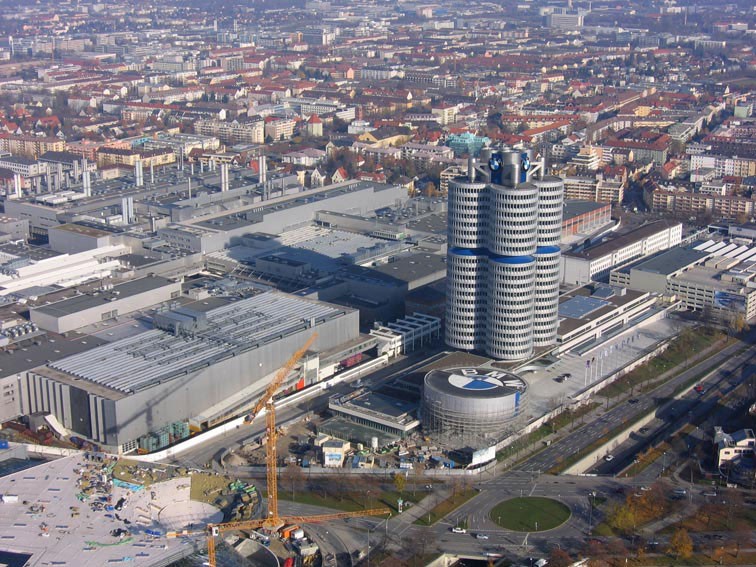
Europe’s second largest country after Russia by population, Germany is one of the richest industrial countries in the world. Cars, chemicals, steel and electronic goods are produced in its many large cities and exported all over the world. The Ruhr Valley cities in the west of the country have grown so large they have merged with one another.
Germany became a single nation for the first time in 1871. Before then, Germans lived in a land made up of a mixture of small duchies, principalities and kingdoms. Divided into East and West after World War II in 1945, Germany became united again in 1990 after the countries of Eastern Europe—including East Germany—threw out their Communist governments.

Switzerland

Except for its northern areas, Switzerland is entirely made up of the valleys and peaks of the Alps. Once a land of remote farms and folk customs, the mountains now attract tourists for the skiing and scenery. Switzerland is a prosperous modern industrial country. It has specialized in banking, chemicals and precision engineering industries. Most of its population speaks German, but the southwest of the country is French-speaking, the far south Italian-speaking.

Austria
Like Switzerland, Austria is almost entirely made up of the valleys and peaks of the Alps. The only lowlands are close to the River Danube. One in five Austrians lives in the capital, Vienna. Austria has a very high standard of living, with good levels of education, healthcare and wealth among its citizens. Its key industries include manufacturing, wood and paper processing, and tourism.
Italy
Surrounded on three sides by the Mediterranean Sea, Italy is shaped like a boot about to kick a stone—the island of Sicily. In the north are the snow-capped mountains of the Alps, including the Dolomites. South-flowing rivers meet the River Po in a wide, fertile plain which opens out to the Adriatic Sea. Running the length of the boot down to the toe are the wooded Apennine Mountains. Both Sicily and Sardinia are rugged islands.

Away from the high ground, Italy has a warm climate. On the northern plain, there are fertile fields of wheat, maize and tomatoes. Grapevines, olives and fruit trees grow all over the country. Italy is the world's leading exporter of wines. Most of Italy's industry is concentrated in the north, especially around Milan and Turin, and is known for cars, electrical appliances, fashion and food. Southern Italy, called the Mezzogiorno, lags well behind in industrial development and prosperity.

Spain
The Iberian peninsula, divided between Spain and Portugal, is separated from the rest of Europe by the Pyrenees Mountains. The core of the peninsula is a plateau called the Meseta, a landscape of plains crossed by several mountain ranges. Large areas are barren or given over to rough pasture for sheep and goats. The north of the country, Spain’s industrial heartland, is cooler and wetter. The peoples of Galicia, Catalonia and the Basque Provinces speak their own languages.
Farther south, across vineyards, wheat fields and olive groves, the climate becomes drier. Andalusia is famous for many things: fighting bulls, sherry, orange trees, village festivals or fiestas, flamenco dancers and Moorish castles. Tourist beaches and hotels line the Mediterranean coast.

Portugal
Situated on the western coast of the Iberian peninsula, Portugal has long held close ties with the sea. Shellfish, anchovies and sardines are caught in coastal waters. Portugal produces most of the world’s cork, stripped from the bark of a kind of oak tree. Vines grow in the river valleys of northern and central Portugal. Some of the grapes are used for making port, a sweet wine that is the speciality of the region near Porto. Like Spain, Portugal is drier in the south. Here, in the Algarve, tourism is an important industry.

European microstates
Microstates are independent nations that are either very small in terms of population or area, usually both. Western Europe contains six microstates: Andorra, Liechtenstein, Malta, Monaco, San Marino and Vatican City. All of these states have a population of under 500,000 people and an area under 500 square kilometres (193 square miles). With a population of around 672,000 people, Luxembourg (bordered by Belgium, Germany and France) is often included among the microstates.

Monaco, Liechtenstein, Luxembourg and San Marino are among the wealthiest nations in the world. They are important financial centres, while Monaco also relies on tourism and gambling. Andorra, in the Pyrenees Mountains, is made prosperous by tourism. Less wealthy than the other microstates, the Mediterranean islands of Malta rely on tourism, shipping, film production and finance. Vatican City, a walled enclave within the city of Rome, Italy, is ruled by the Pope.
Consultant: Lloyd Jenkins
pics






Without in any way limiting Q-files Ltd’s exclusive rights under copyright, any use of this publication to “train” generative artificial intelligence (AI) technologies to generate text is expressly prohibited. Q-files Ltd reserves all rights to license use of this work for generative AI training and development of machine learning language models.