
Europe

CITE
We have made every effort to follow citation style rules, but there may be some minor differences. If in doubt, please refer to the appropriate citation style manual.
Germany. (2026). In Q-files Encyclopedia, Geography, Europe. Retrieved from
https://www.q-files.com/geography/europe/germany
"Germany." Geography, Europe, Q-files Encyclopedia, 19 May. 2026.
https://www.q-files.com/geography/europe/germany.
Accessed 13 Sep. 2026.
Germany 2026. Geography, Europe. Retrieved 13 September 2026, from
https://www.q-files.com/geography/europe/germany
Geography, Europe, s.v. "Germany," accessed September 13, 2026.
https://www.q-files.com/geography/europe/germany


Germany
Germany is Europe’s second largest country after Russia by population, and one of the wealthiest nations in the world. Lying in the centre of Europe, it borders nine other countries. In 1945, after World War II, Germany was split into two countries: West Germany, a democratic republic, and East Germany, a communist state backed by the Soviet Union. In 1990, the two parts were reunited. Today, it is a federal parliamentary republic, with a president, the head of state, and a Chancellor, who is head of the government and the country's political leader. Southern and eastern parts of Germany have a continental climate, with hot summers and cold winters. The rest of the country is milder and wetter, cooled by westerly winds from the North Sea and Atlantic Ocean.


Northern Germany
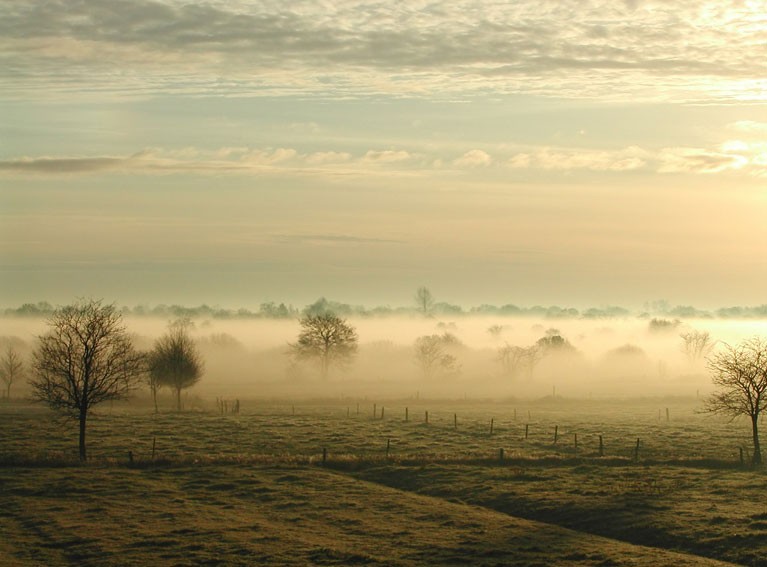
The northern third of Germany makes up part of the flat North European Plain, crossed by the rivers such as the Weser, Elbe and their tributaries. The land was smoothed flat by glaciers during the most recent Ice Age. Along the North Sea coast, the land is low-lying, fringed by sandy beaches and mudflats.

Much of northern Germany is a patchwork of farmland, used for grazing cattle and pigs as well as growing crops. The land along the southern edge of this plain is especially fertile and mostly given over to cereals such as wheat, barley and rye. The great cities of Berlin, Hanover, Bremen and the port city of Hamburg are situated here. In the northeast, the land is covered by sandy soils and river wetlands, and dotted by dozens of lakes formed by the meltwaters of the retreating ice sheet.

Berlin

Berlin was once the capital of the independent Kingdom of Prussia, a land that extended from the borders of Netherlands to those of Russia. It grew into a large industrial city in the 19th century, becoming capital of the newly founded German Empire in 1871.

After the end of World War II in 1945, Germany was divided up between the USA, Britain, France and the Soviet Union. Berlin lay in the Soviet zone, but was also divided between the four powers. In 1949, three of the zones were joined together to become West Berlin, part of West Germany, while the Soviet zone became East Berlin, part of East Germany. In 1961, East Germany built a wall across the city to prevent people moving from East to West.
In 1989, a wave of largely peaceful revolutions swept through many states of Eastern Europe, which then broke free from Soviet control and Communist rule. East Germany was among them, and the hated Berlin Wall came down in November of that year. Berlin once again became capital of a unified Germany, and has since blossomed into a world city, a hub of high-tech and creative industries, a centre of education and culture, and a magnet for migrants and tourists.


Ruhr
The Ruhr is an urban area in the state of North Rhine-Westphalia. It is part of the larger Rhine-Ruhr region, which is home to more than 10 million people and one of the largest urban agglomerations in Europe. The Rhine-Ruhr region includes the cities of Düsseldorf, Duisburg, Essen, Gelsenkirchen, Bochum and Dortmund. These cities expanded rapidly in the 19th century, based on coal mining (the region lay above rich coalfields) and iron and steel industries that grew up along the Ruhr valley.
After World War II, the region experienced rapid growth as part of Germany's "economic miracle" of the 1950s and 60s. The cities began to merge into one another to form a single urban area or megalopolis. Nowadays, the Ruhr is a major centre of modern manufacturing industries. Air and water pollution—once a serious concern—is largely a thing of the past.


Central Germany
Central Germany is made up of forested uplands separated by river valleys. They include the volcanic Harz Mountains and the densely wooded Rothaar Mountains. Further south lie the rounded hills of the Eifel and Hunsrück uplands, the Taunus Hills north of Frankfurt, Palatine Forest, Vogelsberg Massif and the Thuringian Forest (Thüringer Wald). To the east, the Czech border is marked by the Ore Mountains (Erzgebirge).
In the west the Rhine and Mosel rivers wind through deep valleys whose slopes are lined with vineyards. Between Koblenz and Bingen, the Rhine carves its way through the narrow Rhine Gorge, a land of castles and legends. North of Cologne (Köln in German), the Rhine opens out into the low-lying industrial region of the Ruhr.


Southern Germany
The south of Germany is made up of the states of Bavaria (Bayern) in the southeast and Baden-Württemberg in the southwest. The land is mostly thickly forested uplands. Running along the Czech border in the southeast is the Bohemian Forest.
The River Rhine flows along the French border in the southwest through a wide valley that rises on its western side to the uplands of the Black Forest. Here is the source of the Danube, which flows east across southern Germany through Austria and several other countries before reaching the Black Sea. The snow-capped Bavarian Alps, Germany's highest mountains, stretch across its border with Austria. Zugspitze, the country's highest point, is found here.

People
Most of the country’s people are ethnic Germans, the descendants of early Germanic settlers in the region. The next-largest ethnic group are Turks, a mainly Muslim people who make up just over 2% of the population. Many Turks came to work in Germany in the 1950s and have stayed to raise their families.


Germany also has large immigrant populations from Italy, Poland and Albania. Lusatia, a region near the Polish border, is home to the Sorbs, a small Slavic population. Germany is a mainly Christian country. The north has a majority of Protestant Christians, while the south (especially Bavaria) is generally Catholic.
Germany is a very highly-developed country and a high standard of living for most of its people. All Germans have access to excellent healthcare education systems. Nearly everyone can read and write.


Economy
At the end of World War II, Germany’s economy was badly damaged. West Germany reconstructed its industries quickly and soon became one of Europe’s richest countries, while the smaller, communist East Germany remained poor and undeveloped. When the two parts were reunited in 1989, Germany spent billions of dollars on modernizing the East. Today, its economy is the most powerful in Europe and one of the world’s largest.

Situated in the central German state of Hesse, Frankfurt, headquarters of many German banks as well as the European Central Bank, is one of the world's most important financial centres. The most important stock exchange in Germany is also based in the city. Because of this and its concentration of skyscrapers, Frankfurt is sometimes nicknamed "Mainhattan"—a mixture of Manhattan (the central borough of New York's central island) and Main, Frankfurt's river.


Germany is famous for manufacturing: German-made products are in high demand all over the world. Highly-skilled German workers produce cars, machines, electronic devices, cameras, chemicals, sportswear and household goods for export. Manufacturing is centred on cities such as Cologne, Munich, Frankfurt, Hamburg and Berlin. Germany also has important mineral reserves—it is the world's largest exporter of lignite (brown coal).

Germany's road and railway networks are among the densest in the world. The country is crisscrossed by an extensive motorway (autobahn) system. High-speed InterCityExpress (ICE) trains serve all the major German cities as well as destinations in neighbouring countries.


Rivers and waterways
Across Germany a number of canals, manmade waterways, join up its navigable rivers, such as the Rhine, Elbe, Main, Oder and Danube. They thus create interconnecting inland waterways totalling thousands of kilometres in length. Major rivers and waterways alike are used by large, freight-carrying vessels and cruising riverboats.
One of the most important waterways is the Kiel Canal, a 100-kilometre (60-mile) link between the North Sea and Baltic Sea in the north. The Rhine-Main-Danube Canal in Bavaria runs from Bamberg, on the River Pegnitz (a tributary of the Main), and Kelheim on the Danube, a distance of 171 kilometres (106 miles). Rebuilt and completed in 1992, the Rhine-Main-Danube Canal links the North Sea to the Black Sea—right across the European mainland.

Consultant: Nicholas Harris
Facts about Germany
Population 83,456,045 (2023 estimate)
Area 348,672 sq km
Highest point Zugspitze 2963 m (9721 ft)
Capital Berlin, population 3,662,381
Other major cities Hamburg (pop. 1,739,117), Munich (1,260,391), Cologne (963,395), Frankfurt am Main (650,000), Essen (593,085), Stuttgart (589,793), Dortmund (588,462), Düsseldorf (573,057)
Language German
Religions Christianity, Roman Catholic (25%), Christianity, Protestant (23%), Islam (4.6%), Others (1.4%), No religion (46%)
Ethnicity German 92%, Turkish 2%, others (including Greek, Italian, Polish, Russian and Syrian) 6%
Currency Euro (EUR)
Chief exports cars and vehicles, machinery, chemicals, computers and electronics, medicines, metals, foods, textiles, rubber and plastic products


History of Germany
1st century BC
Germanic tribes from Scandinavia settle in the area east of the Rhine and north of the river Danube (most of modern-day Germany). The Romans call this region “Germania”
9 AD
At the Battle of Teutoburg Forest, Germanic tribes attack and defeat Roman troops, protecting their land from Roman conquest
260
Germanic peoples form larger tribes including the Bavarii, Saxons and Visigoths
507
Clovis I unites the Franks, a Germanic tribe, and becomes the first king of the Frankish Kingdom, which later expands eastwards to cover much of present-day Germany
800
Charlemagne (Charles I) founds the Frankish Carolingian Empire
843
Frankish empire breaks apart; the eastern part, East Francia, will become modern-day Germany
919
Germanic tribes are united under Henry the Fowler, Duke of Saxony, who becomes the King of East Francia
962
Germany’s king, Otto I (son of Henry the Fowler), is crowned Holy Roman Emperor by the Pope; Germany becomes the centre of the Holy Roman Empire
1138–1254
Hohenstaufen dynasty, of the Duchy of Swabia, rules the Holy Roman Empire
13th–16th centuries
Cities along the coast of Northern Europe join together in a trading union called the Hanseatic League
1315–17
Great Famine, caused by crop failures and cattle disease, causes mass deaths
1348–50
Germany is hit by the Black Death
1438
Germany comes under Habsburg rule with Albert I as King
1448
German inventor Johannes Gutenberg's movable-type printing press enables a much faster rate of printing, leading to the spread of literature across Europe
1517
German priest Martin Luther declares 95 Theses against the Catholic Church, thus beginning the Reformation—the Protestant split from the Catholic Church
1555
The Peace of Augsburg: a treaty signed by Charles V, Holy Roman Emperor, allows rulers within the Holy Roman Empire to choose between Lutheranism (Protestantism) and Roman Catholicism.
1618–48
Thirty Years’ War in the Holy Roman Empire between Catholics and Protestants. The conflict devastates German lands and significantly reduces the population. In the Peace of Westphalia that ended the war, Prussia, Bavaria and Saxony and other states within the empire are given greater powers to rule themselves.
1640–88
Rule of Frederick William of Brandenburg-Prussia, a member of the House of Hohenzollern and known as "the Great Elector". Prussia emerges as a great power during his reign.
1740–86
Rule of Frederick the Great, King of Prussia, during which the Kingdom of Prussia greatly increased its territories and established its dominance role among the German states.
1806
Francis II announces the end of the Holy Roman Empire and gives himself the title of “Emperor of Austria”
1806–13
Napoleonic Wars: French military leader Napoleon conquers nearly all of Germany for France; he is defeated at the Battle of Leipzig (1813)
1815
German Confederation, an association of 39 German-speaking states, is created at the Congress of Vienna as a replacement of the former Holy Roman Empire
1848
The Year of Revolutions in the German states: the leaders, mostly students and intellectuals, demand German national unity, freedom of the press and freedom of assembly.
1866
Prussia is victorious in Austro-Prussian War; German Confederation is replaced by North German Confederation, which excludes Austria.
1870–71
Franco-Prussian War: Otto von Bismarck, prime minister of Prussia, provokes French to declare war on Prussia as part of his scheme to draw other German states into an alliance with Prussia against France. German forces are victorious and the French territory of Alsace-Lorraine becomes part of Germany
1871
The south German states, except for Austria, Switzerland and Liechtenstein, join the North German Confederation. Germany’s states are now united, forming what is now called the German Empire. It is ruled by a parliament (Reichstag) with Bismarck as Chancellor and Kaiser Wilhelm (William) I as emperor. Prussia's capital Berlin becomes capital of the German Empire.
1888
Wilhelm II becomes the new emperor; Germany starts to expand its navy to match Britain’s and thus become a major power
1914–18
Germany fights alongside Austria-Hungary and Ottoman Turks against France, Great Britain, Russia and the USA in World War I, and is defeated
1918–19
German Revolution: the monarchy is overthrown, Wilhelm II goes into exile and Germany becomes a republic: the Weimar Republic
1919
At the Treaty of Versailles, Germany loses its colonies and substantial amounts of its territory to its neighbours and is forced to pay vast sums, called reparations, to the countries that had defeated it in the war
1933
Adolf Hitler and his Nazi Party come to power and rule Germany as a one-party state
1935
Germany begins building up its military power. Nazis persecute German Jews and take away their German citizenship
1939
Nazi German forces invades Poland, triggering World War II. Millions of Jews, gypsies and other groups are killed by Nazis in concentration camps during the Holocaust
1945
Germany is defeated, ending the war; Hitler kills himself. German military casualties number around 5.3 million and some 900,000 German civilians also perish. Around 12 million ethnic Germans are expelled from across Eastern Europe. Germany loses about a quarter of its pre-war territory. Germany is divided up between the USA, Britain, France and the Soviet Union into four “occupation zones”. Berlin, which lies in the Soviet zone, is also divided between the four powers.
1948-49
Berlin Airlift: Soviet blocks all road and rail access to West Berlin (made up of the French, British and American zones); the Western Allies carry supplies to the people of Berlin by air
1949
The US, French and British zones in the west become the Federal Republic of Germany with its capital at Bonn while the Soviet-controlled zone in the east becomes the communist German Democratic Republic (GDR) with its capital at East Berlin.
1950s
West Germany’s economy begins to grow rapidly; it joins the European Economic Community—later to become the EU—in 1957. East Germany becomes an Eastern Bloc state under political and military control by the Soviet Union.
1961
Construction of the Berlin Wall surrounding the West German parts of Berlin; it was built by Communist East Germany to prevent its citizens escaping to the West
1989
East Germany opens its borders and Berlin Wall is torn down. It is known as the Peaceful Revolution or Die Wende ("The Turning Point").
1990
The two parts of Germany are reunited and Helmut Kohl becomes chancellor
2002
Germany adopts the Euro as its currency
2005
Angela Merkel becomes German Chancellor
2011
Following crisis at Japan's Fukushima plant, German government announces the closure of all Germany's nuclear power stations by 2022
2015
Chancellor Merkel offers temporary asylum to refugees, prompting mass migration of people from Middle east, South Asia and Africa through Balkans towards Germany
pics

Without in any way limiting Q-files Ltd’s exclusive rights under copyright, any use of this publication to “train” generative artificial intelligence (AI) technologies to generate text is expressly prohibited. Q-files Ltd reserves all rights to license use of this work for generative AI training and development of machine learning language models.