
Europe

CITE
We have made every effort to follow citation style rules, but there may be some minor differences. If in doubt, please refer to the appropriate citation style manual.
Sweden. (2026). In Q-files Encyclopedia, Geography, Europe. Retrieved from
https://www.q-files.com/geography/europe/sweden
"Sweden." Geography, Europe, Q-files Encyclopedia, 31 Mar. 2026.
https://www.q-files.com/geography/europe/sweden.
Accessed 31 Oct. 2026.
Sweden 2026. Geography, Europe. Retrieved 31 October 2026, from
https://www.q-files.com/geography/europe/sweden
Geography, Europe, s.v. "Sweden," accessed October 31, 2026.
https://www.q-files.com/geography/europe/sweden


Sweden
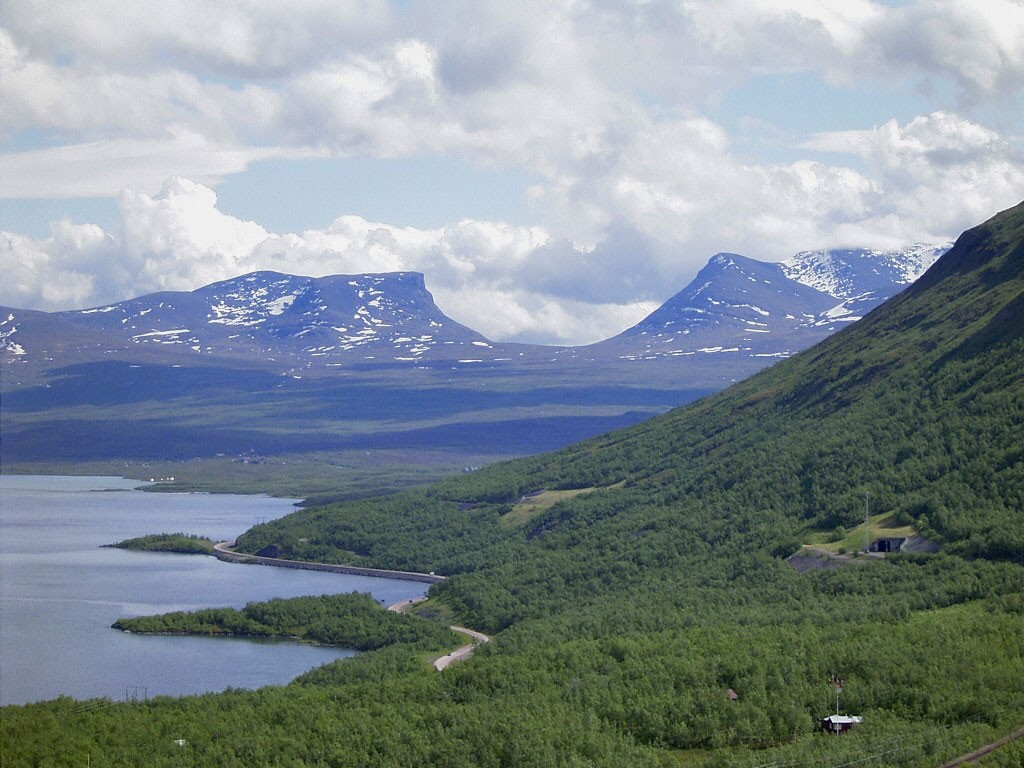
Sweden is one of three Scandinavian countries. The others are Norway and Denmark. Sweden has borders with Norway to the west and Finland to the northeast, and is connected to the Danish island of Sjaelland by the Öresund bridge. It is a long country, stretching down the eastern half of the Scandinavian Peninsula, which it shares with Norway. Along the Norwegian border, the land rises to high, snow-capped mountains. This northern region is heavily forested, and can get very cold in winter. Southern Sweden is flatter and has a milder climate. The country is dotted with more than 95,000 lakes, where meltwaters have filled basins carved out by retreating glaciers during the last Ice Age. Sweden’s latitude means that much of the country experiences short days in winter and longer hours of daylight in summer. The northernmost part of Sweden, about 15% of the country’s total area, lies within the Arctic Circle.


Lands of Sweden
Traditionally, Sweden is divided into three parts or "lands", each made up of a collection of provinces. Götaland ("Land of the Götar") is the southern, most densely populated part. Svealand ("Land of the Swedes") is the central part. The capital of Sweden—including the modern capital Stockholm—has been situated here at least since the late Middle Ages. Norrland ("Northlands") is the northern part, by far the largest of the three, covering 60% of the total Swedish territory. The three northernmost provinces are sometimes called Övre (Upper) Norrland, while the rest are called Nedre (Lower) Norrland.

People
About 80% of Sweden’s people are descendants of Germanic peoples, the first people to settle in northern Europe. In medieval times, they were known as the Norsemen, or Vikings. The remainder are of Finnish ancestry, or are recent immigrants from Poland, the former Yugoslavia, Iraq, Iran, Syria, Somalia and Eritrea. Most people live in cities and towns in the south, mainly the capital, Stockholm, and the second largest city, Gothenburg (Göteborg). Just one in ten Swedes live in the rural north; some areas, such as parts of Småland, are almost completely empty. Swedes have some of the highest living standards in the world. Their country has a strong welfare system: healthcare and education are free for everyone.


Sami
Sweden is home to about 20,000 Sami, the indigenous (native) people of northern Scandinavia. The Swedish part of this region is known as Sápmi (once called Lapland). The Sami have traditionally made a living from reindeer-herding, although many have now settled in cities and work in business and manufacturing. Since 1993, the Sami have had their own parliament. In 2000 the Sami language became one of Sweden’s official languages.
Manufacturing
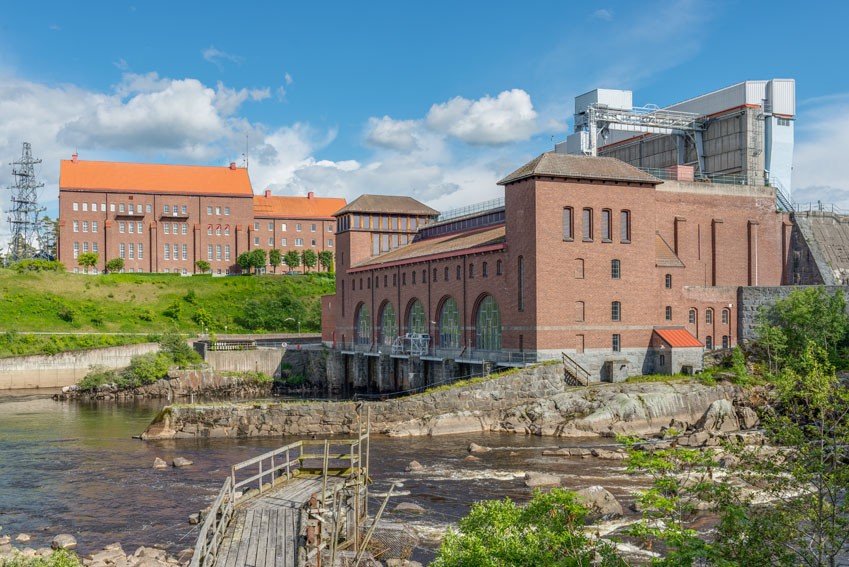
In the 19th century, Sweden mainly supplied wood and timber products to other countries. Today, it is a major manufacturing country: some of its most important exports include steel, cars and trucks, pharmaceuticals, electrical appliances, military equipment and telecommunications devices. Swedish products and textiles have become well-known all over the world for their clean, minimalist designs.

Farming
Farmers in Sweden produce nearly all the food the country needs on just one tenth of its land. Most of the country is too heavily forested, too mountainous or too cold to farm. In the south, particularly the southernmost province of Scania (Skåne), crops such as wheat, rye, sugar beets and potatoes are cultivated. Rye bread, fish and potatoes are important ingredients in home-produced food.
Mining

Sweden has a long history of mining stretching back many centuries. At the beginning of the 20th century, Sweden had about 250 mines. Today, the number has decreased to just 13 active mines, located in the three main mining regions in Sweden: Norrbotten and Skelleftefältet in Norrland, and Bergslagen in Svealand. Sweden is Europe’s leading mining nation with 91% of the continent’s iron ore extraction (almost all it from the Norrbotten mines) as well as 9% of the copper and between 24 and 39% of its lead, zinc, silver and gold.
The Kiruna mine, the largest iron ore mine in Europe, is located in Norrbotten county, Sápmi. Mining began there in 1898, with the shipment of ore made possible by the opening of a railway in 1902, linking Kiruna to the ice-free seaport of Narvik in Norway.
With plans to expand mining operations in the 21st century, it was decided that the present town centre of Kiruna would need to be relocated about 3 kilometres (2 miles) east. There is already evidence of subsidence, the sinking of the ground as a result of the extraction of vast amounts of ore from below. The relocation work, which began in 2007, will be undertaken gradually over decades.

Nature

Swedish people take great interest in nature. The concept of ecology—the connection between plants, animals and the environment—began in Sweden in the 1700s following the work of Carl Linnæus. Today in Sweden, a law called allemansrätten gives people the right to go wherever they want in the countryside, as long as they respect nature and do not damage the environment.
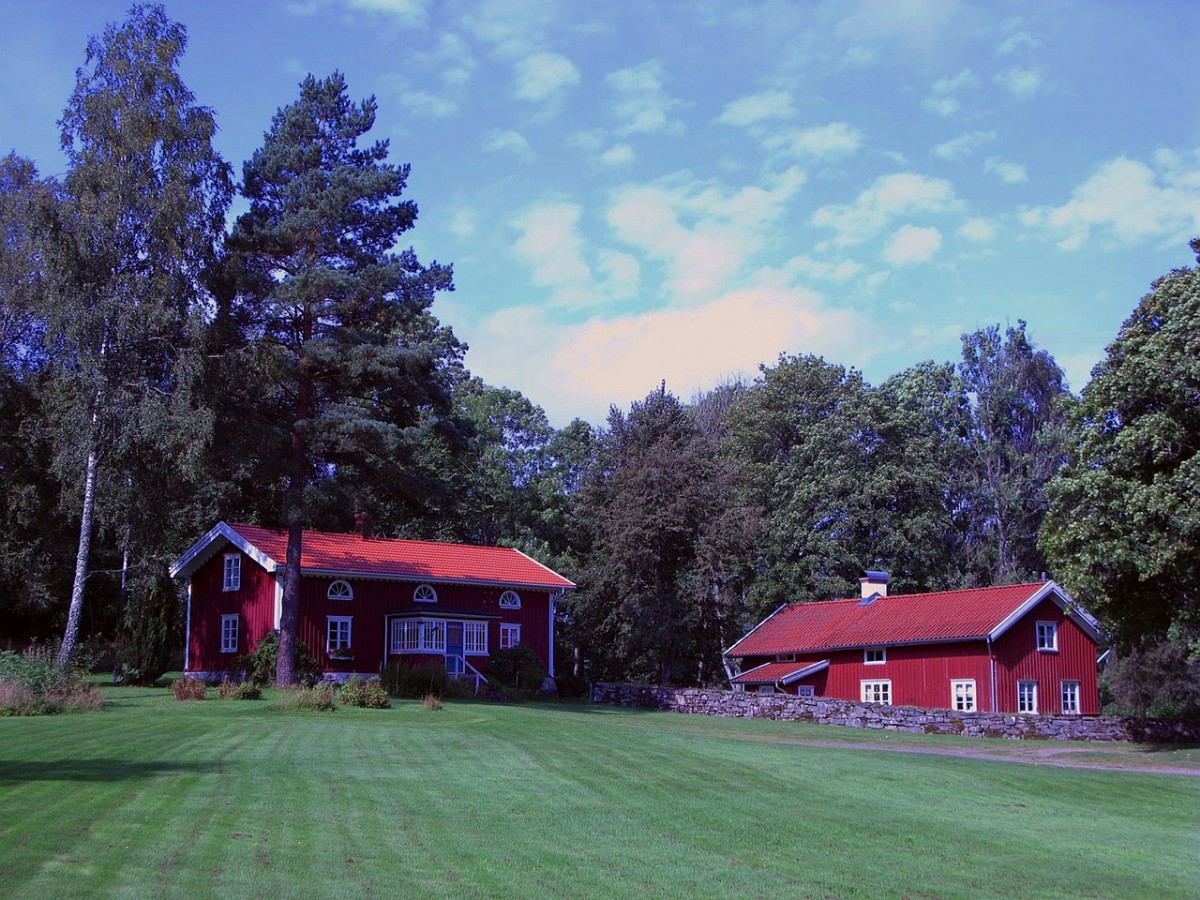
Many Swedes have summer houses in the countryside where they spend their holidays. They gather mushrooms, herbs and wild berries such as blueberries to use in cooking. Eating the harvest fresh was once a rare delicacy; traditionally, Sweden’s long, dark winter meant that most of the harvest had to be stored or dried for the colder months.
Consultant: Nicholas Harris
Facts about Sweden
Population 10,588,230 (2024 estimate)
Area 410,335 sq km
Highest Point Kebnekaise, 2111 m (6924 ft)
Capital Stockholm, population 1,515,017
Other major cities Gothenburg (Göteborg, pop. 572,799), Malmö (301,706), Uppsala (149,245)
Languages Swedish, Sami
Religion Lutheran Christian 87%, other 13%
Ethnicity Swedes, Sweden-Finns, Finns, Sami
Currency Swedish Krona (SEK)
Chief exports Steel, precision machinery, hydropower, motor vehicles

History of Sweden
12,000 BC
At the end of the last Ice Age, the ice sheet begins to melt; the first people settle in Sweden, fishing and hunting reindeer
800–1050
Swedish Vikings, sometimes called the Varangians, travel through Eastern Europe, Western Russia and the Middle East setting up trading posts; one group, known as the "Rus", are thought to be the founding fathers of Russia itself
1008
The unification of the two dominions of the Svear and the Götar creates the Svea Rike (the “Kingdom of the Svear”). King Olof Skötkonung is baptized and makes Christianity the official religion of his kingdom.
1280
King Magnus Ladulås establishes a feudal system and nobility in Sweden
1397
Kalmar Union formed, uniting Denmark, Sweden and Norway under one monarch. Margaret I, already the ruler of Denmark and Norway by inheritance, also becomes ruler of Sweden.
1520
Christina Gyllenstierna defends Stockholm but is defeated by the Danes under Christian II, who is crowned king of Sweden
1523
Kalmar Union ends: Gustav Vasa liberates Stockholm, establishing Sweden's independence from Denmark-Norway and founds the House of Vasa when he is elected king on 6th June.
1527
The Reformation: Sweden breaks ties with the Pope in Rome and the Catholic Church loses its power in the country. Lutheran (Protestant) Christianity begins to become more important
1544
A system of hereditary monarchy is introduced in Sweden (the role of King or Queen is passed down through generations of a family)
1593
The Synod of Uppsala, a council of the Swedish church, declares Lutheranism to be the only religion authorized in Sweden.
1610–17
Ingrian War between Sweden and Russia; following its defeat, Russia is forced to cede territory to Sweden in the Treaty of Stolbovo, laying the foundation for Sweden's rise as a Great Power
1617–29
Sweden conquers much of the Baltic coastline
1630–48
Swedish forces under King Gustavus Adolphus (1611–32) intervene in the Thirty Years’ War. On the winning side, Sweden is granted the provinces of Western Pomerania and Wismar and the bishoprics of Bremen-Verden at the Peace of Westphalia in 1648.
1650
The colony of the Swedish Gold Coast is established on the Gulf of Guinea in present-day Ghana (seized by Denmark in 1663)
1658
Treaty of Roskilde: Denmark-Norway cedes provinces of Blekinge, Bornholm, Bohuslän, Scania, Trøndelag and Halland to Sweden
1700
Great Northern War begins: an alliance of Denmark-Norway, Saxony, Poland and Russia declares war on Sweden; Swedish forces defeat the Russians at Narva
1708
Swedish armies invade Poland
1709
Battle of Poltava: Swedish army under Charles XII is destroyed by the Russian forces of Peter the Great. The defeat marks the beginning of Sweden's decline as a great power
1719–20
Sweden is forced by treaty to cede territory to Prussia, Hanover and Denmark-Norway
1721
At the Treaty of Nystad, Sweden’s empire in the Baltic—Estonia, Livonia and Ingria—falls to Russia
1808–09
Finnish War, fought between the Kingdom of Sweden and the Russian Empire as part of the Napoleonic Wars. Defeat for Sweden results in the loss of Finland to the Russian Empire.
1809
Sweden becomes a constitutional monarchy; a new parliament shares power with the king
1814
Sweden is united with Norway by Frenchman Jean Baptiste Bernadotte, who becomes King Karl XIV Johan in 1818
1905
Union between Sweden and Norway is peacefully dissolved at the Treaty of Karlstad
1907–21
All Swedish men (1907) and women (1921) are given the right to vote
1939–45
Sweden remains neutral during World War II
1979
Sweden is the first country in the world to introduce a new law making it illegal to punish children by striking them
1986
Social democrat prime minister of Sweden, Olof Palme, is assassinated by an unknown gunman on a Stockholm street
1995
Sweden joins the European Union
2000
Official opening of new bridge (Øresund Bridge) and tunnel (Drogden Tunnel) linking Malmö in southern Sweden and Danish capital Copenhagen
2003
Swedes vote against the introduction of the Euro as their currency
2013
Riots erupt in a mostly immigrant suburb of Stockholm, following the police shooting of an elderly man
2015
Sweden receives thousands of asylum seekers and migrants chiefly from Africa and the Middle East
2024
Sweden joins NATO alliance
pics
Without in any way limiting Q-files Ltd’s exclusive rights under copyright, any use of this publication to “train” generative artificial intelligence (AI) technologies to generate text is expressly prohibited. Q-files Ltd reserves all rights to license use of this work for generative AI training and development of machine learning language models.