
Europe

CITE
We have made every effort to follow citation style rules, but there may be some minor differences. If in doubt, please refer to the appropriate citation style manual.
Albania. (2026). In Q-files Encyclopedia, Geography, Europe. Retrieved from
https://www.q-files.com/geography/europe/albania
"Albania." Geography, Europe, Q-files Encyclopedia, 23 Jun. 2026.
https://www.q-files.com/geography/europe/albania.
Accessed 31 Oct. 2026.
Albania 2026. Geography, Europe. Retrieved 31 October 2026, from
https://www.q-files.com/geography/europe/albania
Geography, Europe, s.v. "Albania," accessed October 31, 2026.
https://www.q-files.com/geography/europe/albania


Albania
Albania lies on the east coast of the Adriatic Sea. High, rugged mountains stretch across much of the country, from the Prokletije Alps in the north to the Korab range along the border with North Macedonia. Their slopes are covered by woodland and thick pine forests. Most of the country’s people live on the coastal plain. Summers are hot and dry, while winters are mild. Inland, the climate is continental with cooler and wetter conditions all year round. For much of the 20th century, Albania was cut off from the rest of Europe by its Communist government. Today it is a modern democracy, but remains one of the poorest countries in Europe.


People
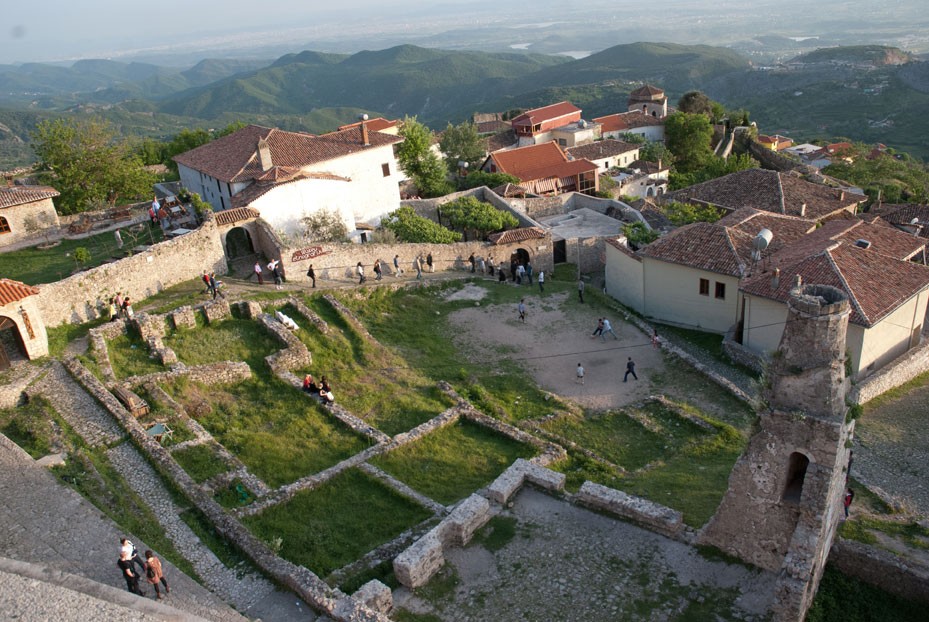
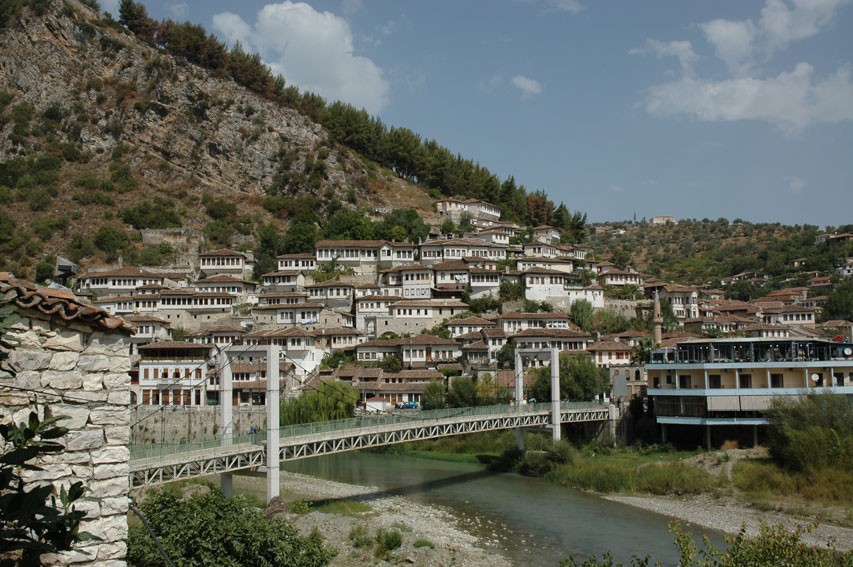
The Albanian people are descendants of the ancient Illyrians, tribespeople who settled in the western Balkan Peninsula about 3000 years ago. Until the 20th century, people lived in family tribes or clans, separated from others by their country’s rugged, mountainous landscape. Today, although Albania is fast becoming more modern, most of its population people still live on farms in the countryside, in villages or small towns. Apart from the capital, Tirana (Tiranë), home to just under half a million people, there are few other sizable cities.

Until World War II, Albania was a mainly Muslim country. When the Communist government came to power in 1944, they made it illegal to follow a religion and closed down the mosques. Only in the early 1990s did these places of worship re-open. Today, around half of the population follows Islam, but a fifth claim no religion at all.


Agriculture
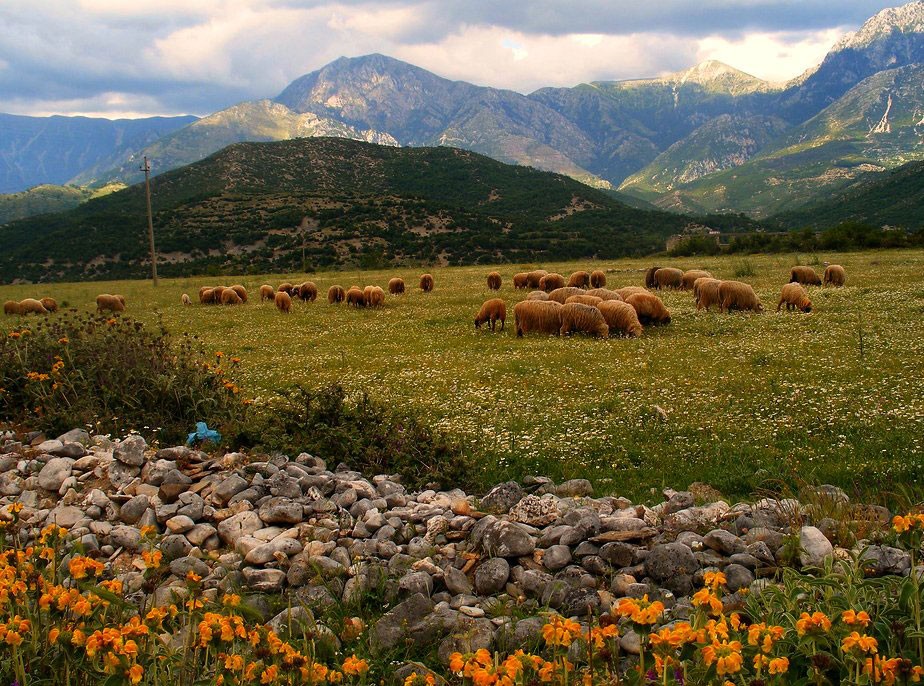
Agriculture is still very important to Albania’s economy. Over half of Albanians work in agriculture, producing cereals such as wheat and corn, potatoes and tobacco. In the sunny coastal region, farmers grow Mediterranean crops, including olives, figs and citrus fruits. Sheep and goats graze on the high mountain slopes.
Industry
Since independence in the early 1990s, Albania has tried to develop its modern industries. It has large reserves of natural gas—enough to supply the country’s needs—and its factories produce chemicals, cement and clothing. A tourist industry is rapidly growing up along the Adriatic coast. Many kilometres of white, unspoilt sandy beaches now attract several more than 7.5 million tourists each year—up from just half a million in 2005.

Vjosa Wild River National Park
The River Vjosa (Vjosë in Albanian, Aoos in Greek), one of the last wild rivers (free from human interference) in Europe, was declared a national park by the Albanian government in 2023. It is the first of its kind in Europe. The river is home to more than 1000 animal and plant species, including otters, European eels, the endangered Egyptian vulture and the critically endangered Balkan lynx. Free from dams and hydro-electric power plants, it will now be protected from any future development projects, including gravel extraction. The creation of the park forms part of the country's plans to encourage ecotourism in the region. The park does not, however, cover the river’s delta, or prevent plans for an international airport in an area which forms a refuge for flamingos, pelicans and migratory birds.

Consultant: Nicholas Harris
Facts about Albania
Population 2,402,113 (2023 census)
Area 27,398 sq km
Highest point Mount Korab 2764 m (9068 ft)
Capital Tirana (Tiranë), population 389,323
Other major cities Durrës (pop. 101,728), Elbasan (66,834), Vlorë (66,320)
Language Albanian
Religions Muslim 57%, Christian (Roman Catholic) 10%, Christian (Orthodox) 7%, atheist 3%, Bektashi (Sufi) 2%, others and none 21%
Ethnicity Albanian 83%, Greek 1%, others (including Roma, Macedonian and Montenegrin) 16%
Currency Albanian lek (ALL)
Chief exports textiles and shoes, metals, crude oil, vegetables, tobacco, asphalt


History of Albania
1000 BC
Illyrian tribes live in the western Balkan peninsula
4th century BC
King Bardhylus unites several Illyrian tribes as the Kingdom of Illyria
165 BC
Romans capture Illyria’s king, King Gent, and the region becomes part of the Roman Empire
395
Roman Empire splits into East and West; the region of modern Albania becomes part of the Eastern (Byzantine) Empire. The city of Dyrrachium (modern Durrës) is an important port and a major link between the Empire and western Europe.
1204
During the Fourth Crusade, Christian forces from Western Europe capture Constantinople. Venice wins control over most of Albania. The Byzantines regain control of the southern portion of Albania and establish the Despotate of Epirus.
1272
Forces of Charles of Anjou (King Charles I of Sicily) occupy Durrës (then called Durazzo) and establish the Kingdom of Albania.
1389
Battle of Kosovo: Albanians fighting alongside Serbian army are crushed by forces of the Ottoman Empire.
early 15th century
Ottoman Empire begins its conquest of Albania, capturing central and southern regions
1444
George Kastrioti Skanderbeg sets up the League of Lezhe to resist Ottoman rule; he becomes a national hero
1478–79
Ottoman siege of Shkodra: Republic of Venice cede Shkodra to the Ottomans in the peace treaty of 1479, ending Albanian resistance. Many Albanians flee to neighbouring Italy, giving rise to the Arbëreshë communities still living there today.
1833–48
Albanians revolt against Ottoman rule
1881
Ottoman forces crush Albanian resistance fighters at Prizren
1912–13
First Balkan War: Balkan League countries, Serbia, Greece, Montenegro and Bulgaria, declare war on the Ottoman Empire. Albanians fight on the Ottoman side in order to safeguard their territories. As a result of the war, the League capture and divide up between them almost all of the Ottoman Empire's remaining territories in Europe.
1913
By the Treaty of London which ends the First Balkan War on 30th May, Albania is declared an independent state. Most of its territory is occupied by Serbia and Greece, who are forced to withdraw their troops.
1919–24
Period of instability as Italy, Serbia (later, Yugoslavia) and Greece all press their claims on Albanian territory
1928
With backing from fascist Italy, Albania changes from a republic to a monarchy with Zog, previously prime minister, becoming king.
1939–40
During World War II, Italy invades and uses Albania as a base to attack Greece; King Zog flees the country
1944
Following a brief period of Nazi German rule, Communists establish a government under Enver Hoxha
1945
The Communist government agrees to restore Kosovo to Yugoslavia, and Yugoslavia recognizes the government of Albania.
1960
Albania sides with the People's Republic of China, causing the Soviet Union, previously a close ally, to cut its support
1985
Hoxha dies and is replaced by Ramiz Alia
1992
In the midst of economic and social chaos, with thousands of Albanians attempting to flee to Italy, multi-party elections are held. The Democratic Party wins, Alia resigns, and the country becomes a democracy. Albanians are allowed to travel abroad.
1997
A popular investment scheme collapses; thousands of Albanians lose all their savings and violence breaks out. King Zog’s son Leka returns to restore the monarchy, but is forced back into exile
1998–99
Albania sends troops to Kosovo to support ethnic Albanians fighting for independence from Serbia and Montenegro
2014
Albania becomes a full member of the NATO
2019
A 6.4-magnitude earthquake ravages Albania, with the epicentre about 16 km (10 miles) southwest of Mamurras. The most affected areas are the region around Durrës.
2026
(May onwards) Flamingo Revolution: protests triggered by opposition to a proposed luxury tourism development linked to the Sazan Island and Zvërnec resort (backed primarily by Jared Kushner, son-in-law of US president Donald Trump), spread to Tirana and other cities, where they expand into opposition to government corruption and other issues.
pics
Without in any way limiting Q-files Ltd’s exclusive rights under copyright, any use of this publication to “train” generative artificial intelligence (AI) technologies to generate text is expressly prohibited. Q-files Ltd reserves all rights to license use of this work for generative AI training and development of machine learning language models.