
Europe

CITE
We have made every effort to follow citation style rules, but there may be some minor differences. If in doubt, please refer to the appropriate citation style manual.
North Macedonia. (2026). In Q-files Encyclopedia, Geography, Europe. Retrieved from
https://www.q-files.com/geography/europe/north-macedonia
"North Macedonia." Geography, Europe, Q-files Encyclopedia, 31 Mar. 2026.
https://www.q-files.com/geography/europe/north-macedonia.
Accessed 1 Nov. 2026.
North Macedonia 2026. Geography, Europe. Retrieved 1 November 2026, from
https://www.q-files.com/geography/europe/north-macedonia
Geography, Europe, s.v. "North Macedonia," accessed November 1, 2026.
https://www.q-files.com/geography/europe/north-macedonia


North Macedonia
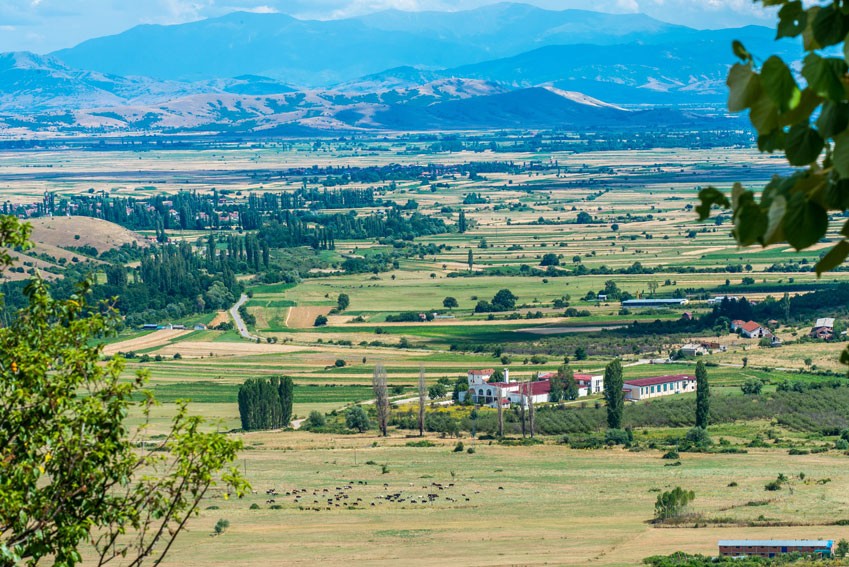
The landlocked country of North Macedonia (its official name since February 2019, following an agreement with Greece which had disputed its previous name, "Macedonia") lies in the heart of the Balkan peninsula. Until 1991 it was one of several republics that made up Yugoslavia. Running through the middle of the country is the green, fertile valley of the River Vardar. These lowland plains have the richest farmland. On either side of the Vardar, the land rises steeply to rugged mountain ranges. In the southeastern corner lie two large lakes, Ohrid and Prespa. North Macedonia has a continental climate; summers are warm and dry while winters can be very cold, especially in the mountains.


People
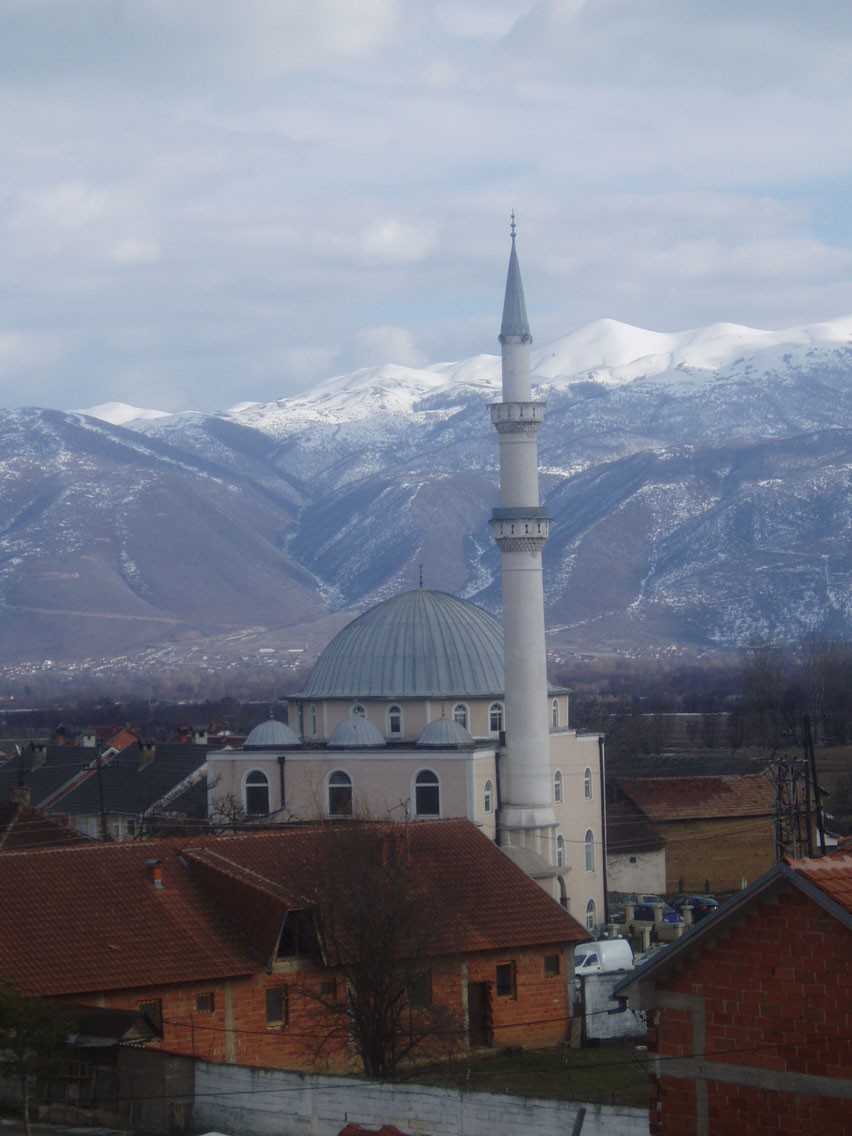
About two-thirds of the population are ethnic Macedonians, a Slavic people. Their language, Macedonian, is similar to Bulgarian and Serbian; speakers of each can understand one another quite easily. Albanians, who live mainly in the northwest, are the country’s second largest ethnic group. There have long been tensions between Macedonian Slavs and ethnic Albanians. In 2001, Albanians revolted against the Macedonian government, demanding equal rights with Macedonians; the protests almost sparked a civil war. Macedonians traditionally follow Orthodox Christianity, a religion practised throughout Eastern Europe and Russia. The Albanian population is largely Muslim.

Economy
Before it became independent in 1991, Macedonia (as it was then known) was the poorest part of Yugoslavia. Even today, unemployment levels are still some of the highest in Europe. Most people work in services such as retail, government and health care. One of the country’s biggest manufacturing industries is the textile industry, which employs around a third of the labour force. Some companies produce fabrics, such as woven cotton and acrylics, while others make them into clothing and export them to the rest of Europe.

Earthquake damage
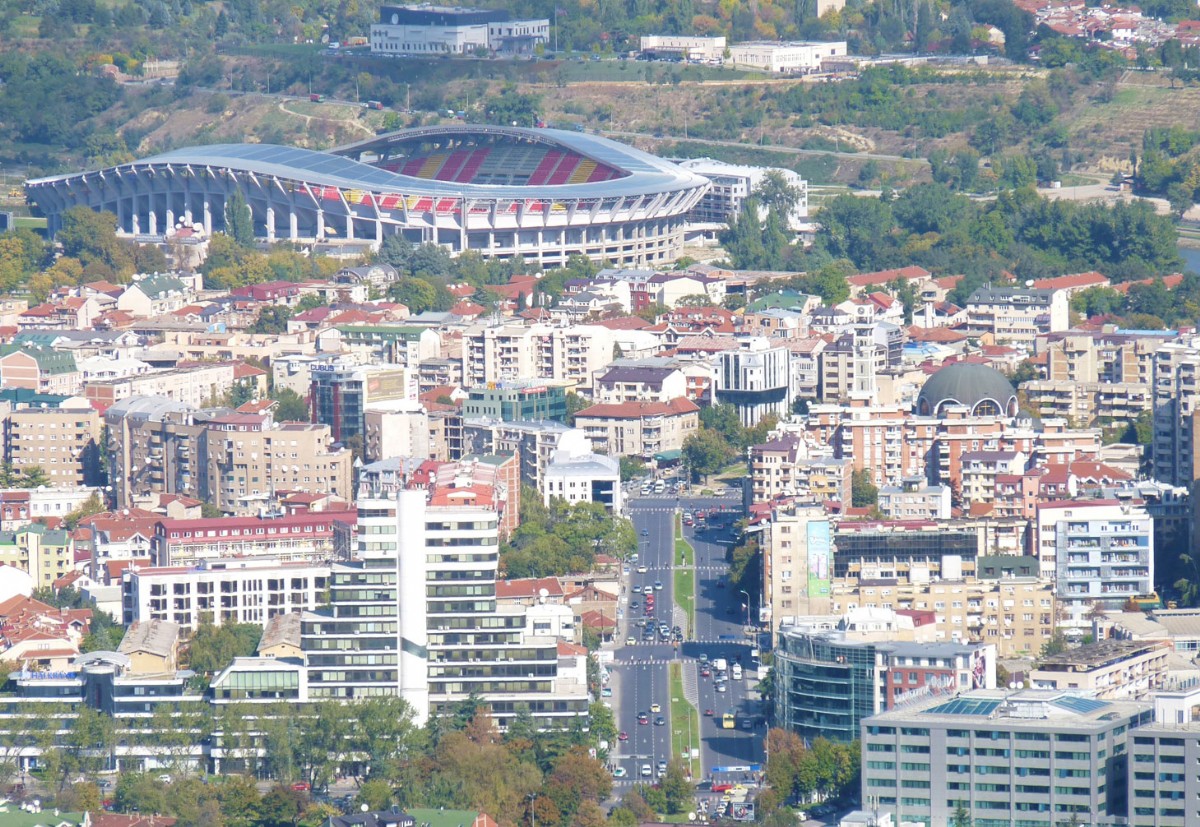
North Macedonia lies at a point where several fault lines (cracks in the Earth’s crust) meet, which puts it at high risk from major earthquakes. The last serious quake was in 1963, when a 6.1 magnitude earthquake killed more than 1000 people and reduced about four-fifths of the capital, Skopje, to rubble. It was the third time in its history that Skopje had been destroyed by an earthquake. With help from other countries, much of the city was rebuilt quickly during the 1960s. The functional concrete architecture of this period can still be seen all over the city today.

Consultant: Nicholas Harris
Facts about North Macedonia
Population 1,815,261 (2025 estimate)
Area 25,433 sq km
Highest point Golem Korab 2764 m (9068 ft)
Capital Skopje, population 474,889
Other major cities Bitola (pop. 86,528), Kumanovo (76,275), Prilep (73,814), Tetovo (72,944)
Languages Macedonian, Albanian
Religions Christian (Orthodox) 65%, Muslim 33%, others and none 2%
Ethnicity Macedonian 58%, Albanian 24%, Turkish 4%, Roma 2.5%, Serb 1%, others 10.5%
Currency Macedonian denar (MKD)
Chief exports textiles and clothing, shoes, tobacco, metals, tomatoes, cigarettes, medicines

History of North Macedonia
356 BC
Philip II of Macedon unites several regions, including large areas of northern Greece, as the Greek Kingdom of Macedon
336–323 BC
Philip’s son, Alexander the Great, expands the Kingdom of Macedon, conquering Persian lands stretching all the way to India; Macedonia rules over the largest empire in the world
146 BC
Macedonia becomes a province of the Roman Empire
6th century AD
Slavic peoples settle in the Balkan region
836–52
Reign of Bulgarian emperor Khan Presian, who conquers Macedonia
971
Byzantines conquer Bulgaria; under Emperor Basil II, the Byzantines eventually defeat a resurgent Bulgaria and restore control over the Balkans, including modern-day North Macedonia by 1020
13th century
Bulgarian Empire rules Macedonia, but it soon collapses and control passes back to the Byzantines
1345
Macedonia is conquered by Serbian Empire under Tsar Stefan Dušan. Skopje becomes his capital.
1389
Ottoman Turks capture Macedonia and it becomes part of the Ottoman Empire
1828–78
Greece, Serbia and Bulgaria break free from Ottoman rule and compete for control of Macedonia
1878–79
Macedonians rebel against Ottoman rule
1903
Macedonian rebels stage an uprising which is brutally crushed by the Ottoman Turks; over 150 villages are destroyed
1913
Greece, Serbia and Bulgaria help to defeat the Ottomans and divide the region of Macedonia between them; Serbia controls the part that is now North Macedonia
1915–18
Following the invasion of Serbia by the combined armies of Germany, Austria-Hungary and Bulgaria during World War I, the area of North Macedonia is occupied by Bulgaria
1918
Macedonia is made part of a new country, the Kingdom of Serbs, Croats and Slovenes
1929
The country is renamed Yugoslavia. The area of present-day North Macedonia becomes part of Vardar Banovina, a province (banate) of the Kingdom of Yugoslavia
1941–45
During World War II, Axis Powers invade and occupy Yugoslavia. Vardar Banovina is divided between Bulgaria and Italian-occupied Albania. Harsh rule by the occupying forces encourage many Vardar Macedonians to support the Partisan resistance movement of Josip Broz Tito after 1943
1945
Macedonia becomes one of a group of six republics belonging to the Socialist Federal Republic of Yugoslavia under the presidency of Josip Tito
1991
Macedonia votes to become independent and leaves Yugoslavia
1992
The country’s ethnic Albanians call for the right to govern their own territory (the northwestern part where most Albanians live)
1993
Macedonia joins the United Nations, but has to accept the title Former Yugoslav Republic of Macedonia, because of Greek objections. A region of northern Greece, once the major part of the ancient Greek Kingdom of Macedonia, is also still known as Macedonia
1997
Government forbids the use of the Albanian flag, sparking huge protests
1999
Thousands of Albanian refugees arrive from neighbouring Kosovo, fleeing Serbian violence
2001
Albanian rebels stage an uprising, calling for equal rights for the country’s ethnic Albanians
2002
Albanian is made an official language
2008
Macedonia recognizes the state of Kosovo
2015
Clashes in the northern town of Kumanovo between ethnic Albanians and Macedonians
2016
As huge numbers of people from the Middle East make their way across Macedonia to northern Europe, Macedonia closes its border with Greece, leaving thousands of migrants stranded at the Greek border village of Idomeni
2018
Macedonia and Greece sign the Prespa Agreement which will see the country change its name to Republic of North Macedonia. The Macedonian population vote on the name change in a referendum. Only 36.9% of voters take part, however, making the result invalid.
2019
Both Macedonian and Greek parliaments approve the Prespa Agreement. The Macedonian government announces that the country is renamed as North Macedonia.
2020
North Macedonia joins NATO as the 30th member state. However, Bulgaria blocks the official start of EU accession talks with North Macedonia
pics


Without in any way limiting Q-files Ltd’s exclusive rights under copyright, any use of this publication to “train” generative artificial intelligence (AI) technologies to generate text is expressly prohibited. Q-files Ltd reserves all rights to license use of this work for generative AI training and development of machine learning language models.