
Europe

CITE
We have made every effort to follow citation style rules, but there may be some minor differences. If in doubt, please refer to the appropriate citation style manual.
Netherlands. (2026). In Q-files Encyclopedia, Geography, Europe. Retrieved from
https://www.q-files.com/geography/europe/netherlands
"Netherlands." Geography, Europe, Q-files Encyclopedia, 31 Mar. 2026.
https://www.q-files.com/geography/europe/netherlands.
Accessed 31 Oct. 2026.
Netherlands 2026. Geography, Europe. Retrieved 31 October 2026, from
https://www.q-files.com/geography/europe/netherlands
Geography, Europe, s.v. "Netherlands," accessed October 31, 2026.
https://www.q-files.com/geography/europe/netherlands


Netherlands
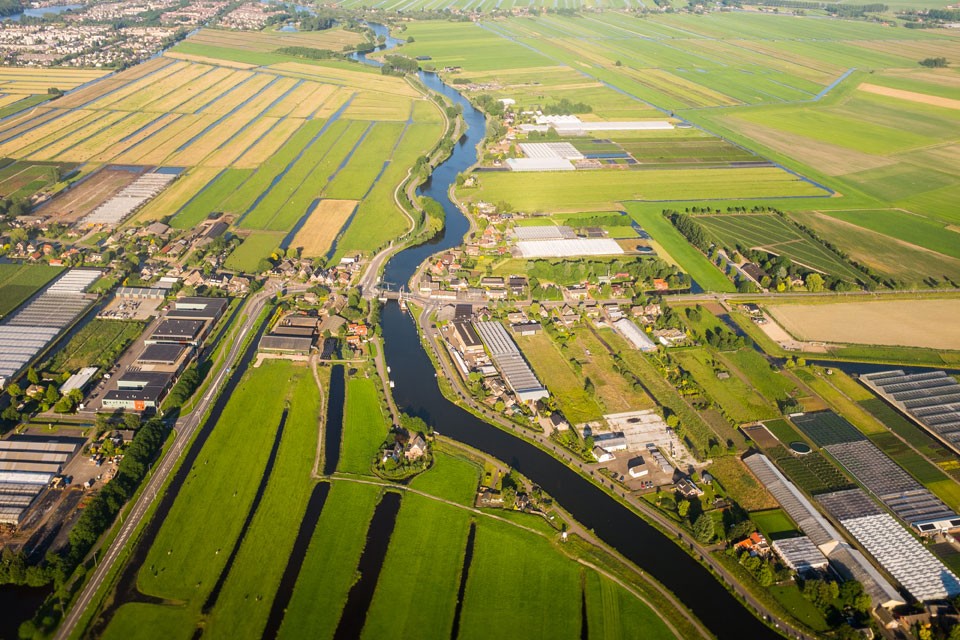
The Netherlands is sometimes known as Holland (although this name really refers only to part of the country). Much of the land is so low-lying that large areas have had to be protected, or “reclaimed”, from the sea. Just inland of the line of sand dunes lining the west coast are the reclaimed lowlands, known as polders. Many are planted with colourful tulip fields. Zeeland, in the southwest, is largely made up of the delta of three large rivers: the Rhine (Rijn), the Maas (Meuse) and Scheldt (Schelde). In the southeast, the land rises slightly to the plateau region of Limburg, the foothills of the Ardennes. The east and the northeast of the country, farmland and heathland regions, are slightly higher in elevation too. The Netherlands has a cool, temperate climate, affected by winds from the North Atlantic. Summers are warm, while winters are mild and rainy.


Holland
Holland is made up of two provinces: Noord (North) Holland and Zuid (South) Holland. The Netherlands’ three largest cities, Amsterdam, Rotterdam and The Hague, are located here. As these cities have grown, their suburbs have started to merge together. Along with the city of Utrecht, they now make up a single, large urban area (conurbation) known as the Randstad. This is one of Europe’s most densely populated areas—but not all of it is urban: pockets of countryside have deliberately been left between the cities. Many people live in these quieter areas and commute into the cities for work.
Friesland
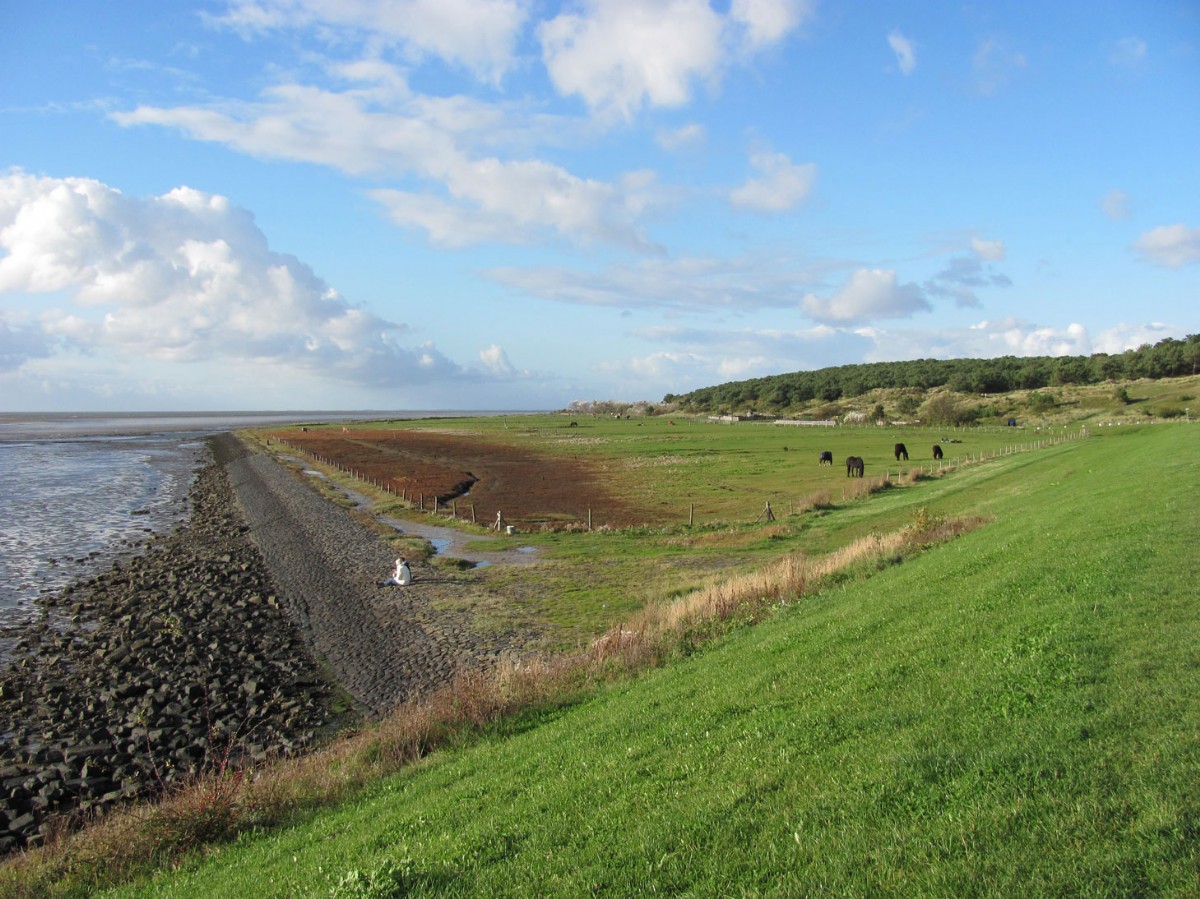
Friesland is the northernmost province of the Netherlands. It includes a chain of offshore islands, the West Frisians, which are connected to the mainland by ferry. Friesland’s flat, fertile countryside has been used as farmland for generations. It is well known for dairy farming: the distinctive black-and-white Frisian cattle were first bred in this region. The Frisians themselves are descended from the Frisii, an ancient Germanic tribe who settled on the Netherlands’ northern coast during the 1st century AD.
Agriculture
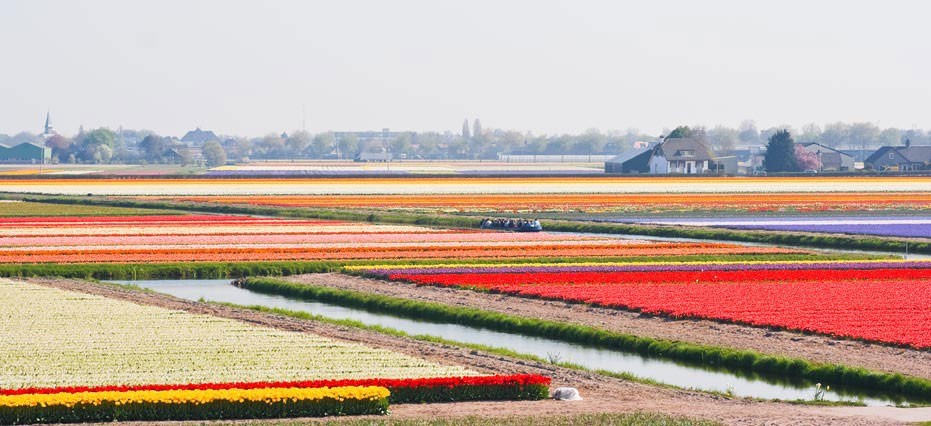
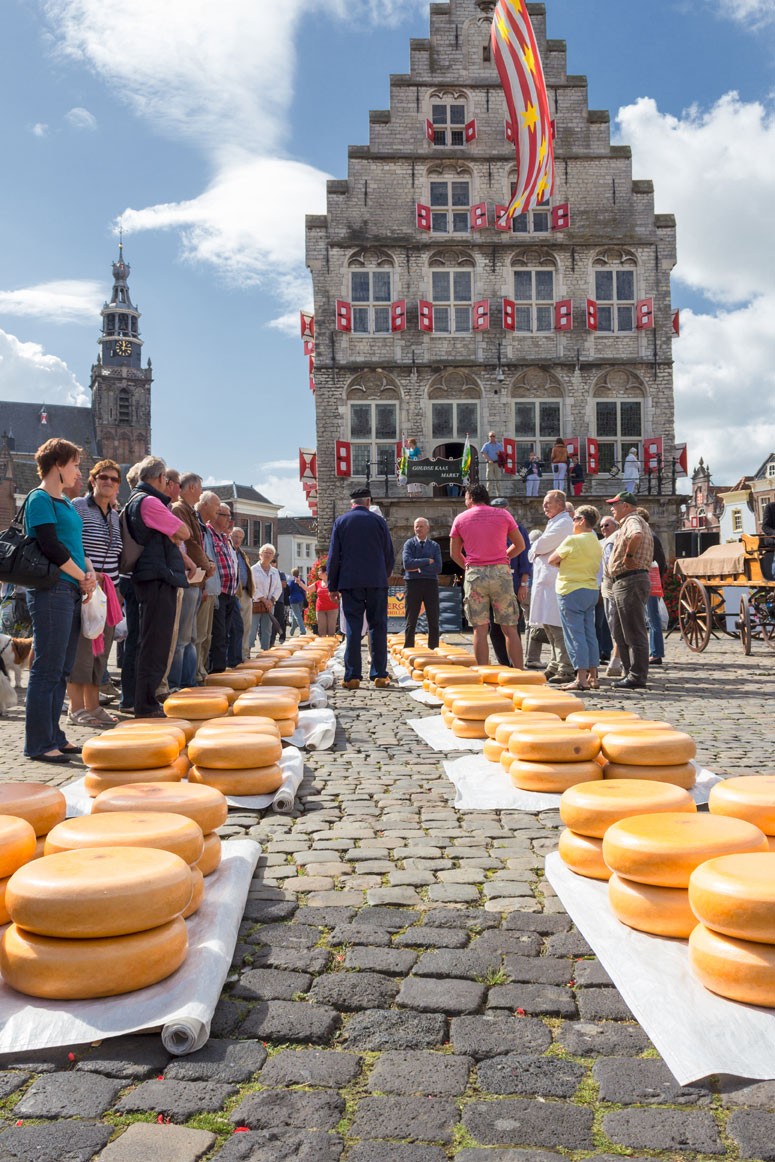
Over half the country’s land is used as farmland. Farmers grow wheat and barley, potatoes, sugar beets—used both for animal feed and producing sugar—and flower bulbs, especially tulips. Cattle and pigs are the chief types of livestock raised; the Netherlands is well-known for its cheeses, butter and ham.
People
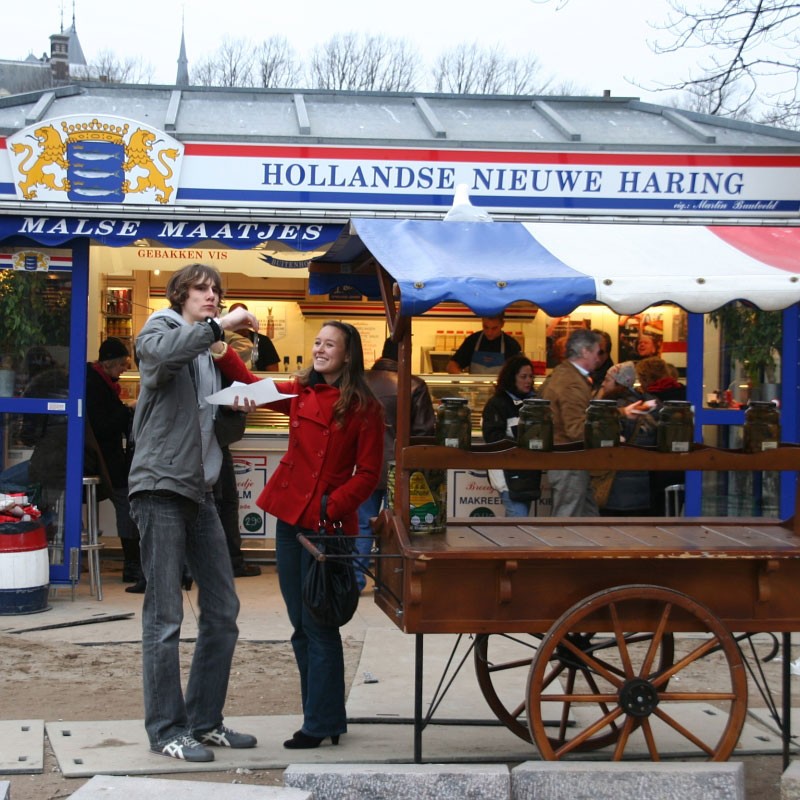
The Dutch (inhabitants of the Netherlands) are a Germanic people: their ancestors were Frankish settlers who arrived in the 5th century AD. Dutch is the official language, but about half a million people in Friesland speak one of three varieties of another language: Frisian, or Frysk.

Land reclamation
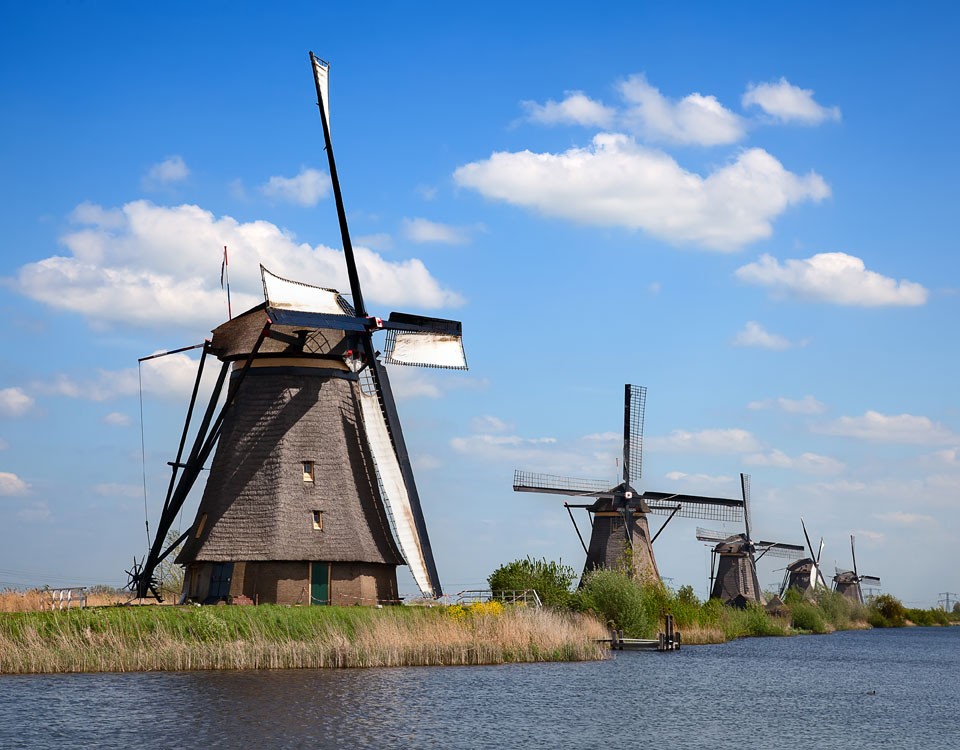
Just over a quarter of the land area of the Netherlands (which means "low-lying lands") lies below sea level. Some areas, called polderlands, were actually once covered by water and have been "reclaimed" for use as farmland. Windmills pumped water away along canals, leaving dry, fertile land. For centuries, the Dutch have fought to protect their land from the sea. Behind the lines of sand dunes that run along the west coast and the Frisian Islands, people built dykes (earth embankments) and dug drainage ditches.
Zuiderzee Works
The Zuiderzee Works involved the damming of the Zuiderzee, an inlet of the North Sea, and the reclamation of land from around its shores and from under the water itself by building polders. The object was both to provide flood protection and create new land for agriculture.

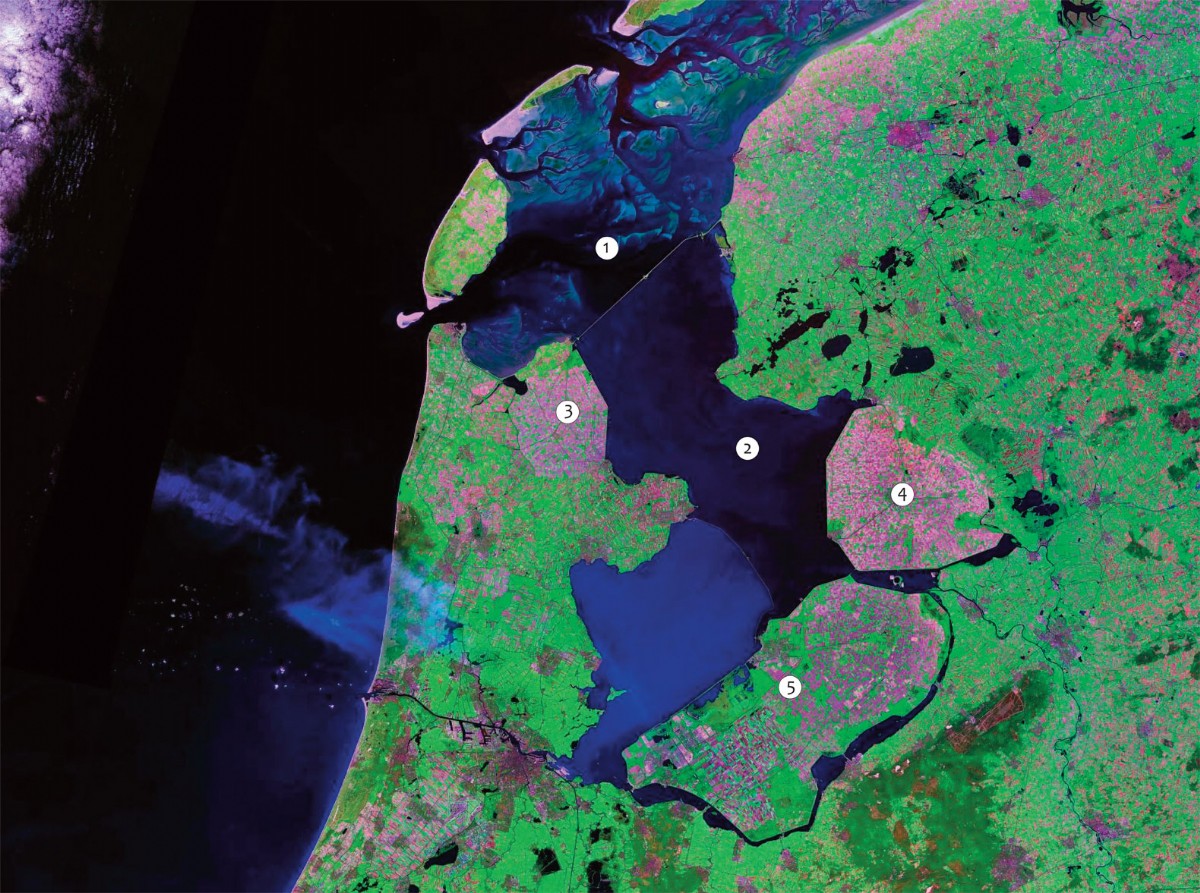
Completed in 1933, the main dam, the Afsluitdijk (Enclosure Dam), is 32 kilometres (20 miles) long and 90 metres (295 feet) wide. The next step involved creating polders by damming off portions of what is now called the IJsselmeer, then pumping all the water out. Each gemaal or pumping station contained a mechanism similar to an Archimedes' screw. The land was then further drained by a network of drainage canals. Reeds were sown from the air by plane on to the muddy flats to bind the soil. These plants were then replaced by rapeseed and cereals. The Wieringermeer polder was completed in 1930, Nordoostpolder in 1942 and the Flevoland polders in 1957 and 1968.
Delta Works
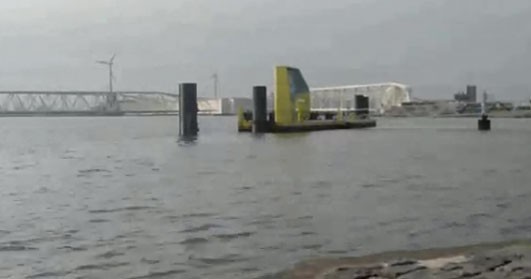
The Delta Works are a series of dams, locks and storm surge barriers designed to protect larges area of land around the Rhine-Maas-Scheldt Delta in the southwestern Netherlands from flooding. The engineers did this by shortening the coastline by about 700 kilometres (430 miles), thus reducing the number of dykes that would otherwise have to be built along each river estuary. The mouths of the Oosterschelde, the Haringvliet and the Grevelingen were blocked, while those of the Nieuwe Waterweg and the Westerschelde—shipping routes to the ports of Rotterdam and Antwerp—were left open. The dykes along these waterways were heightened and strengthened.

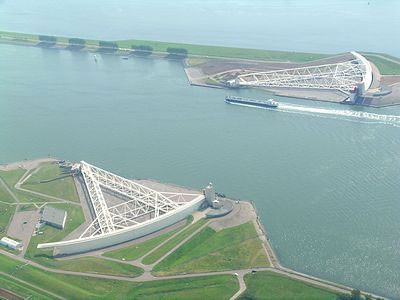
The Delta Works were officially declared completed after almost 50 years of construction work in 1997. But because of climate change and predicted sea-level rises, the dykes are now being built higher and wider. Work on upgrading river flooding defences are ongoing in anticipation of a rise in the North Sea of 1.3 metres (4.25 feet) by 2100 and 4 metres (13 feet) by 2200.
Industry
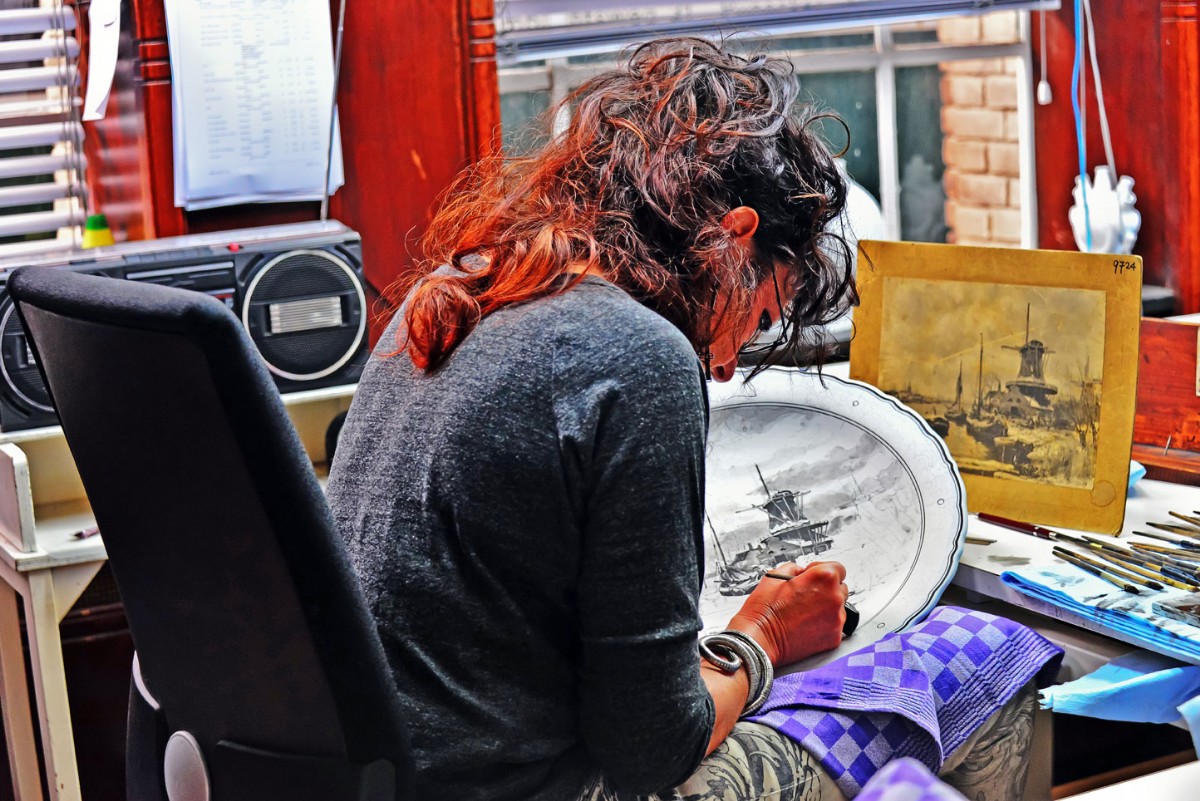
In between the farmland and bulbfields of the Netherlands, large industrial cities have grown up. Manufacturing has been long been important in the Netherlands. Industries such as diamond-cutting and shipbuilding date back to the 16th century and still exist today. The production of vehicles, machinery, chemicals and electrical goods has become more important in recent decades.
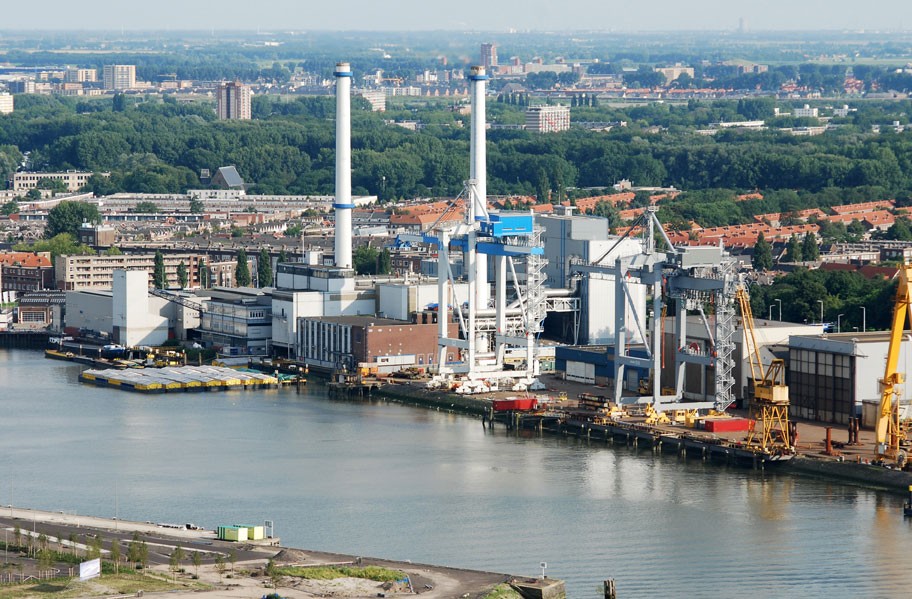
The Netherlands has long been a major international centre of shipping and trade. The port of Rotterdam is the largest in Europe and the world's 11th largest by cargo tonnage.
Amsterdam
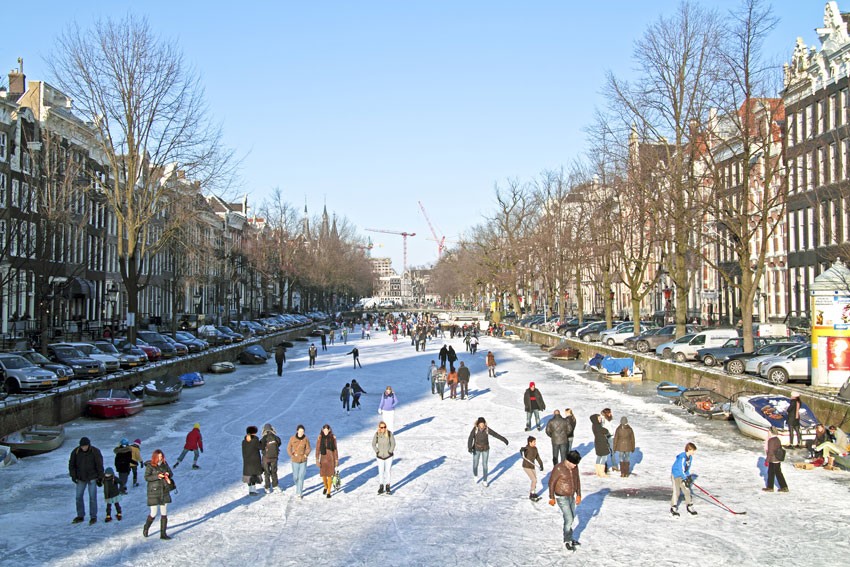
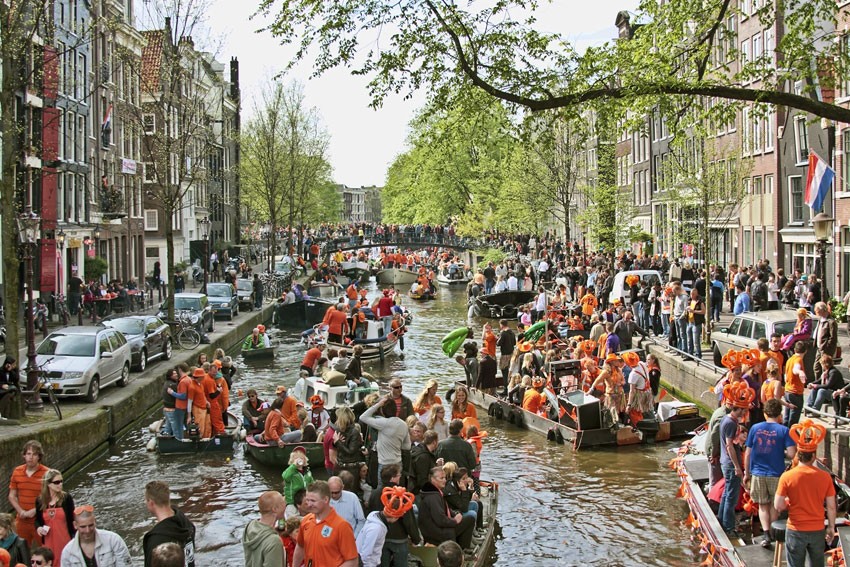
In its heyday in the 17th century, the Dutch port of Amsterdam was one of the busiest in the world. The city was an important financial centre, and was also known for diamond-trading. Today, the city is the Dutch capital and still the country's most important financial and commercial centre. An extensive network of bicycle lanes means that it is extremely easy and safe to get around the city. There are three times as many bicycles as cars on its streets. Around 5 million tourists visit Amsterdam every year, drawn by its architecture, canals, museums and nightlife.
Consultant: Nicholas Harris
Facts about the Netherlands
Population 17,821,419 (2023 estimate)
Area 33,893 sq km
Highest Point Vaalserberg 322 m (1056 ft)
Capital Amsterdam (pop. 741,636)
Other major cities Rotterdam (598,199), The Hague (474,292), Utrecht (290,529), Eindhoven (209,620), Tilburg (199,613), Groningen (181,194)
Languages Dutch, Frisian
Religions Christian (Roman Catholic) 28%, Christian (Protestant) 19%, Muslim 5%, others and none 48%
Ethnicity Dutch 74%, other European 8%, Indonesian 2%, Turkish 2%, Surinamese 2%, Moroccan 2%, Dutch Caribbean 1%, others 9%
Currency Euro (EUR)
Chief exports machinery, chemicals, fuels, foods, cheese, plants and flowers
History of the Netherlands
650–250 BC
Migration of Germanic tribes from the north to the Low Countries
57 BC
Julius Caesar conquers the southern Netherlands for the Roman Empire
69 AD
Batavi tribe rebels against the Romans but are eventually defeated
1st century
A people called the Frisians settle along the coast of the Netherlands
490
The Franks expand their empire to include the Netherlands
6th–7th centuries
Wars between Frisians and Franks
650–734
Frisian Kingdom under King Aldegisel and King Redbad emerges with Utrecht as its capital
850–85
Vikings rule much of the Netherlands’ coast
855
Lotharingia, a successor Frankish kingdom named after King Lothair II, rules the Netherlands and the Rhineland
10th–11th centuries
The Holy Roman Empire rules much of the Low Countries, but powerful local nobles hold sway in their private kingdoms, including Holland, Hainaut, Flanders, Gelre, Brabant and Utrecht
1000
Economy starts to grow; towns grow up around monasteries and castles
1212
Severe flooding in northwestern Netherlands kills 60,000 people
1384–1482
The House of Burgundy rules the Low Countries
15th century
Amsterdam becomes a major port, trading grain from Baltic countries with Belgium, France and England
1433
Duke of Burgundy unites Netherlands and Belgium
1482–1581
The House of Habsburg rules the Low Countries
1516
Netherlands comes under the rule of Charles V, Holy Roman Emperor and king of Spain
1568
Eighty Years' War between the Seventeen Provinces and the Spanish begins
1579
Union of Utrecht: the northern half of the Seventeen Provinces commit to support each other in their defence against the Spanish: this is seen as the foundation of the modern Netherlands
1581
Northern provinces declare their independence from Spain
17th century
Dutch Golden Age: the Dutch Empire grows to become one of the major seafaring and economic powers in the world; science and art (especially painting) are among the most acclaimed in the world.
1602
Dutch East India Company sets up in Jakarta (what is now Indonesia)
1614
Dutch found settlement of New Amsterdam on the southern part of Manhattan
1630–54
Dutch settlers conquer Brazil, but transfer it to Portugal in 1661
1648
Peace of Münster ends the Eighty Years’ War; King Philip IV of Spain finally recognizes Dutch independence; the provinces of Holland, Zeeland, Groningen, Friesland, Utrecht, Overijssel and Gelderland form a confederation
1652
Dutch settle the Cape Colony, South Africa
1672
Rampjaar (Disaster Year): Dutch Republic fights a war against France, England and three German lands at the same time
1795
With the support of revolutionary France, Dutch republicans proclaim the Batavian Republic
1806–10
Kingdom of Holland is set up by Napoleon Bonaparte as a puppet kingdom governed by his brother Louis Bonaparte
1810–13
Napoleon makes Netherlands part of the French Empire, until he is defeated in the Battle of Leipzig
1815
William Frederick becomes King William I of United Netherlands
1830
Southern Netherlands rebels and gains independence as Belgium
1863
The Netherlands abolishes slavery, although this takes effect only in 1873
1914–1918
The Netherlands maintains its neutrality during World War I
1933
A 32-km (20-mile) dam is completed across the Zuider Zee forming a freshwater lake known as the Ijsselmeer
1940
Germany invades and occupies the Netherlands during World War II
1949
The Dutch East Indies becomes independent as Indonesia.
1952
The Netherlands is a founding member of the European Coal and Steel Community, which is to become the European Economic Community in 1957
1975
Dutch colony of Suriname achieves independence; hundreds of thousands of Surinamese emigrate to the Netherlands
1980
Queen Juliana retires and is succeeded by her daughter Beatrix
2001
The Netherlands becomes the world's first country to legalize same-sex marriage.
2002
The Dutch guilder is replaced by a new currency: the euro
2010
The Netherlands Antilles is dissolved and Aruba, Curacao, St Maarten become nations within the Kingdom of the Netherlands; Bonaire, St Eustatius and Saba, became autonomous municipalities
2013
Willem-Alexander becomes King of the Netherlands
2014
Malaysian Airlines flight MH17 travelling from Amsterdam to Kuala Lumpur crashes in eastern Ukraine, close to the border with Russia; 193 Dutch citizens are among the 298 people killed
pics

Without in any way limiting Q-files Ltd’s exclusive rights under copyright, any use of this publication to “train” generative artificial intelligence (AI) technologies to generate text is expressly prohibited. Q-files Ltd reserves all rights to license use of this work for generative AI training and development of machine learning language models.