
Europe

CITE
We have made every effort to follow citation style rules, but there may be some minor differences. If in doubt, please refer to the appropriate citation style manual.
Slovenia. (2026). In Q-files Encyclopedia, Geography, Europe. Retrieved from
https://www.q-files.com/geography/europe/slovenia
"Slovenia." Geography, Europe, Q-files Encyclopedia, 31 Mar. 2026.
https://www.q-files.com/geography/europe/slovenia.
Accessed 13 Sep. 2026.
Slovenia 2026. Geography, Europe. Retrieved 13 September 2026, from
https://www.q-files.com/geography/europe/slovenia
Geography, Europe, s.v. "Slovenia," accessed September 13, 2026.
https://www.q-files.com/geography/europe/slovenia


Slovenia
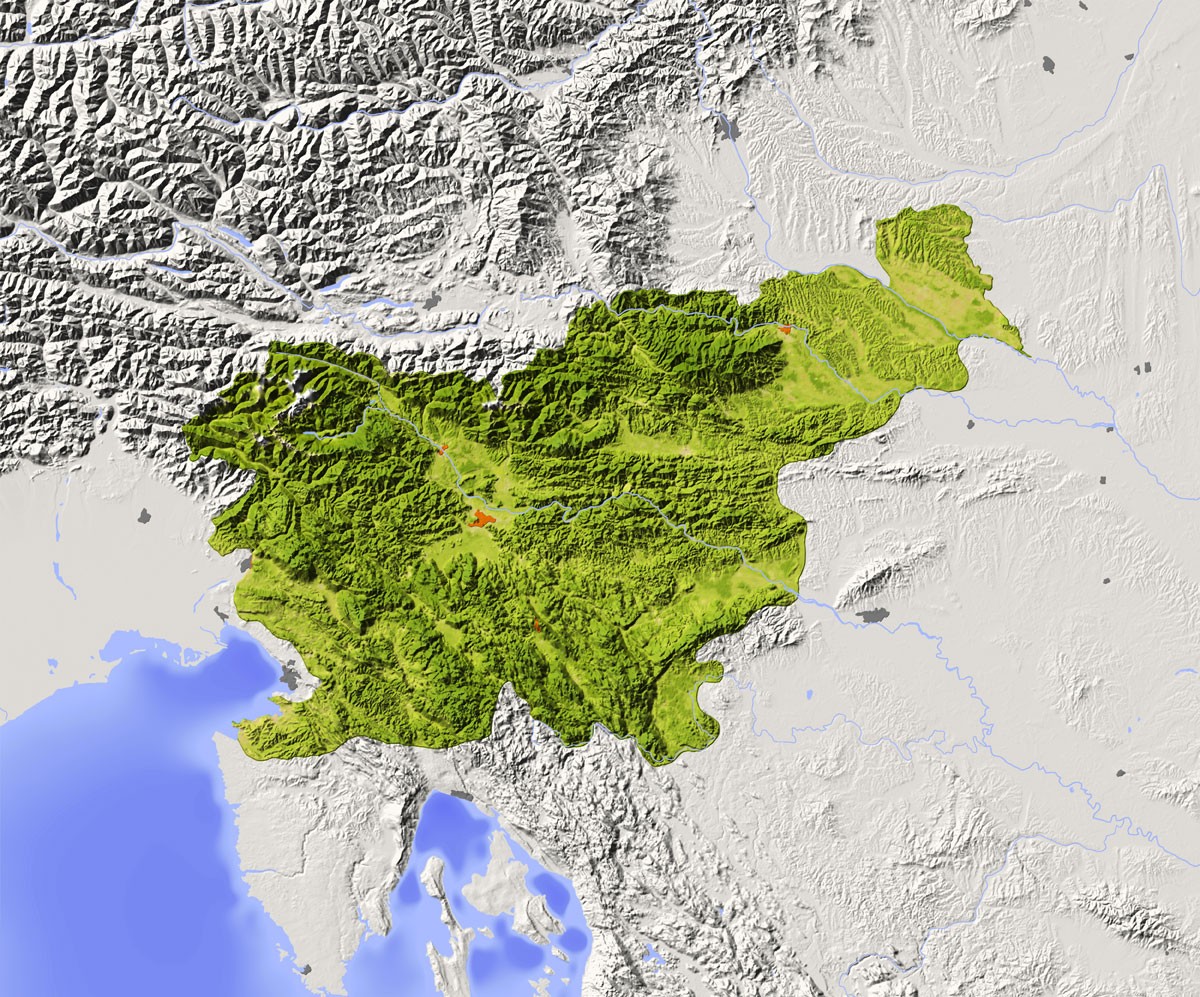
The mountainous country of Slovenia lies at the junction of the Alps and the Dinaric Alps, which run down the eastern shore of the Adriatic Sea. The Julian and Karavanke ranges stretch along the northern border with Austria. Forests cover two-thirds of the country. Slovenia has a mostly continental climate with warm summers and cold winters—thick snow blankets the northern mountains during winter months. Near the short coast, the climate is warm and rainy for much of the year and winters are short and mild. Until it became independent in 1992, Slovenia was part of Yugoslavia.


People
The Slovenes are a South Slavic people who first settled in the region in the 6th century. Their language, Slovenian, is similar to Czech, Slovak and Polish. Slovenes have kept their language and folk traditions alive despite being ruled by German-speaking Austrians for much of their history. Most people live in small towns and villages in the valleys. Even the capital, Ljubljana, is small by comparison with most of Europe’s capital cities.

Economy
During the 20th century, Slovenia was the most economically developed of the six Yugoslav republics. It was known for manufacturing heavy goods, including steel and chemicals. Today, about two-thirds of people work in services, such as finance, education and tourism. Manufacturing is still important too; skilled workers in Slovenia’s factories produce cars, machinery, electrical equipment and medicines.


Karst
Lying in western Slovenia is the Kras Plateau, or “Karst”. It is famous for its dramatic limestone landscape. The rock has been eroded over time by water and weather, creating enormous caves with underground rivers, deep gorges and sinkholes. The Škocjan caves are some of the largest known underground canyons in the world. In the late 15th century, scientists in Slovenia were the first to study the geography of the region. Because of their work, all similar limestone landscapes around the world today are known as “karst”.

Consultant: Nicholas Harris
Facts about Slovenia
Population 2,130,850 (2024 estimate)
Area 20,151 sq km
Highest point Triglav 2863 m (9391 ft)
Capital Ljubljana, population 288,382
Other major cities Maribor (pop. 95,767), Celje (37,628), Kranj (37,223)
Language Slovenian
Religions Christian (Roman Catholic) 58%, Muslim 2%, Christian (Orthodox) 2%, others and none 38%
Ethnicity Slovene 83%, Serb 2%, Croat 2%, Bosniak 1%, others 12%
Currency Euro (EUR)
Chief exports machinery, cars and transport equipment, chemicals, medicines


History of Slovenia
1st century
The region is conquered by the Romans and made part of the Roman Empire
6th century
Germanic tribes migrate westward and a Slavic people settle in the region—the ancestors of modern Slovenes
7th century
Avars, a nomadic people from Central Europe, begin to attack Slovenes; King Samo unites all the region’s Slavs to fight against the Avars
659
Samo dies; Slovenes form the Slavic state of Carantania in the northeast, while the Avars rule other parts of the region
803
Charlemagne, king of the Franks, defeats Avars; Slovenia comes under Bavarian rule (part of what is now Germany)
976
Carantania becomes known as the Duchy of Carinthia
14th century
Habsburgs of Austria gain control of the region that is now Slovenia
1420
Republic of Venice takes control of western Slovenia. It rules it until the Venetian Republic is dissolved in 1797, whereupon it passes to the Austrian Empire.
1515
Peasant revolt: thousands of peasants across the entire country protest violently at their lack of rights
1918
Austro-Hungarian Empire collapses and Slovenia joins a union of countries called the Kingdom of Serbs, Croats and Slovenes; in 1929 it is renamed the Kingdom of Yugoslavia
1941
Nazi Germany and Italy occupy Slovenia during World War II
1945
At the end of World War II, the Yugoslav government is taken over by Communists and Slovenia becomes a Communist republic of Yugoslavia
1990
Slovenia holds its first multi-party elections (more than one political party stands for election). The Communist government is voted out and Milan Kucan becomes president
1991
Slovenia declares independence; Yugoslav army invades, leading to the Ten-Day War, but it withdraws when a ceasefire is agreed with the help of the European Union (EU)
1992
Slovenia’s independence is recognized by the EU and United States
2004
Slovenia becomes a member of the EU and North Atlantic Treaty Organization (NATO)
2007
Slovenia becomes the first former communist state to adopt the euro
2012–13
Thousands of people take part in anti-austerity protests in Ljubljana and Maribor
pics


Without in any way limiting Q-files Ltd’s exclusive rights under copyright, any use of this publication to “train” generative artificial intelligence (AI) technologies to generate text is expressly prohibited. Q-files Ltd reserves all rights to license use of this work for generative AI training and development of machine learning language models.