
Erosion

CITE
We have made every effort to follow citation style rules, but there may be some minor differences. If in doubt, please refer to the appropriate citation style manual.
Caves. (2026). In Q-files Encyclopedia, Earth, Erosion. Retrieved from
https://www.q-files.com/earth/erosion/caves
"Caves." Earth, Erosion, Q-files Encyclopedia, 14 Apr. 2026.
https://www.q-files.com/earth/erosion/caves.
Accessed 21 Sep. 2026.
Caves 2026. Earth, Erosion. Retrieved 21 September 2026, from
https://www.q-files.com/earth/erosion/caves
Earth, Erosion, s.v. "Caves," accessed September 21, 2026.
https://www.q-files.com/earth/erosion/caves


Caves
Caves are underground holes in the rock. Some caves open up when the ground splits, as in an earthquake. Some are eroded by waves hurling stones and pebbles at a cliff. But most are made in limestone, a kind of sedimentary rock, by a chemical process. Rainwater naturally contains tiny amounts of acid. It trickles into cracks and reacts with the rock made of soluble calcium carbonate to dissolve it away, little by little. Over thousands of years, the small cracks are gradually widened into huge caves. The science of exploration and all aspects of caves is called speleology.
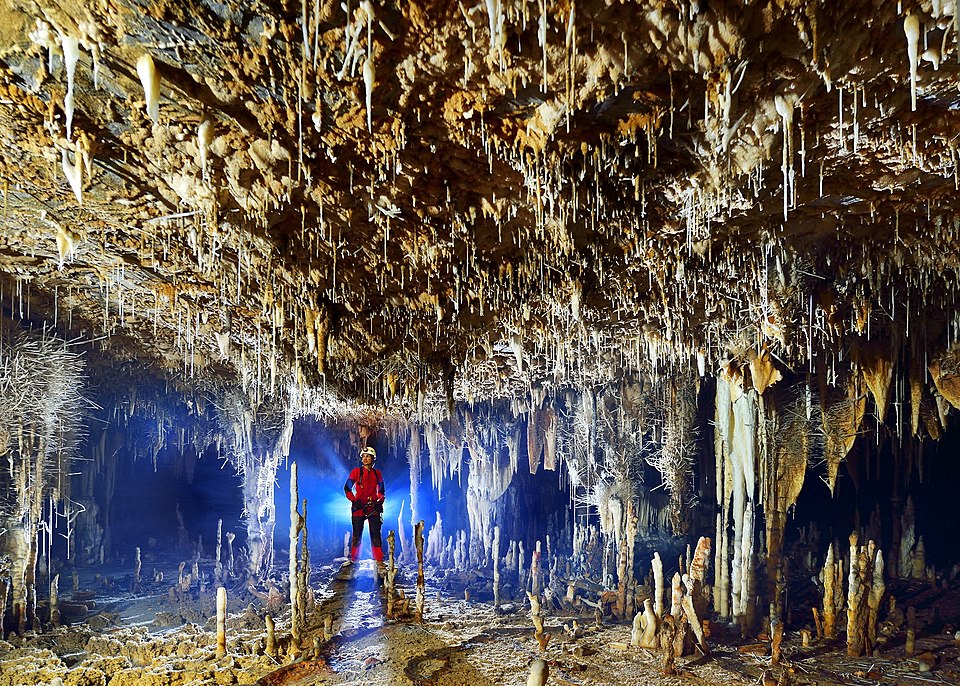
Limestone caves
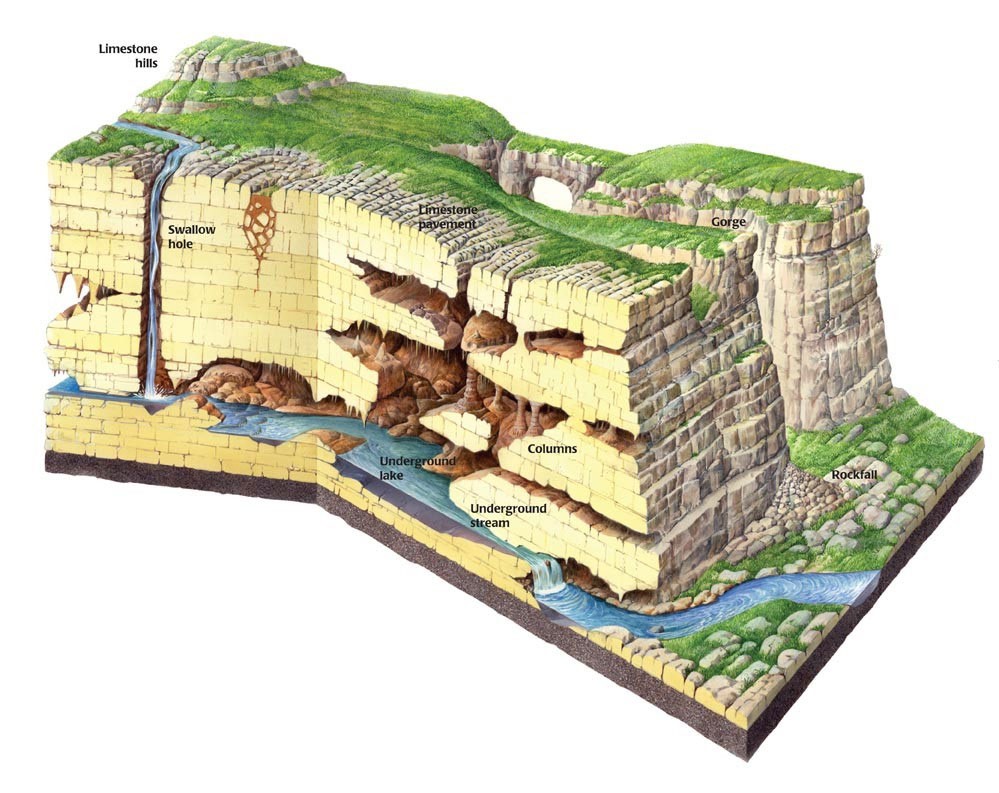
Limestone is easily dissolved by rainwater, which is actually a very weak acid. It seeps through the soil and into cracks in the rock, slowly eroding it away. Streams and rivers, too, easily wear away limestone and even carve channels for themselves in the rock deep underground. Over thousands of years, this water action forms caves, often made up of a series of chambers, tunnels and passages in the limestone, which can run for tens or even hundreds of kilometres underground.
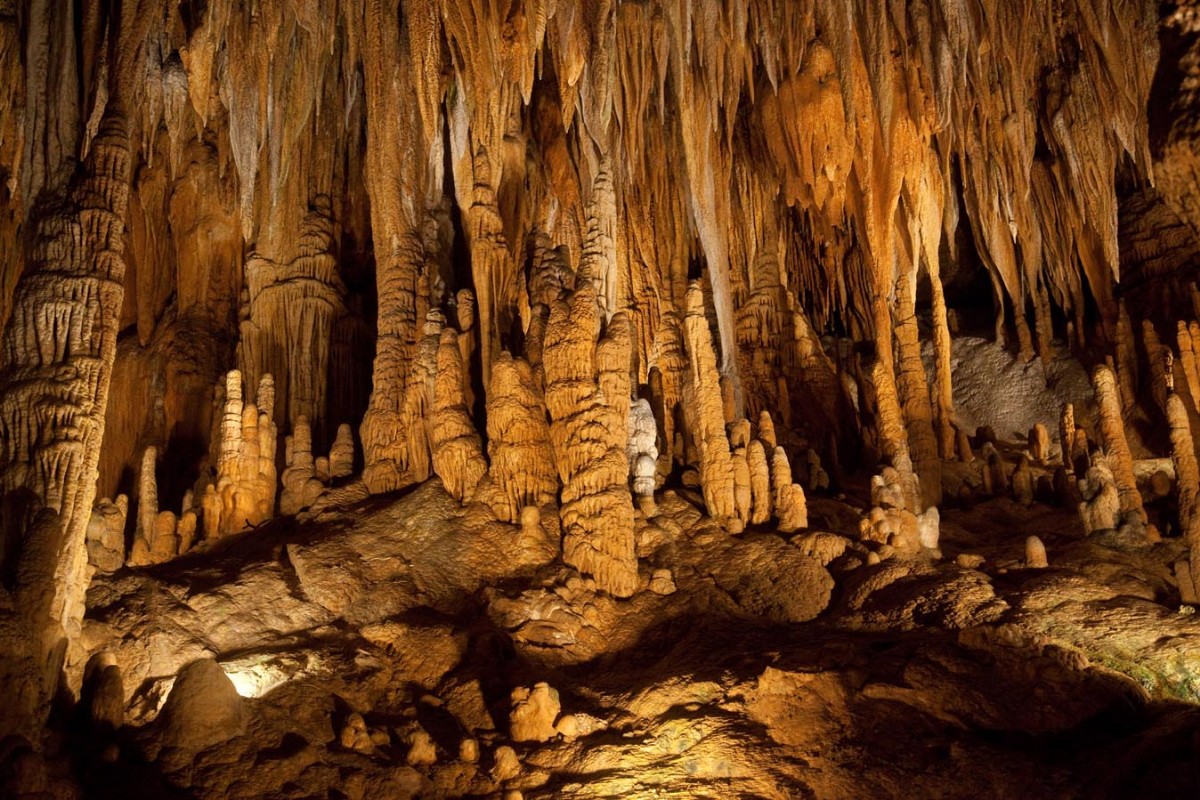
Stalactites and stalagmites
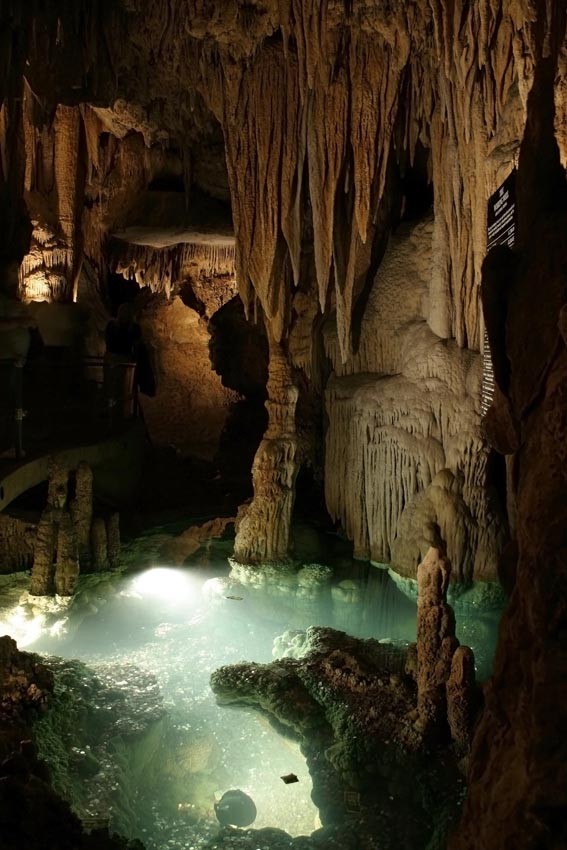
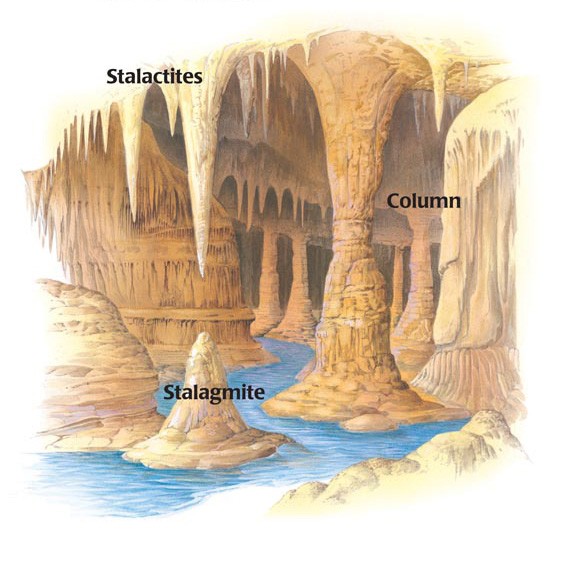
Water seeping through the rocks dissolves the minerals that make up the limestone. If the water then drips into a cave or cavity it leaves a tiny amount of the dissolved minerals behind as it falls. Over time, the mineral deposits build up into limestone “icicles”, called stalactites, hanging from the cave roof. Stalagmites are mineral towers built up from water dripping on to the floor from the stalactites above. Sometimes they join the stalactites to form solid columns of rock, linking the ceiling of the cave to the floor.
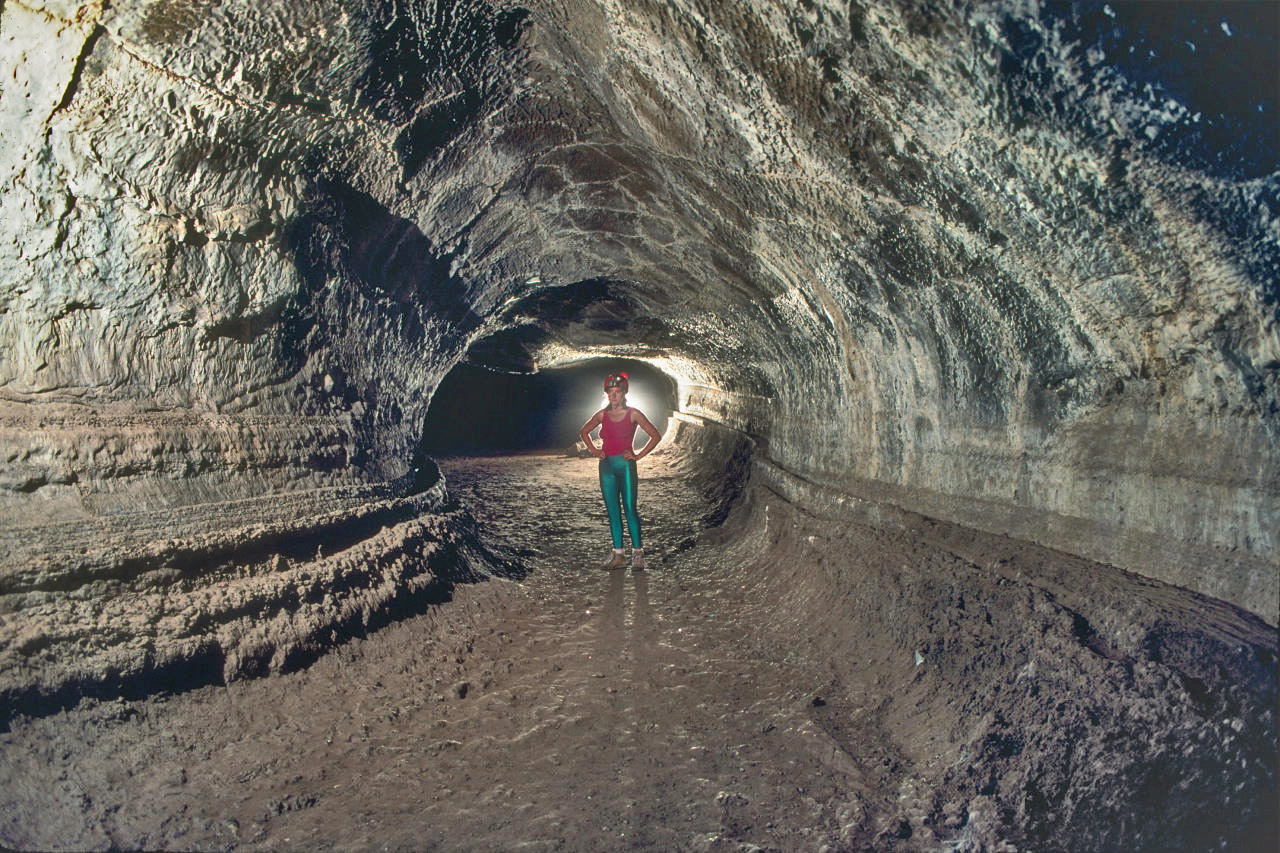
Lava tubes
Some caves are formed not by water dissolving limestone but through volcanic activity. As lava from the erupting volcano flows downhill, its surface cools and solidifies, forming a hard crust. Inside, molten lava may continue to flow. If it drains away, a hollow tube remains. Lava tubes can be up to 15 metres (50 ft) wide—though most are narrower—and can be kilometres long. Examples of lava tube caves can be found in the Canary Islands, Australia and on Hawaii. Some have been discovered on the Moon and Mars.
Consultant: Ian Fairchild
pics

Without in any way limiting Q-files Ltd’s exclusive rights under copyright, any use of this publication to “train” generative artificial intelligence (AI) technologies to generate text is expressly prohibited. Q-files Ltd reserves all rights to license use of this work for generative AI training and development of machine learning language models.