
Erosion

CITE
We have made every effort to follow citation style rules, but there may be some minor differences. If in doubt, please refer to the appropriate citation style manual.
Slopes and landslides. (2026). In Q-files Encyclopedia, Earth, Erosion. Retrieved from
https://www.q-files.com/earth/erosion/slopes-and-landslides
"Slopes and landslides." Earth, Erosion, Q-files Encyclopedia, 1 May. 2026.
https://www.q-files.com/earth/erosion/slopes-and-landslides.
Accessed 6 Aug. 2026.
Slopes and landslides 2026. Earth, Erosion. Retrieved 6 August 2026, from
https://www.q-files.com/earth/erosion/slopes-and-landslides
Earth, Erosion, s.v. "Slopes and landslides," accessed August 6, 2026.
https://www.q-files.com/earth/erosion/slopes-and-landslides


Slopes and landslides
Slopes are unstable because gravity causes material such as soil, mud, rock fragments and rock itself to creep, slide, flow or fall down them. The presence of water is an important factor. Saturation after heavy rainfall both reduces the material's cohesion (the way it is held together) and adds to its weight, making slopes less stable. Other causes of downslope movement are undercutting by waves or rivers, earthquakes and volcanic eruptions. Human activity can be significant, too. Removing the vegetation that binds the soil, construction projects that affect the composition or shape of a slope and vibrations from nearby traffic are all ways in which a slope may become destabilized.
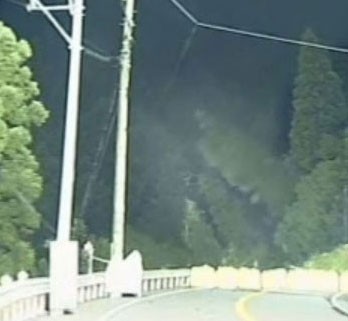
Creep, slides, flows and falls

Landslides, the downslope movement of material, include a wide range of movements, such as soil creep, earthflows, mudflows, rock slides, slumping and rock falls. Creep is slow, almost imperceptible movement, made in small steps. Slides are faster, and can remove entire hillsides. Flows are when the material, most commonly silt and sand, breaks up and tumbles downwards, not holding any shape. Falls are free movement of rock through the air—typical on very steep slopes or cliffs.
Typically, a slope is weakened first, say by saturation or human activities; the actual landslide often requires a trigger to start it, for example, a heavy downpour, an earthquake or a blasting at a quarry.
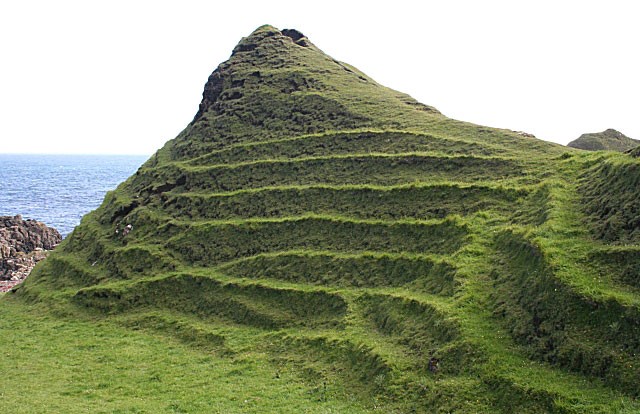
Soil creep
Soil creep (also known as solifluction) is the commonest form of downslope movement: it probably occurs on most hillsides. Tilted posts and telegraph poles, leaning walls and bent tree trunks all give evidence that soil creep is taking place. Fluctuations in temperature (which cause the soil particles to expand or contract) and the presence of groundwater and frost cause the soil to move, grain by grain, a few centimetres each year.
The soil is usually bound together by grass roots, forming slabs of earth that move downhill in a series of small steps called terracettes. Providing level routes across a hillside, they are often used as tracks by grazing livestock, such as sheep and cows. This adds to the rate of soil creep.
Earthflows
Earthflows are downslope flows of saturated soil. The more water the soil contains, the faster its movement. They are commonly triggered by sudden rainfall. Solid material on the surface is carried along by the flow underneath. This creates a bulging lobe which moves downhill in a slow, rolling motion.
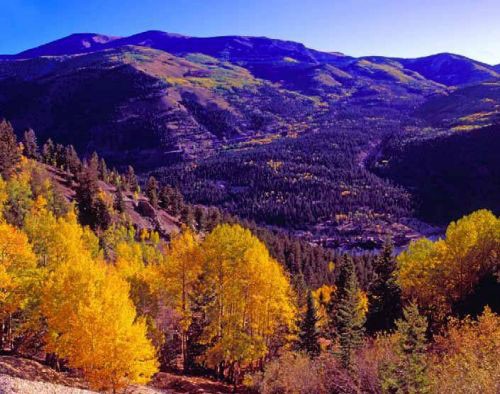

Mudflows
In a mudflow, or debris slide, mud mixed with fragments of rock becomes saturated after a heavy downpour. The material no longer sticks to the slope—often heavily vegetated—and slides downwards as a flowing mass. As it does so, it loses all cohesion (being bound together) and spreads out at the bottom of a slope. In extreme cases, the slurry of mud and rock surges down the slope with great force. The flow may even pick up trees, houses and cars, and block bridges or dam rivers, causing much devastation.
Rockslides
Rockslides are rapid downslope movements of rock slabs along joints in the rock. The blocks break up into smaller pieces as they career downslope and collide with each other. Rock accumulates as cone-shaped pile of debris at the bottom of the slope.
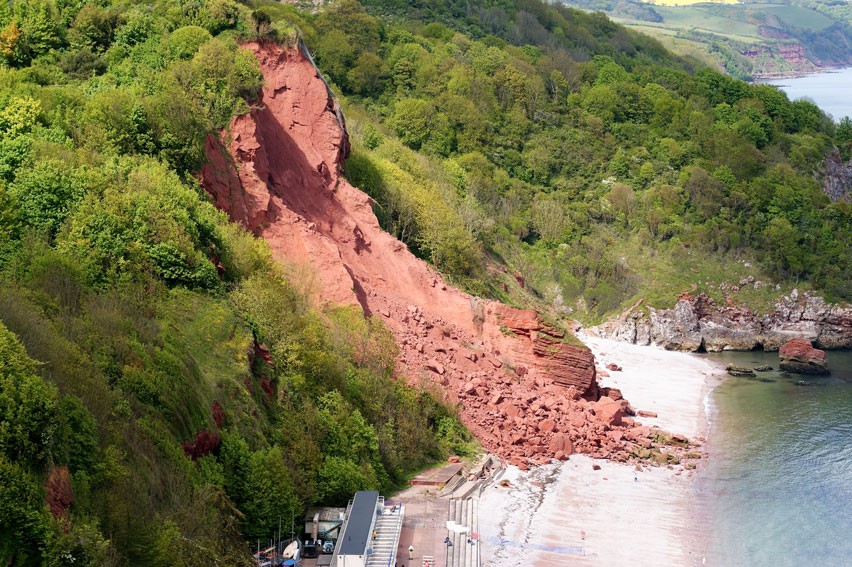
Slumps
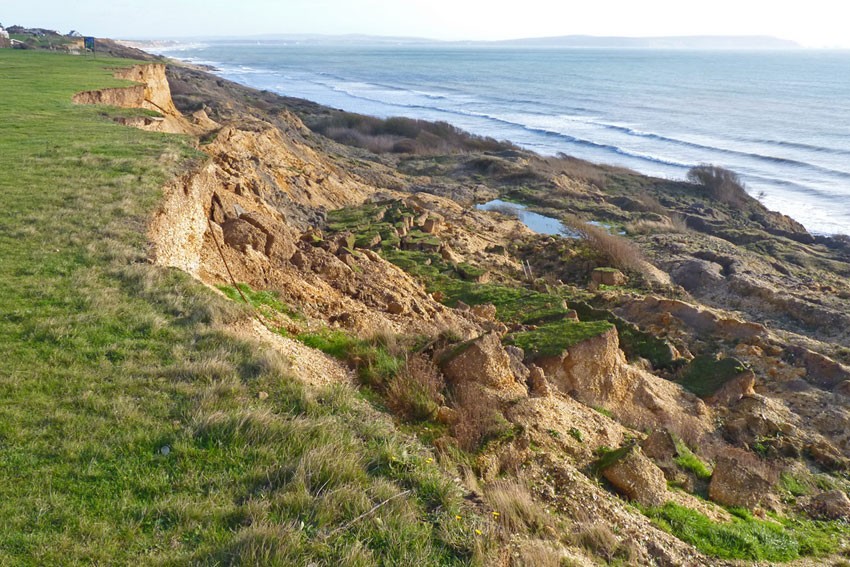
A slump occurs when mass of sediment or rock slides a short distance down a slope, sliding along a curved (concave-upwards, or spoon-shaped) underlying surface. This event, often slow-moving, is also known as a rotational slide. The toe, or bottom, of the rock may disintegrate and form a debris slide.
A slump commonly happens when the upper layers of rock are permeable (allowing water to pass through them), for example, chalk or sandstone, but the lower layers are impermeable (water cannot pass through), such as clay or shale. Waterlogging makes the slope unstable in the first place, both by adding to the mass of material and lubricating its sliding surface. The slump may be triggered by earthquake shocks, saturation, freezing and thawing, or when river or wave erosion undercuts the slope, removing its physical support.
Rockfalls
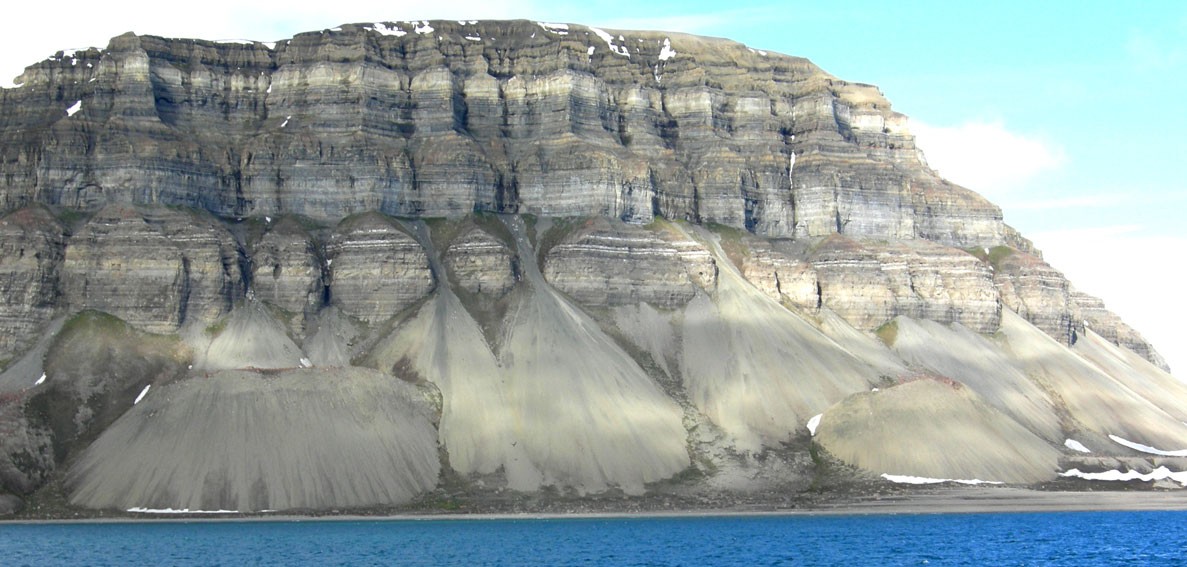
A rockfall occurs when rock falls freely from a cliff face or a very steep slope, or bounces, rolls or slides down it. This commonly occurs on coastal or mountain cliffs. The boulders, stones or fragments collect at the bottom, forming a cone-shaped talus or scree. Rockfalls are often caused by weathering: freeze-thaw (water that has seeped into the rocks, and expanded and contracted) breaks up the rock. These fractures may become enlarged by root-wedging: plant roots grow into these spaces and push them apart.
Lahars
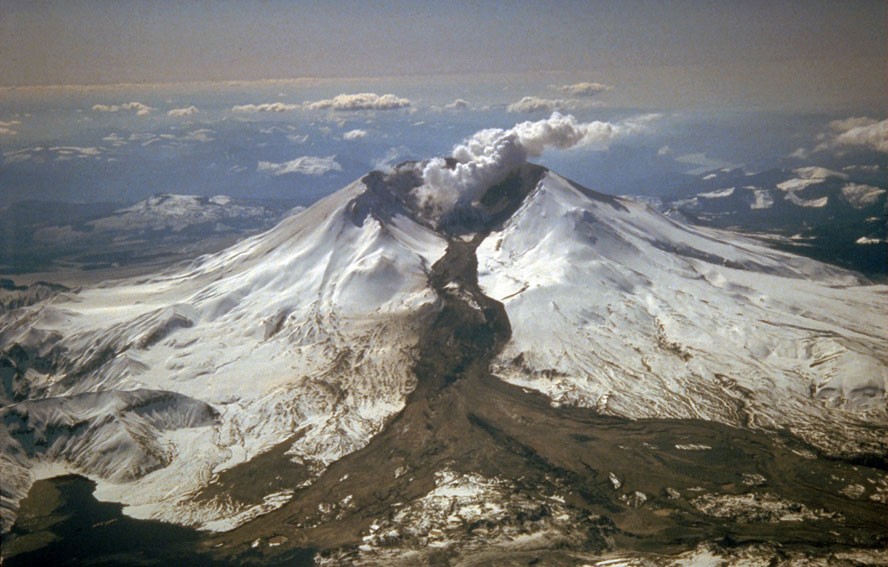
A lahar is a type of mudflow or debris slide that consists of a mix of pyroclastic material (a mixture of hot gas and volcanic rock), rocky debris and water. The slurry flows very rapidly down from a volcano, often along well-defined gullies or valleys. Lahars are extremely destructive: they can destroy any structures in their path. Notable lahars include those at Mount Pinatubo in the Phillipines (1991) and Nevado del Ruiz in Colombia (1985). The latter obliterated the town of Armero and killed about 25,000 people.
2026 Niscemi landslide
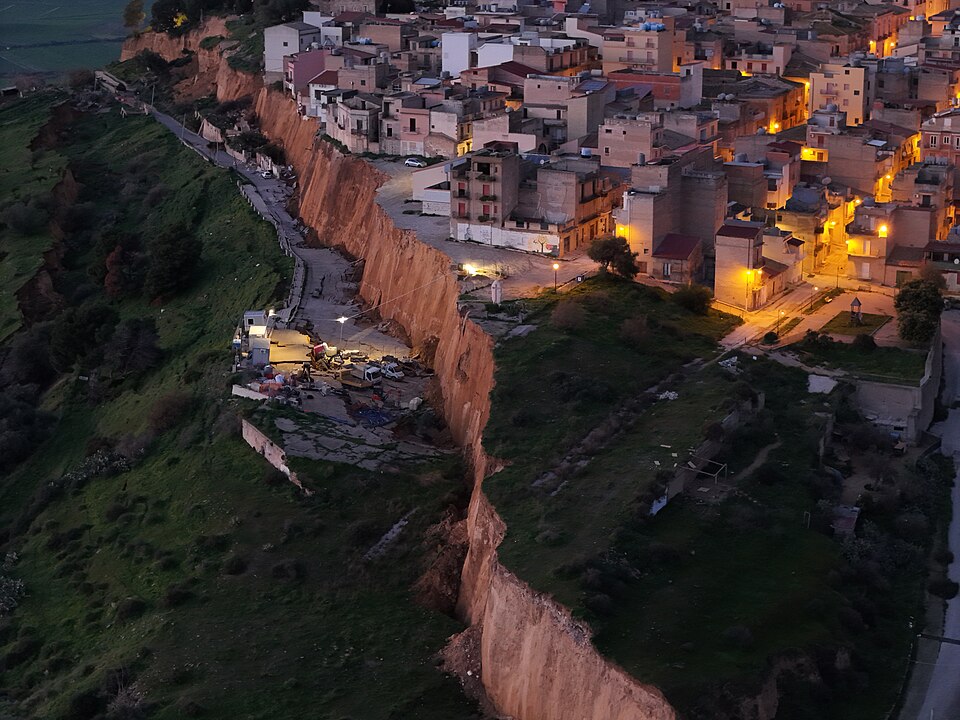
A major landslide took place in the town of Niscemi, Sicily, Italy, on 25th January 2026. Following heavy rain lasting several days, a 4-kilometre (2.5-mile) stretch of soaked ground, consisting mostly of clay, weakened and gave way. Roads and buildings collapsed into the valley below. Fortunately, the authorities had already taken safety measures, evacuating more than 1000 people in the days leading up to the event. Dozens of buildings, including 17th-century churches, now sit precariously close to the edge of the cliff.
Despite a history of landslides in the area, many buildings had been built there from the 1950s and 60s onwards. With heavy storms now more frequent in the Mediterranean region thanks to the climate emergency, many towns and cities are at risk from future landslides.
Consultant: Ian Fairchild
pics
Without in any way limiting Q-files Ltd’s exclusive rights under copyright, any use of this publication to “train” generative artificial intelligence (AI) technologies to generate text is expressly prohibited. Q-files Ltd reserves all rights to license use of this work for generative AI training and development of machine learning language models.