
Europe

CITE
We have made every effort to follow citation style rules, but there may be some minor differences. If in doubt, please refer to the appropriate citation style manual.
Central and Eastern Europe. (2026). In Q-files Encyclopedia, Geography, Europe. Retrieved from
https://www.q-files.com/geography/europe/central-and-eastern-europe
"Central and Eastern Europe." Geography, Europe, Q-files Encyclopedia, 31 Mar. 2026.
https://www.q-files.com/geography/europe/central-and-eastern-europe.
Accessed 13 Sep. 2026.
Central and Eastern Europe 2026. Geography, Europe. Retrieved 13 September 2026, from
https://www.q-files.com/geography/europe/central-and-eastern-europe
Geography, Europe, s.v. "Central and Eastern Europe," accessed September 13, 2026.
https://www.q-files.com/geography/europe/central-and-eastern-europe


Central and Eastern Europe
Central and Eastern Europe, extending eastwards from Germany and the Alpine regions to the south, is a patchwork of more than 20 countries. The Ural Mountains, Ural River and Caucasus Mountains mark the border between Europe and Asia. During the Cold War (1945–89), when Communist countries and capitalist countries were divided by deep distrust, many countries in Central and Eastern Europe were either part of the former Soviet Union or allied with it. The exceptions were Greece and Cyprus in the south, and the former Yugoslavia. Yugoslavia disintegrated in 1992, and its territory is now divided into seven independent states (one of which, Kosovo, is not recognized by Serbia).


Central Europe
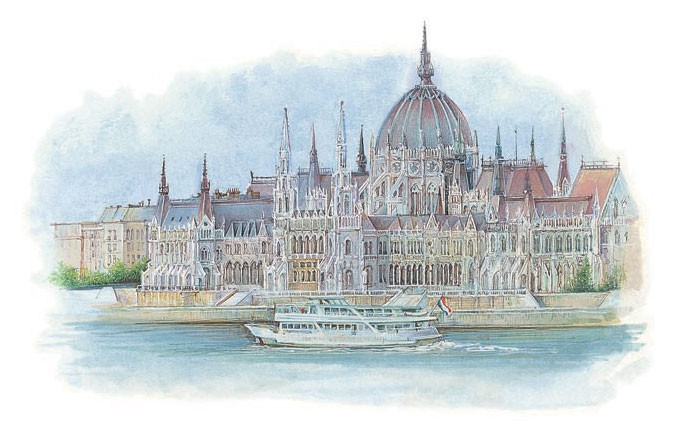
Poland, Czechia, Slovakia and Hungary make up Central Europe. East of Germany, the North European Plain fans out across Poland. In the south, the forested Sudetes and Carpathian mountain ranges rim Czechia and cover much of Slovakia. Cereals, root vegetables and livestock are farmed in the valleys. The fertile lowlands along the River Danube in Hungary are scattered with orchards and vineyards. All four countries have economies based on industries such as mining, electronics, metalworking, car production and glass-making.

The Balkans
The countries of southeast Europe lying between the Adriatic Sea and the Black Sea are known as the Balkan states. The area is a patchwork of different ethnic groups and religions. Bosnia and Herzegovina, for example, has three major religions: Islam, Roman Catholicism and Eastern Orthodoxy. Along with many of the other Balkan states, Bosnia and Herzegovina was formerly part of Yugoslavia, which dissolved in 1992.


Two chains of mountains run the length of the western Balkans: the Balkan Mountains from the Alps to southern Greece, the other, the Carpathians, in a curve through the north. Where the two ranges meet, the River Danube courses through a deep gorge known as the Iron Gate.
The Danube lowlands in Serbia, Romania and Bulgaria are the best farming areas, where wheat and maize are grown. Winters are cold, but cotton, vines, olives, tobacco and grapes can be cultivated in the warm summers. Elsewhere, the uplands are grazed by sheep and goats.
The coastal Balkan states of Albania, Croatia, Montenegro and Slovenia have thriving tourist industries. Like some of the other former Yugoslavian republics, Kosovo and North Macedonia, in the central Balkan peninsula, faced economic difficulties after independence. Today North Macedonia has a growing tourist industry and strong textile, iron, steel and wine industries.
Greece

One fifth of the total land area of Greece is made up of islands. Even on the mainland, nowhere is more than 137 kilometres (85 miles) from the sea. Most of Greece is covered by rugged mountains, so farming space is limited, and its olive groves and vineyards are scattered along the hillsides. Today, Greece and its islands are a popular holiday destination for tourists. Other important industries are shipping and telecommunications.
Cyprus
Cyprus is an island nation in the eastern Mediterranean Sea. It is the third largest Mediterranean island after Sicily and Sardinia. Since 1974 the country has been partitioned into two parts: the southern part under the control of the Republic of Cyprus and the northern part under Turkish control. The highest point on the island is Mount Olympus, at 1952 metres (6404 feet). Cyprus is a major tourist destination, and also has large financial services and shipping industries.


Belarus, Moldova
and Ukraine
These three former Soviet states lie between Central Europe, the Balkans and Russia. About 40% of Belarus's land is covered by forest. Its key industries include chemical and oil refining, vehicle manufacture and wood processing. Moldova is known for its rich farmland and wine industry.
Ukraine, with its fertile “black earth” (chernozem), has extensive areas of farmland. There are fields of wheat, barley, sugar beet and sunflowers. Manufacturing is concentrated in Ukraine’s southeastern cities. The Ukrainian language is spoken mainly in western and central areas, while Russian-speakers are concentrated in the south and east.
The Crimean Peninsula was illegally annexed by Russia in 2014, and war broke out between pro-Russian groups and the Ukrainian government in the Donbas region of eastern Ukraine later that year. Russia mounted a full-scale invasion of Ukraine in Feburary 2022, which was resisted by Ukrainian forces. The two countries have been at war ever since.
Russia

Spanning two continents, Europe and Asia, Russia is the largest country by area in the world. Until 1991 Russia and a number of surrounding countries formed the USSR, often called the Soviet Union. Most of Russia’s population lives west of the Ural Mountains, in the European part, where the big industrial cities, such as Moscow and St Petersburg, are located. Also in this area lies a good part of Russia’s farmland, producing cereals and root crops. Siberia, its Asian part, lies to the east of the Urals. Besides Russian, around 100 different languages are spoken within Russia's boundaries, the main ones being Tatar, Chuvash, Bashkir, Chechen and Ukrainian.


The Caucasus
The Caucasus region lies at the crossroads between Europe and Asia. A mountainous region, it includes the highest point in Europe: Mount Elbrus (5642 metres / 18,506 feet). The independent countries of Georgia, Armenia and Azerbaijan are bordered to the north by a region of Russia consisting of a patchwork of small states, each with their own languages and cultures, some of which claim independence from Russia.
There are more than 50 ethnic groups in the Caucasus, with followers of both Eastern Orthodox Christianity and Islam. The sheltered warm climate and fertile soils allow a range of crops to be grown in the region, including tea, vines, tobacco and cotton. There are rich reserves of oil and natural gas in Azerbaijan.

Consultant: Lloyd Jenkins
pics



Without in any way limiting Q-files Ltd’s exclusive rights under copyright, any use of this publication to “train” generative artificial intelligence (AI) technologies to generate text is expressly prohibited. Q-files Ltd reserves all rights to license use of this work for generative AI training and development of machine learning language models.