
Europe

CITE
We have made every effort to follow citation style rules, but there may be some minor differences. If in doubt, please refer to the appropriate citation style manual.
Denmark. (2026). In Q-files Encyclopedia, Geography, Europe. Retrieved from
https://www.q-files.com/geography/europe/denmark
"Denmark." Geography, Europe, Q-files Encyclopedia, 31 Mar. 2026.
https://www.q-files.com/geography/europe/denmark.
Accessed 31 Oct. 2026.
Denmark 2026. Geography, Europe. Retrieved 31 October 2026, from
https://www.q-files.com/geography/europe/denmark
Geography, Europe, s.v. "Denmark," accessed October 31, 2026.
https://www.q-files.com/geography/europe/denmark


Denmark
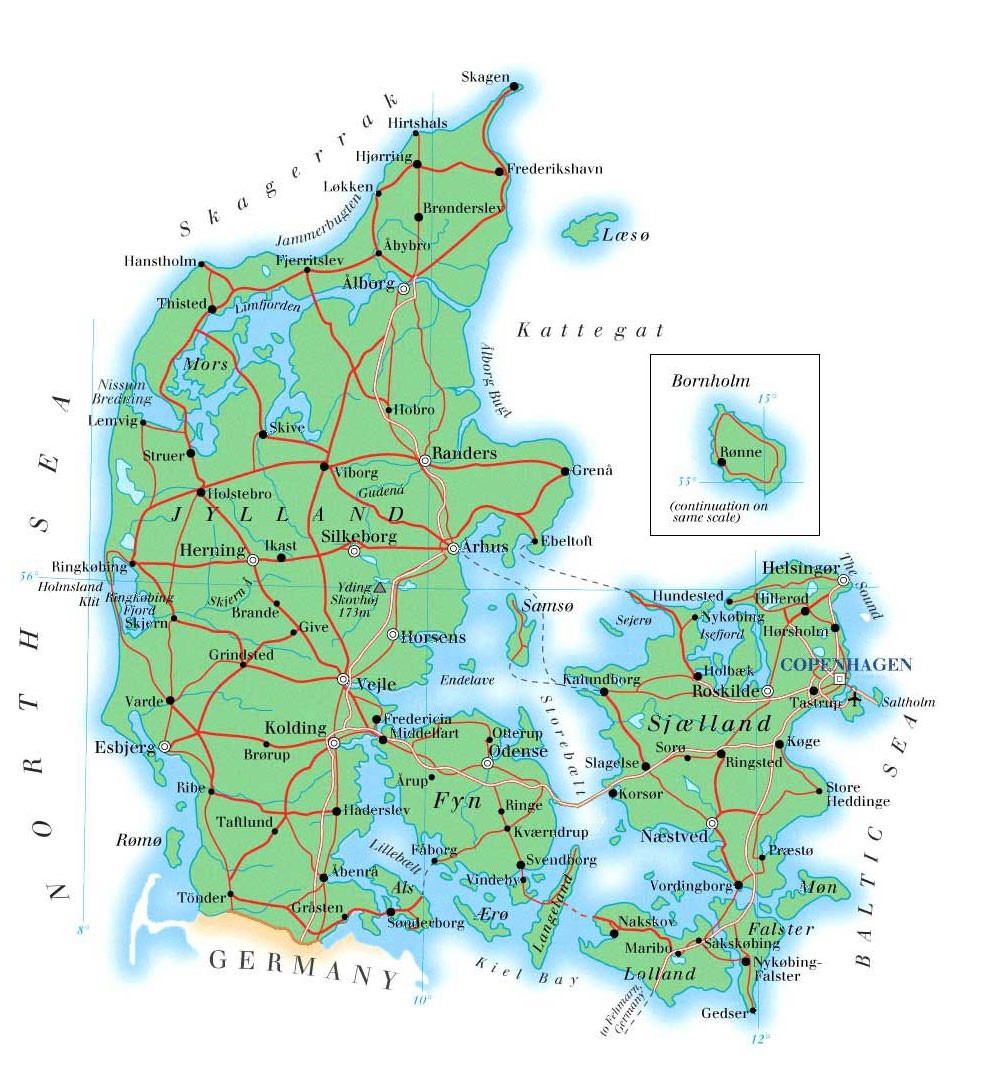
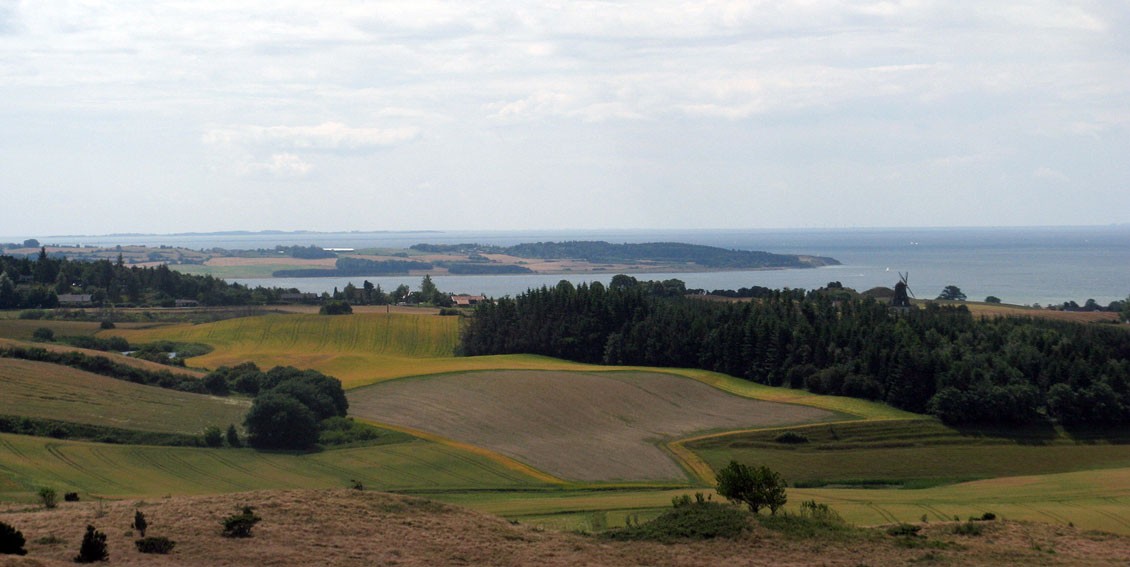
The Scandinavian country of Denmark is made up of the Jutland Peninsula (Jylland) and more than 400 surrounding islands. Smoothed down by glaciers during the last Ice Age, Denmark’s land is low-lying. Most of Jutland and the islands are covered by sediments, called moraines, deposited after the ice cap melted. The sandy soils of southern Jutland come from sediments laid down by meltwater streams. The Danish coastline has many sea inlets and shallow lagoons. Although it lies in northern Europe, Denmark is warmed by the seas that almost surround it, giving it a relatively mild climate. Summers are cool, while in winter, averages temperature are not far below 0°C (32°F).

People
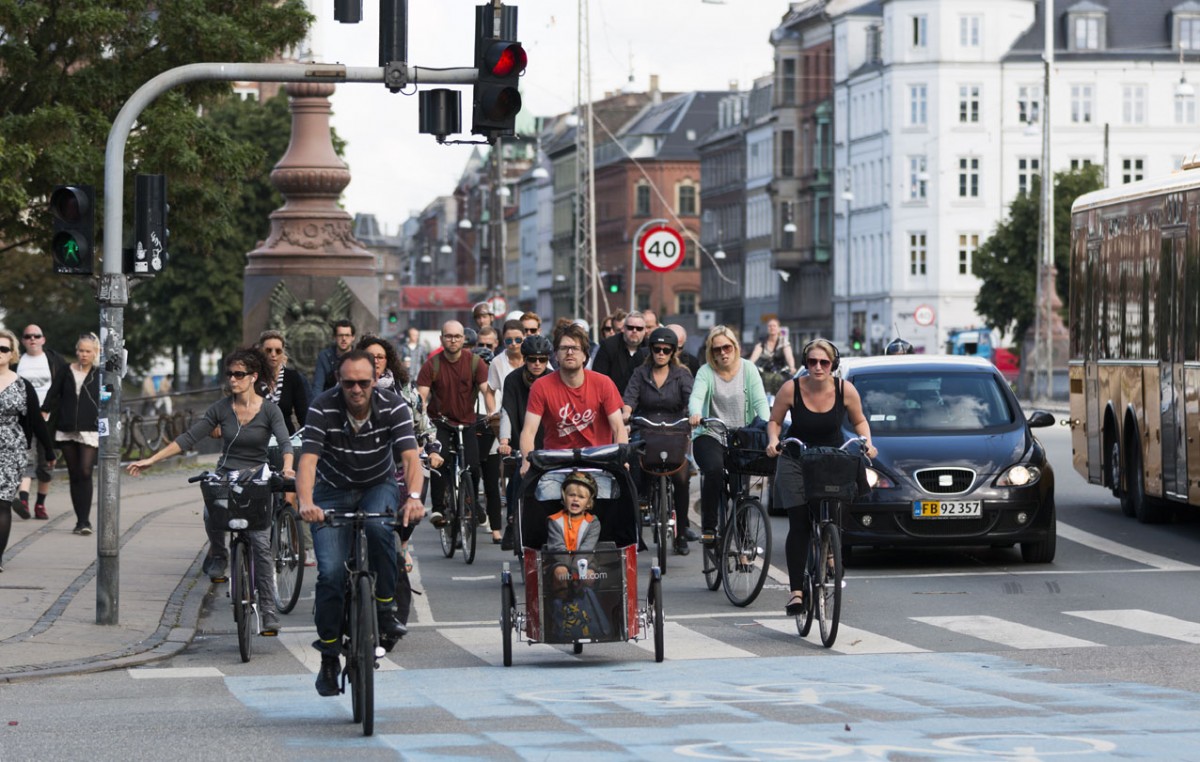
Denmark’s people—Danes—are closely related to Swedes and Norwegians. Their Germanic ancestors settled in the country in the 4th century AD. During the Viking age, Danish warriors raided the shores of England and Ireland, later conquering and settling in these lands. Today, Danes enjoy one of the highest standards of living in the world. In Denmark’s capital, Copenhagen, more than one third of people travel to work by bicycle. In fact, there are more bikes in the city than people.

Economy
Denmark has long been politically stable and has a thriving modern economy. Around one-third of Danes work in industry, in small factories producing goods such as machinery, electronic equipment and medicines. These industries are concentrated around Copenhagen. Danish furniture, ceramics and textiles are recognized for their clean, simple designs.

Bridges and tunnels
Denmark's larger islands are connected by bridges: the Little Belt Bridge connects Jutland with Funen (Fyn); the Great Belt Bridge connects Funen with Zealand (Sjælland); the Øresund Bridge connects Zealand with Sweden. The Fehmarn Belt Fixed Link is a 18-kilometre (11-mile) tunnel under construction that will connect the Danish island of Lolland with the German island of Fehmarn across the Baltic Sea. Completion is scheduled for 2028.


Faroe Islands
The Faroe Islands lie around halfway between Norway and Iceland in the North Atlantic Ocean. Home to about 50,000 people, the islands have had their own government since 1948 but are still officially a part of Denmark. The Faroe Islands' capital is Tórshavn. The landscape is rocky and there are hardly any trees. Many of the 18 main islands are joined together by bridges and tunnels.
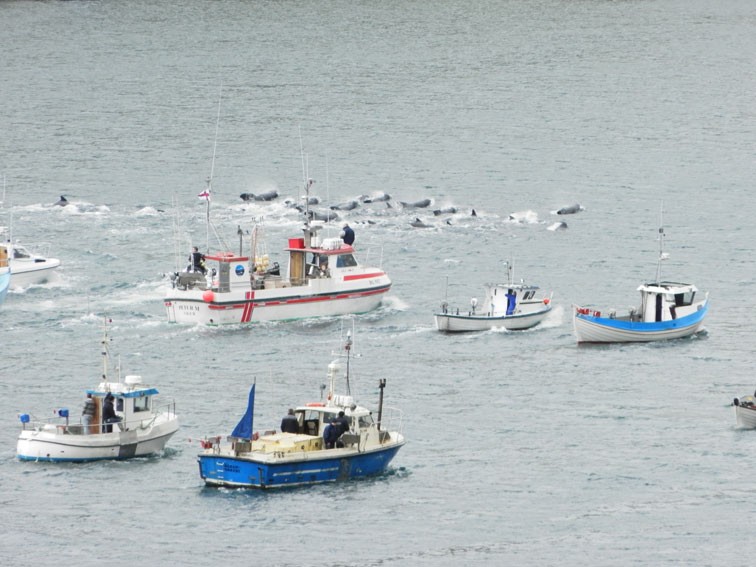
Most Faroese people make a living by fishing or sheep farming. Whale hunting, called grindadráp in Faroese, is legal and organized locally. The catch of pilot whales provides food for many of the inhabitants. The Faroese language is closely related to Icelandic. Weather systems sweeping across the Atlantic Ocean bring rainy, stormy weather nearly all year round, but also keep temperatures on the islands mild.
Consultant: Nicholas Harris
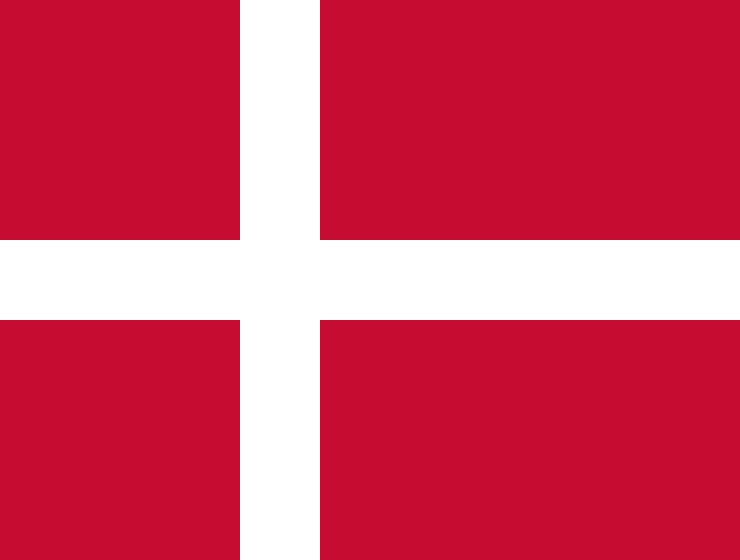
Facts about Denmark
Population 5,948,136 (2023 estimate)
Area 42,434 sq km
Highest point Yding Skovhøj (including burial mound) 173 m (561 ft)
Capital Copenhagen, population 660,842 (metro area pop. 2,135,634)
Other major cities Århus (pop. 237,551), Odense (145,931), Aalborg (122,219)
Language Danish
Religions Christian (Evangelical Lutheran) 80%, Muslim 4%, others 16%
Ethnicity Danish, Faroese (small groups of Greenlandic, German, Turkish, Iranian and Somali peoples)
Currency Danish krone (DKK)
Chief exports machinery, pork, dairy products, fish, medicines, furniture, windmills

History of Denmark
12,500 BC
First hunter-gatherers live in the region that is now Denmark
3900 BC
Farming societies begin to emerge
4th century
A Germanic people called the Jutes live on the Jutland Peninsula
9th century
Beginning of the Viking age in Denmark; Viking explorers from Denmark discover Greenland and Iceland, raid, conquer and trade along Europe’s coasts
853
Danes invade Ireland and found settlements
865
Danes land a large army in East Anglia, aiming to conquer the Anglo-Saxon kingdoms of England. They later establish self-rule for Danes in parts of central and eastern England, known as Danelaw.
958–86
Reign of Harald Bluetooth as king of Denmark. He introduces Christianity to Denmark and consolidates his rule over most of Jutland and Zealand.
1013–35
Reigns of Danish kings in England: Sweyn Forkbeard (1013–14) and Cnut (1016–35), who became ruler of Denmark, England and Norway as a single realm.
1397
Denmark joins together with Sweden and Norway to form the Kalmar Union, ruled by Denmark’s Queen Margaret I
1523
Sweden breaks away from the Kalmar Union
1536
Denmark converts to Lutheranism, a form of Protestant Christianity. It enters into a union with Norway (called Denmark-Norway) in 1537.
1611–13
Kalmar War: led by King Christian IV, Denmark attacks Sweden in response to Sweden's claim over Northern Norway. Sweden is forced to pay 1 million silver riksdaler to Denmark, an amount known as the Älvsborg ransom.
1620–1869
Denmark holds colonial possessions in India, including the town of Tharangambadi in present-day Tamil Nadu, Serampore in present-day West Bengal, and the Nicobar Islands
1645
Treaty of Brømsebro: following an invasion by Sweden, Denmark-Norway surrenders Halland, Gotland and several provinces in Norway
1647–51
A combination of poor harvest and plague kills 20% of Denmark’s population
1657–60
Second Northern War is fought between Denmark and Sweden. Sweden conquers Jutland, occupies Funen and much of Zealand and, in a 1658 peace treaty, gains control of Scania, Trøndelag and the island of Bornholm. Then Swedish forces carry out a 2-year siege of Copenhagen, which Denmark repels and regains control of Trøndelag and Bornholm.
1660s
Denmark-Norway builds Osu Castle (also known as Fort Christiansborg) on the coast of the Gulf of Guinea in Africa. The capital of the Danish Gold Coast, it is used as a base for shipping enslaved people overseas for the next 200 years
1672–1917
Denmark hold colonial possessions in the West Indies, the Danish Virgin Islands, where slave labour is used to produce sugar, rum and molasses. The islands are sold to the US in 1917.
1700–20
Denmark joins the anti-Swedish coalition alongside Saxony–Poland–Lithuania and Russia. It gains territory in Schleswig-Holstein in the peace settlement.
1801–14
During the Napoleonic Wars, Britain attacks Copenhagen (1801) and Denmark’s navy in what was called the Gunboat War (1807–14)
1814
At the Treaty of Kiel, Denmark passes control of Norway to Sweden, but keeps possession of Iceland, Greenland and the Faroe Islands
1849
Denmark sets up a parliament and becomes a constitutional monarchy
1850s
Industrialization begins; first railways are built in Denmark and people begin to migrate to the cities
1864
Denmark is defeated in the Second Schleswig War by Prussia and Austria, and cedes Schleswig-Holstein to Prussia.
1914–18
Denmark is neutral during World War I
1940–45
Nazi Germany invades and occupies Denmark during World War II
1944
Denmark grants independence to Iceland
1948
Faroe Islands are granted self-government but remain part of Denmark
1949
Denmark joins the North Atlantic Treaty Organisation (NATO)
1972
King Frederik IX dies; he is succeeded by his daughter, Margrethe II
1973
Denmark joins the European Economic Community (later to become the European Union)
1979
Greenland is granted self-government, but remains part of Denmark
1993
After rejecting it in 1992, Danes vote to accept the terms of the Maastricht Treaty and join the new European Union
2000
Øresund Bridge and Drogden Tunnel open between Copenhagen and the southern Swedish city of Malmö; travel time between the two is now just 15 minutes
2011
Helle Thorning-Schmidt becomes Denmark's first female prime minister
2015
Two civilians shot and others wounded at a cultural centre and a synagogue in Copenhagen in gun attacks by terrorists, suspected to be Islamic extremists (February)
2024
Queen Margrethe II abdicates in favour of her son, who becomes King Frederik X
pics
Without in any way limiting Q-files Ltd’s exclusive rights under copyright, any use of this publication to “train” generative artificial intelligence (AI) technologies to generate text is expressly prohibited. Q-files Ltd reserves all rights to license use of this work for generative AI training and development of machine learning language models.