
Mammals

CITE
We have made every effort to follow citation style rules, but there may be some minor differences. If in doubt, please refer to the appropriate citation style manual.
Whales. (2026). In Q-files Encyclopedia, Life, Mammals. Retrieved from
https://www.q-files.com/life/mammals/whales
"Whales." Life, Mammals, Q-files Encyclopedia, 24 Mar. 2026.
https://www.q-files.com/life/mammals/whales.
Accessed 6 Aug. 2026.
Whales 2026. Life, Mammals. Retrieved 6 August 2026, from
https://www.q-files.com/life/mammals/whales
Life, Mammals, s.v. "Whales," accessed August 6, 2026.
https://www.q-files.com/life/mammals/whales


Whales
Whales are ocean-living mammals that live permanently in the water. Together with dolphins and porpoises, they make up the group of mammals called cetaceans. Whales have a long, streamlined shape with no hair or fur on their bodies, so that they can swim quickly and easily. Instead of four legs, they have a tail, called a fluke, and flippers. Whales have a thick layer of fat under their skins, called blubber, to keep them warm in cold waters. As air-breathing mammals, whales have to come to the surface of the water to breathe air. They have excellent hearing, but a poor sense of smell. There are two types of whale: toothed whales and baleen whales.
Size
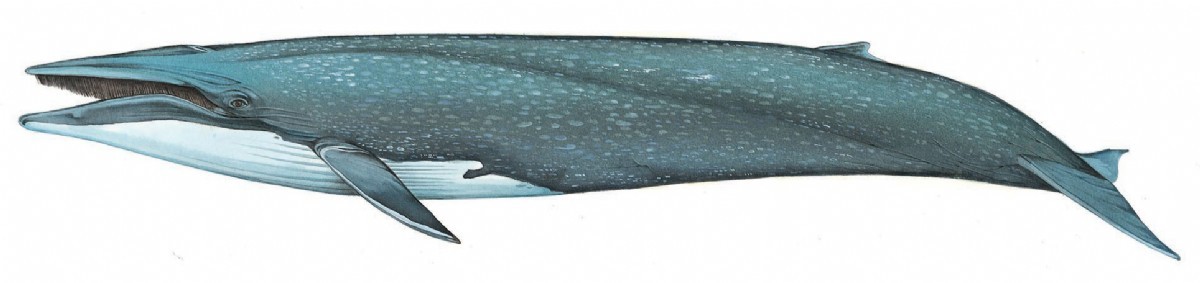
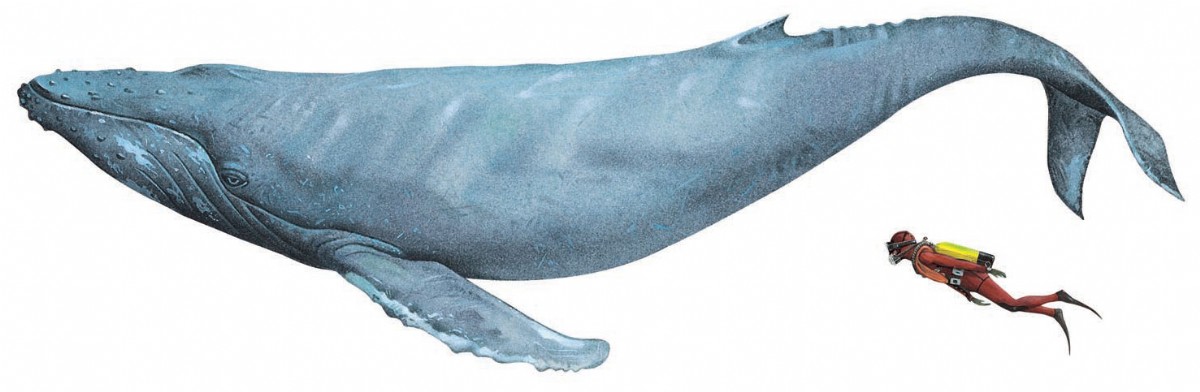
Whales are the largest animals in the world. In fact, the enormous blue whale, which can measure over 30 metres (100 feet) long, is probably the biggest animal that has ever lived. Whales are able to grow so large because their huge weight is supported by the water. If a land animal grew to this size, its legs would collapse under the weight of its own body.
Breathing
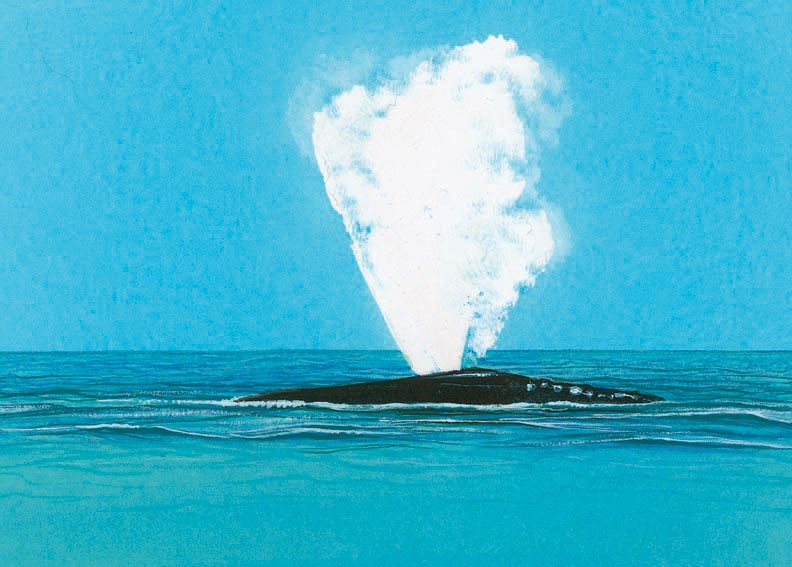
All whales must come to the water's surface from time to time to breathe. While a whale is submerged, its nostrils, or blowholes, remain shut. When it comes to the surface, it breathes out in an explosion of waste air and water droplets known as a "blow" or a "spout". Different whale species can be distinguished by the form of their spout. Baleen whales have two blowholes side by side on top of their heads; toothed whales have just one.
Fluking
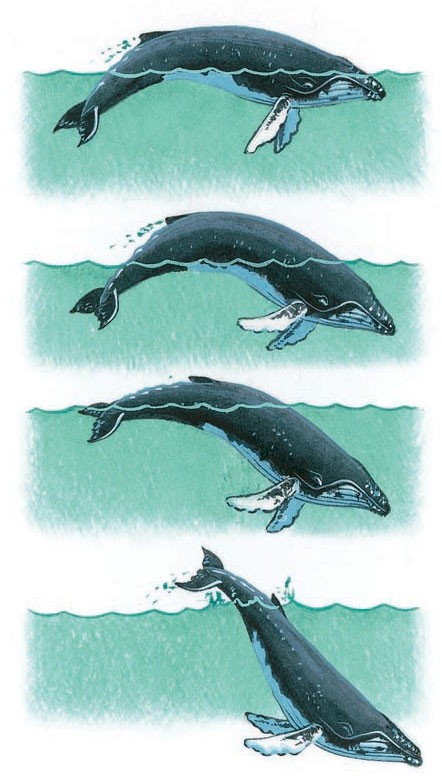
When some whales begin a deep dive, they lift their tails, known as flukes, into the air. This helps them manoeuvre their bodies into the steep angle they need to carry out their descent. This is called fluking. The exact shape of a whale's fluke helps whale-watchers identify which species they are. Humpback whales get their name from the shape of their curved backs when they begin their dive.
Acrobatics
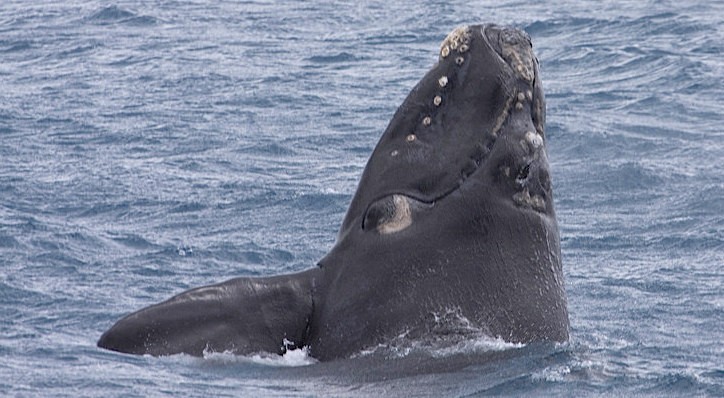
Many whales leap right out of the water, an action known as breaching. They may do this in order to take in air while swimming fast, to communicate with other whales, to knock parasites from their skins—or simply for fun. When a whale pokes its head and upper body above the water for a while to look around it this is called spyhopping. This may be to search for prey, or out of curiosity.
Echolocation
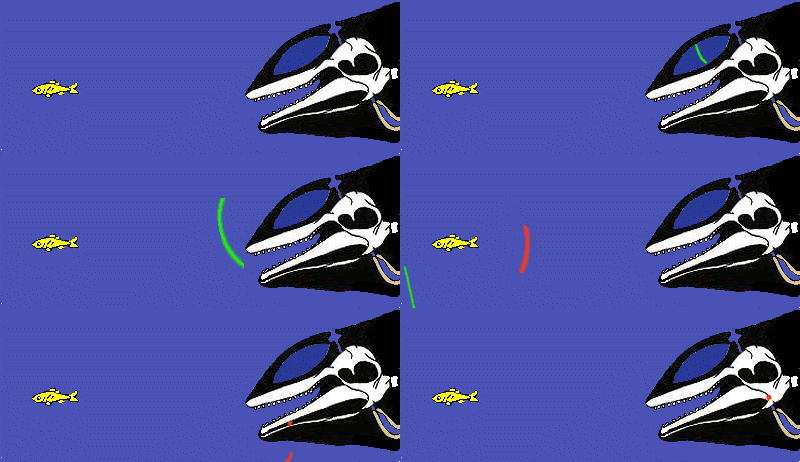
Most whales, dolphins and porpoises are able to create a picture of their immediate surroundings by using sound—a more effective way of "seeing" in dark, murky waters.
The whales make noises that bounce back, or echo, from objects around them, including the seabed, rocks or even fish or other marine animals. The melon, a fatty organ inside their foreheads, is probably used to focus these noises. Whales' excellent sense of hearing enables them to make their way around and locate prey. This is called echolocation, a technique also used by bats for navigating and hunting prey in the dark.
Stranding
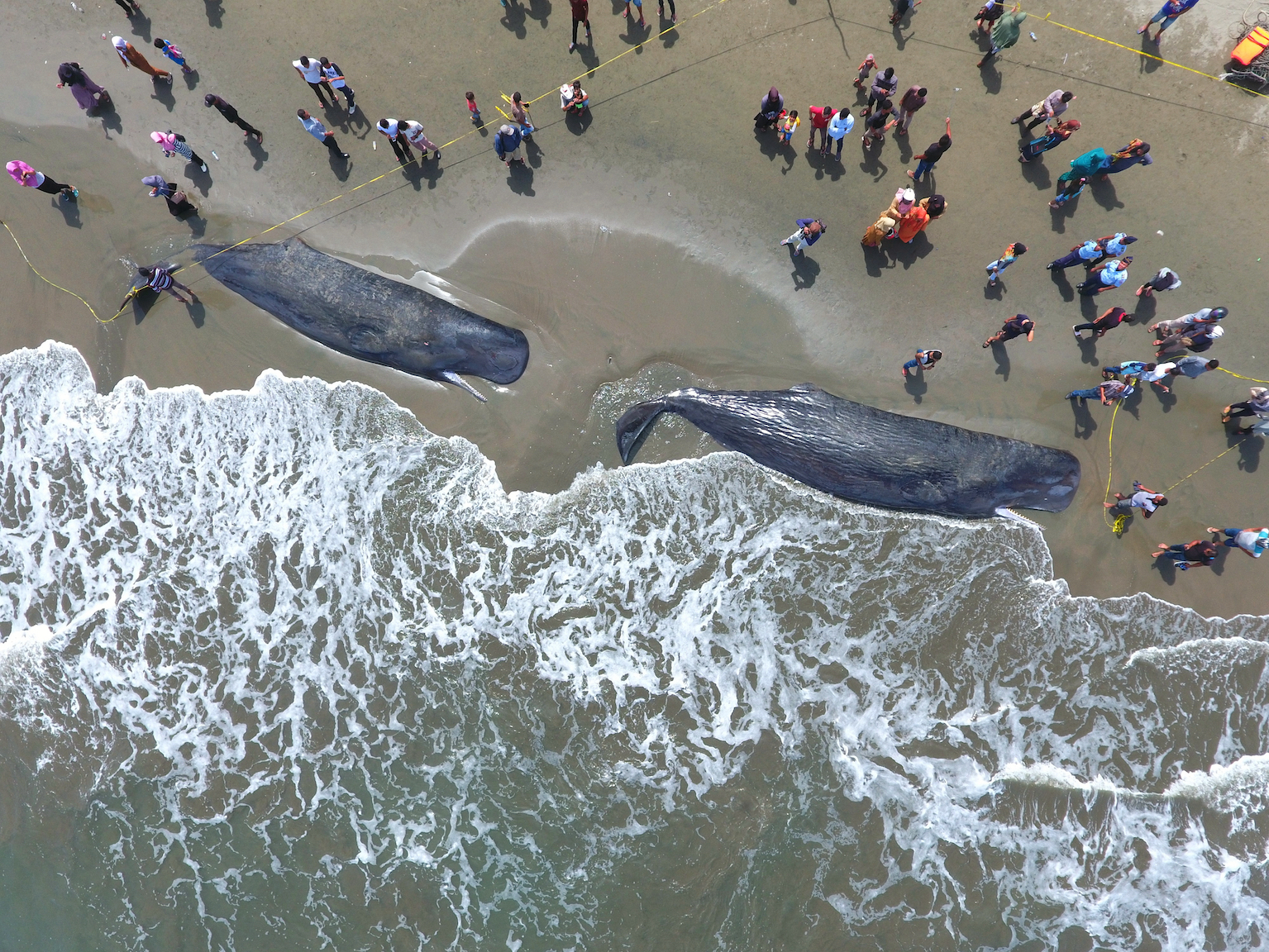
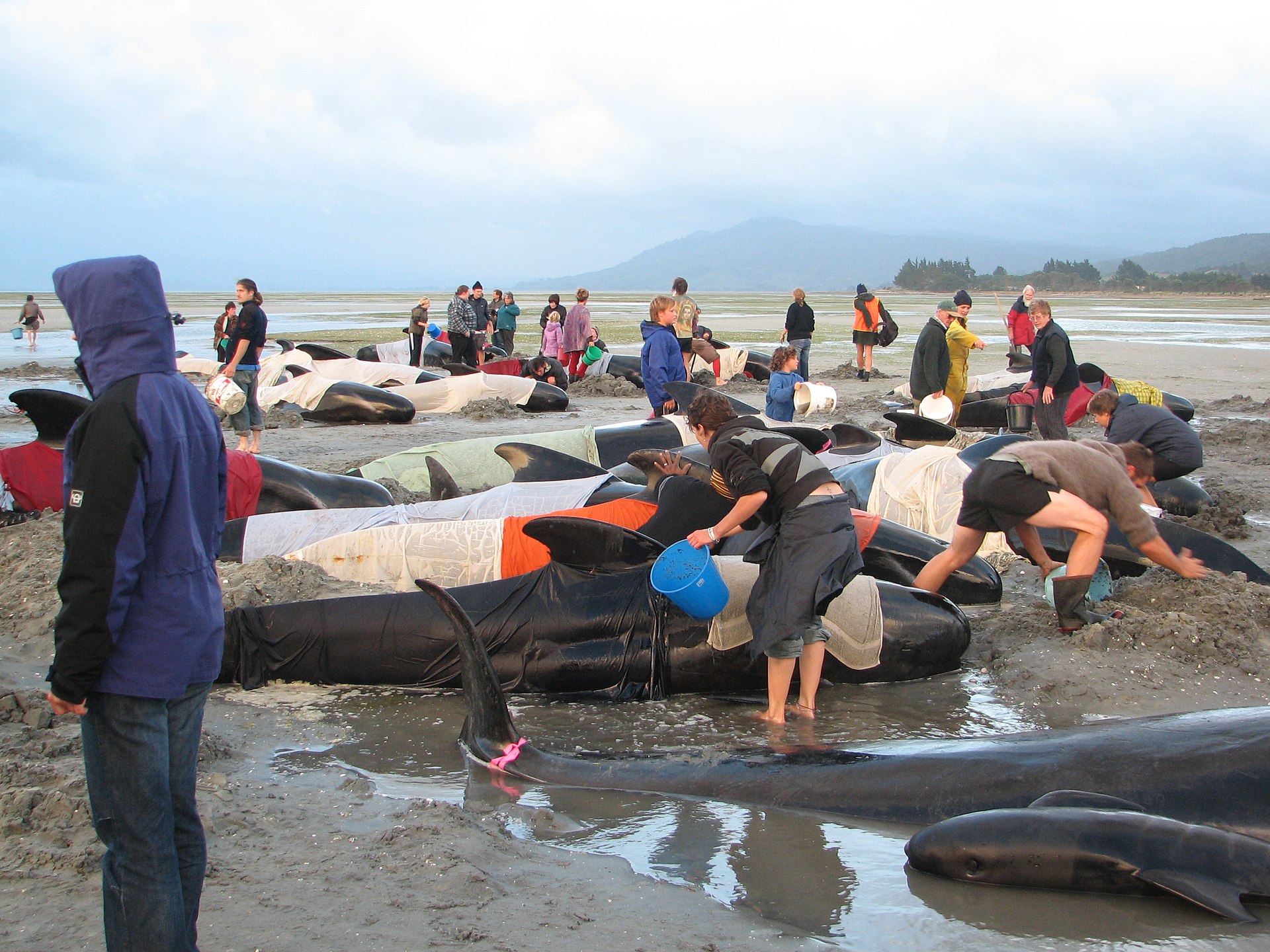
Stranding or beaching is when a whale, or groups of whales, are washed ashore—usually on a beach—while still alive and healthy. Only some kinds do this and they are all toothed whales, including sperm whales, orcas and pilot whales. Some dolphins and porpoises also strand themselves. No one knows why this happens. It may be that changes in the Earth's magnetic field or the use of sonar by ships and boats (or general engine noise) confuse the whales' sense of direction. Beached whales often die due to dehydration, by collapsing under their own weight or by drowning when the incoming tide covers their blowhole.
Baleen whales
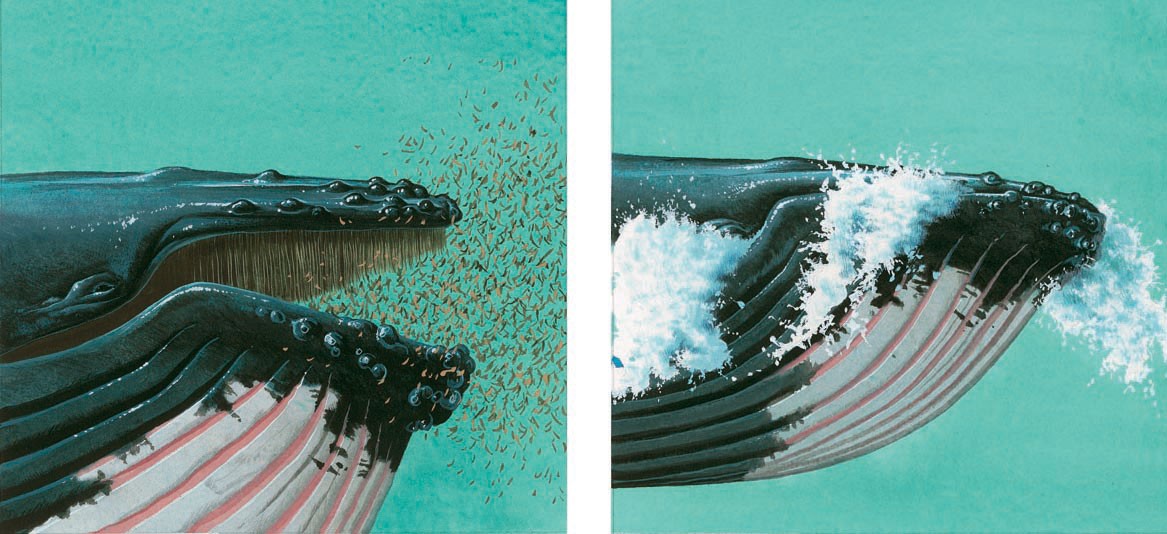
Despite their huge size, baleen whales feed on tiny creatures called zooplankton, which float through the oceans in great masses. These include small, shrimp-like creatures called krill. The whales take in mouthfuls of water and filter out the zooplankton through plates of horn-like material, called baleen, in their mouths. Some will also feed on schools of tiny fish using this method. Baleen whales are also known as mysticeti. They include the rorquals, the right whales and the grey whale.
Rorquals
The rorquals are the largest whales. They include the blue (the largest of all), Bryde's, humpback, fin, minke and sei whales. They are baleen whales, and all have grooved skin on the underside of their heads. This allows their mouths to expand massively when they take in great gulpfuls of water and food.
Humpback whale
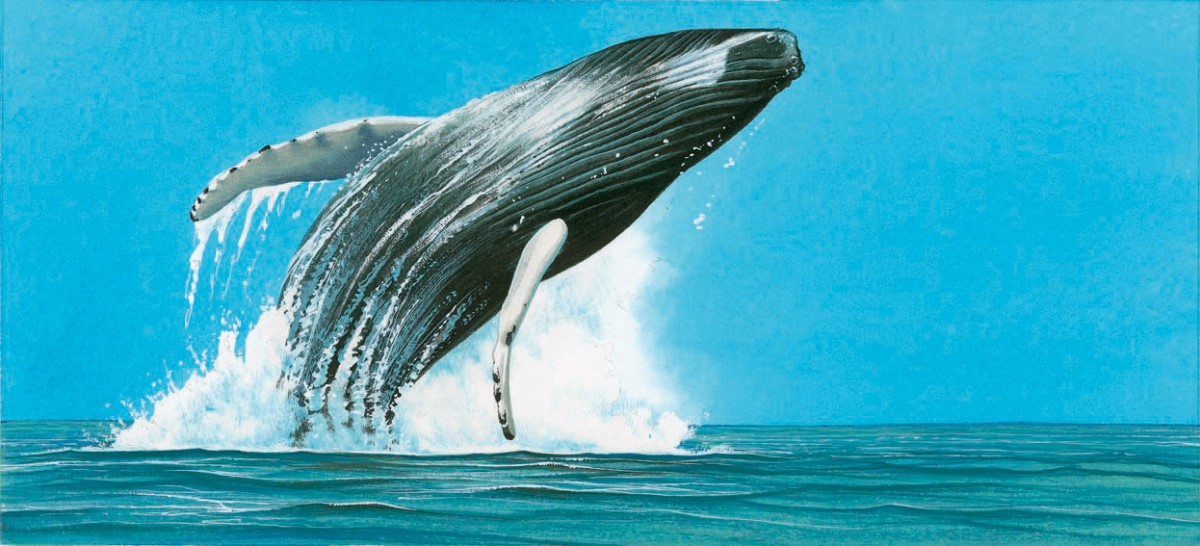
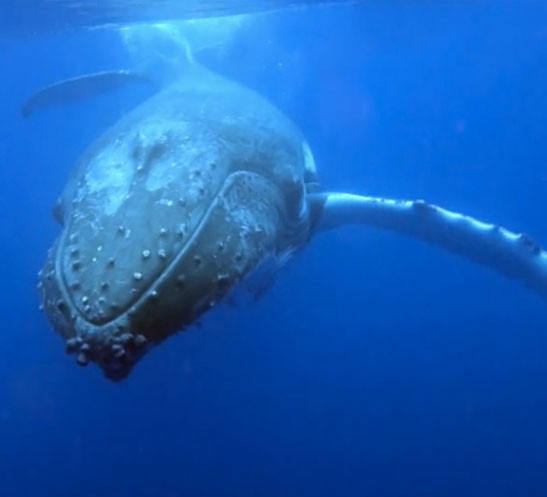
The humpback whale is a large rorqual, easily distinguished by its long flippers and the wart-like knobs, called tubercles, that cover its head and lower jaw. Humpbacks often leap out of the water, splashing down on their backs. They feed on krill and small fish which they strain from the water.
They are known for their loud and complex “songs”, which may last for hours at a time, and travel great distances through the ocean. The moans, cries and other noises may be to communicate with others and attract mates.
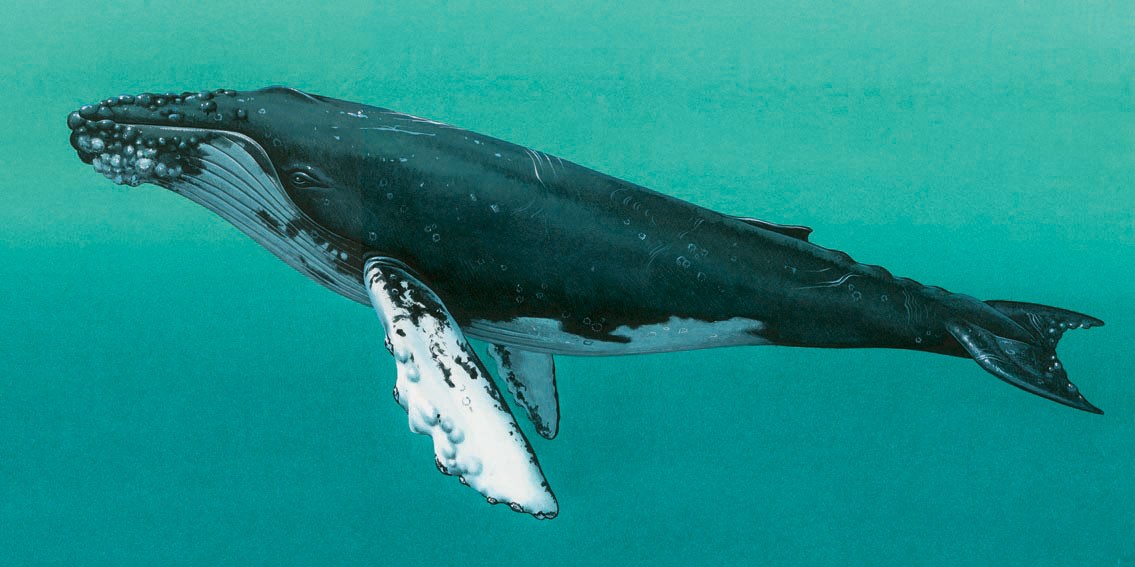
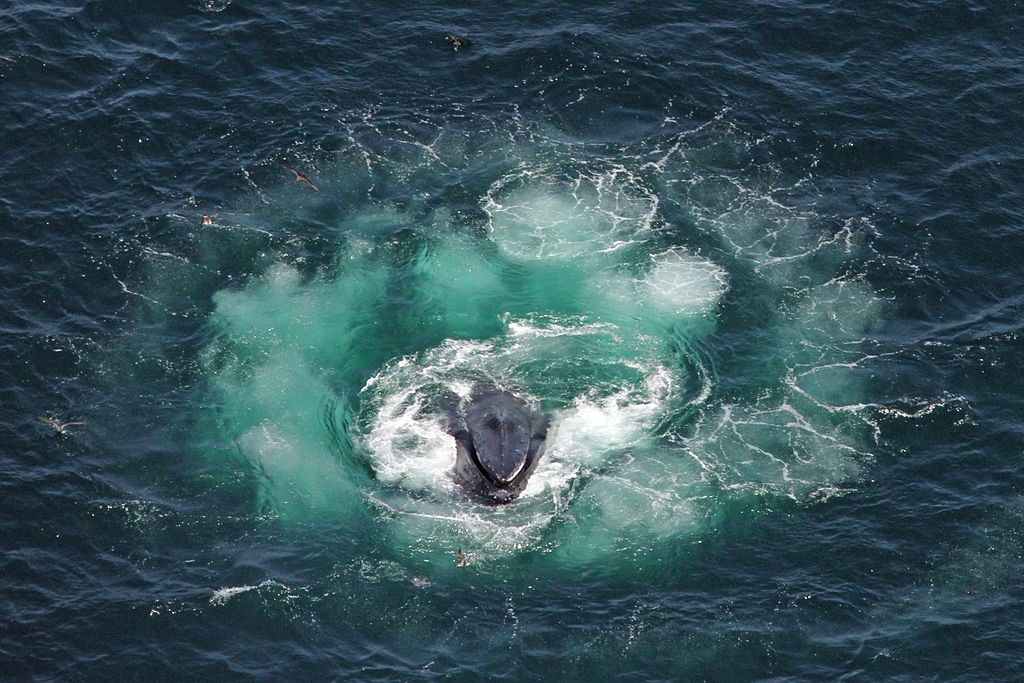
Every summer, humpback whales migrate from tropical waters to feed in polar waters when the krill are at their most plentiful. They sometimes catch fish by a technique called bubble net feeding. A number of whales circle underneath a school of small fish, blowing a ring of bubbles to create a kind of "net" which traps them inside. The whales then suddenly swim upwards through their "net", gulping down the fish.

Bowhead whale
Bowhead whales are one of the few whale species that live in Arctic waters all year round. Most spend the winter just south of the pack ice and move north as the sea ice breaks up and retreats in the spring. To protect them from the cold, they have an insulating layer of blubber that can be up to 50 centimetres (19 inches) thick—the thickest of any animal. Bowheads have extremely large heads—about a third of their body length—and stocky bodies with no dorsal fin. Using their thick skulls to break through sea ice, they often bear scars.
Closely related to the right whales, bowheads are baleen whales, so they filter their food—around 1.8 tonnes of krill and other small crustaceans each day—by straining water through their baleen plates (the longest of all whales).
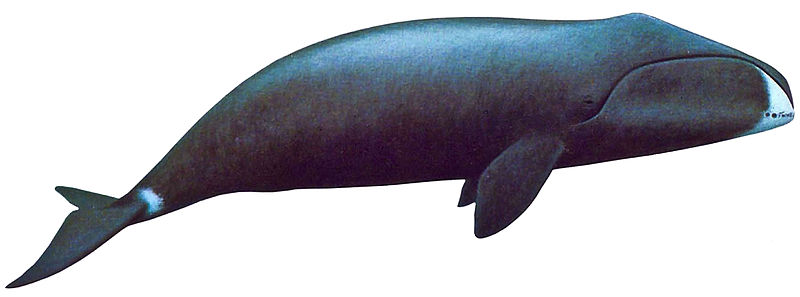
Highly vocal, bowheads have a large variety of low-frequency calls, used to help them locate sources of food, to navigate through the ice and to find mates. Bowheads gather in mass numbers every year at secret locations known as "whale spas". They are vulnerable to attack by killer whales, however, which are now more frequently found in the northern Arctic Ocean because of global warming.
From stone harpoon tips recovered from bowheads that have been hunted in the past, scientists have discovered that bowhead whales live well over 100 years. Recent DNA analysis indicate that they may actually live more than 200 years, making them the longest lived mammals on Earth. Scientists think right and fin whales may have similar lifespans.
Fin whale
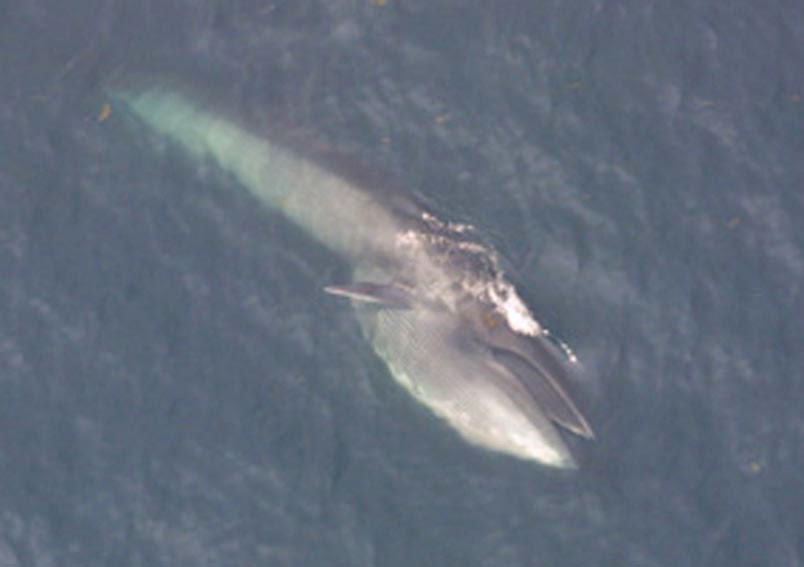
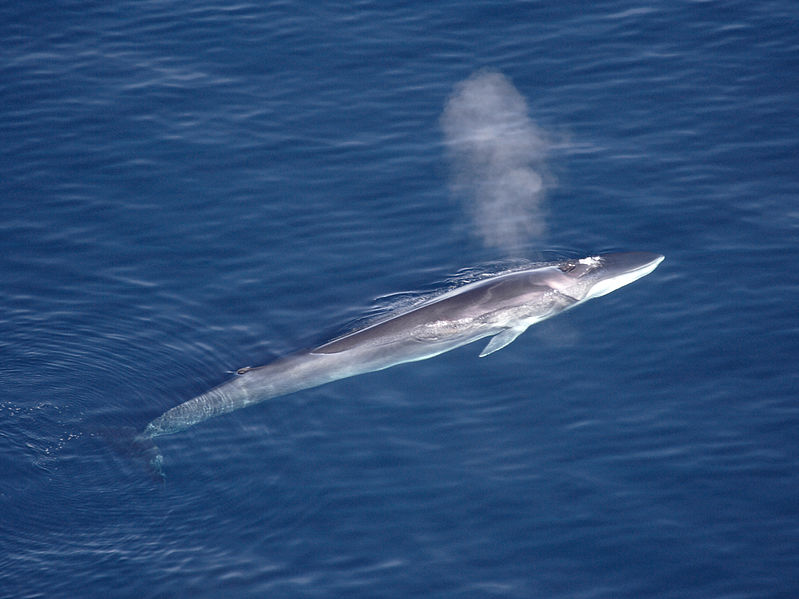
Fin whales are the second largest mammals in the world after their relative in the rorqual group, the blue whale. They grow to lengths of up to 26 metres (85 feet) and have a distinct ridge along their backs behind their dorsal fin, which gives them the nickname "razorbacks”. Found in all the oceans from polar to tropical waters, fin whales are probably the fastest cetaceans, able to swim over distances at up to 41 km/h (25 mph) with bursts of up to 46 km/h (29 mph). They are baleen whales, and feed on small fish, squid and small crustaceans including copepods and krill.
Grey whale
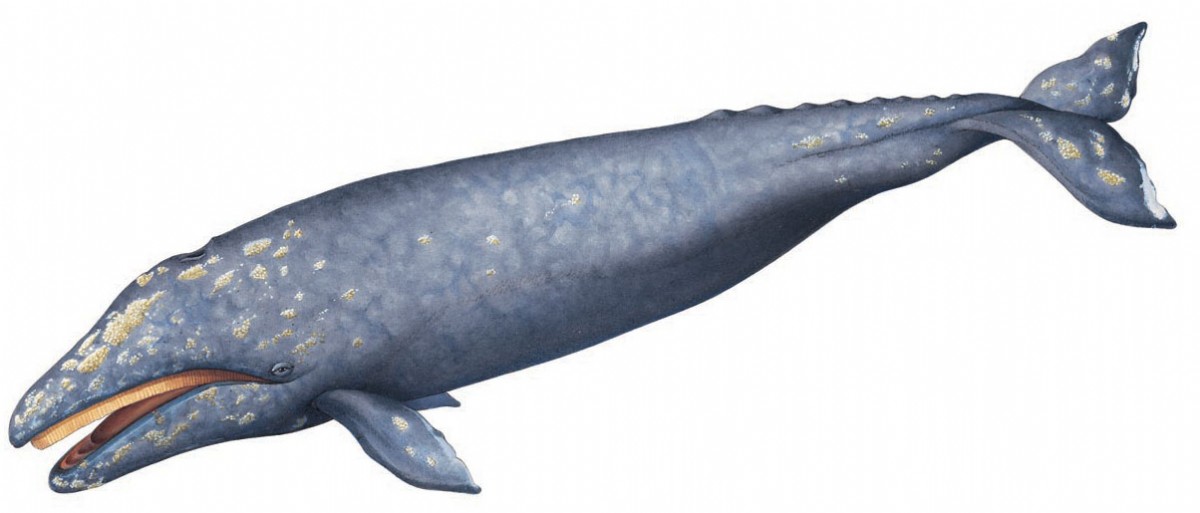
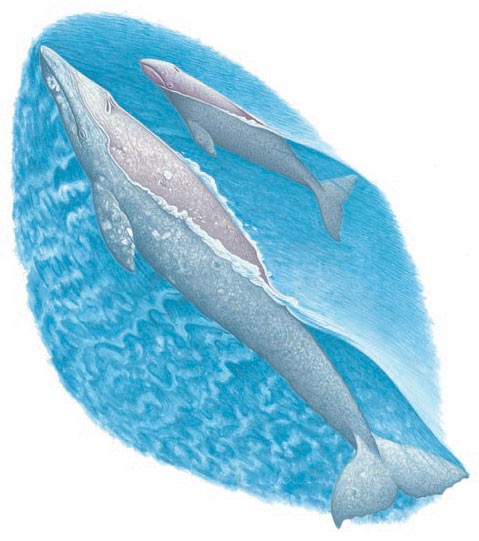
Grey whales spend the summer months feeding on shrimp and shellfish in the Arctic Ocean. Then they swim south along the Pacific coasts to breed in warm, shallow, sub-tropical waters of Mexico, or of East Asia on the opposite side of the ocean. They head north again in spring, completing a round trip of some 20,000 kilometres (12,400 miles), the furthest regular migration journey made by any mammal. As a result of years of hunting, grey whales are now endangered.
Toothed whales
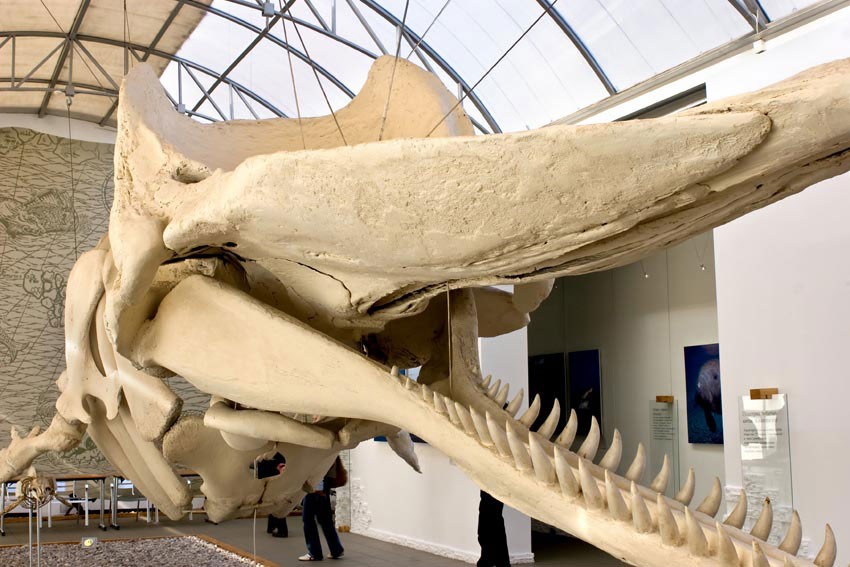
Some whales, such as the sperm whale or the beluga, have many small, peg-like teeth. These whales feed mainly on fish or squid. The sperm whale preys on giant squid. It is able to dive to depths of probably up to 3000 metres (10,000 feet) and stay underwater for over an hour in pursuit of its deep-dwelling prey. Toothed whales are also known as odontoceti. Besides the sperm whale and beluga, the group includes the narwhal and the beaked whales.
Beluga
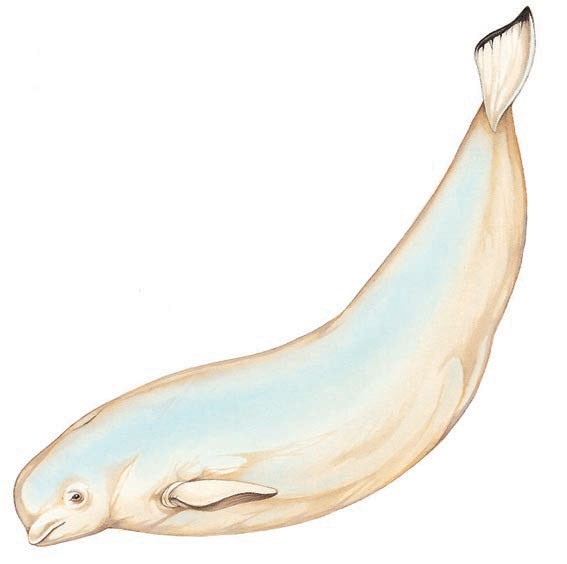
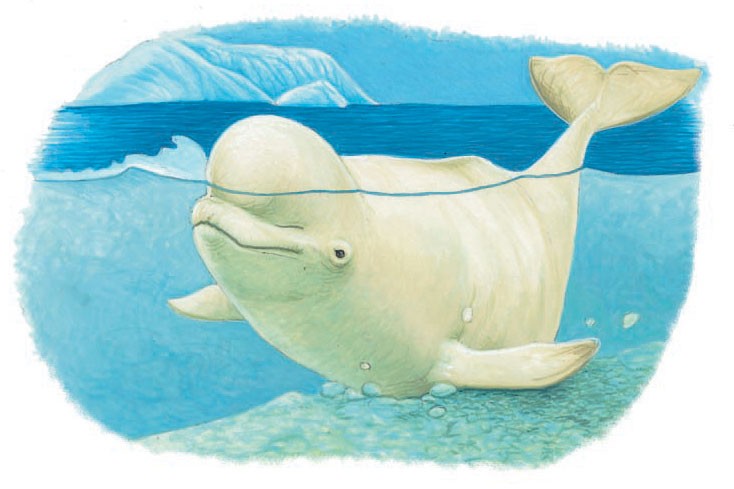
Because of their pure white colour, belugas are very easy to recognize. Although they are born dark grey, they turn white by the time they are 10 years old. These whales are also known as "sea canaries" because of the wide range of noises they make, from clicks and squeaks to whistles and mooing sounds.
Belugas live in freezing Arctic waters, swimming among floating blocks of ice. They feed on fish and crustaceans found on the seabed beneath the pack ice. Beluga whales are the only species of whale or dolphin known to undergo a seasonal moult. Their natural enemies are polar bears and killer whales, but pollution, industry, and hunting by humans are now much greater threats to their survival.
Narwhal

Narwhals live in the Arctic all year round, unlike other whales which move south in the winter. Males have a long, spiralling tusk, which is actually one of their two teeth. Narwhals feed on fish, shrimp and squid.
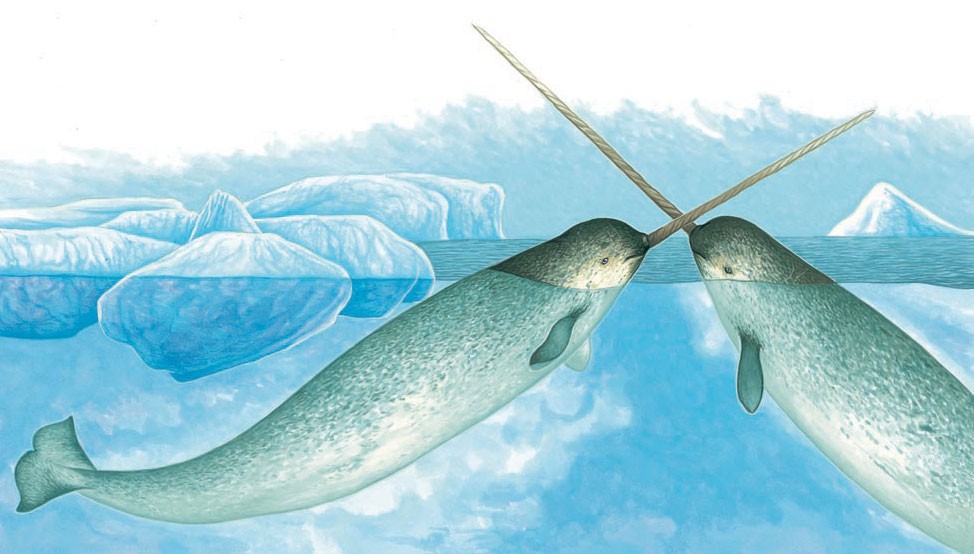
The function of the tusk is not known for sure, but may be used for fighting. The fights are mostly a display of strength between males competing for females, but sometimes they result in injury. Some older males have been observed with broken tusks and scarring on their heads, probably as a result of these fights.
Beaked whales
The beaked whales are the least known type of whales. Some species are only known from their carcasses that have been washed ashore. They are toothed whales, but most males only have two or four teeth in their elongated "beaks" and most females none at all. A number of beaked whales have bulging foreheads, containing the melon, the organ they use for echolocation. They spend long periods underwater and live near deep ocean trenches, eating mainly squid or deep-water fish.

Consultant: Chris Jarvis
pics

Without in any way limiting Q-files Ltd’s exclusive rights under copyright, any use of this publication to “train” generative artificial intelligence (AI) technologies to generate text is expressly prohibited. Q-files Ltd reserves all rights to license use of this work for generative AI training and development of machine learning language models.