
Mammals

CITE
We have made every effort to follow citation style rules, but there may be some minor differences. If in doubt, please refer to the appropriate citation style manual.
Pigs. (2026). In Q-files Encyclopedia, Life, Mammals. Retrieved from
https://www.q-files.com/life/mammals/pigs
"Pigs." Life, Mammals, Q-files Encyclopedia, 24 Mar. 2026.
https://www.q-files.com/life/mammals/pigs.
Accessed 22 Sep. 2026.
Pigs 2026. Life, Mammals. Retrieved 22 September 2026, from
https://www.q-files.com/life/mammals/pigs
Life, Mammals, s.v. "Pigs," accessed September 22, 2026.
https://www.q-files.com/life/mammals/pigs


Pigs
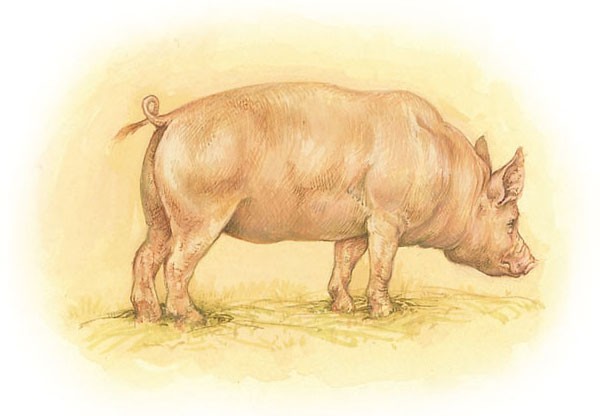
Pigs have short legs, large heads and stocky bodies covered with bristly hair. They belong to the ungulate group of hoofed animals. Pigs have four toes on each foot, although they walk on only the middle two. They have large canine teeth, which curve upwards to form tusks. These are used for rooting around in the mud for food and for fighting other males in rivalry contests. Pigs use their snouts to sniff out plants, fungi and small animals to eat. Besides domestic pigs and their wild boar ancestors, there are a number of wild relatives, including the warthog and babirusa. The peccary is more distantly related.

Wild boar
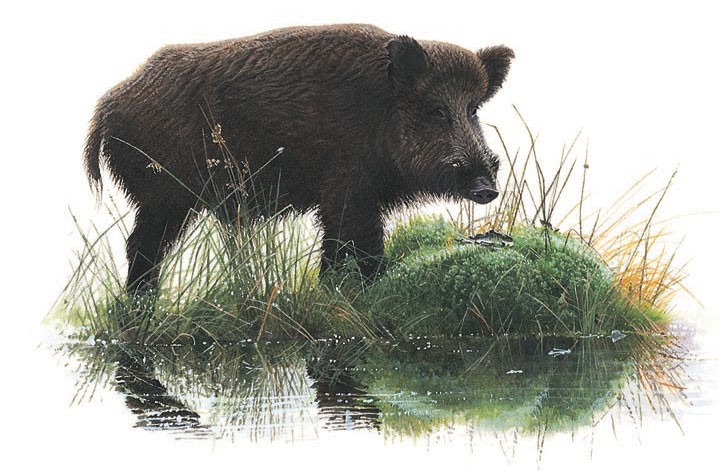
The ancestors of domestic pigs, wild boars roam through woodlands in many countries of mainland Europe. They are most active at nightfall, when they forage for food. Wild boars use their large, bendy snouts to sniff out and unearth plants, fruits, worms, roots and even small animals such as frogs and rodents. They usually live in small groups of males or females and their young, although larger groups may come together to feed.
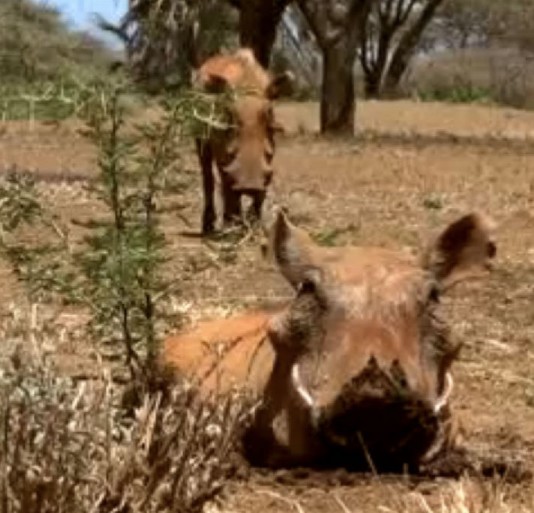
Warthog
The warthog is named after the four, wart-like knobs on its head. It lives in the savanna and woodlands of Africa. Its two curved upper tusks can grow to 25 centimetres (10 inches) long. The much shorter lower ones are razor-sharp and can seriously injure would-be predators, such as lions and leopards. The warthog forages for fruits, bark, insects, reptiles, eggs and carrion (dead animals). It often takes over the burrows of other animals such as aardvarks. It wallows in mud to rid itself of insects and cool down in the heat.
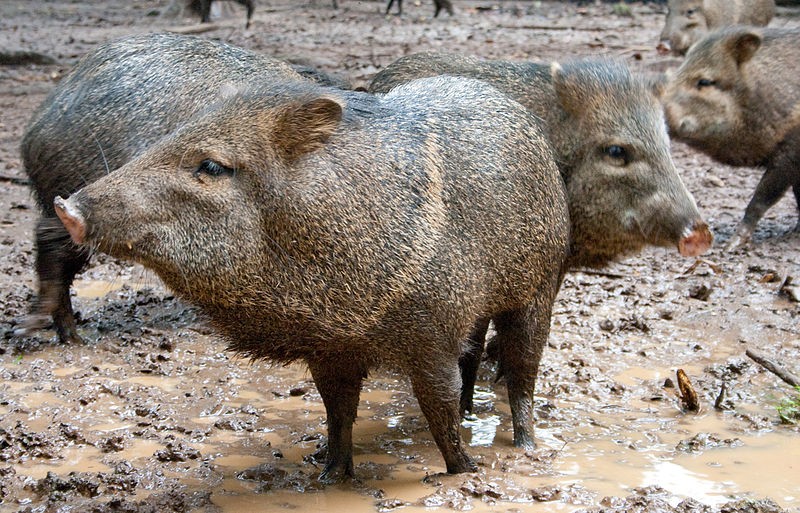
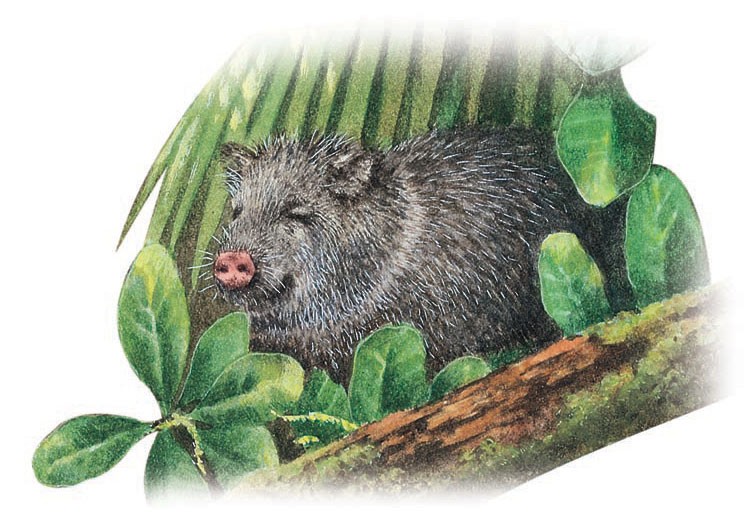
Peccaries
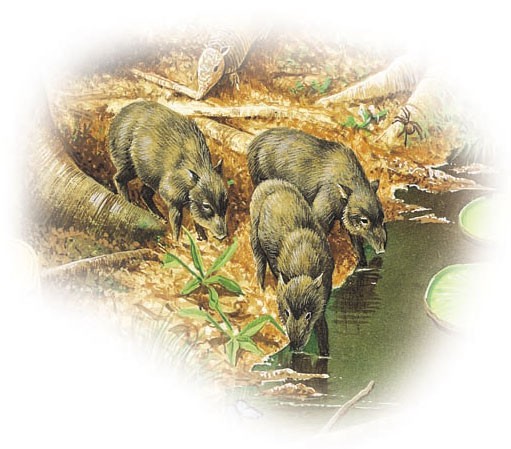
Peccaries live in large social herds made up of smaller family groups including males, females and young. Peccaries will defend their territory against intruders and risk their lives to protect the herd from a predator. They feed mostly on roots, fruit and seeds.
Consultant: Chris Jarvis
pics

Without in any way limiting Q-files Ltd’s exclusive rights under copyright, any use of this publication to “train” generative artificial intelligence (AI) technologies to generate text is expressly prohibited. Q-files Ltd reserves all rights to license use of this work for generative AI training and development of machine learning language models.