
Mammals

CITE
We have made every effort to follow citation style rules, but there may be some minor differences. If in doubt, please refer to the appropriate citation style manual.
Deer. (2026). In Q-files Encyclopedia, Life, Mammals. Retrieved from
https://www.q-files.com/life/mammals/deer
"Deer." Life, Mammals, Q-files Encyclopedia, 24 Mar. 2026.
https://www.q-files.com/life/mammals/deer.
Accessed 31 Oct. 2026.
Deer 2026. Life, Mammals. Retrieved 31 October 2026, from
https://www.q-files.com/life/mammals/deer
Life, Mammals, s.v. "Deer," accessed October 31, 2026.
https://www.q-files.com/life/mammals/deer


Deer
Deer are long-legged, two-toed ungulates—mammals with hooves instead of claws. Living in woodlands, forests, tundra or grasslands, deer feed on leaves, grass, twigs and shoots. There are 47 species of deer, ranging in size from tiny forest-dwelling creatures less than 0.5 metres (1.6 feet) tall, to the mighty moose, one of the world's largest land animals. All are ruminants: their stomachs are divided into compartments that break down grasses, a tough food to digest, in stages. Male deer, called bucks (or stags if they are large), have antlers made of bone, which they shed each year. Female deer are called hinds or does. Young deer, called fawns, are born with white spots on their fur, which they lose as they grow.
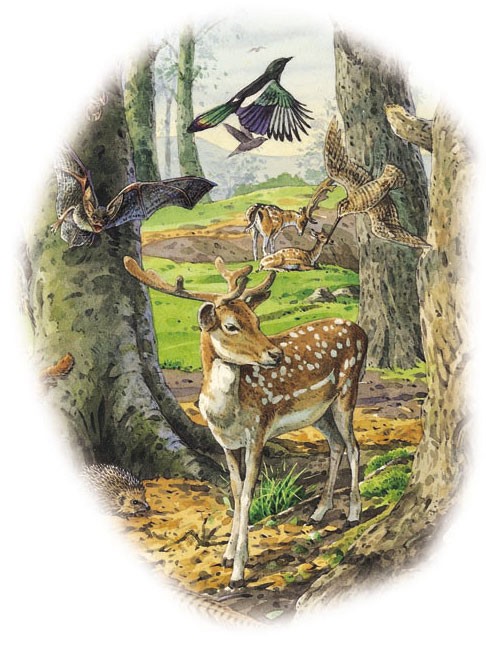


Antlers
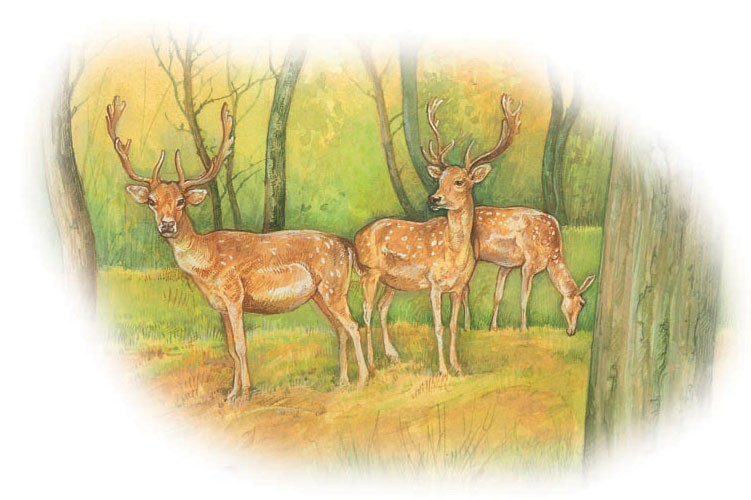
Antlers start to grow as a spongy material. They are covered in skin, called velvet. Before the rut, or mating season, the antlers harden under the velvet to become bone. The velvet is then rubbed off, leaving dead bone. After the rut, the antlers fall off at the base.
Each species of deer has its own characteristic antler shape. Fallow deer and moose antlers have a broad central portion with branches, called tines, spreading out like fingers on a hand. Young males of many deer have single spikes for antlers.
Rutting
In the deer “rut”, which occurs in the autumn and early winter, males compete for the attention of females. Stags walk side by side to compare each other’s size and let out loud roars to attract females and intimidate rivals. The rut for white-tailed deer, for example, can last for up to three months. Roaring, also called belling, can be heard several kilometres away.
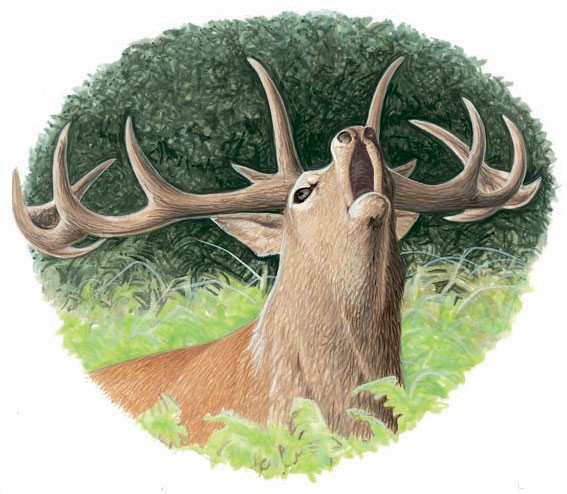

These displays mean that it is possible for males to size each other up without necessarily needing to fight. However, if two stags refuse to step down, the pair will lock horns and try to throw each other off balance. They will be similarly sized animals, and the sparring will usually be no more than shoving contests. Some fights, however, may result in injuries or even death.

Fawns
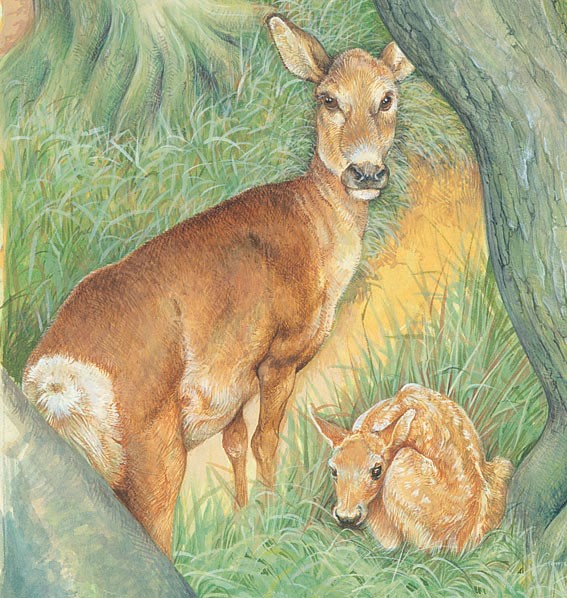
Deer mate in the autumn rut and give birth the following spring, when food is easier to find. Roe deer fawns are born with spotty markings. These camouflage them in the dappled light of the forest floor. A fawn can stay perfectly still and silent for hours at a time. Any movement would give away its location and potentially attract predators. Until they are strong enough to run away from danger, young roe deer are safer hidden from sight. Their mother’s presence would only attract the attention of predators, so she keeps her distance.
Reindeer (caribou)
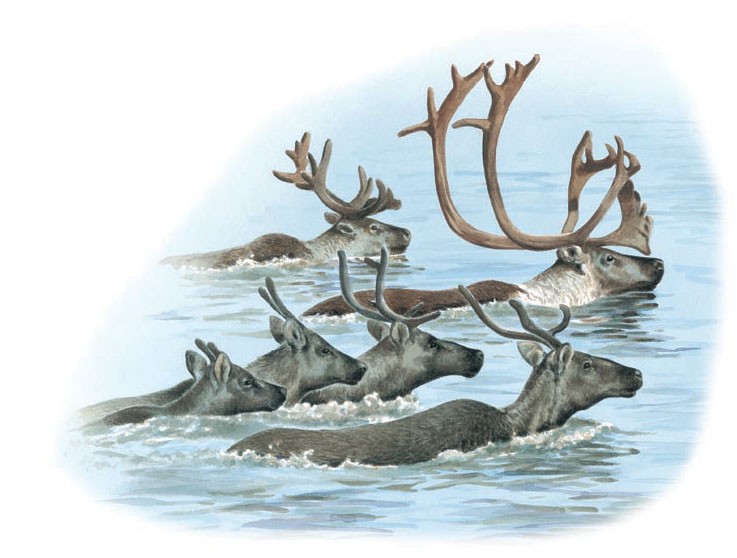
The reindeer lives in the tundra, treeless lands bordering the Arctic Ocean, as well as the forests further south. Both males and females have large antlers. In North America, reindeer are known as caribou, which comes from a Native American word meaning "shoveller". It paws away at the snow with the sharp edge of its hoof to uncover and eat a lichen known as "reindeer moss". Reindeer feed in herds, grazing on grasses and other small plants. Some have been domesticated by some native peoples of the Arctic region. They herd them for their milk, meat and hides.

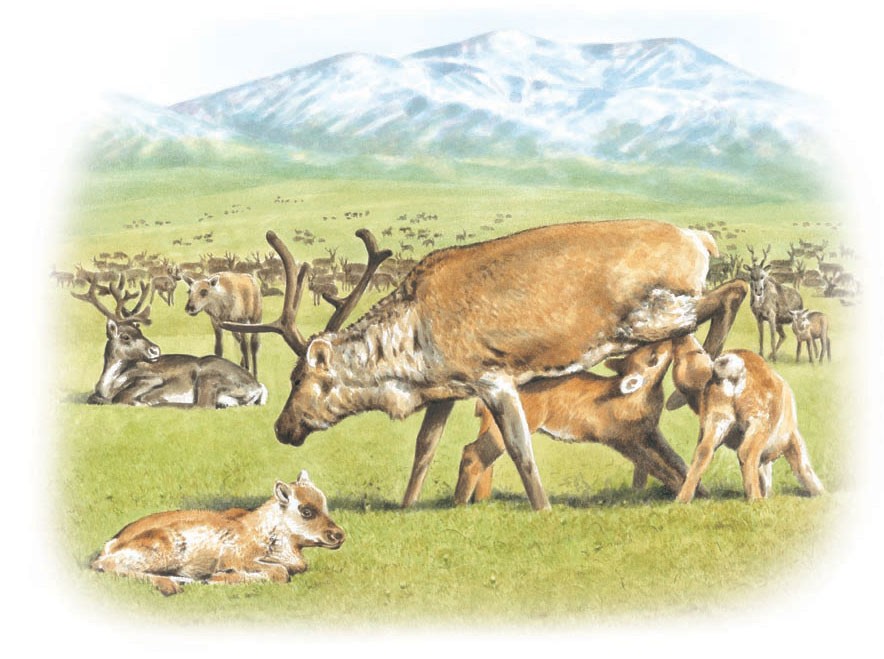
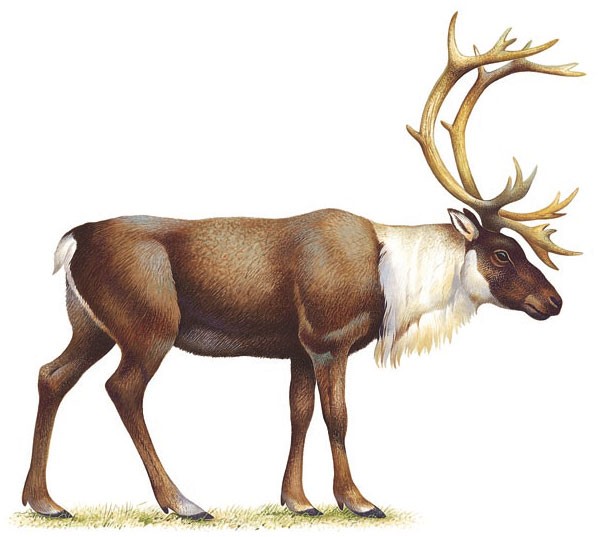
Each June, reindeer gather on the tundra to graze. Melting snow uncover plants that grow quickly in the continuous daylight of summer. Females give birth to one, or very occasionally two, calves. The young reindeer can walk almost as soon as they are born and will be ready to head south with the adults in the autumn to spend winter in the coniferous forests.
Every autumn, herds of reindeer herds travel south from the tundra to warmer, more sheltered forests. This may involve a journey of up to 1500 kilometres (roughly 500 miles). The reindeer often have to swim across wide, icy rivers to reach their destination. The hairs in their coats trap air, which helps them both to keep warm and float more easily.
Moose


The moose, or Eurasian elk, lives in the northern forests of Siberia, northern Europe and North America. The world’s largest deer, a male moose may stand more than two metres (7 feet) tall at the shoulder and weigh as much as half a tonne. A solitary animal, the moose's long legs and wide hooves enable it to pick its way carefully and silently through the forest. It can often be found half-submerged in a lake where it feeds on water plants. Moose browse on shoots and leaves from trees and the forest floor, and may eat up to 32 kilograms (70 pounds) of food a day. A male moose is known as a bull, a female a cow, and the young a calf.
Mouse deer
Standing only 20 centimetres (8 inches) high at the shoulder, and weighing no more than 2 kilograms (4.4 pounds), the lesser mouse deer, also called the kanchil, is the smallest hoofed animal in the world. The mouse deer, or chevrotains, are not, strictly speaking, "true" deer, but another family of ungulates.
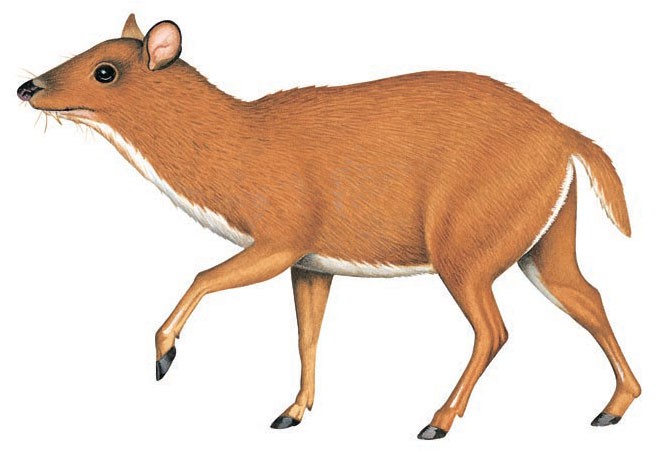
Despite its small size, the male of the species can be quite fierce when he needs to protect himself from rivals. He uses his tusks, his extended upper canine teeth, to slash at his enemy. But nothing can protect the lesser mouse deer from large, predatory birds or crocodiles. So these tiny deer come out only at night, where they scurry about in the dense undergrowth of the Southeast Asian rainforest, searching for fallen fruit, fungi and leaves.
Consultant: Chris Jarvis
pics
Without in any way limiting Q-files Ltd’s exclusive rights under copyright, any use of this publication to “train” generative artificial intelligence (AI) technologies to generate text is expressly prohibited. Q-files Ltd reserves all rights to license use of this work for generative AI training and development of machine learning language models.