
Europe

CITE
We have made every effort to follow citation style rules, but there may be some minor differences. If in doubt, please refer to the appropriate citation style manual.
Luxembourg. (2026). In Q-files Encyclopedia, Geography, Europe. Retrieved from
https://www.q-files.com/geography/europe/luxembourg
"Luxembourg." Geography, Europe, Q-files Encyclopedia, 31 Mar. 2026.
https://www.q-files.com/geography/europe/luxembourg.
Accessed 13 Sep. 2026.
Luxembourg 2026. Geography, Europe. Retrieved 13 September 2026, from
https://www.q-files.com/geography/europe/luxembourg
Geography, Europe, s.v. "Luxembourg," accessed September 13, 2026.
https://www.q-files.com/geography/europe/luxembourg


Luxembourg
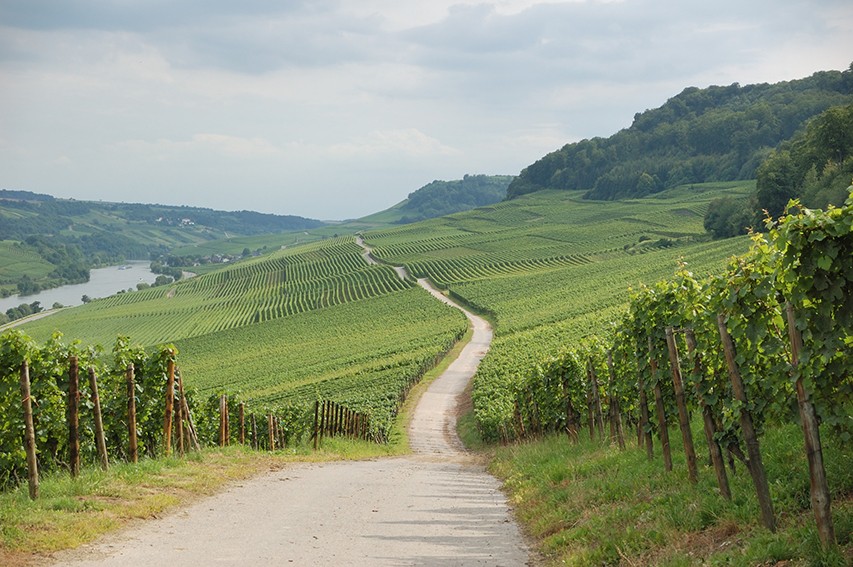
Luxembourg lies sandwiched between Belgium, France and Germany. Northern Luxembourg, a hilly, forested region, is part of the Ardennes plateau which extends into Belgium and northern France. The southern part, where most Luxembourgers live, is flatter. Here, small farms are planted with cereal crops and potatoes, while wine grapes thrive in the Moselle Valley to the east. The climate is mild and rainy; summers are warm and wet, while winters are cool. Luxembourg is scattered with walled towns and castles, reminders of its history at the crossroads of major empires. Luxembourg's official name is the Grand Duchy of Luxembourg. It has a monarch—the Grand Duke—and is a parliamentary democracy. It was a founding member of the European Union and the United Nations.


People
Luxembourgers speak the country’s original language, Letzeburgisch (or Luxembourgish) as well as German and French. French is the official language of the government. The dominant religion is Roman Catholicism. Immigrants from other European countries make up over a third of Luxembourg’s population. The country is home to around 91,000 Portuguese people, as well as Bosnians, Montenegrins and Serbs who arrived fleeing the Yugoslav Wars in the 1990s.

Economy
Luxembourg is an extremely wealthy country and its people enjoy some of the highest living standards in the world. Its economy was dominated by steel production until the 1960s. Nowadays it has become a major centre of international banking and finance. EU institutions, such as the European Court of Justice, along with a number of internet companies, including Skype and Amazon, have their headquarters here.

Consultant: Nicholas Harris
Facts about Luxembourg
Population 672,050 (2024 estimate)
Area 2586 sq km
Highest point Buurgplaatz 559 m (1834 ft)
Capital Luxembourg, population 132,780
Languages German, Letzeburgesch, French
Religions Christian (Roman Catholic) 87%, others 13%
Nationality Luxembourger 53%, Portuguese 15%, French 8%, Italian 4%, German 2%, others 18%
Currency Euro (EUR)
Chief exports machinery, steel products, rubber products, glass, chemicals


History of Luxembourg
600 BC
Luxembourg inhabited by Celts
1st century BC
Treveri, a Belgic tribe, prosper in the region
53 BC
Treveri conquered for the Roman Empire by Julius Caesart
90 AD
Region becomes part of a Roman prince called Gallia Belgica
406
Gallia Belgica abandoned by Rome to Franks
959
The region becomes part of the Holy Roman Empire
963
Acquisition of Lucilinburhuc (Fortress of Luxembourg) on the Bock rock by Siegfried, Count of Ardennes
1437
Territory sold to Philip the Good, Duke of Burgundy
1477
Luxembourg comes under Habsburg rule
1684
Following invasion by King Louis XIV, Luxembourg comes under French rule, until it is returned to the Habsburgs in 1697
1795
Luxembourg is conquered and annexed by Revolutionary France
1815
Congress of Vienna forms Luxembourg as a Grand Duchy within the German Confederation, although it is ruled as a province of the Netherlands
1839
First Treaty of London (following the Belgian Revolution): the French-speaking western half of its territory is transferred to Belgium; King of Netherlands remains head of state
1867
Luxembourg Crisis: dispute between French Empire and Prussia over Luxembourg peacefully resolved at Second Treaty of London; Luxembourg becomes fully independent after German Confederation abolished, although the title of Grand Duke is still personally held by the King of Netherlands
1890
Death of William III of Netherlands: the Grand Duchy passes to a new family, the House of Nassau-Weilburg
1914–18
Luxembourg occupied by Germany during World War I
1940–44
Luxembourg occupied by Nazi Germany during World War II
1948
Luxembourg forms an economic union with Belgium and Netherlands, called BeNeLux
1949
Luxembourg becomes founder member of UN and NATO
1957
Luxembourg becomes one of six founder members of the European Economic Community (later the European Union)
1985
Declares Letzeburgesch (Luxembourgish) the national language
1999
Joins the euro currency area
2000
Crown Prince Henri becomes Grand Duke of Luxembourg on the abdication of his father, Jean
2020
Luxembourg became the first country in the world to provide free public transport across the country
pics

Without in any way limiting Q-files Ltd’s exclusive rights under copyright, any use of this publication to “train” generative artificial intelligence (AI) technologies to generate text is expressly prohibited. Q-files Ltd reserves all rights to license use of this work for generative AI training and development of machine learning language models.