
Europe

CITE
We have made every effort to follow citation style rules, but there may be some minor differences. If in doubt, please refer to the appropriate citation style manual.
Ireland. (2026). In Q-files Encyclopedia, Geography, Europe. Retrieved from
https://www.q-files.com/geography/europe/ireland
"Ireland." Geography, Europe, Q-files Encyclopedia, 31 Mar. 2026.
https://www.q-files.com/geography/europe/ireland.
Accessed 13 Sep. 2026.
Ireland 2026. Geography, Europe. Retrieved 13 September 2026, from
https://www.q-files.com/geography/europe/ireland
Geography, Europe, s.v. "Ireland," accessed September 13, 2026.
https://www.q-files.com/geography/europe/ireland


Ireland
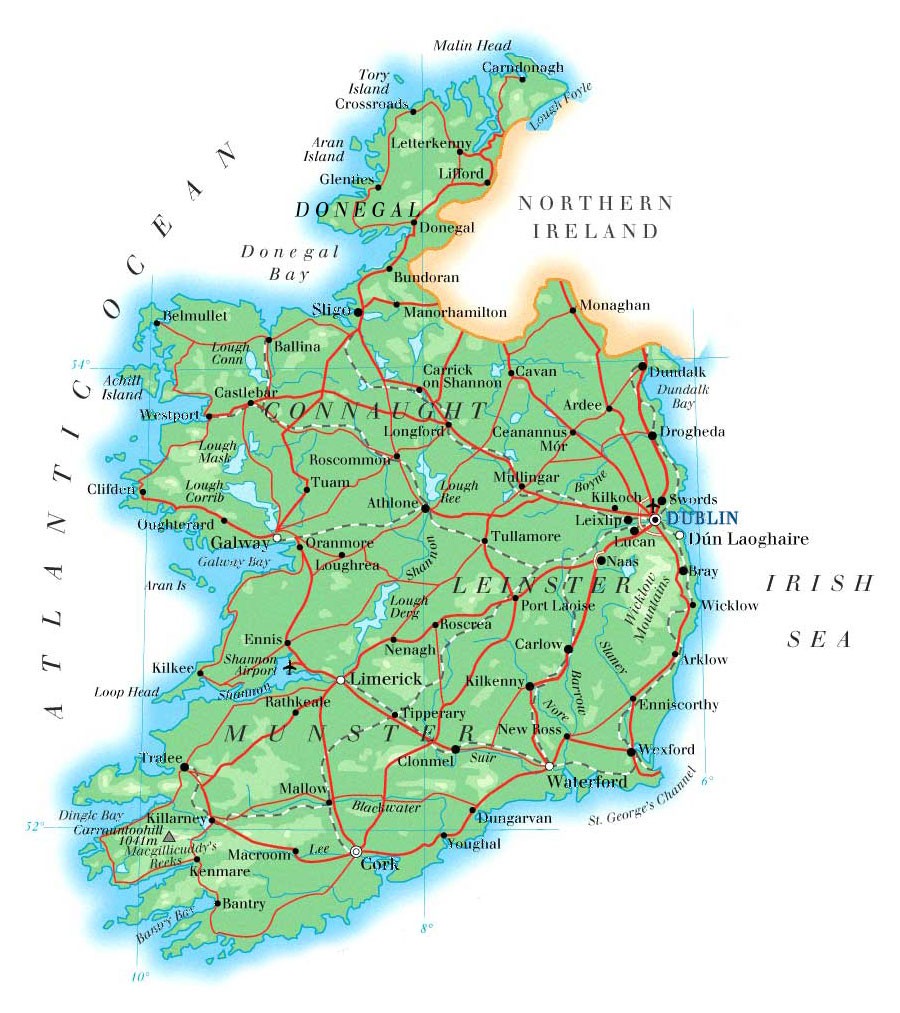
Ireland is a land of mountains, bogs, pastures and farmland. The island of Ireland is divided between the Republic of Ireland and the smaller province of Northern Ireland, which is part of the United Kingdom. Ireland is well known for its lush green landscape; much of the country is made up of gently rolling lowlands, criss-crossed by rivers and lakes. Dotted across both the south and the northwest of the country are a number of mountain ranges, each separated by river valleys or arms of the sea. The western coast in particular is indented with long sea inlets, and there are hundreds of islands lying just offshore. Ireland has a mild, wet climate with warm summers and cool winters. Located on the eastern shores of the North Atlantic, temperatures are kept mild all year round by the North Atlantic Current, part of the Gulf Stream.


People
The people are mostly descended from Celtic settlers who arrived from the European mainland around 2500 years ago. Celtic influences have played an important part in Irish culture, especially in music and storytelling. Most people in the Republic of Ireland are Catholic. Every year, festivals and parades are held on 17th March—St Patrick’s Day—to celebrate Irish culture and its history. Ireland’s official language is Irish Gaelic (or simply, Irish). Around 130,000 people speak it as a first language (mostly in western regions), while around 1.7 million Irish people speak or understand it as a second language.

Economy
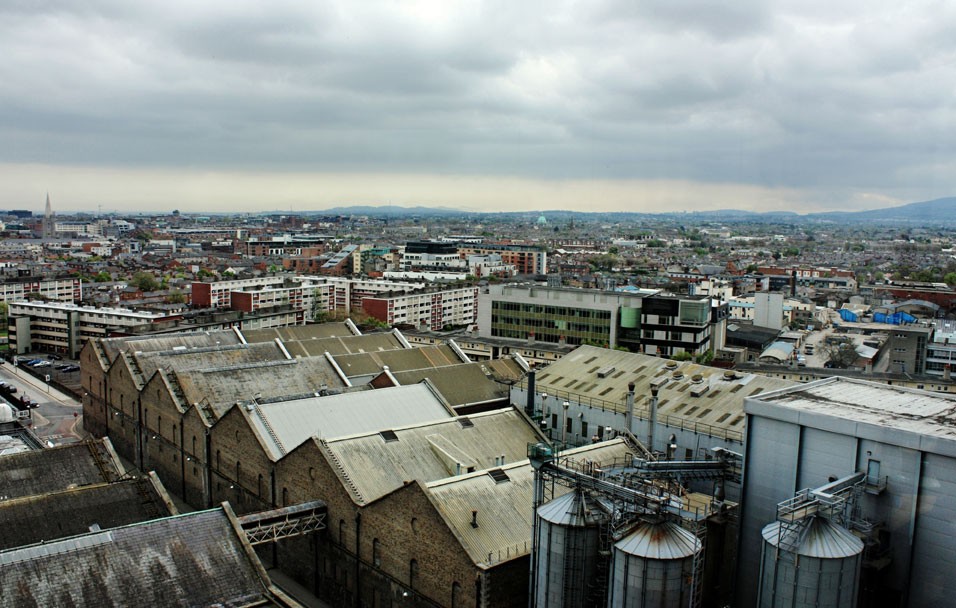
More than 90% of Ireland's farmland is given over to grass for hay or pasture: livestock and meat products are an important export earners. A largely agricultural country until the second half of the 20th century, Ireland's economy is now based on services, such as finance and telecommunications, and high-tech industries, as well as on manufacturing.

Between 1995 and 2000, the Irish economy grew so fast that it was named the Celtic Tiger ("tiger" being the name given to countries that experience rapid economic growth). Today, Ireland is one of the wealthiest nations in Europe. It is a major exporter of computer software, and an important provider of software-related services.

Consultant: Nicholas Harris
Facts about Ireland
Population 5,281,600 (2023 estimate)
Area 68,883 sq km
Highest point Carrauntoohil 1041 m (3414 ft)
Capital Dublin, population 1,024,027
Other major cities Cork (pop. 190,384), Dun Laoghaire (185,400), Limerick (102,287), Galway (85,910)
Languages English, Irish (Gaelic)
Religion Christian (Roman Catholic) 84.7%, Christian (Church of Ireland) 2.7%, other Christian 2.7%, Muslim 1.1%, others/none 8.9%
Ethnicity white (Irish) 77%, white (other) 11%, Asian 3%, black 1.5%, others 7.5%
Currency Euro (EUR)
Chief exports machinery and equipment, computers, software, chemicals, medicines, food products


History of Ireland
7500 BC
First settlers arrive in Ireland
6500 BC
Ireland becomes a separate island
3200 BC
Burial mound at Newgrange built
700 BC
Celtic settlers from Europe arrive in Ireland
AD 431
First Irish bishop, Palladius, appointed
432
St Patrick helps introduce Christianity to the Irish people
795
Viking invaders from Scotland begin raids on monasteries in north and west Ireland. They later establish settlements.
841
Vikings establish permanent settlement at what will one day become the modern capital of Ireland, Dublin
1002
Following a series of battles against the Vikings, driving them from Dublin (1000), Brian Boru proclaims himself king of Ireland. Victory at the Battle of Clondarf in 1014 ends Viking rule and Ireland becomes divided into small, separate kingdoms.
1170
English force led by Strongbow seizes Dublin and becomes king of Ireland. Alarmed by this threat to his own power, King Henry II of England invades Ireland in 1171 and takes control of most of the island. This event marks the start of more than 700 years of English rule in Ireland.
1541
Henry VIII of England becomes King of Ireland, changing its religion to Protestant Church of England, and persecuting Catholics.
1593–1603
Nine Years' War, fought by an Irish confederacy against English rule in Ireland. English are victorious at the Siege of Kinsale (1601-02). Many of the defeated northern lords leave Ireland in 1607 (the Flight of the Earls).
1609
Landowners from Britain begin to establish "plantations" (arable farms) in Ulster, the northern province of Ireland, on land seized from native Gaelic chiefs. The new landlords and settlers are mostly Protestants from Scotland and northern England.
1650–52
Resistance to English rule by Irish Catholics crushed by forces commanded by Oliver Cromwell; Protestants now in complete control. By the Act of Settlement of 1652, Irish Catholics are transported west of the River Shannon to settle in Connaught (Connacht).
1690
Battle of the Boyne: Catholic Irish forces supporting the deposed Roman Catholic king of England, James II, fight the forces (many of them Ulster Protestants) of the Protestant King William II. William is victorious, establishing Protestant dominance over Ireland.
1798
Outlawed by the British government, the Society of United Irishmen led by Wolfe Tone rises in revolt. The rebellion is soon crushed by the British.
1801
The Irish government is abolished. Ireland is united with Britain in the United Kingdom of Great Britain and Ireland, with a single parliament in London.
1820s
Mass rebellion as Irish people protest at anti-Catholic British laws
1845–49
Around 1 million people die from starvation in the Great Famine. About one and a half million people leave Ireland, many of whom emigrate to the United States.
1874
The campaign for Home Rule, led by a large group of Irish MPs campaigning for an Irish parliament to be set up in Dublin, begins.
1886
The first of two Home Rule bills is introduced to the British parliament but is defeated. A second one, introduced in 1893, suffers the same fate.
1912
Protestant Unionists from northern Ireland set up an armed group known as the Ulster Volunteers to resist a new Home Rule bill, while Irish Nationalist supporters of Home Rule set up their own armed group, the Irish Volunteers, to support it.
1916
Irish Nationalists protest at British rule in Dublin in the Easter Rising, but it is quickly suppressed by the British, who execute 16 of the uprising's leaders.
1919
MPs from the Irish Nationalist Sinn Féin party set up their own republican parliament, or Dáil, in Dublin, declaring Irish independence. The Irish Republican Army (IRA) uses armed force against the police and British army, sparking the Anglo-Irish War, or the Irish War of Independence.
Irish War of Independence, a guerrilla campaign fought by the IRA against British rule in Ireland
1920
Bloody Sunday: after 14 British intelligence officers are assassinated, the same number of civilians are shot dead by Royal Irish Constabulary men at Croke Park, the Gaelic games stadium in Dublin (21st November)
1921
(May) British government partitions Ireland between the 26 largely Catholic Republican counties in the south and the six mostly Protestant Unionist counties in the north, each with their own parliaments: one in Dublin and one in Belfast. (July) Ceasefire is agreed, leading to the signing of the Anglo-Irish Treaty (December) ending British rule in southern Ireland.
1922
(June) Civil War breaks out between those Republicans (including many members of the IRA) who refused to accept partition, and the forces of the Provisional Government of Ireland who support the Treaty. (December) The Irish Free State is created as a self-governing Dominion. The Civil War is won by the pro-treaty Free State forces in May 1923.
1939–45
Ireland remains neutral during World War II
1949
The country, having renamed itself Ireland (Éire in Irish) in 1937, becomes a republic and leaves the British Commonwealth
1973
Joins the European Community (later the European Union)
1998
A peace settlement for Northern Ireland, known as the Good Friday Agreement, is approved in 1998 in referendums north and south of the border. The territorial claim of the Republic of Ireland to Northern Ireland is removed.
2002
Ireland becomes a founder member of the Euro currency zone
2018
In a referendum, the Irish people vote decisively to end the country's ban on abortion
pics

Without in any way limiting Q-files Ltd’s exclusive rights under copyright, any use of this publication to “train” generative artificial intelligence (AI) technologies to generate text is expressly prohibited. Q-files Ltd reserves all rights to license use of this work for generative AI training and development of machine learning language models.