
The world in the 20th century

CITE
We have made every effort to follow citation style rules, but there may be some minor differences. If in doubt, please refer to the appropriate citation style manual.
World history 1945–2000. (2025). In Q-files Encyclopedia, History, The world in the 20th century. Retrieved from
https://www.q-files.com/history/the-world-in-the-20th-century/world-history-1945-2000
"World history 1945–2000." History, The world in the 20th century, Q-files Encyclopedia, 24 Oct. 2025.
https://www.q-files.com/history/the-world-in-the-20th-century/world-history-1945-2000.
Accessed 21 Sep. 2026.
World history 1945–2000 2025. History, The world in the 20th century. Retrieved 21 September 2026, from
https://www.q-files.com/history/the-world-in-the-20th-century/world-history-1945-2000
History, The world in the 20th century, s.v. "World history 1945–2000," accessed September 21, 2026.
https://www.q-files.com/history/the-world-in-the-20th-century/world-history-1945-2000


World history 1945–2000
World War II left up to 85 million people dead and countless cities in Europe and Asia in ruins. Six million Jews and many more regarded by the Nazis as “undesirable” had been murdered in the Holocaust. To ensure that such a war could not happen again, in 1945, 50 nations signed the charter of the United Nations. But the world was soon dividing into two opposing military alliances again, the United States-led NATO (North Atlantic Treaty Organization) and the Soviet-led Warsaw Pact.

Two postwar
superpowers
At the end of the war, it was clear that two countries—the United States of America and the Soviet Union (USSR)—had become the world’s leading powers, the “superpowers”. However, these two superpowers had deep political and economic differences.
The Soviet Union, which was formed in 1922 when Russia joined with other territories, was under Communist rule. Communism aims at creating a classless, moneyless society in which everyone shares ownership of businesses, factories and farms. The USA and its allies were capitalist economies, in which businesses are privately owned, with goods and services produced for profit.
Cold War
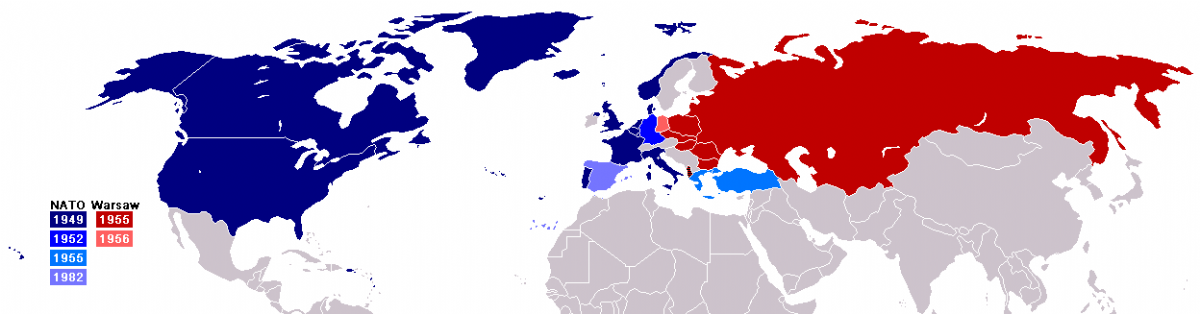
After the war, Soviet leaders tried to extend Communist rule in Europe and Asia, while Western nations tried to contain them. Distrust and rivalry grew between Communist nations, often called the Eastern Bloc, and the West. In 1949, the USA and 11 other Western states signed the North Atlantic Treaty, creating a new military alliance. In 1955, the USSR joined with seven other Communist states in a military alliance known as the Warsaw Pact. This period of tension and distrust between the Eastern Bloc and the West—which never met in direct military conflict—is known as the Cold War.
Berlin Wall
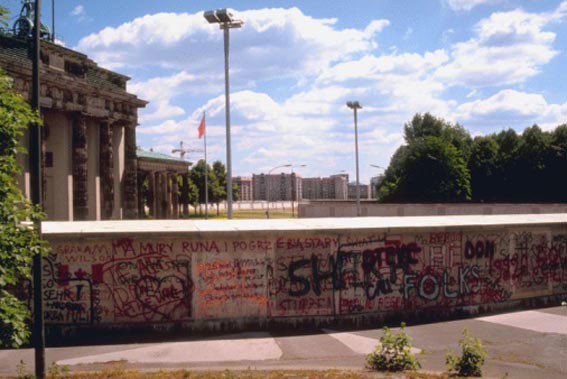
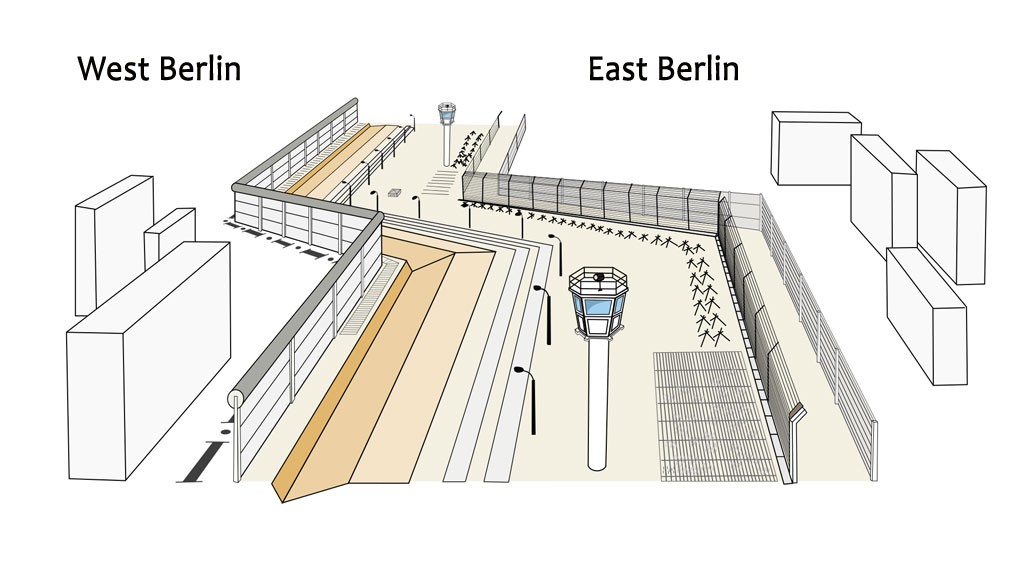
After the war, Germany was divided up between the USA, Britain, France and the Soviet Union. The capital, Berlin, lay in the Soviet zone, but was also divided between the four powers. In 1949, three zones were joined together to form West Germany, while the Soviet zone became East Germany with a Communist government. In 1961, East Germany built a wall across the city to prevent people moving from East to West.
Cuban missile crisis
Competition and distrust between the USA and the USSR led to an arms race in which each side tried to outdo the other in the development and production of weapons, including nuclear weapons. The threat of nuclear war loomed most drastically during the Cuban missile crisis of October 1962. This was a confrontation between the USA on one side and the Soviet Union and Cuba (also Communist) on the other.
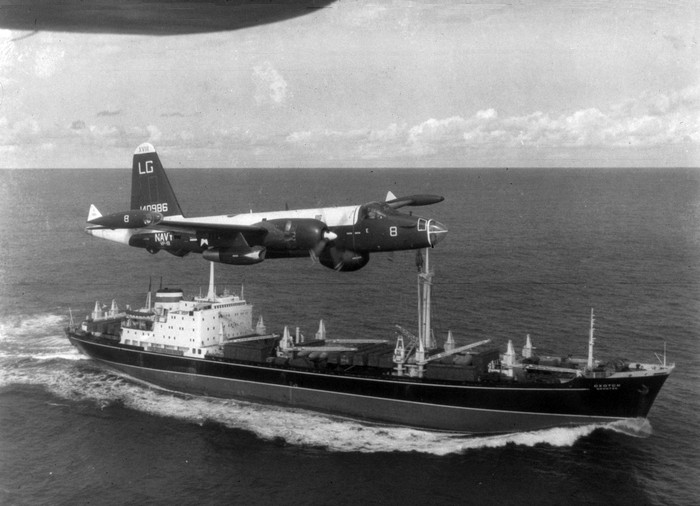
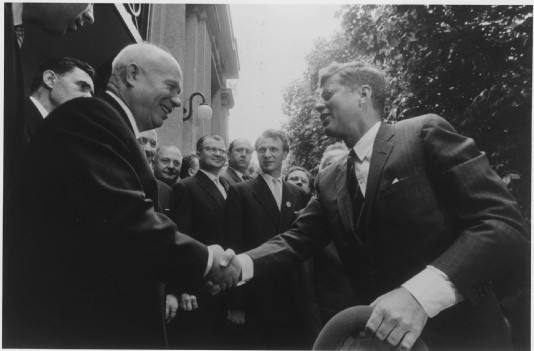
The crisis arose when the USA became aware that the USSR was building nuclear missile sites on Cuba, which lies 150 kilometres (90 miles) off the coast of the USA. After 13 days of tense negotiations, an agreement was reached between President Kennedy of the USA and President Khrushchev of the USSR, and the Soviets dismantled their sites.
Korean and Vietnam wars
The West and the Communist nations never met in direct military conflict, which would have run the risk of a nuclear war. However, the Cold War saw several "proxy" wars in which the USA or the Soviet Union sent their forces into battle against nations supported by the other party. These included conflicts in Afghanistan, Korea, Vietnam and Cuba.
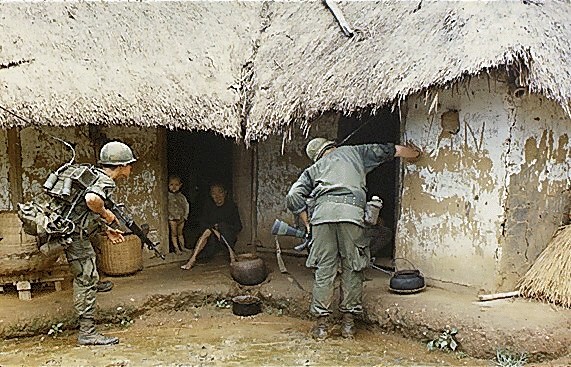
The Korean War (1950–1953) was fought between South Korea, supported by troops from the US, Britain and others, and Communist North Korea, supported by China and the Soviet Union. The Vietnam War (1955–1975) was fought between North Vietnam, supported by China and other Communist allies, and South Vietnam, supported by the USA and its allies.
The end of the Cold War
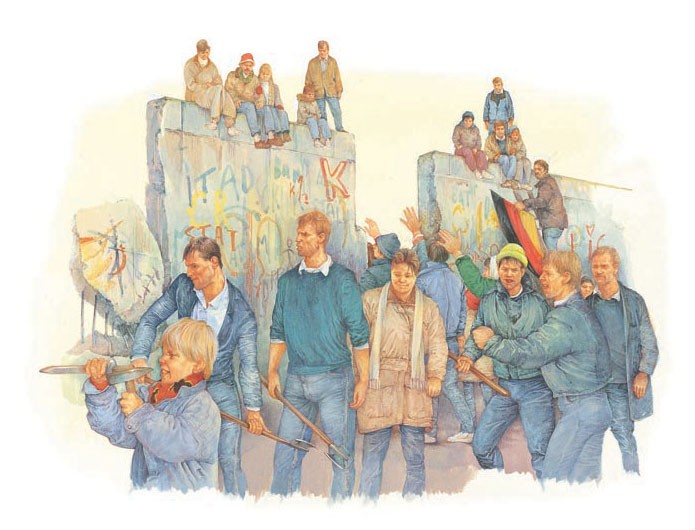
In 1989, a wave of largely peaceful revolutions swept through the Communist states of Eastern Europe, which broke free from Soviet control and Communist rule. East Germany was among them, and the hated Berlin Wall came down in November of that year. In 1991, due to demands for greater democracy and independence, the Soviet Union was formally dissolved, breaking down into separate republics. Many historians say that the fall of Communism in the USSR marked the end of the Cold War.
Indian independence
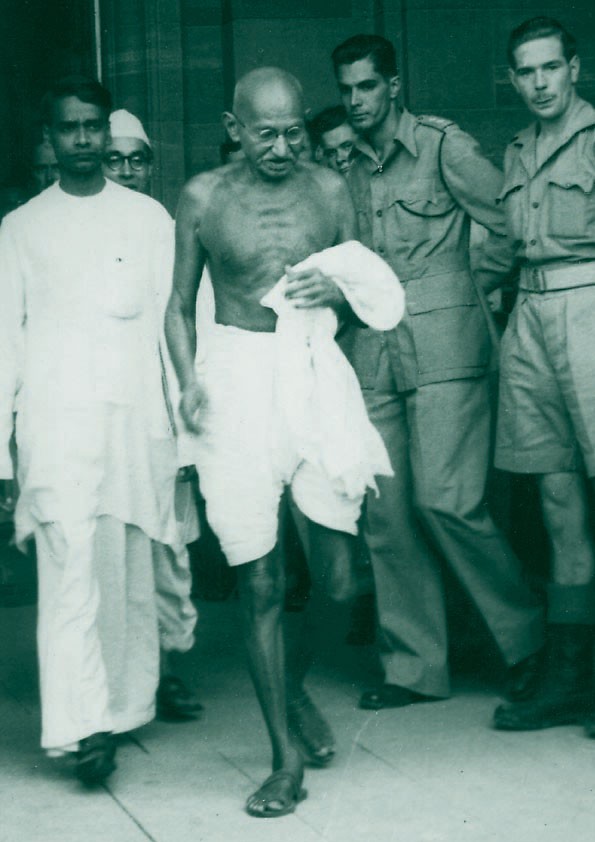
India had been ruled by the British government since 1858. Despite Indian demands for reform and, after 1917, for independence, Britain was very reluctant to let India go. From the 1920s, the campaign for independence was led by Mohandas Gandhi (1869–1948). It was not until after World War II that the British government finally agreed to Indian independence. Although the majority of people in India were Hindus, there were also millions of Muslims who did not want to live under Hindu rule. The Muslim leader Mohammed Ali Jinnah campaigned for a separate state for Muslims, and the British eventually agreed. In 1947, two areas in northwest and northeast India became the Muslim state of Pakistan (the northeast region is present-day Bangladesh).
As people moved from one state to the other, violence broke out between the two sides: somewhere between 200,000 and 1 million people died. On 14th August 1947, Pakistan became an independent nation, followed by India, just after midnight on 15th August 1947.
Decolonization
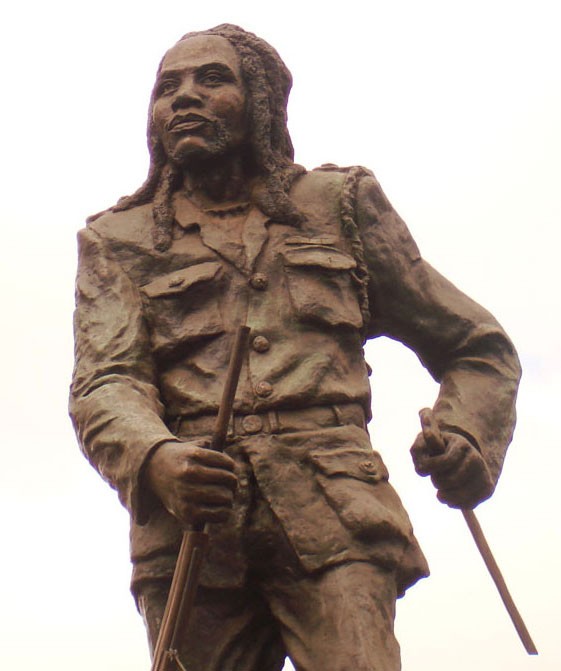
Decolonization refers to the process by which territories throw off the rule of another country and establish their independence. The post-war years saw decolonization across Asia and Africa as once huge European empires, such as the British, French, Portuguese and Dutch, were dismantled. In Asia, the first state to be decolonized after the war was Indonesia, a former Dutch colony, in 1945. Many African colonies became independent peacefully, while others, such as Algeria (1962), Kenya (1963) and Angola (1975), were forced to fight for it.

Apartheid in
South Africa
The oppression of the black majority in South Africa began under Dutch and British rule. After 1926, Britain gave South Africa the right to govern itself, but it was the white minority who held all the power while black people had few rights. From 1948, the white government used a policy called “apartheid” (apartness) to keep the black majority out of power. Black Africans were forbidden from entering white areas, and blacks and whites could not go to the same schools.
The struggle to end apartheid finally succeeded in 1994, when free elections were held for the first time in South Africa’s history, and Nelson Mandela became president.
Communist China
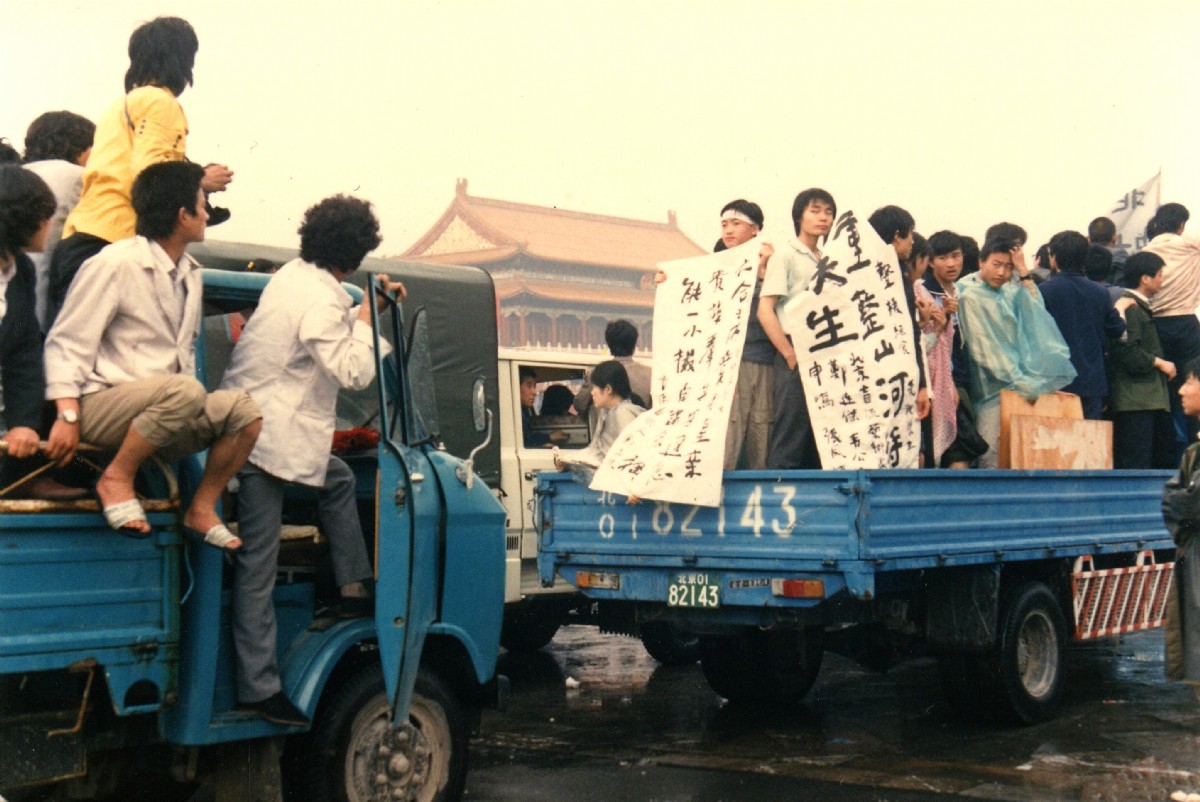
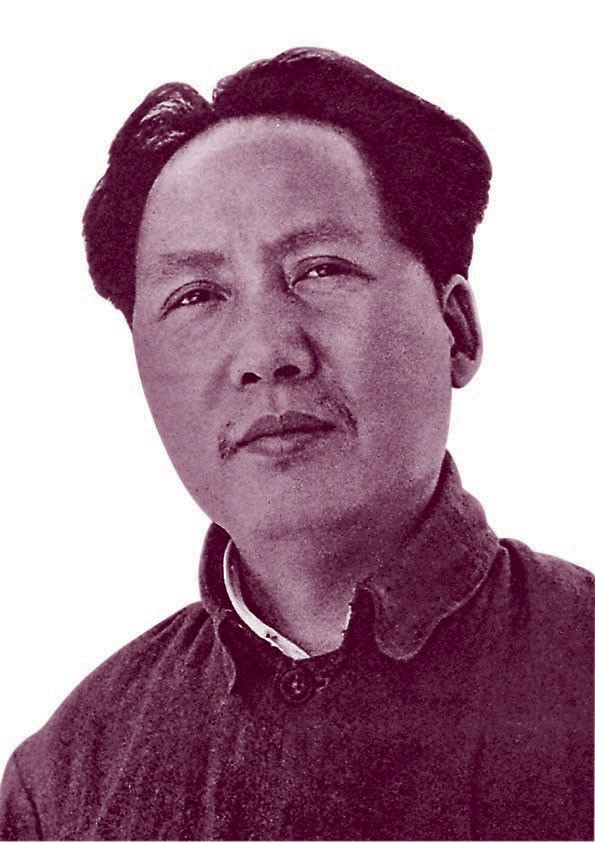
Following the Chinese Civil War, the Communist Party took power in China in 1949, under the leadership of Mao Zedong. Mao oversaw drastic reforms designed to improve the economy and increase food production. Industries were brought under government control and land was taken over by co-operatives (the people who farmed the land themselves). Although Mao oversaw the building of China into a world power, it is estimated that his policies caused the deaths of up to 70 million people. After Mao’s death in 1976, China’s leaders began to loosen control over their citizens’ personal lives and to allow private businesses and private ownership of land. However, in 1989, the violent suppression by the government of student protests in Tiananmen Square, Beijing, brought worldwide condemnation.
US civil rights movement
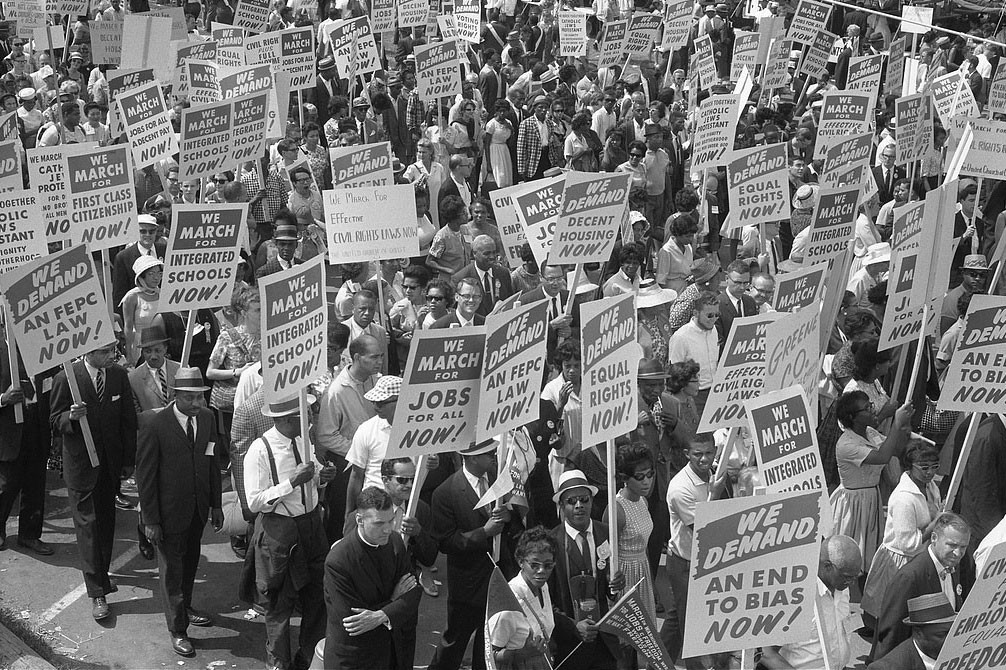
In the USA, racial segregation (the separation of one race from another) and discrimination (unfair treatment because of race) began when America was a British colony and the first slaves were imported from Africa. Slavery was abolished in the USA in 1865, but strict segregation still existed in many states. Local laws were passed to ensure that black and white people still had to use separate schools, buses, cinemas and shops. In the 1950s and 60s, activists like Rosa Parks—who refused to give up her seat on a bus to a white passenger—and Martin Luther King led a civil rights movement demanding change. In 1964, the Civil Rights Act marked an end to major forms of legal discrimination and segregation.
Arab-Israeli conflict
In the face of increasing demands for a Jewish homeland after the Holocaust, in 1947 the United Nations approved a plan to divide Palestine in the Middle East into separate Jewish and Arab states. More than 700,000 Palestinian Arabs fled from the area that became Israel. Many of those refugees still live in the Palestinian territories that border Israel: the West Bank and Gaza.
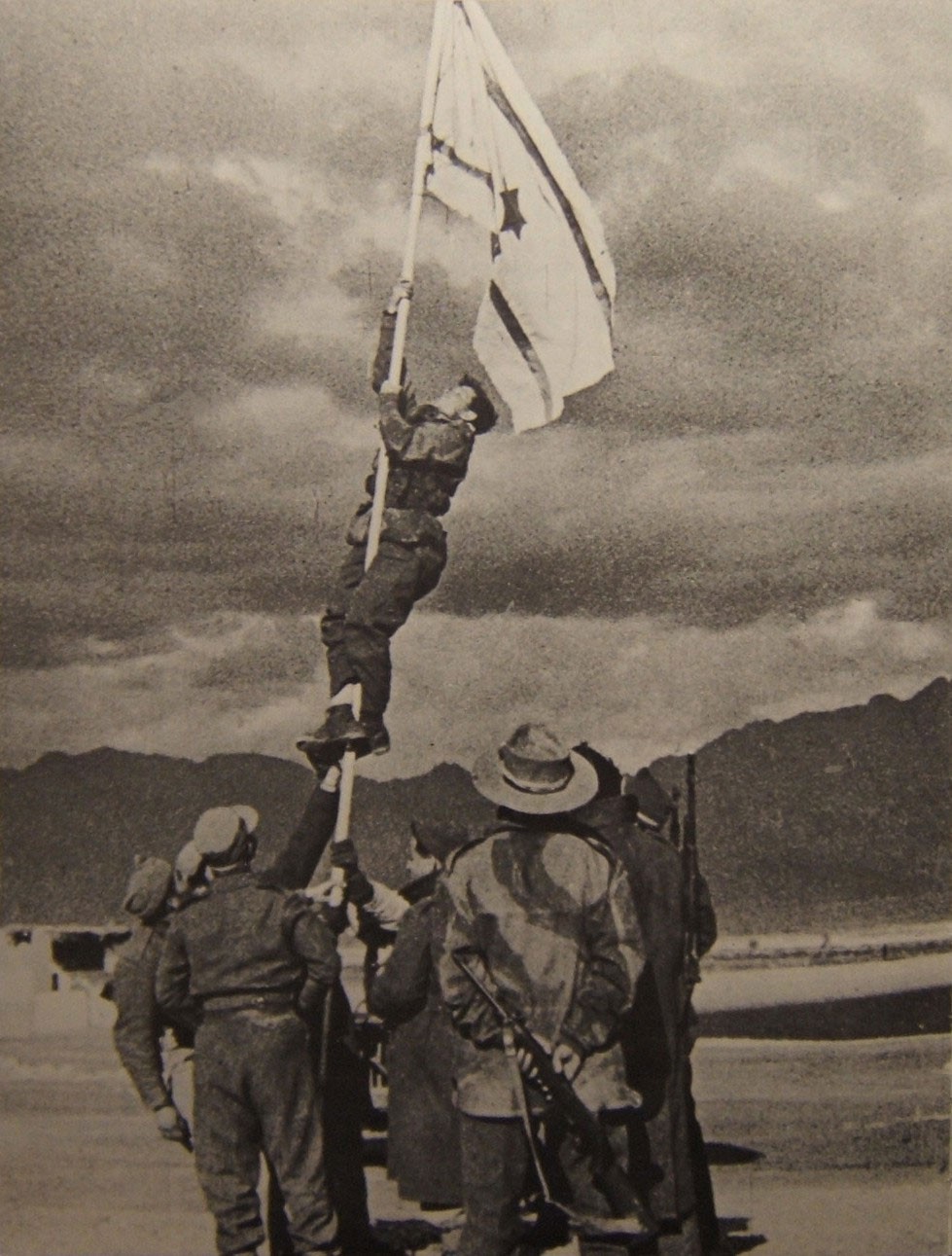
In 1948, the Jewish state of Israel was declared. Bitterly opposed to the new state, Egypt, Lebanon, Syria, Jordan and Iraq immediately invaded it, leading to the 1948 Arab-Israeli War.
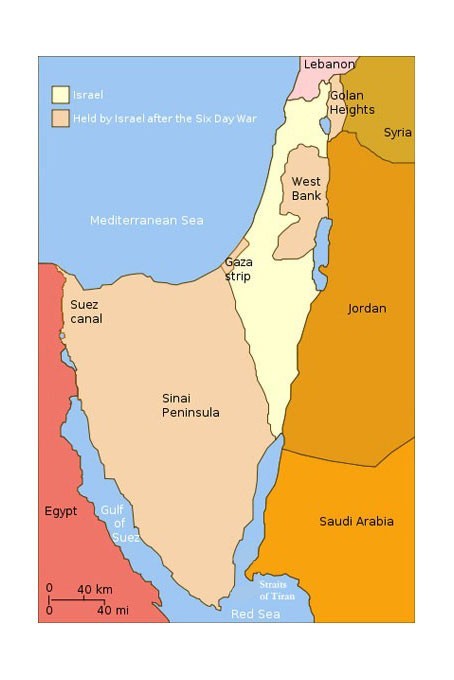
Israel made large territorial gains after the Six Day War (5th–10th June 1967) in which it defeated the combined forces of Egypt, Jordan and Syria. Although there have been no large-scale military engagements since the end of the 1973 Yom Kippur War (named after the attack launched on Israel by Syria and Egypt on Yom Kippur, a Jewish holy day), the region is still deeply troubled by conflict over land and religion.
A key area of tension in the current conflict is between Israel and Palestinian-ruled Gaza. Rocket attacks launched from Gaza have led to military responses from Israel that have killed many thousands of civilians.
Conflict in the Middle East also causes tension between Israel’s supporters, notably the USA and UK, and the Muslim world.
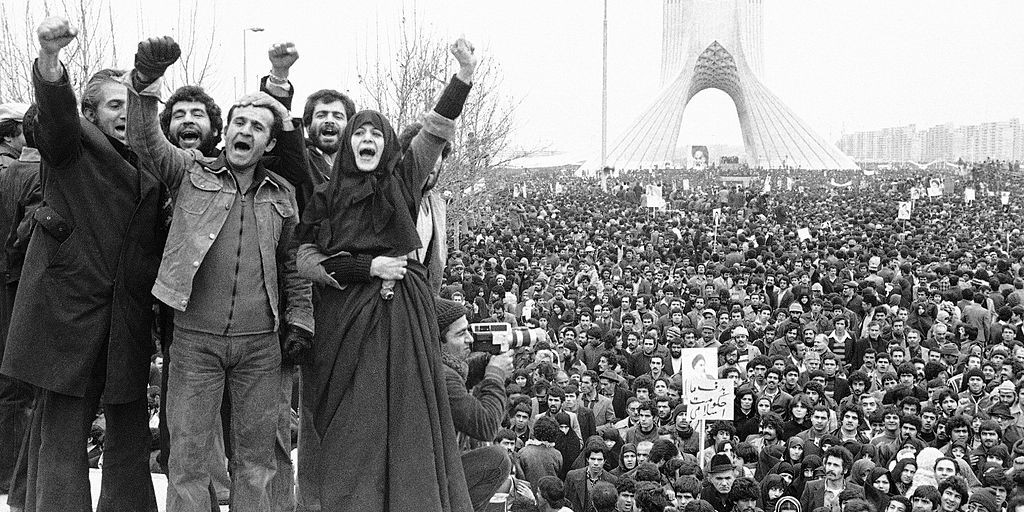
Iranian Revolution
In the Middle East during the 1970s, there was a growing movement to replace foreign culture and values with so-called “pure” Islamic forms of belief and behaviour. This led to the Iranian Revolution in 1979, in which the ruling monarch of Iran, Mohammed Reza Shah Pahlavi, was removed from power. Iran became an Islamic Republic under the Grand Ayatollah Ruhollah Khomeini, the leader of the revolution.
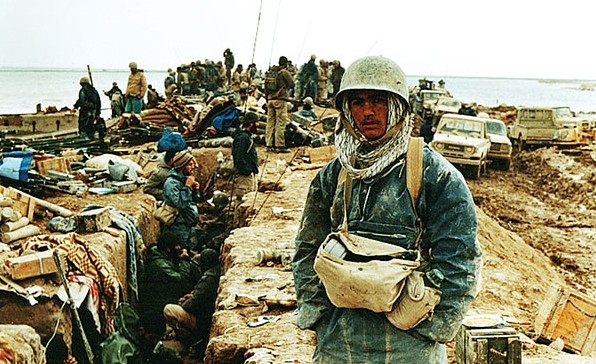
Iranian revolutionaries called for the overthrow of other monarchies in the Middle East and their replacement with Islamic republics. Neighbouring Iraq, with its government controlled by supporters of a branch of Islam called Sunni, decided to invade Iran, a follower of the other main branch of Islam, Shia, in 1980. Iran halted the Iraqi advance, but the Iran-Iraq war lasted for eight years and resulted in hundreds of thousands of deaths. The Islamic Revolution inspired anti-Western feeling across the Middle East which continues to this day.
Consultant: Philip Parker
pics
Without in any way limiting Q-files Ltd’s exclusive rights under copyright, any use of this publication to “train” generative artificial intelligence (AI) technologies to generate text is expressly prohibited. Q-files Ltd reserves all rights to license use of this work for generative AI training and development of machine learning language models.