
China

CITE
We have made every effort to follow citation style rules, but there may be some minor differences. If in doubt, please refer to the appropriate citation style manual.
Modern China. (2026). In Q-files Encyclopedia, History, China. Retrieved from
https://www.q-files.com/history/china/modern-china
"Modern China." History, China, Q-files Encyclopedia, 15 May. 2026.
https://www.q-files.com/history/china/modern-china.
Accessed 22 Sep. 2026.
Modern China 2026. History, China. Retrieved 22 September 2026, from
https://www.q-files.com/history/china/modern-china
History, China, s.v. "Modern China," accessed September 22, 2026.
https://www.q-files.com/history/china/modern-china


Modern China
At its height in the 18th century, Qing dynasty China had become the richest and most powerful country in the world. However, China gradually became dominated by rising foreign powers in the 1800s, its Qing rulers too weak and inefficient to alter events. A revolution in 1911 overthrew the emperor and China was declared a republic. But the country was soon divided by warring political parties and then invaded by Japan. This led to the establishment of the Communist government in 1949, which rules China today.


Chinese Republic
Following the abdication of the emperor in 1912, the new republic under the presidency of Sun Yat-sen was weak and threatened by constant rebellions. Sun was soon forced to hand over power to Yuan Shikai (1859–1916), a general who had been prime minister under Qing rule. When Yuan died in 1916, China became divided and controlled by competing warlords, beginning the so-called Warlord Era.
Chiang Kai-shek
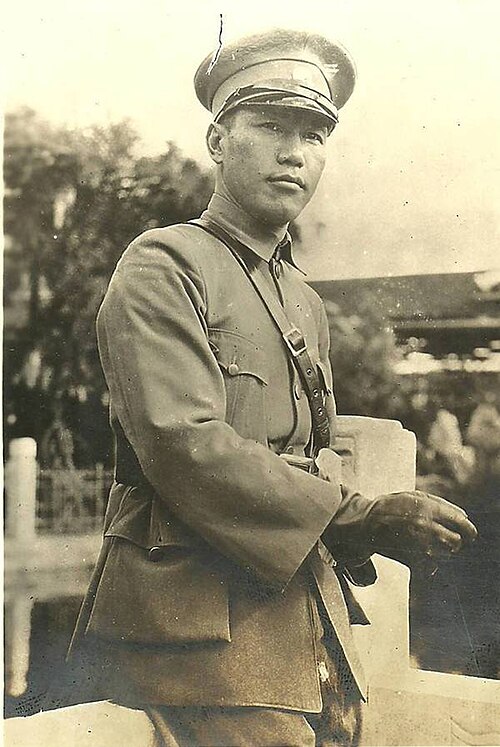
The Chinese Communist Party was founded in 1921. At first, it supported the Kuomintang (KMT) or Nationalist Party led by Sun Yat-sen in its fight against the warlords. After Sun died in 1925, General Chiang Kai-shek (1887–1975) took over as leader of the Nationalists. In 1926 he led the Northern Expedition, a military campaign directed against the powerful warlords.
Chiang did not trust the Communists, and expelled most of them from the KMT. He then launched a violent attack on them in 1927, the Shanghai massacre. It was the first stage of a full-scale purge, known as the White Terror. In response, the Communists set up their own force, the Red Army, to fight the Nationalists. Meanwhile, the last major warlord pledged allegiance to Chiang's Nationalist government in Nanjing in 1928. Chiang now ruled the whole of China as a one-party state.
The Long March
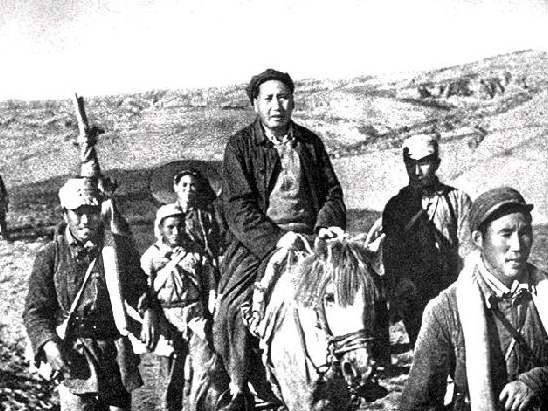
By 1930, Mao Zedong, the son of a peasant from Hunan Province, had become a significant figure in the Communist Party. Having retreated to southeastern China during the White Terror, he adopted guerrilla warfare, using small forces to mount surprise attacks on the Nationalists. In 1934, the Red Army started on what was known as the "Long March" to northern China, leading more than 100,000 Communist supporters away from encircling Nationalist forces. (In fact, it was not a single long march, but a series of retreats in which thousands died under attack from their opponents.) As a result of his leadership during the Long March, Mao gained much support and prestige. By 1935, when the surviving Communist forces had finally reached northern China, Mao had become leader of the Communist Party.
War with Japan
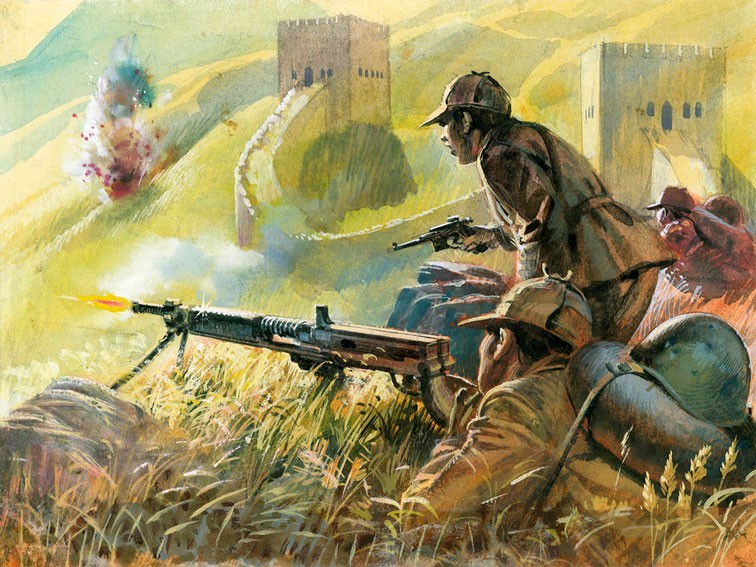
In 1931 the Japanese army had invaded and occupied the northern Chinese province of Manchuria, known to them as Manchukuo. They then seized the neighbouring Jehol province in 1933 and, in 1937, launched an all-out invasion of the rest of China. The Japanese invasion brought the Nationalists and Communists together into an alliance against their common enemy. This alliance held throughout World War II, as Japan continued to seize Chinese territory. The war with Japan continued until Japan surrendered in 1945.
People’s Republic
After the end of the war, civil war once again broke out between Communists and Nationalists in China. This time the Communists emerged victorious in 1949. Chiang Kai-shek fled to the island of Taiwan. On 1st October 1949, the People’s Republic of China came into existence, under its new Communist leader, Mao Zedong. Mao received assistance and support from China’s Communist neighbour, the Soviet Union, under its leader Joseph Stalin. However, despite the signing of a Sino-Soviet Treaty of Mutual Friendship in February 1950, relations were often uneasy between these two Communist giants. It reached a low point in 1969 when Soviet and Chinese troops clashed on the Manchurian border.

Korean War
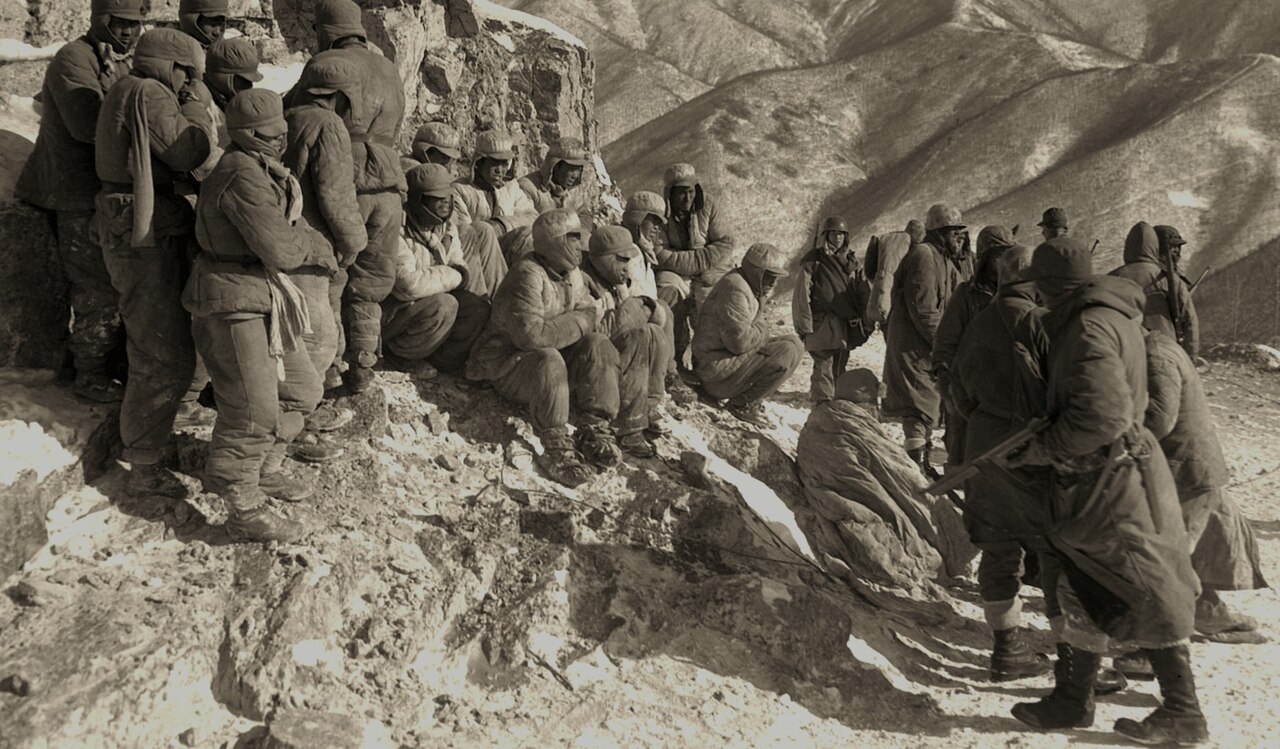
The new People's Republic was soon drawn into its first international conflict. In June 1950, Kim Il Sung's North Korean forces crossed the 38th Parallel to invade South Korea. United Nations forces, led by the United States, entered the war on the side of the South. Stalin decided not to go to war with the US. Faced with the prospect of a US-backed Korea on its border (should the UN forces win), China decided to support North Korea.
UN forces liberated Seoul, the South's capital, in September, then took Pyongyang in the North in October. With UN troops advancing towards the River Yalu, the border between China and North Korea, China sent a huge army against them. Poorly equipped compared to UN forces, Chinese troops, known as the People's Volunteer Army, were soon pushed back. But, by Christmas 1950, at the cost of enormous casualties, they had forced the UN troops to retreat to the 38th Parallel. The two sides fought to hold territory until an armistice was signed on 27th July 1953.


Invasion of Tibet
Under Chinese rule since 1720, Tibet declared its independence after China became a republic in 1912. China had always maintained that Tibet was a part of China, and, soon after the People's Republic came into being, took steps to incorporate it. After months of failed negotiations, Chinese forces, known as the People's Liberation Army (PLA), captured the Tibetan border town of Chamdo in October 1950. Tibet then came under Chinese control when its government signed the Seventeen Point Agreement in May 1951.
Following an uprising in the Tibetan capital of Lhasa in 1959, in which tens of thousands of Tibetans were killed by the PLA, the Dalai Lama, the Tibetan Buddhist leader, fled into exile.
Communist government

Mao Zedong and his fellow Communist leaders began to reshape Chinese society in the 1950s. Farmland was taken away from landowners and reorganized into communal farms (a commune is a group of people who live and work together) run by the farmworkers themselves, called collectives. With Soviet help, Mao also launched a five-year plan (1953–58) to increase industrial output.
In 1956 Mao proclaimed a policy of "letting a hundred flowers bloom"—allowing people to express their own ideas and to question the Chinese leadership. Many people took this as an invitation to express hostility towards the Communist Party. After a few months, a shocked Mao reversed this policy, savagely turning against anyone who disagreed with the party.


Great Leap Forward
A second five-year plan was launched in 1958. Known as the Great Leap Forward, the plan focused on heavy industry such as steel and iron production. Small collectives were merged into much larger communes. Enormous numbers of peasants were moved directly from working in the fields to become industrial workers. When in the summer of 1959 Defence Minister Peng Dehuai dared to question Mao’s policies, he was removed from office and put in prison.
But the Great Leap Forward was a disaster, with the sudden lack of farmworkers resulting in a steep decline in food production that led to widespread famine. Millions of people died. Mao had to accept criticism of his policy from other Communist leaders, such as Liu Shaoqi and Deng Xiaoping.
Cultural Revolution
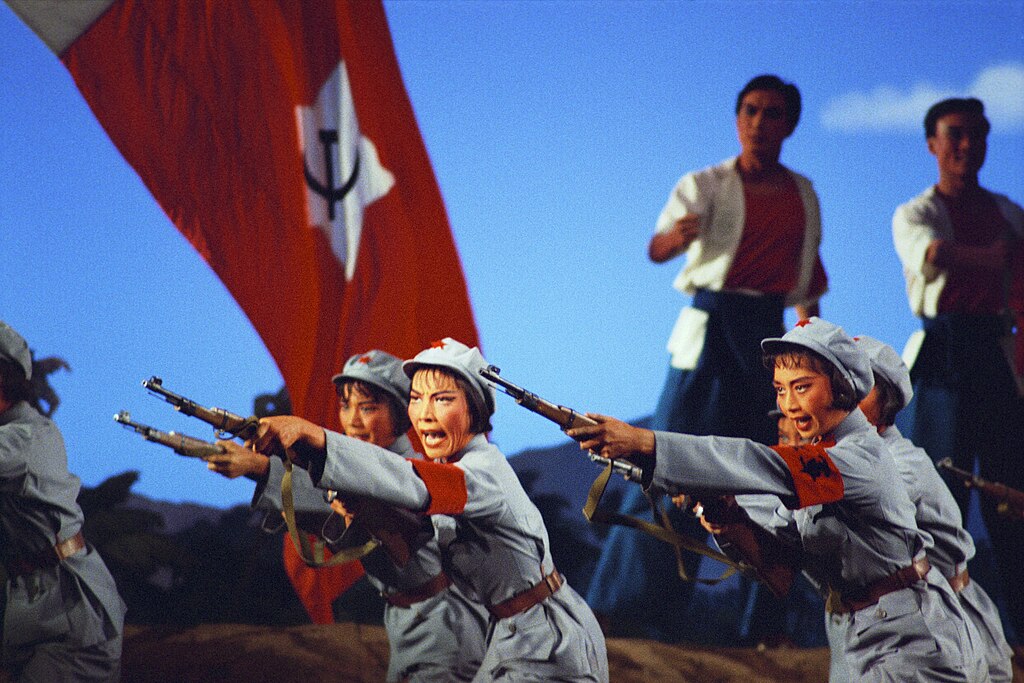
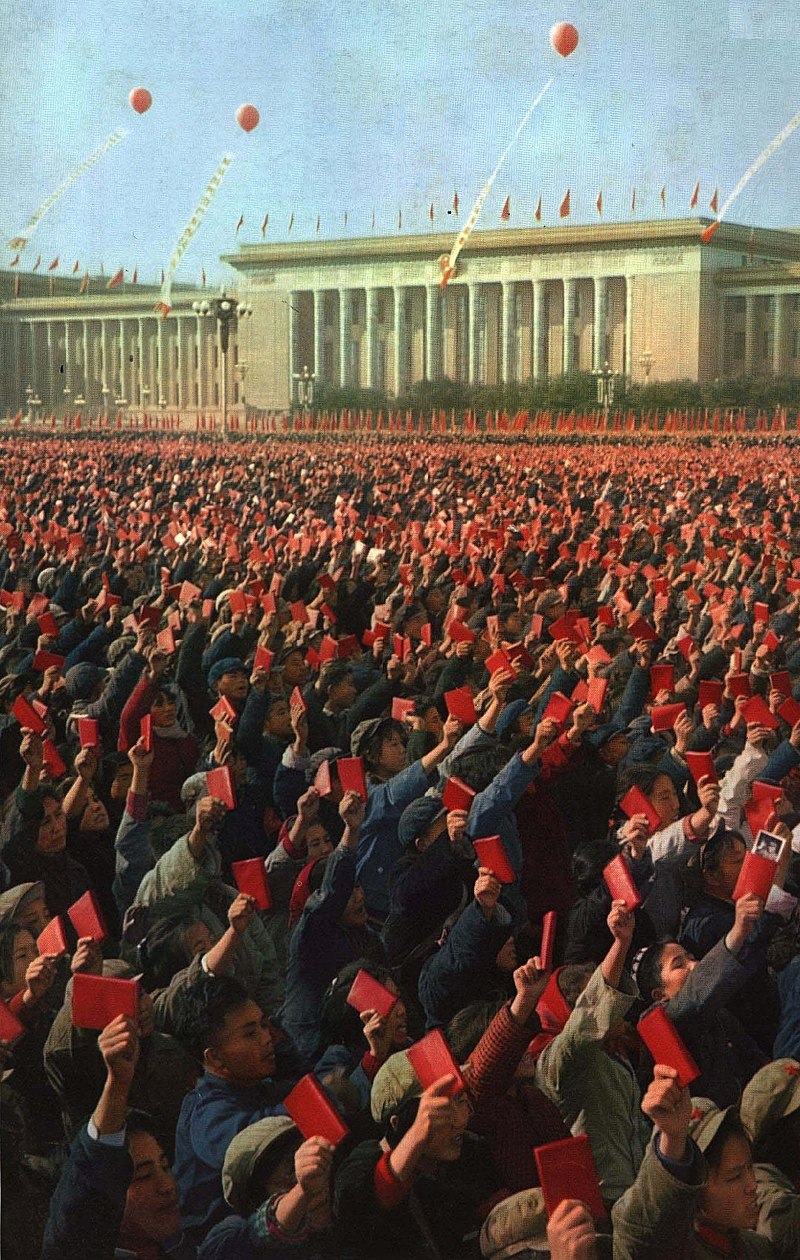
With his authority challenged, Mao launched the Cultural Revolution in 1966. He was encouraged and supported in this by his wife, Jiang Qing. His aim was to get rid of what he called "impure" elements in society. The actual work of the Cultural Revolution was done by groups of young people called Red Guards. Schools and universities were shut down, and the teachers, lecturers and other educated people were forced to go to rural areas for "re-education", doing hard labour in the fields. The policy caused widespread chaos, and brought the Chinese economy to a standstill. Probably at least a million people died during this period as the Red Guards' activities became increasingly violent.
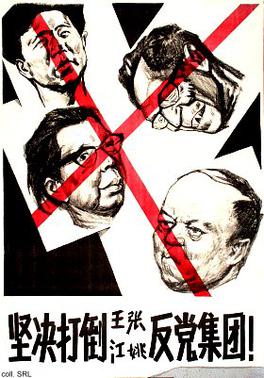
A political group known, as the Gang of Four, became powerful in the Chinese Communist Party through the later stages of the Cultural Revolution, and were possibly involved in key decision-making. Among the four was Mao's wife, Jiang Qing.
After Mao
Mao declared the Cultural Revolution to be over in 1969. As China began slowly to recover, Mao himself became increasingly old and frail. He died on 9th September 1976. Almost immediately, the Gang of Four were arrested. Held to be responsible for the excesses and failures in the Cultural Revolution (although Mao himself would probably have made at least some of the key decisions), they were charged with a series of treasonous crimes. Convicted at their trial in 1981, they were sentenced to death, a verdict later changed to life imprisonment.
Deng Xiaoping
In December 1978, Deng Xiaoping became the "Paramount Leader" of China (although he was head of neither the party nor the state). Deng and his allies began to loosen control over their personal lives of Chinese citizens. They began to introduce economic reforms, adopting a plan called the Four Modernizations (referring to agriculture, industry, science and technology), which allowed some private ownership of land and businesses.

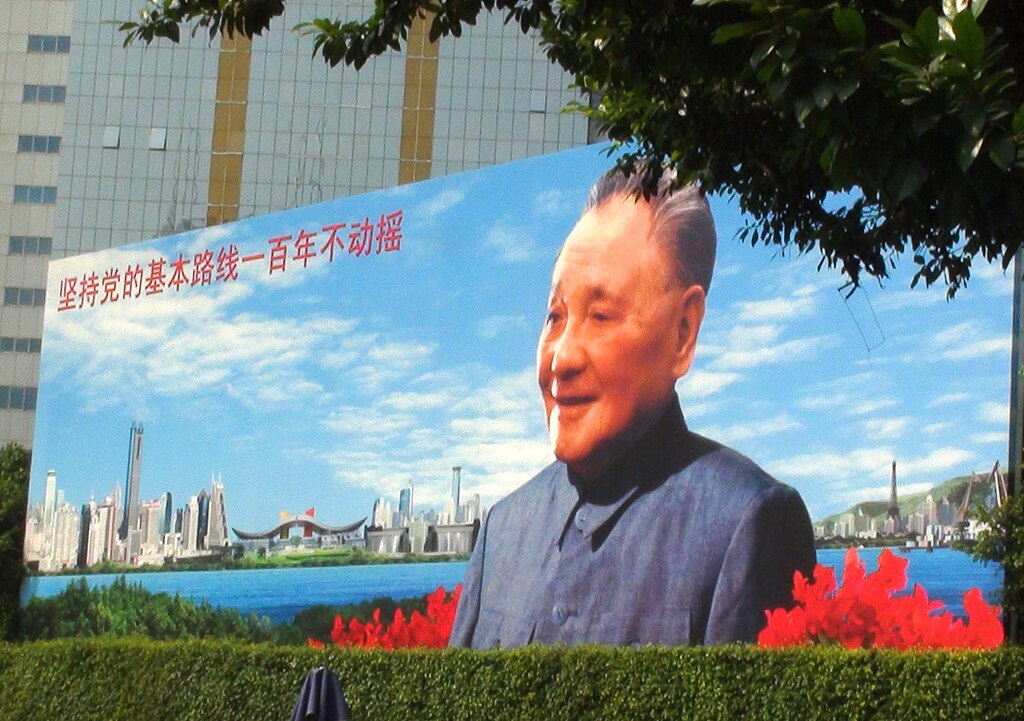
One of Deng's first acts was to introduce the Open Door Policy, permitting foreign businesses that wanted to set up in China to do so. He also created a series of Special Economic Zones for foreign investment. Places such as Shenzhen, Zhuhai and Xiamen soon became engines of rapid growth for the Chinese economy.
One Child Policy
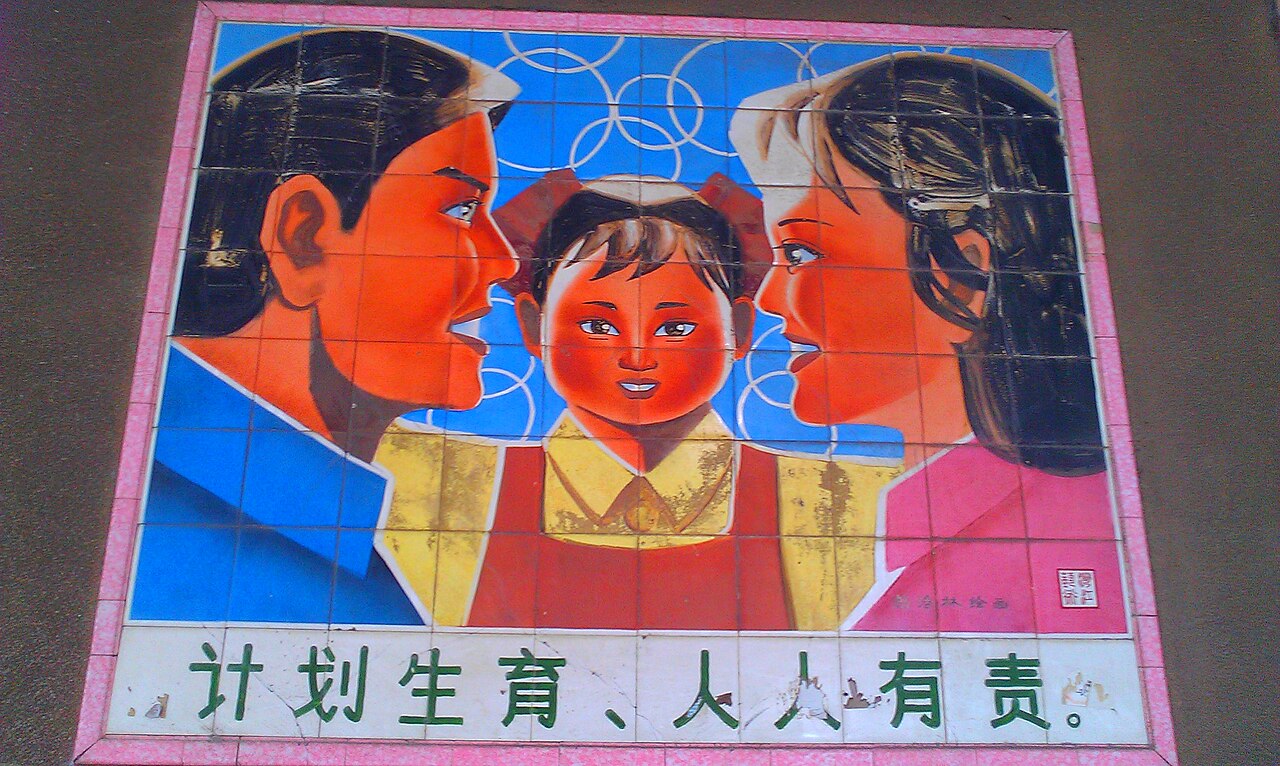
In 1979 the Chinese government introduced its One Child Policy as an attempt to slow its rapidly increasing population. The policy was detested in rural areas, where children helped with farm work and so where there was strong demand for sons. The policy worked, but by the early 2000s had caused a major demographic imbalance, with too many old retired people supported by too few workers. The policy was replaced by a two-child policy in 2015, which was itself replaced by a three-child policy in May 2021. All limits were removed two months later.
Tiananmen Square
Deng's reforms of the 1970s and 80s led to significant economic growth in China, which largely continues today. There was also, for a short period, greater toleration by the Communist Party of dissent (opposing views). This begain in the 1970s with criticism of the Cultural Revolution, Mao Zedong and the Gang of Four. But by the 1980s the opportunities for greater freedom of expression led many students and educated people to campaign for faster economic and political reforms in China.
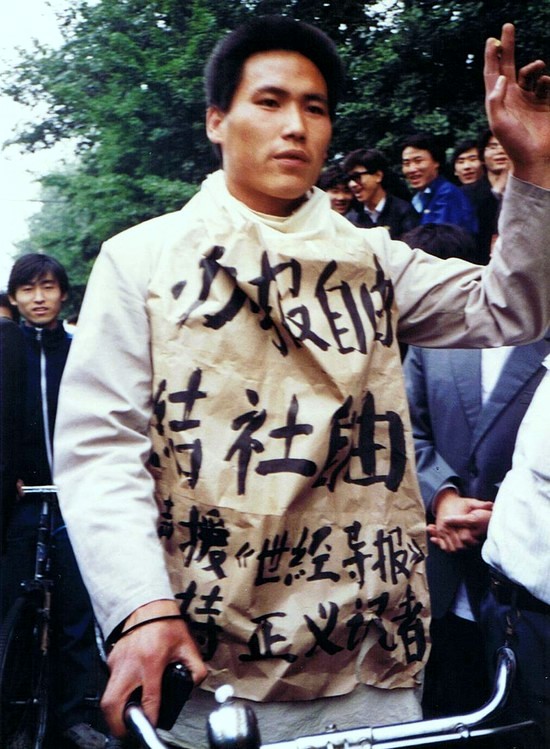

In April 1989, students and other citizens in Beijing camped out at Tiananmen Square to mourn the death of leading reformer Hu Yaobang and to protest against economic hardship and corruption. On 4th June, the Chinese government used armed force to clear demonstrators from the streets, resulting the deaths of probably thousands of demonstrators (no offical numbers are known). The violent suppression of the protests in Tiananmen Square brought worldwide condemnation of the Chinese government.
China's economic miracle

Deng Xiaoping retired after the Tiananmen Square massacre. His policies had opened up the Chinese economy and put into practice a new system that allowed Western-style free market capitalism to flourish under state control. Deng died in 1997, but his policies continued under his chosen successors, Jiang Zemin and Zhu Rongji. They converted many state enterprises into private businesses, reduced trade barriers and regulation, and reformed China's banking system. China became the world's fastest growing major economy. It even overtook the United States as the world's largest economy by one measure, GDP (PPP), in 2016.
Human rights
For much of China's population, living standards have improved a great deal (although less so in rural areas), but political controls remained tight. Human rights in China are considered poor by international bodies. Freedom of the press, independent judges, workers' rights and religious freedoms are all absent.
Abuses also include the treatment of Tibetan Buddhists and Uyghur Muslims. Reports emerged in 2017 that internment camps had been established in Xinjiang Uyghur Autonomous Region, western China, where around a million Muslim people were being forcibly "re-educated". In March 2020, the Chinese government was found to be using Uyghurs for forced labour.

pics
Without in any way limiting Q-files Ltd’s exclusive rights under copyright, any use of this publication to “train” generative artificial intelligence (AI) technologies to generate text is expressly prohibited. Q-files Ltd reserves all rights to license use of this work for generative AI training and development of machine learning language models.