
Government

CITE
We have made every effort to follow citation style rules, but there may be some minor differences. If in doubt, please refer to the appropriate citation style manual.
Human rights. (2026). In Q-files Encyclopedia, Geography, Government. Retrieved from
https://www.q-files.com/geography/government/human-rights
"Human rights." Geography, Government, Q-files Encyclopedia, 27 Jul. 2026.
https://www.q-files.com/geography/government/human-rights.
Accessed 13 Sep. 2026.
Human rights 2026. Geography, Government. Retrieved 13 September 2026, from
https://www.q-files.com/geography/government/human-rights
Geography, Government, s.v. "Human rights," accessed September 13, 2026.
https://www.q-files.com/geography/government/human-rights


Human rights
Every person in the world has basic freedoms and rights. These were agreed upon by the countries of the United Nations in 1948 when they drew up the Universal Declaration of Human Rights: 30 human rights which belong to everybody, regardless of race, gender, religion, nationality or status. They were decided based on values that everyone in the world shares, such as fairness, independence and dignity. No one can ever take our human rights away from us, but they can sometimes be limited or restricted, for example, if there is a risk to national security, or if our behaviour threatens someone else’s human rights. Some human rights can never be limited in any circumstances, such as the right not to be made a slave. These are known as “absolute rights”.
13th May 2026


Universal Declaration
of Human Rights
An agreement on our human rights is important so that a country’s government knows the basic standard for how to treat its citizens. The 1948 Universal Declaration of Human Rights allows us to hold people, companies or governments to account when they do not respect our rights. The Declaration is not a legally binding document—not officially law—but many countries use it as a template, and some have protected the rights by law. They include the UK (Human Rights Act 1998), Germany (Basic Law), Canada (Canadian Human Rights Act), Sweden, Australia and Switzerland. As well as making it illegal to breach (disrespect) our human rights, this means that when the government creates a new law they must make sure it follows them.
A total of 30 human rights are listed as articles in the Declaration. The first two articles state that everybody has the right to be treated equally (Article 1), and explain that the rights apply to everybody, regardless of race, gender, language, political or religious beliefs (Article 2).
Safety
Some rights protect our safety and health, such as article 14, the right to seek asylum in another country if we are being persecuted in our own.
Under article 25, everybody has the right to an adequate standard of living, which means access to food and water, clothing, housing and support if we lose our jobs, fall ill or become disabled.

Employment

Some human rights protect our work. Article 23 sets out everyone’s right to work, to choose what we do for employment and to receive fair pay for our work. Article 24 protects our right to have a limit on our working hours and to have enough time to rest and take time off for holidays.

Education
Article 26 protects the right to education for everybody, and says that the first years of education should be compulsory and free. In 2012, a schoolgirl named Malala Yousafzai defended hers and other girls’ right to an education when the Taliban banned girls from attending school in her part of Pakistan. The Taliban’s actions violated (went against) their universal right to an education, and the right to have their human rights protected regardless of gender.
Wellbeing
Our human rights entitle everybody to get married and have a family if they would like to (Article 16). Another human right is to have a private life—to be able to live freely without governments or others interfering with our privacy, our families, and our homes (Article 12). This right also protects our communications, such as messages and letters we send and phone calls we make to one another.
Article 17 gives us the right to own belongings, and says that nobody can take them away from us without good reason. Article 27 sets out the right to take part in the cultural life of our communities, which means we all have the right to enjoy the arts, learn about advances in science, and to contribute to them.

Freedom


Many of our human rights protect our freedom—either freedom of movement, or freedom of thought and expression. Everyone has the right to a nationality: to belong to a country (Article 15) as well as to move around freely within it; and to enter and leave their country freely if they wish (Article 13). Being free to change our nationality is a human right, too.
Our rights allow us the freedom to have religious beliefs, or not to have any religion at all (Article 18). We are entitled to freedom of opinion, too (Article 19), which means that we are free to have an opinion and to express it. But we are responsible for not harming others when we express our opinion. In many countries, hate speech, including racism, sexism and religious prejudice, is a crime.
Politics
Our rights give us protection when we take part in politics, and give us a say in the way our countries are governed. Article 20 protects our right to gather peacefully, for example to discuss our political beliefs with others. Article 21 gives us the right to participate in government, such as by voting or standing as a candidate for election. It also says that elections must be free and fair, without anyone trying to corrupt them by changing the result.


Justice
If we are accused of a crime or brought to justice, our human rights exist to make sure we are treated fairly. Article 6 says that everyone, everywhere, has the right to be protected by the law wherever they go, and Article 7 recognizes that the law applies equally to everyone, regardless of race, gender, social status or anything else. If our rights are violated (disrespected), Article 8 protects the right to have our case listened to by skilled judges who can find a solution.
Article 9 says that we should not be arrested, imprisoned or exiled (sent out of our home country as a punishment) without good reason. If we are accused of breaking the law we have the right, under Article 10, to have a fair trial held in public, and the right to be considered innocent until we are proven guilty (Article 11).
Citizens of the world

Article 28 ensures our right to live in a country, and a world (the international community) that ensures that all our human rights can be met. Article 29 explains that we all have to act in a responsible way to make sure we respect other people’s human rights and do not unfairly interfere with them by our actions. The final human right, Article 30, protects all the other rights by saying that no one, and nothing, can take our rights away.
Limiting human rights
If a person’s actions break the law, or threaten the security or rights of others, some of their human rights might be limited. This means a limit will be placed on how far they apply and they may be temporarily overruled. The courts can decide who can exercise their right in these cases. For example, sometimes the right to a private life is limited when the police search a person’s phone because they suspect them of planning a crime. In this situation, the community’s rights to safety are judged to be more important than the individual’s right to a private life.


Everyone has the right to express their opinions freely under Article 19. But this right can be limited if by doing so a person creates violence (such as a speech calling for hatred and violence at a protest), because it conflicts with other people’s right to live in a peaceful society where their rights are protected and they are not persecuted.
Some rights can only be limited under certain circumstances. These are known as qualified rights, and they can be limited if they interfere with other people’s rights or national security. They include Article 12, the right to have a family life in private. Because this is a qualified right, courts may question people about their private lives during a trial if necessary and expect them to answer truthfully.
Absolute rights
Not all human rights can be limited. Some are known as absolute human rights, and they must never be taken away for any reason. They are:
• Article 3, the right to life
• Article 4, the right not to be made a slave
• Article 5, the right not to be tortured or to be treated in a degrading (humiliating) way
• Article 10, the right to a fair and public trial
The right to life is also the right to be protected if an authority (such as a school or prison) is responsible for us and our lives are at risk.


Breaching human rights
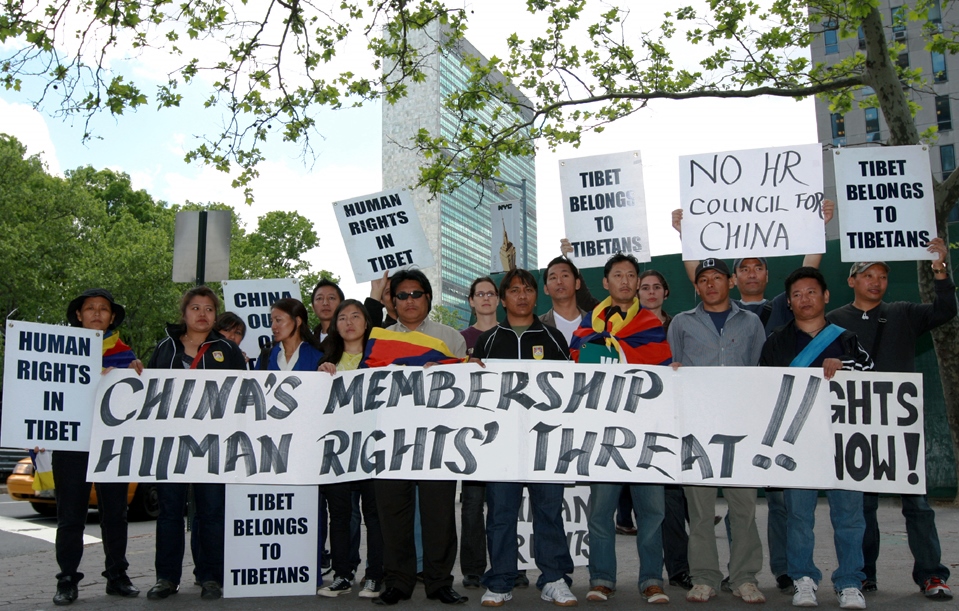
Our human rights are meant to protect us wherever we go. But in some countries, they are disrespected and ignored. When governments fail to prevent famine and starvation, they are violating Article 3, the right to life. Some governments ban certain languages from being used in public life, making it impossible for their speakers to take part in cultural life (Article 27). When a country is suspected of breaching human rights, the United Nations launches an investigation to examine the evidence. Its member states come up with a resolution, usually a call for the country to change its actions and address the issue. It is not legally binding but the country’s international reputation is at stake.
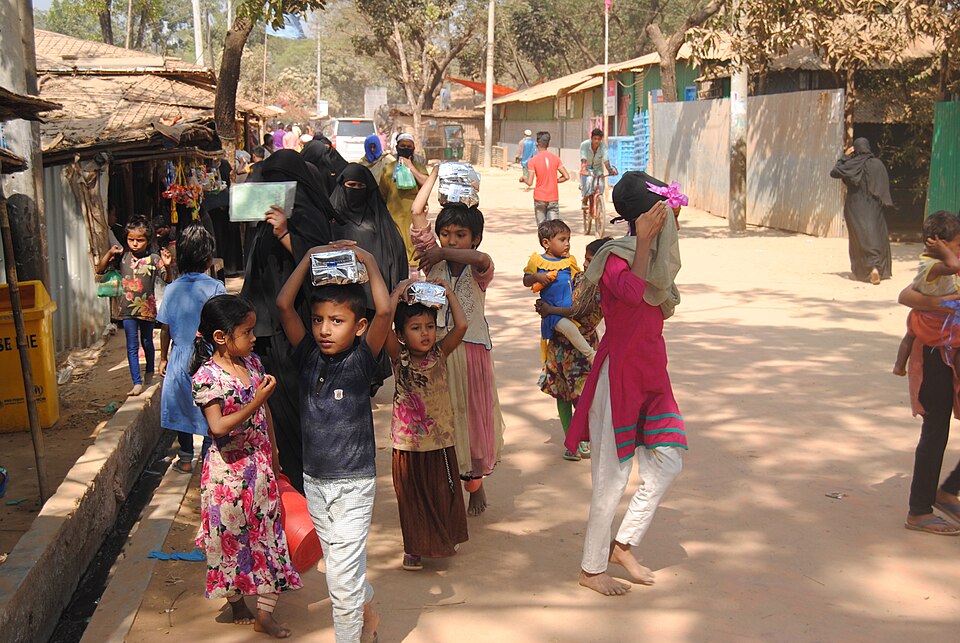
In Myanmar in 2017, a violent attack by the military on the country’s Rohingya people caused 1 million persecuted Rohingya to flee to Bangladesh, where they live today as refugees. The United Nations investigated the report that Myanmar’s military seriously breached the Rohingya’s human rights by denying them citizenship and refusing to treat them equally under the law. A resolution calling for Myanmar to protect these people’s human rights was signed by 134 countries.

History
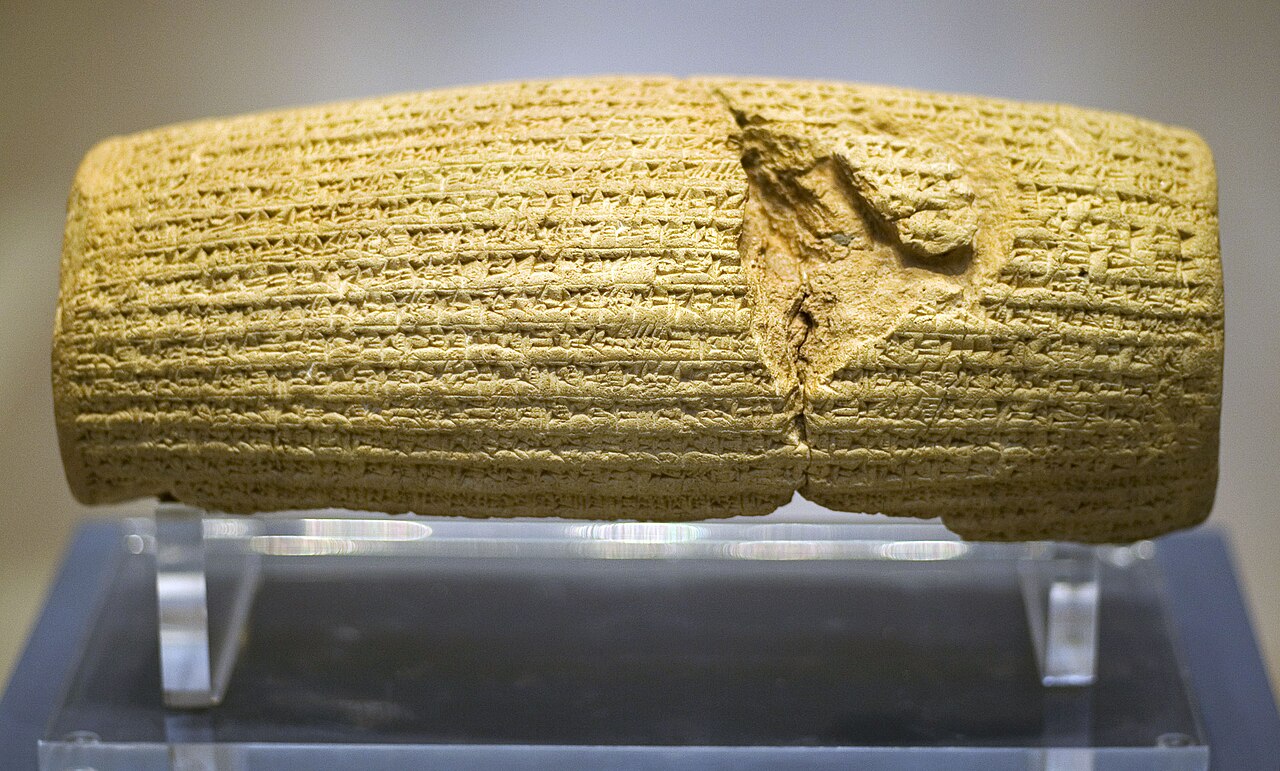
In 539 the Persian emperor Cyrus the Great (c. 600–530 BC) conquered the city of Babylon. He drew up a list of rights that all the people of the city were to share, including freedom from slavery. He declared that everyone was equal regardless of race, and that everyone was free to choose their own religion. The Cyrus Cylinder, on which the text setting out Cyrus's policies is inscribed, is said to be the first declaration of human rights in history.
In 1215, the Magna Carta, a document that set out laws and rights for everyone in his kingdom, was signed by King John of England. Parts of it still exist today in the Universal Declaration of Human Rights. The Magna Carta made everyone equal before the law. It stated that “no free man must be imprisoned or punished in any way unless he has been judged by his equals or by the laws of this country”. This stands today as articles 9 and 10 of the Universal Declaration of Human Rights, which state that no one can be unlawfully arrested and imprisoned, and everyone is entitled to a fair and public trial.


The next big development in human rights came in 1689, when the English Bill of Rights included the right not to be subjected to “cruel and unusual punishment”, as well as the right to freedom of speech. A century later, the Declaration of the Rights of Man and of the Citizen, a document from the French Revolution, was published (1789). Its list of 17 human rights, which make all citizens equal before the law, have influenced democracies everywhere.
After millions of people were tortured and murdered in the Holocaust during World War II, countries all over the world agreed that they needed to make sure it could never be allowed to happen again. The countries of the newly-formed United Nations (UN) drew up a list protecting the basic rights and freedoms of all human beings. More than 50 countries worked together for two years to agree on the rights. They were led by Eleanor Roosevelt, who presented the Declaration to the world in 1948. Since then, the laws have been expanded, including adding specific rights for women, children and disabled people. From 2006 onwards, the United Nations’ Human Rights Council reviews each of its 192 member states every four years, to check they are addressing and improving human rights issues.


European Convention
on Human Rights
The European Convention on Human Rights (ECHR) is an international treaty which came into force in 1953. All member states of the Council of Europe (a separate institution to the European Union) are parties to the Convention. Inspired by the Universal Declaration of Human Rights, the ECHR is designed to protect human rights and political freedoms throughout Europe. It does so through an international court, the European Court of Human Rights in Strasbourg, France. The court's judgments are legally binding on the parties.
Anyone who believes their rights under the Convention have been violated by a member state can bring a case before the court.

pics


Without in any way limiting Q-files Ltd’s exclusive rights under copyright, any use of this publication to “train” generative artificial intelligence (AI) technologies to generate text is expressly prohibited. Q-files Ltd reserves all rights to license use of this work for generative AI training and development of machine learning language models.