
Famous women

CITE
We have made every effort to follow citation style rules, but there may be some minor differences. If in doubt, please refer to the appropriate citation style manual.
Wangari Maathai. (2026). In Q-files Encyclopedia, History, Famous women. Retrieved from
https://www.q-files.com/history/famous-women/wangari-maathai
"Wangari Maathai." History, Famous women, Q-files Encyclopedia, 15 May. 2026.
https://www.q-files.com/history/famous-women/wangari-maathai.
Accessed 21 Sep. 2026.
Wangari Maathai 2026. History, Famous women. Retrieved 21 September 2026, from
https://www.q-files.com/history/famous-women/wangari-maathai
History, Famous women, s.v. "Wangari Maathai," accessed September 21, 2026.
https://www.q-files.com/history/famous-women/wangari-maathai


Wangari Maathai
Wangari Maathai (1940–2011) was a Kenyan environmental and political campaigner. She became the first woman in East and Central Africa to gain a doctorate, receiving a PhD from the University of Nairobi in 1971. Through her Green Belt Movement, which she founded in 1977, she encouraged women’s groups to plant millions of trees across Kenya. She was elected to Kenya's National Assembly in 2002 and won the Nobel Peace Prize in 2004 for her “contribution to sustainable development that embraces democracy, human rights and women's rights in particular."

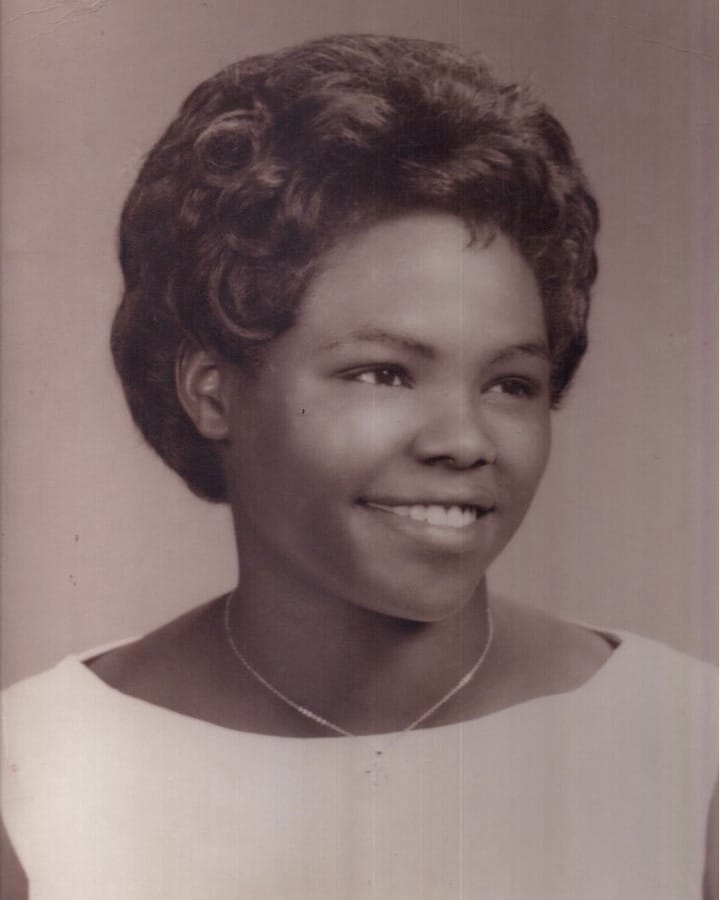
Early life
Wangari Maathai was born Wangari Muta in 1940 in the village of Ihithe, Nyeri District, in the central highlands of Kenya, then part of British East Africa. Her family was Kikuyu, the most populous ethnic group in Kenya. Around 1943, Wangari's family moved to a white-owned farm in the Great Rift Valley near Nakuru. At the age of 8, she returned to Ihithe to go to school, later moving to St Cecilia's boarding school in Nyeri. A bright student, Wangari became one of some 300 Kenyans selected to study in the United States in September 1960. After receiving a Bachelor of Science degree in 1964, she studied at the University of Pittsburgh for a master's degree in biology. Returning to Kenya in 1966, she got a job as a research assistant at the University College of Nairobi.
In April 1966, she met Mwangi Mathai, another Kenyan who had studied in America, and married him in May 1969. In 1971, she became the first East African woman to receive a PhD, a doctorate. Hers was in veterinary anatomy. Wangari continued to teach at the University of Nairobi, rising to become associate professor in 1977. By then she had become the mother of three children. She was also beginning her career as a campaigner, working to gain equal benefits for the women working on the staff of the university.
Wangari and her husband separated in 1977 and divorced in 1979. She kept his surname, choosing to add an extra "a" to make it "Maathai".
Campaigner
Through her work at various volunteer associations, Maathai came to realise the root of most of Kenya's problems was the degradation of its environment. Through her Green Belt Movement, which she founded in 1977, she encouraged women’s groups to plant more than 20 million trees across Kenya. In 1980, she was elected chair of the National Council of Women of Kenya (NCWK), a body to which many women's organizations across Kenya belonged. She served as chair until 1987.


An outspoken critic of Daniel arap Moi, Kenya's president from 1978 to 2002, Maathai campaigned on a range of issues and was arrested many times. In 1989, she staged a protest in Nairobi's Uhuru Park to prevent the construction of a skyscraper. Her actions helped cause the project to be dropped. The place in where she demonstrated came to be known as "Freedom Corner." The following year, Maathai was beaten and injured by police at another protest in which she called for the release of political prisoners.
Nobel prize
At a time when elections in Kenya were not regarded as free and fair (until 1992, Kenya was a one-party state) Maathai campaigned for fair elections in Kenya and strove to unite opposition parties in order to feat the ruling party. After several failed attempts, in 2002 Maathai was finally elected as member of the parliament of Kenya. She ran as a candidate of the National Rainbow Coalition and won her constituency with 98% of the vote. Between January 2003 and November 2005 she served as the assistant minister for environment and natural resources in the government of President Mwai Kibaki. In 2004 Wangari Maathai became the first black African woman to win the Nobel Peace Prize, for her “contribution to sustainable development, democracy and peace”.


Last years
Maathai continued to support environmental causes, spearheading the United Nations Billion Tree Campaign in 2006. She also supported women's causes, becoming one of the founders of the Nobel Women's Initiative, along with five Nobel prizewinning women from other continents, whose goal was to help strengthen work being done in support of women's rights around the world.
Wangari Maathai died on 25th September 2011 of complications arising from ovarian cancer while receiving treatment at a Nairobi hospital.

pics
Without in any way limiting Q-files Ltd’s exclusive rights under copyright, any use of this publication to “train” generative artificial intelligence (AI) technologies to generate text is expressly prohibited. Q-files Ltd reserves all rights to license use of this work for generative AI training and development of machine learning language models.