
Famous women

CITE
We have made every effort to follow citation style rules, but there may be some minor differences. If in doubt, please refer to the appropriate citation style manual.
Frida Kahlo. (2025). In Q-files Encyclopedia, History, Famous women. Retrieved from
https://www.q-files.com/history/famous-women/frida-kahlo
"Frida Kahlo." History, Famous women, Q-files Encyclopedia, 26 Aug. 2025.
https://www.q-files.com/history/famous-women/frida-kahlo.
Accessed 6 Aug. 2026.
Frida Kahlo 2025. History, Famous women. Retrieved 6 August 2026, from
https://www.q-files.com/history/famous-women/frida-kahlo
History, Famous women, s.v. "Frida Kahlo," accessed August 6, 2026.
https://www.q-files.com/history/famous-women/frida-kahlo


Frida Kahlo
Frida Kahlo (1907–54) was a Mexican artist, best known for her self-portraits and works inspired by themes from Mexican history and popular culture. She began painting after she was severely injured in a bus accident. She later became politically active and married fellow Communist, mural artist Diego Rivera, in 1929. Duroing her lifetime, her paintings, many of which reflect her experience of constant pain and emotional turmoil, were exhibited in the US, Paris and Mexico. Through her life and work, Frida Kahlo inspired all women to follow their dreams and to have the courage to speak about the difficulties they face in their lives.

Early life
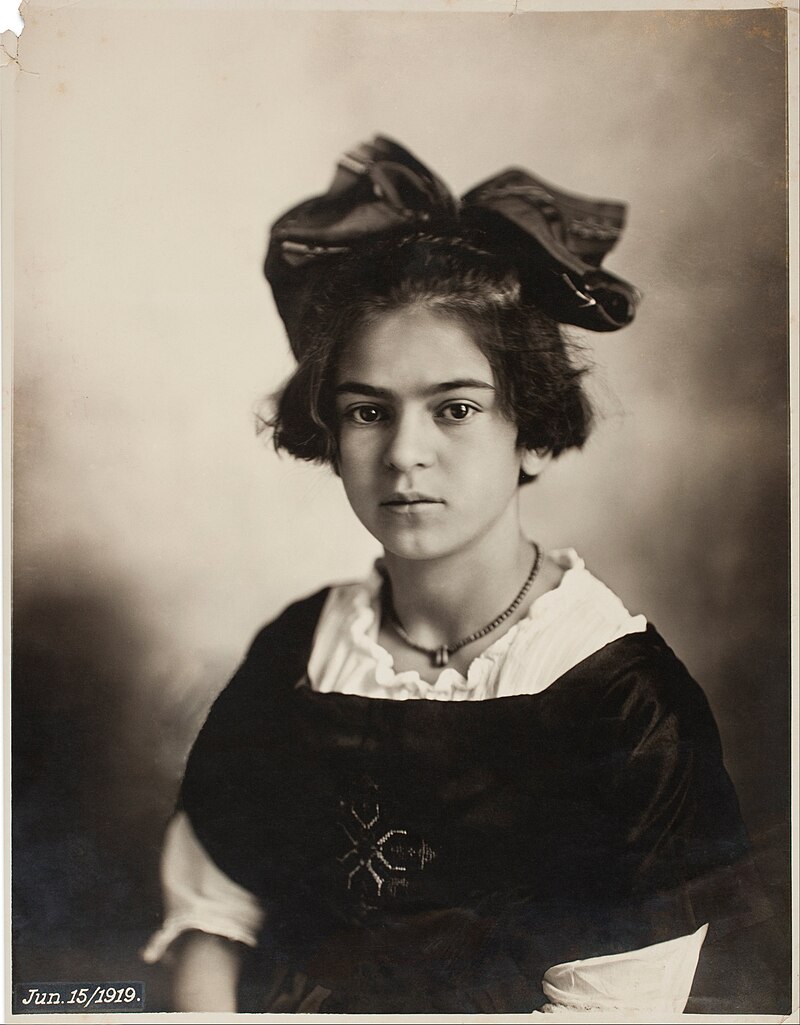
Frida Kahlo was born Magdalena Carmen Frieda Kahlo y Calderón on 6th July 1907, in Coyoacán, a village on the outskirts of Mexico City. Her father, Guillermo (originally Wilhelm), was a photographer who had migrated from Germany to Mexico in 1891. Her mother Matilde was born in Oaxaca to an indigenous father and a mother of Spanish descent. Frida had two older sisters, Matilde and Adriana, and a younger sister, Cristina.
When she was six years old, Frida contracted polio, which caused her to be bedridden for nine months. It made her right leg grow shorter and thinner than her left, giving her a limp. Her father, to whom she was especially close, taught her about literature and nature, and encouraged her to play sports to regain her strength. He also taught her photography.
Accident
In 1922, Frida enrolled at the National Preparatory School, studying natural sciences with the aim of becoming a doctor. Already politically active, she formed an informal group with nine other students called the Cachuchas; they were rebellious and against everything conservative. She began a relationship with the leader of the group, Alejandro Gomez Arias, who became her first love.
On 17th September 1925, Frida and Alejandro were travelling together on a bus when it collided with an oncoming trolley bus. Several passengers were killed in the accident. Frida was impaled by a steel handrail, which went through her pelvis. She later described the injury as "the way a sword pierces a bull". She suffered many other serious injuries, too, including fractures to her spine, leg and collar bone. Frida spent a month in hospital and two months recovering at home.


The accident ended her dreams of becoming a doctor and caused her pain and illness for the rest of her life. But her artistic talent now came to the fore. Confined to bed, Frida began to paint using a specially-made easel. She had a mirror placed above the easel, enabling her to paint herself. Most of her paintings were self-portraits, but she also made paintings of her sisters and her schoolfriends.

Marriage
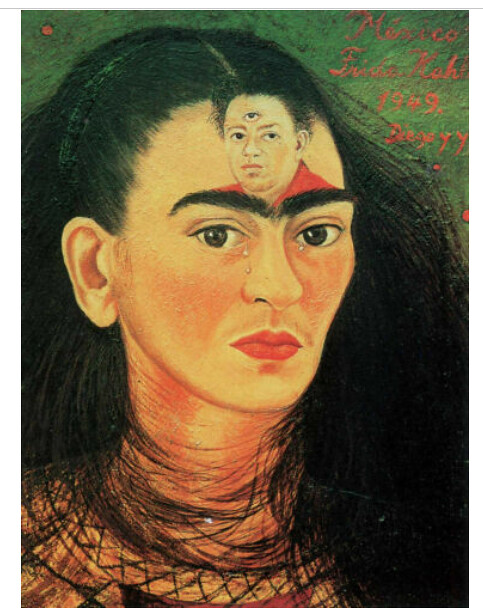
In June 1928, Frida Kahlo was introduced to Diego Rivera, a famous painter of murals (large wall paintings), who was 21 years her senior. She asked him to judge whether she should pursue a career as an artist. Impressed by her works, he encouraged her to do so. The two also began a relationship, marrying in 1929.
During their early years together, Kahlo travelled with Rivera to wherever he received commissions for murals: Cuernavaca in the Mexican state of Morelos, then on to San Francisco, New York and Detroit in the United States.
In these years Kahlo developed her own artistic style, increasingly drawing inspiration from Mexican folk art. Her paintings, which often depicted pain and death, mixed realism with surrealism and included symbols from Aztec mythology.
She began wearing traditional indigenous Mexican peasant clothing herself: long, colourful skirts, elaborate headdresses and jewellery. In San Francisco, she exhibited her works for the first time. While in Detroit, Kahlo had a miscarriage, the first of three she would endure in her life.

Return to Mexico
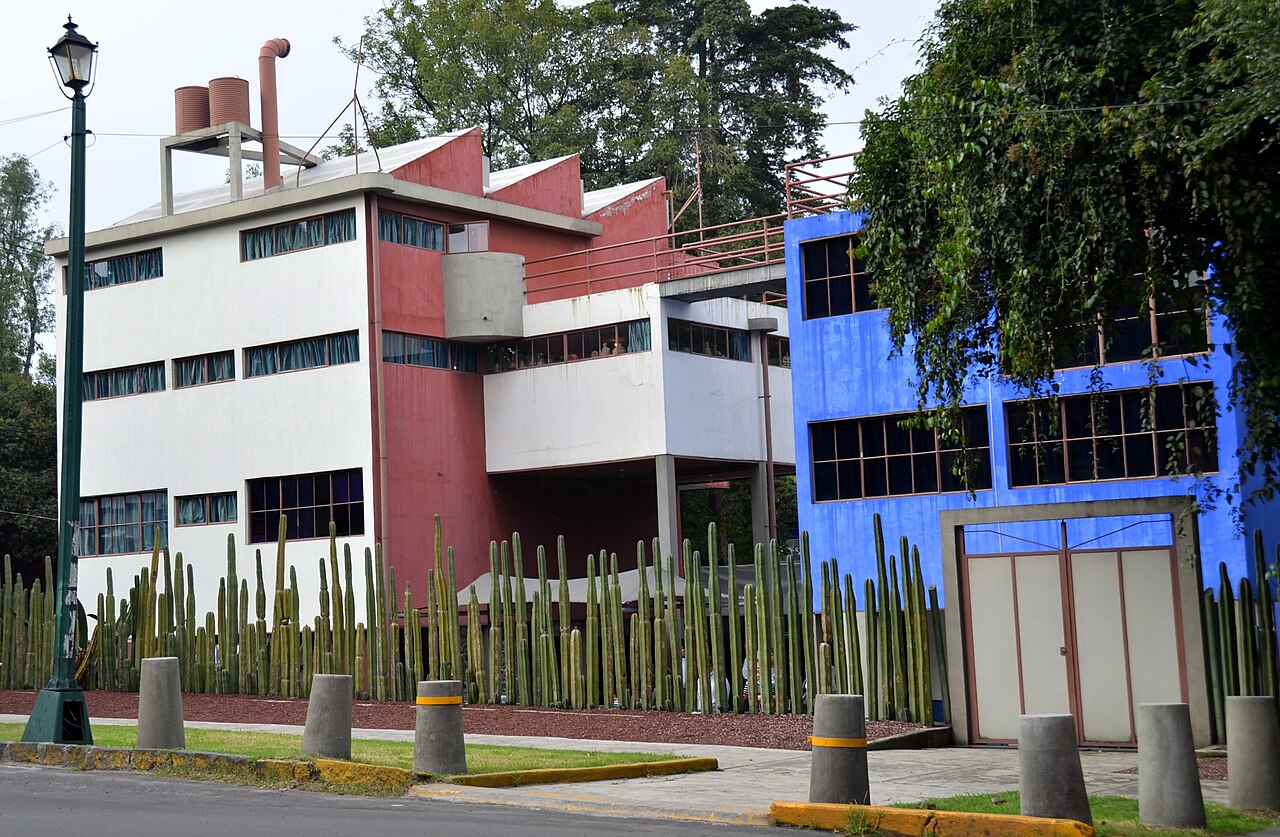
Kahlo and Rivera returned to live in San Ángel, a wealthy neighbourhood in Mexico City, in December 1933. Their new house consisted of two sections joined by a bridge. Kahlo's was painted blue, Rivera's pink and white. It became an important meeting place for artists and political activists from Mexico and abroad.

Kahlo's marriage to Rivera become strained—he had started an affair with her younger sister, Cristina, which caused her great hurt—and, for a time, she moved back to live in her childhood home, La Casa Azul ("The Blue House").
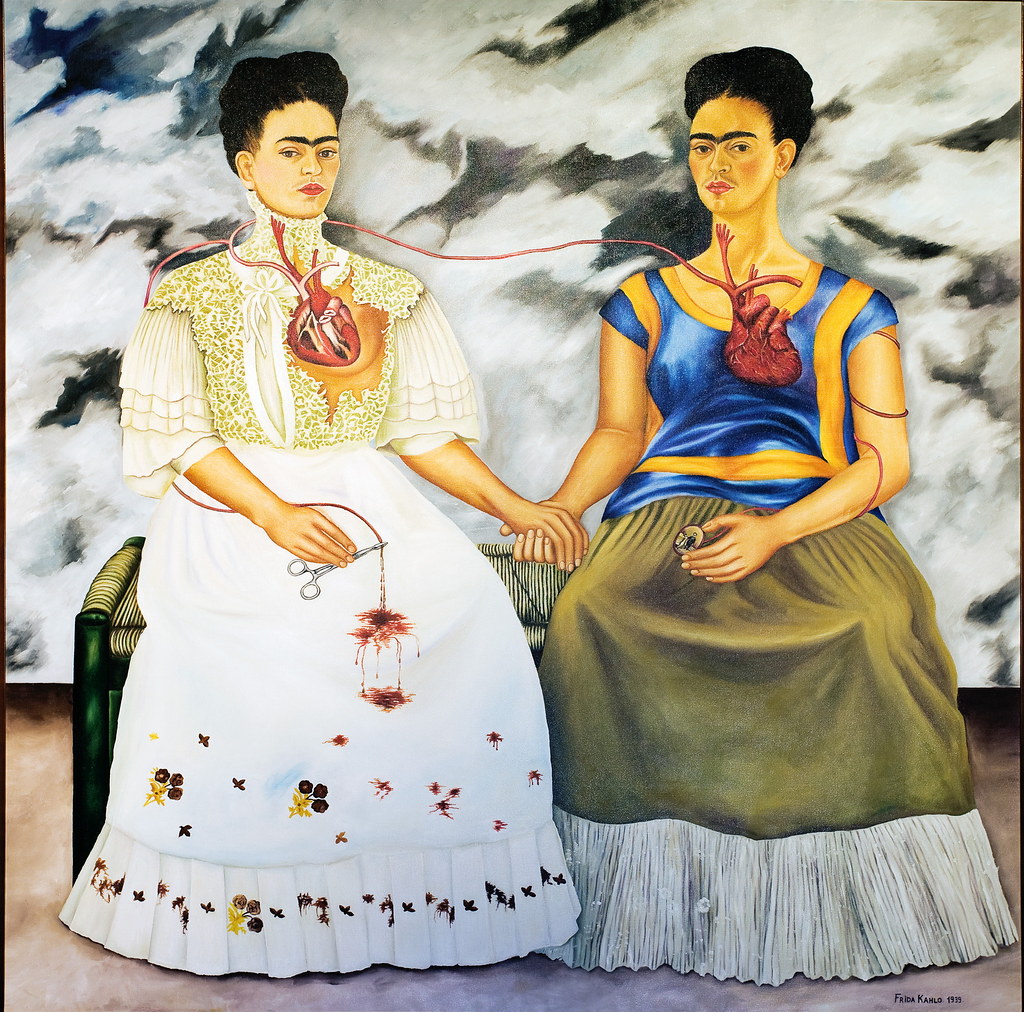
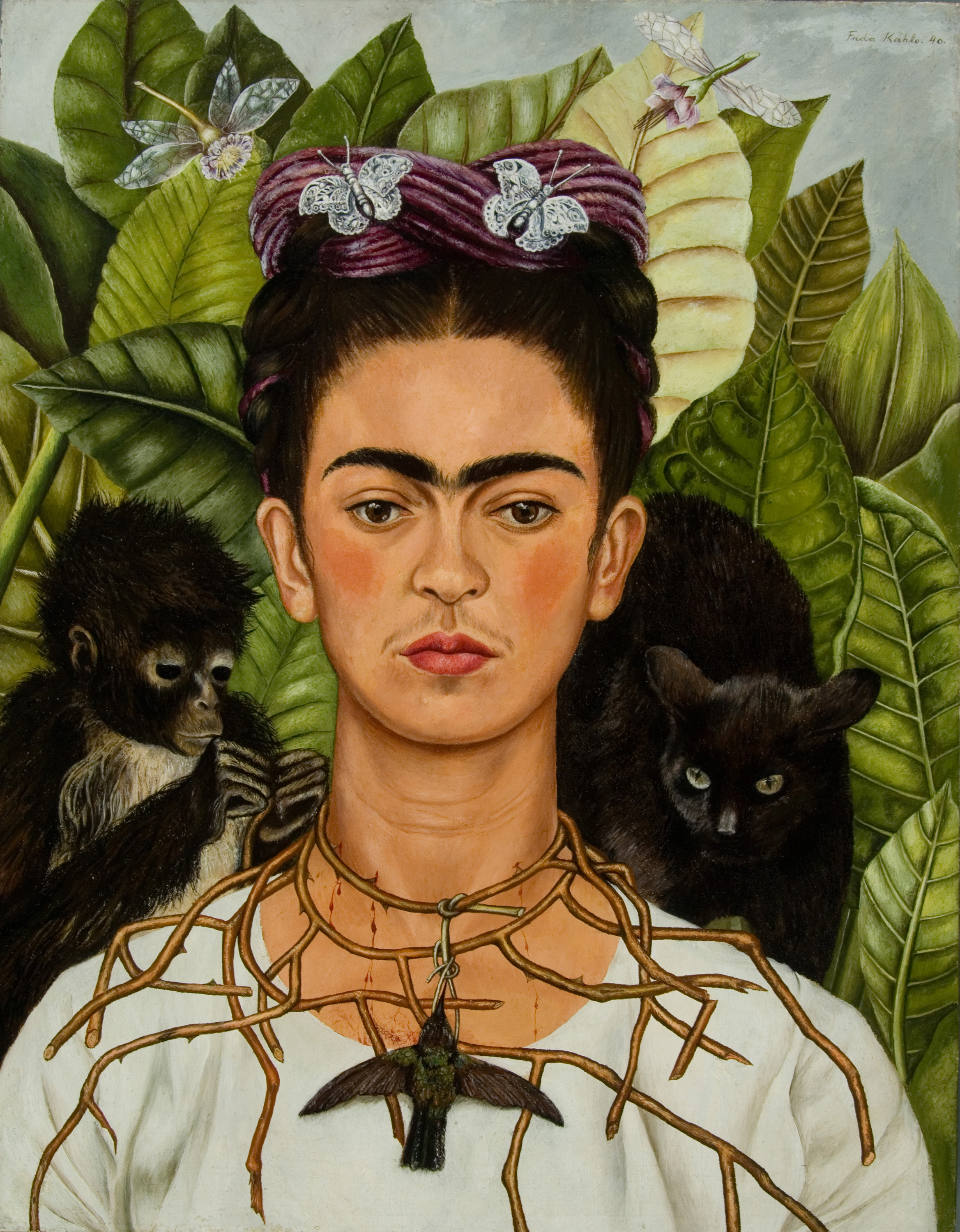
Determined to earn her own living, Kahlo worked hard as an artist, painting several of her most famous works, including The Two Fridas (1939), Self-portrait with Cropped Hair (1940) and Self-Portrait with Thorn Necklace and Hummingbird (1940). Kahlo and Rivera divorced in 1939, but remarried in 1940.
Success as an artist
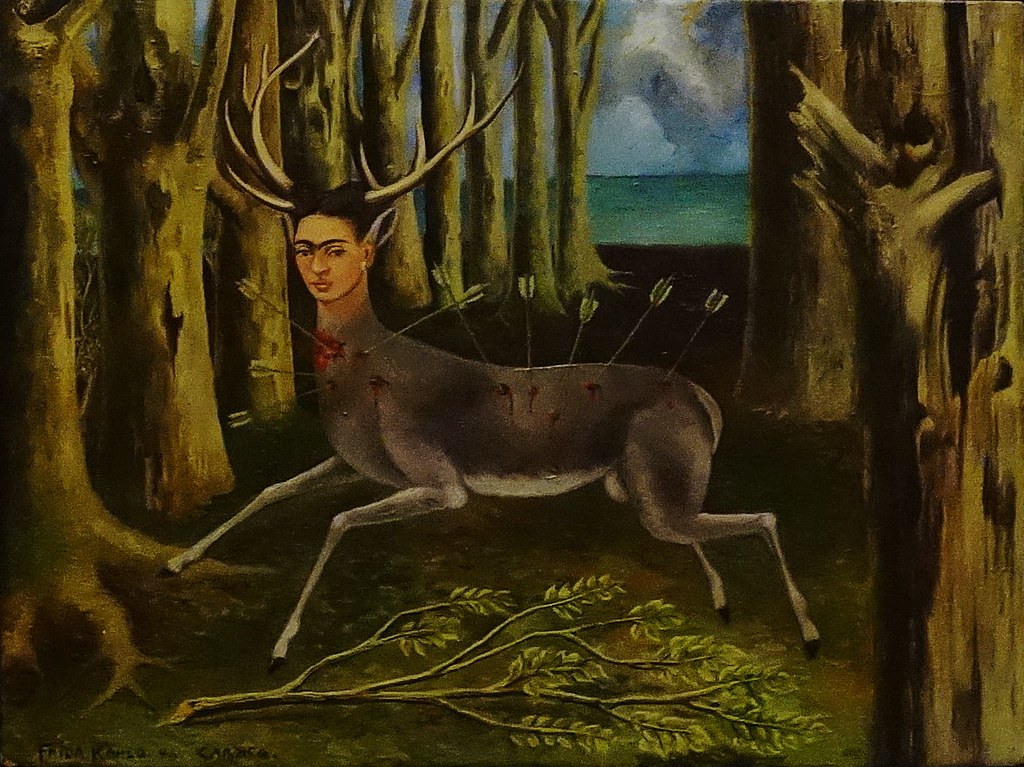
The late 1930s saw Frida Kahlo's work as an artist become internationally recognized. French surrealist André Breton was impressed by her work and, in 1938, arranged for exhibitions in New York and Paris. Despite this, she struggled to make a living from her art. Her health problems also continued throughout the 1940s, increasingly confining her to La Casa Azul. The death of her father in April 1941 plunged her into a depression. Paintings from this period, such as The Broken Column (1944) and The Wounded Deer (1946), reflect her mood and declining health.
Nevertheless, Kahlo's work gradually gained popularity in her home country, where she won acclaim for her painting Moses in 1946. Her first solo exhibition in Mexico was staged at the Galería Arte Contemporaneo in April 1953.
Last years
Kahlo's health issues worsened further after 1950, causing her to spent long periods in hospital. In 1953, part of her right leg was amputated to stop the spread of gangrene. Undaunted, she continued to paint and support political causes: her final public appearance was a demonstration against the US-backed overthrow of the Guatemalan president on 2nd July 1954.
Barely two weeks later, soon after her 47th birthday, Frida Kahlo died at La Casa Azul on 13th July 1954. Her last drawing was of a black angel, accompanied by the words: Espero alegre la salida—y espero no volver jamás ("I joyfully await the exit—and hope never to return").

Years after Frida Kahlo's death, interest in both her art and her life—especially its painful and tragic aspects—grew. By the early 1990s, she had become a recognized figure in art history, a symbol for Mexican national and indigenous traditions and a hero of the feminist movement.
pics
Without in any way limiting Q-files Ltd’s exclusive rights under copyright, any use of this publication to “train” generative artificial intelligence (AI) technologies to generate text is expressly prohibited. Q-files Ltd reserves all rights to license use of this work for generative AI training and development of machine learning language models.