
Famous women

CITE
We have made every effort to follow citation style rules, but there may be some minor differences. If in doubt, please refer to the appropriate citation style manual.
Sojourner Truth. (2025). In Q-files Encyclopedia, History, Famous women. Retrieved from
https://www.q-files.com/history/famous-women/sojourner-truth
"Sojourner Truth." History, Famous women, Q-files Encyclopedia, 26 Aug. 2025.
https://www.q-files.com/history/famous-women/sojourner-truth.
Accessed 6 Aug. 2026.
Sojourner Truth 2025. History, Famous women. Retrieved 6 August 2026, from
https://www.q-files.com/history/famous-women/sojourner-truth
History, Famous women, s.v. "Sojourner Truth," accessed August 6, 2026.
https://www.q-files.com/history/famous-women/sojourner-truth


Sojourner Truth
Sojourner Truth (c. 1797–1883) was an American abolitionist and campaigner for African American civil rights, women's rights and alcohol temperance. She is best known for her speech on racial inequality, "Ain't I a Woman?", delivered without notes or preparation at the Ohio Women's Rights Convention in 1851. Along with Frederick Douglass and Harriet Tubman, she was among those people who had escaped from slavery to rise to prominence as leaders of the abolitionist movement in the mid-19th century United States.
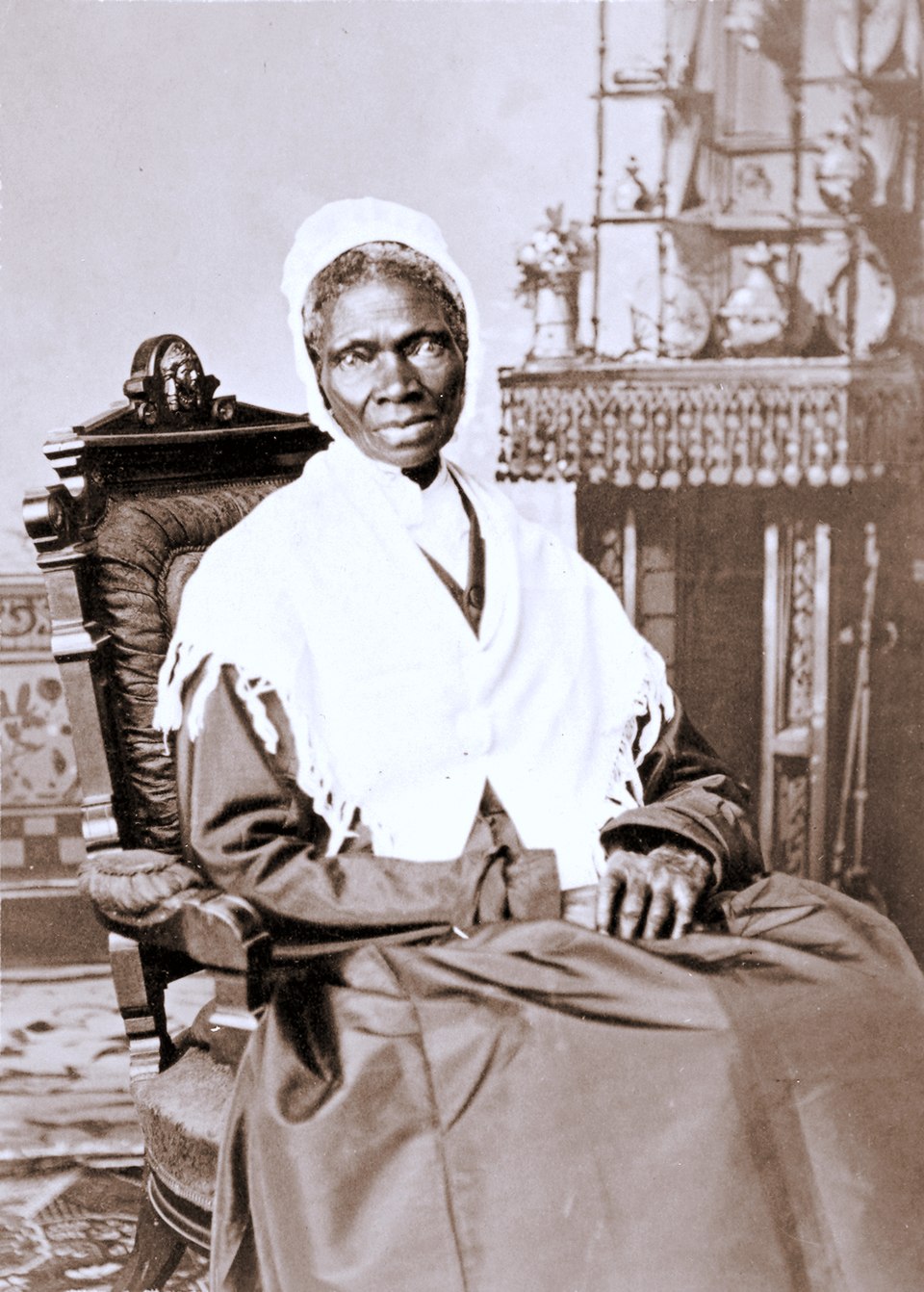
Early life
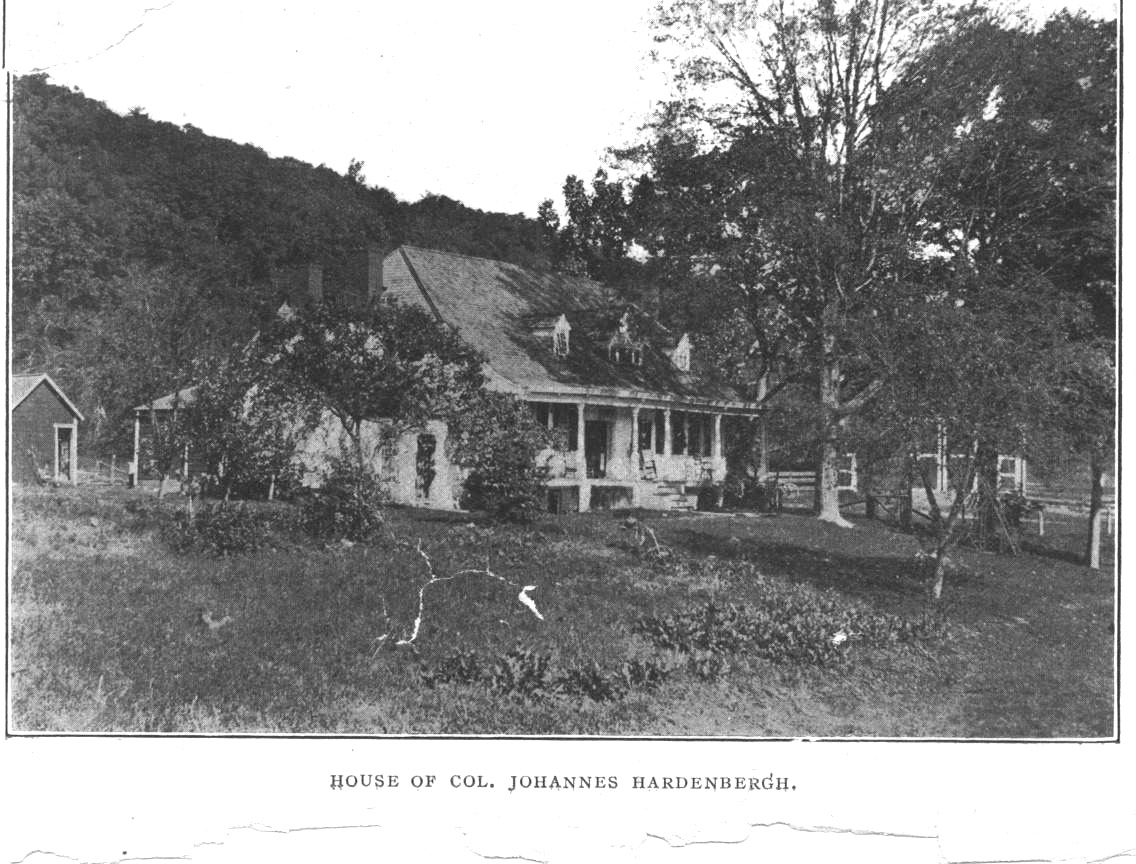
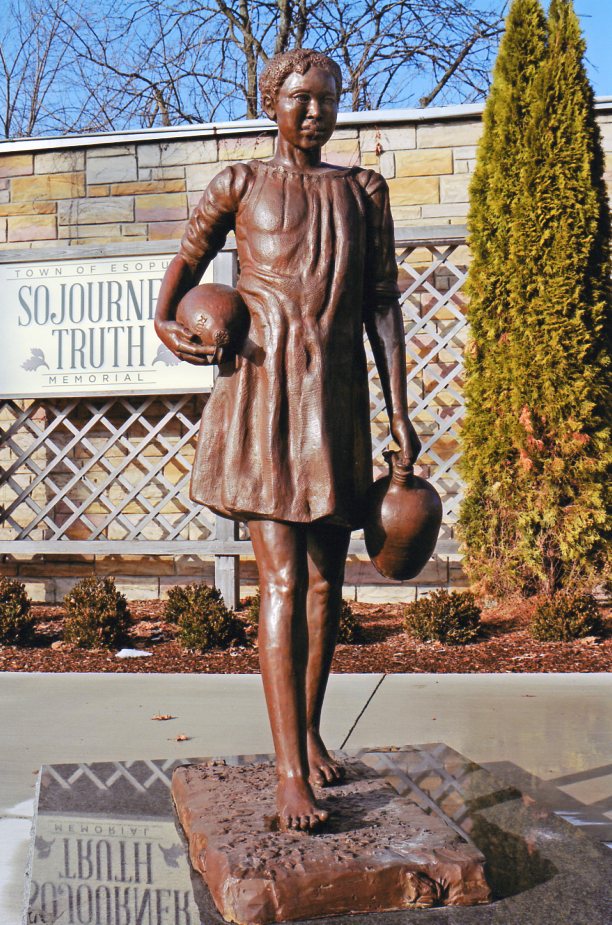
Sojourner Truth was born Isabella Baumfree (or Bomefree) in Dutch-speaking Ulster County, New York, probably in 1797. She was one of 12 children born to James and Elizabeth Baumfree, both enslaved persons owned by Colonel Hardenbergh. As a 9-year-old slave girl, known as Belle at the time, she was sold at an auction with a flock of sheep for $100. Her new owner was a man named John Neely, who subjected her to harsh physical labour and violent punishments.
Belle would be sold twice more, the second time to John Dumont of West Park, New York, in whose ownership she learned to speak English for the first time. In her teens, she had a daughter with an enslaved man from a neighbouring farm named Robert. Forbidden to remain with him, she was forced to marry another, older enslaved man instead, with whom she had three children.
In 1826 she escaped with her infant daughter Sophia to an abolitionist family, the Van Wagenens, who lived nearby. They bought Belle's freedom for $20. With the Van Wegenens' help, she then went to court to free her son, who had been illegally sold into slavery in Alabama, and so becoming the first black woman to win such a case against a white man.
Preacher
Belle moved to New York City in 1828, where she worked for a local minister, learning to become a public speaker. In 1843, convinced she heard the Spirit of God calling on her to preach the truth, Belle gave herself a new name: Sojourner Truth. She then moved from New York to the Massachusetts countryside, where she joined the Northampton Association of Education and Industry, an abolitionist organization that supported women's rights, religious tolerance and pacifism. As the abolitionist movement gathered momentum, Sojourner Truth's reputation grew. Her audiences grew larger and became more enthusiastic.
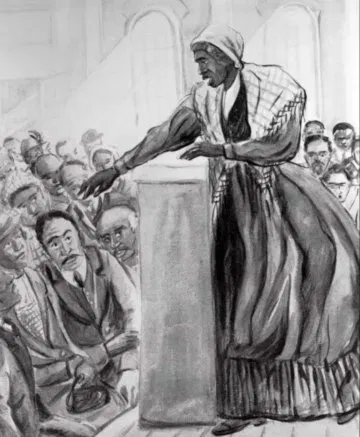

"Ain't I a Woman?"
In 1851 Sojourner Truth gave a speech in Ohio. She spoke as a former enslaved woman and labourer, combining calls for abolition of slavery with a demand for equal human rights for all women. A version of the speech became widely known years later by the title "Ain't I a Woman?" (a reference to the dialect spoken by black people in the American South, even though Sojourner Truth herself spoke English with a Dutch accent).
During the 1850s, she settled in Battle Creek, Michigan, where three of her daughters lived. Sojourner Truth continued giving speeches, while also helping enslaved people to escape to freedom. She spoke before many audiences, frequently breaking into song.
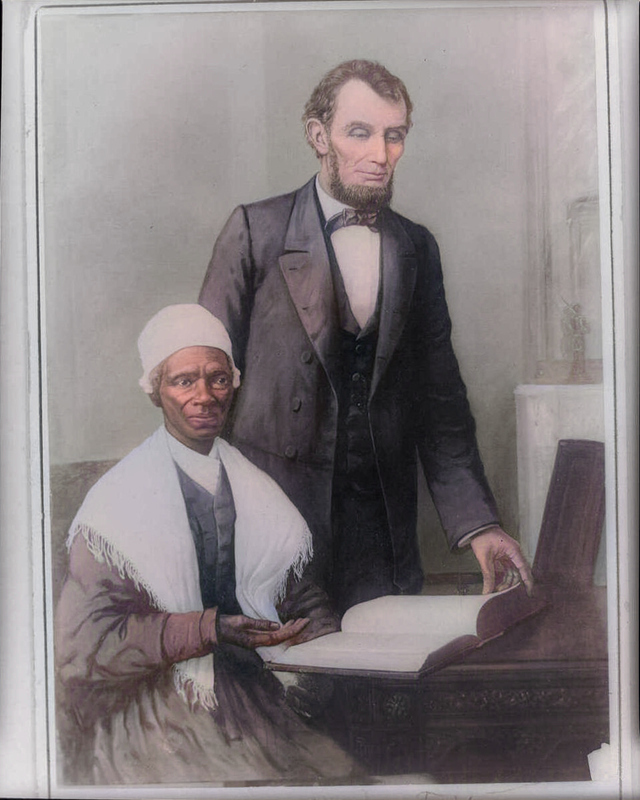
During the Civil War, she helped recruit black troops for the Union Army. On at least one occasion, Truth met and spoke with President Abraham Lincoln about her beliefs and experiences. After the war, she tried, but failed, to secure land grants from the federal government for formerly enslaved people.
Last years
Sojourner Truth continued to fight for a more equal society for African Americans, women's rights and prison reform for the rest of her life. Nearly blind and deaf, she spent her final years in Michigan. She died at her home in Battle Creek on 26th November 1883.
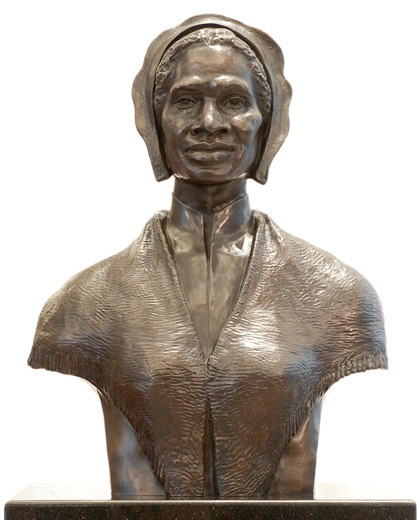
A memorial bust of Sojourner Truth was unveiled in 2009 in Emancipation Hall in the US Capitol Visitor Center. She is the first African American woman to have a statue in the Capitol building.
pics
Without in any way limiting Q-files Ltd’s exclusive rights under copyright, any use of this publication to “train” generative artificial intelligence (AI) technologies to generate text is expressly prohibited. Q-files Ltd reserves all rights to license use of this work for generative AI training and development of machine learning language models.