
Famous women

CITE
We have made every effort to follow citation style rules, but there may be some minor differences. If in doubt, please refer to the appropriate citation style manual.
Elizabeth Fry. (2025). In Q-files Encyclopedia, History, Famous women. Retrieved from
https://www.q-files.com/history/famous-women/elizabeth-fry
"Elizabeth Fry." History, Famous women, Q-files Encyclopedia, 22 Aug. 2025.
https://www.q-files.com/history/famous-women/elizabeth-fry.
Accessed 6 Aug. 2026.
Elizabeth Fry 2025. History, Famous women. Retrieved 6 August 2026, from
https://www.q-files.com/history/famous-women/elizabeth-fry
History, Famous women, s.v. "Elizabeth Fry," accessed August 6, 2026.
https://www.q-files.com/history/famous-women/elizabeth-fry


Elizabeth Fry
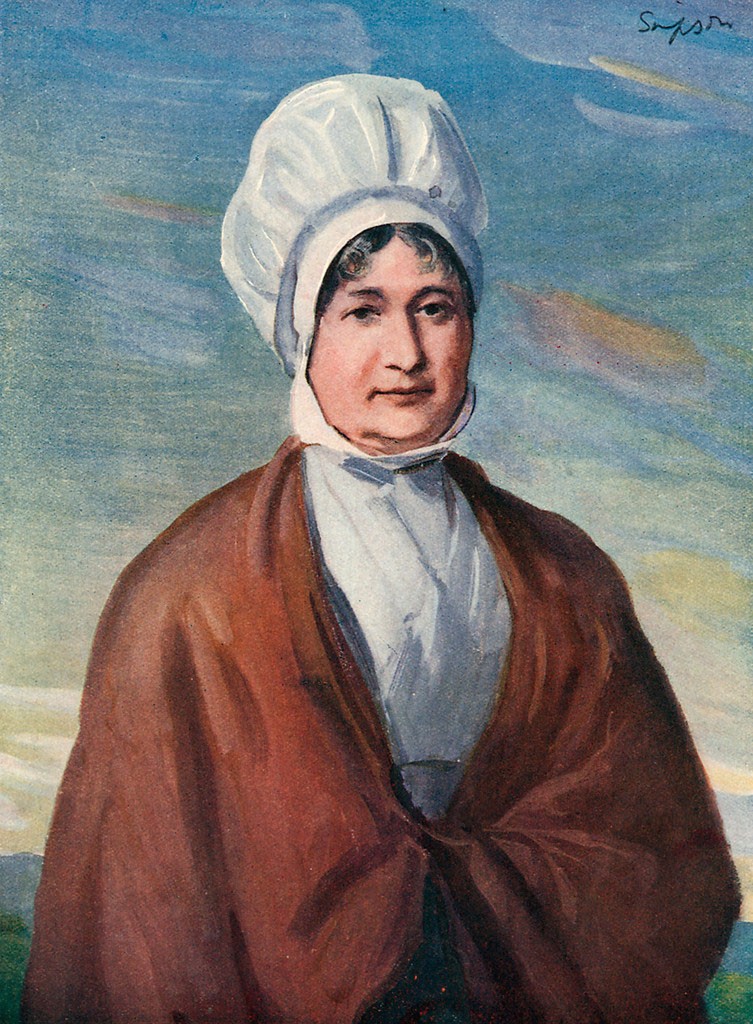
Elizabeth Fry (1780–1845) was an English Quaker who dedicated much of her adult life to helping those in need. A compassionate and brave campaigner, she became well known for her fight to improve the conditions of women prisoners in the early 19th century. Her pioneering work inspired other women to play a fuller role in society, and her ideas for reforms in prisons, asylums and elsewhere continued to be influential long after her death.

Early life
Elizabeth Fry was born on 21st May 1780 into a wealthy family in Norwich, England, the third of 13 children. Her parents, John and Catherine Gurney, were both Quakers, members of the Religious Society of Friends, a Christian group that placed importance on a personal relationship with God. The Quakers were actively involved in many social issues, such as the campaign to end the slave trade. Catherine often took her daughter with her when she visited the poor and the sick locally. Catherine died when Elizabeth was only 12 years old, leaving the older children to bring up their younger brothers and sisters.
Newgate Prison
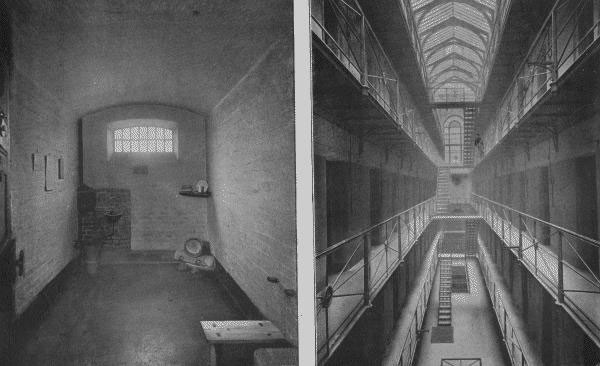
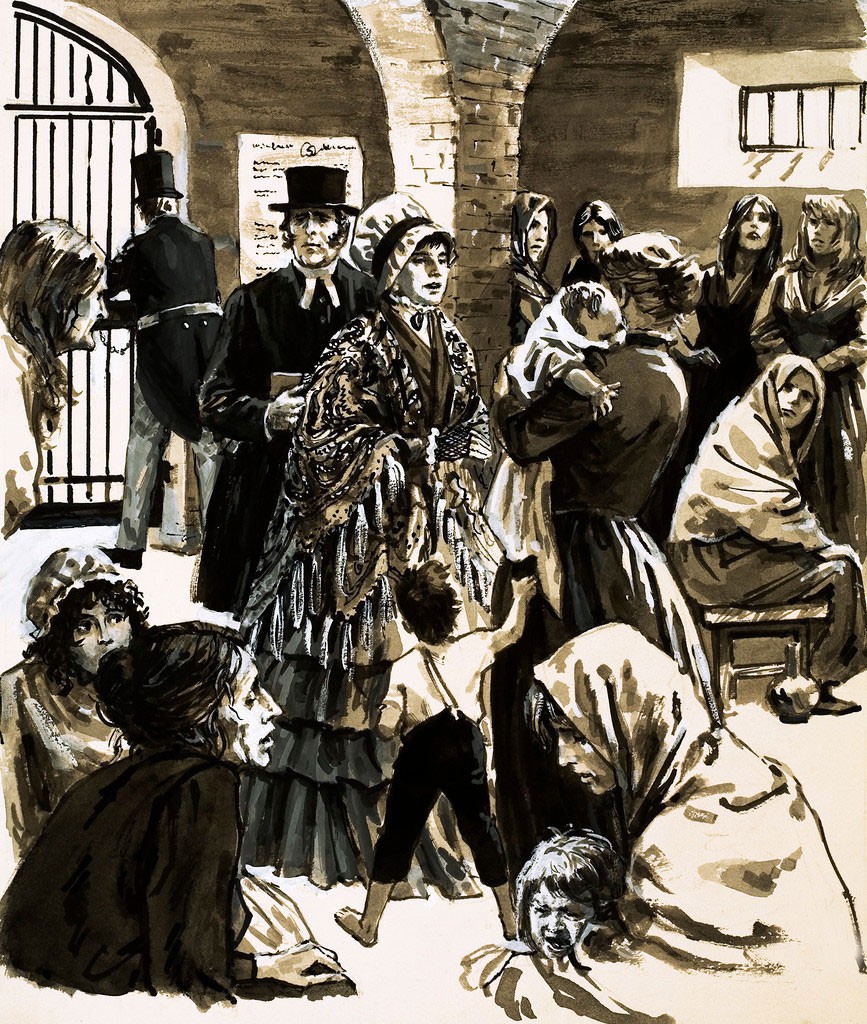
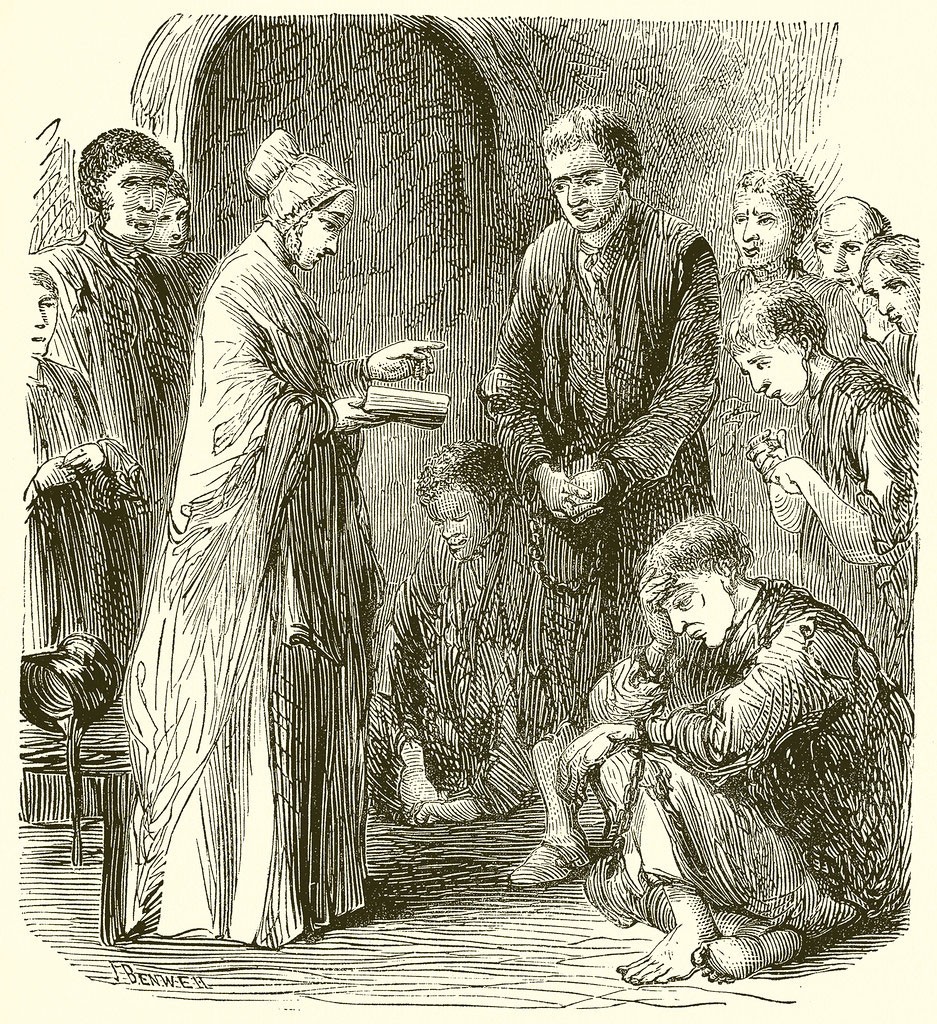
In 1800, Elizabeth married Joseph Fry, also from a well-off Quaker family. The pair went on to have 11 children, and Elizabeth combined looking after her growing family with her concerns for the poor and needy. In 1811, Elizabeth Fry became a Quaker minister. Soon after this, a visit from a French Quaker called Stephen Grellet alerted Elizabeth to the conditions inside Newgate Prison in London. Elizabeth visited the prison and was appalled by what she found, particularly the plight of the women and children. She immediately began to provide practical help in the form of clothing and other essentials for the prisoners.
Prison reform
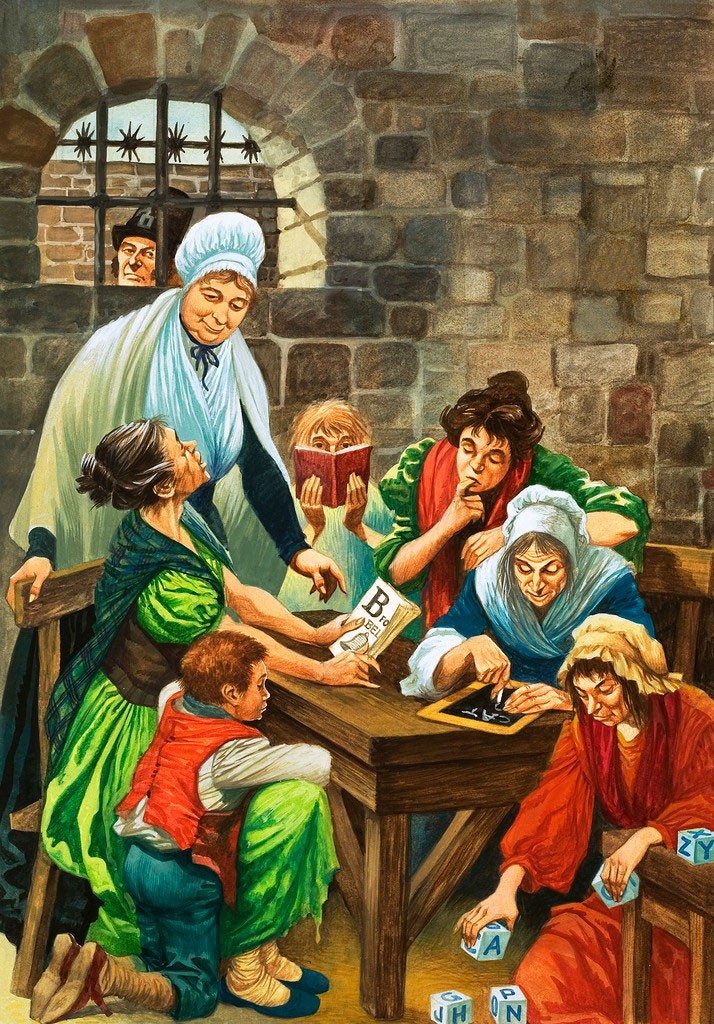
Illness and financial difficulties at home meant that Elizabeth did not visit Newgate again until 1816. This time she helped the women prisoners to start a school for the children in the prison. She also set up a ladies’ committee to provide materials so that women prisoners could knit or sew items to sell, allowing them to earn money to buy essential goods for themselves. Her work began to attract great interest, and in 1818 she addressed a Parliamentary committee in the House of Commons about the state of London prisons, as well as meeting Queen Charlotte, wife of King George III.
"Something of God in everyone"
As her work became widely known, Elizabeth turned her attention to prisons elsewhere in the country. She travelled to Scotland and the north of England with her brother Joseph. On her return she wrote a report giving many recommendations for the treatment of women prisoners, and strongly condemning the death penalty. She also concerned herself with the conditions endured by prisoners who had been sentenced to be transported to the colonies, regularly visiting the convict ships. “My Quaker belief is that there is something of God in everyone, and that includes criminals. So the aim when we put someone in prison should be to try to reform them, not just to punish them.”

Wider reforms
Elizabeth continued her work throughout the rest of her life. She travelled extensively around Europe, visiting prisons, hospitals and asylums. As well as prison reform she worked to improve the treatment of the insane, promoted education for women, championed better housing for the poor, opened a school to train nurses, and became involved in the anti-slavery campaign. Her reforms attracted interest and praise from many quarters including Queen Victoria and Prince Albert, and Florence Nightingale. Her unflagging commitment to her work meant that her own health frequently suffered. She died in Ramsgate in 1845, surrounded by her family, but the impact of her work continued to be felt long after her death.
Consultant: Philip Parker
pics
Without in any way limiting Q-files Ltd’s exclusive rights under copyright, any use of this publication to “train” generative artificial intelligence (AI) technologies to generate text is expressly prohibited. Q-files Ltd reserves all rights to license use of this work for generative AI training and development of machine learning language models.