
Government

CITE
We have made every effort to follow citation style rules, but there may be some minor differences. If in doubt, please refer to the appropriate citation style manual.
Prisons. (2026). In Q-files Encyclopedia, Geography, Government. Retrieved from
https://www.q-files.com/geography/government/prisons
"Prisons." Geography, Government, Q-files Encyclopedia, 29 May. 2026.
https://www.q-files.com/geography/government/prisons.
Accessed 6 Nov. 2026.
Prisons 2026. Geography, Government. Retrieved 6 November 2026, from
https://www.q-files.com/geography/government/prisons
Geography, Government, s.v. "Prisons," accessed November 6, 2026.
https://www.q-files.com/geography/government/prisons


Prisons
A prison, also known as a jail, detention centre or penitentiary, is a place where people who have committed crimes are held. If a person is found guilty of a crime, they will sometimes be sent to prison. The length of time a prisoner spends in prison depends on the sentence (decision on their punishment) they received at their trial. While a person is in prison, many of their freedoms are removed. This makes it a punishment which is designed to try and discourage people from committing crimes. This punishment forms part of the justice system. As well as providing appropriate punishment for a crime, prisons are designed to rehabilitate prisoners by helping them to change their lives so they can rejoin society when they are released. Prisons also protect public and national security by ensuring that violent criminals are kept safely away from the communities they have harmed.

Sentencing
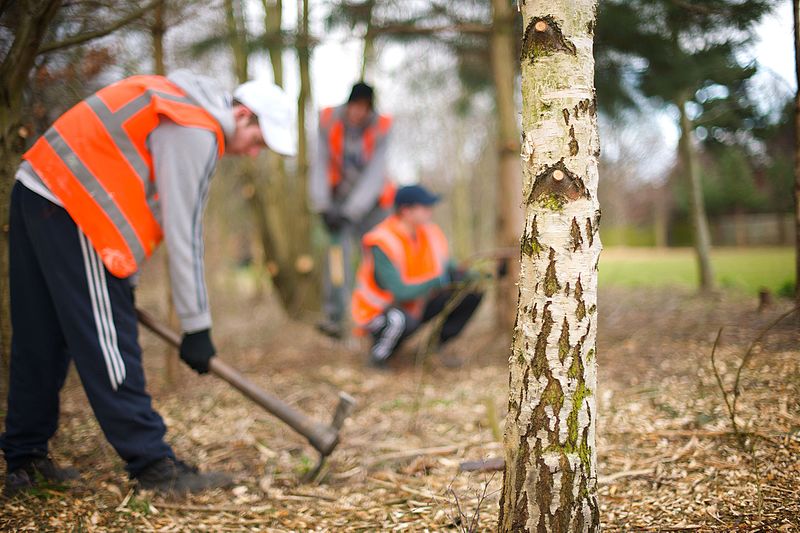
When a person is found guilty of a crime, a judge in court will decide on their punishment, known as a sentence. The sentence depends on things like the seriousness of the crime, the person’s intentions when committing it, and the harm caused to the victim. For minor crimes, a person might be ordered to pay a fine or handed a community sentence. This might involve spending a set number of hours cleaning public spaces, or removing graffiti.
As another alternative to a prison sentence, an offender might be placed on probation. During the period of probation, an offender faces the threat of being imprisoned if found breaking the rules set by the court or probation officer. He or she might be fitted with an electronic tag (or monitor), which signals their movement to officials.
A prison sentence is handed out for more serious crimes. It is a set length of time that a person must spend in prison, varying from a few weeks to a lifetime. A prisoner handed a five year sentence, for example, might not spend the whole five years in prison. Towards the end of their sentence, they might be able to apply for, and be granted, parole. Being on parole means that a prisoner is released early, but must still report back to a probation officer during this time. There are usually restrictions on travelling and working. Most prisoners who are not judged to be a danger to the public can apply for parole. For a few prisoners, their crime is so serious that they receive a whole life sentence: they can never apply for parole and will spend the rest of their lives in prison.
Prisoners
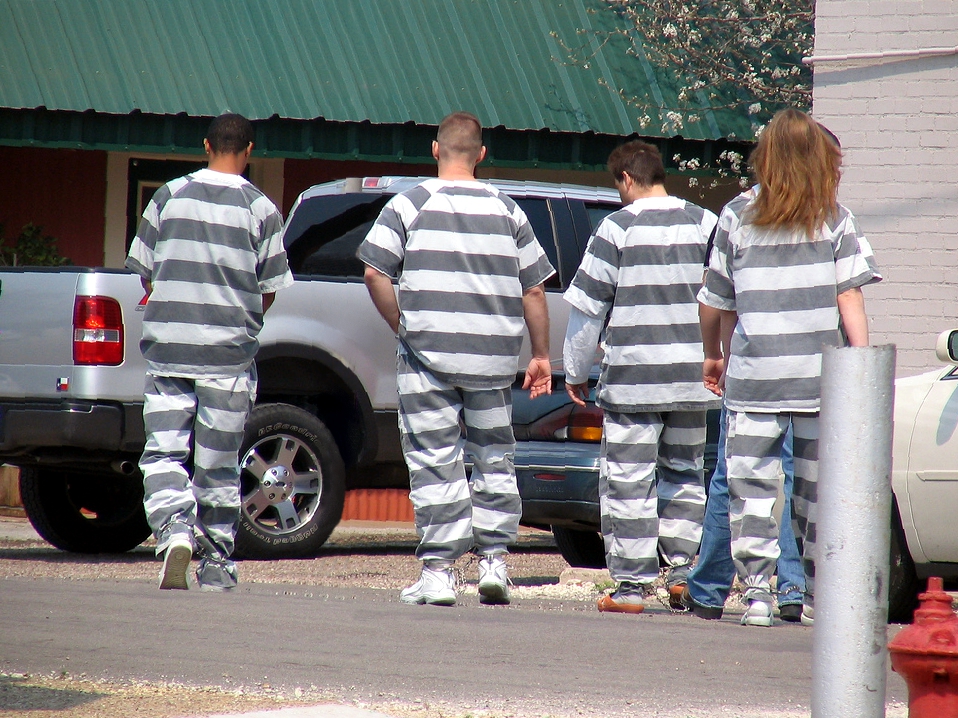
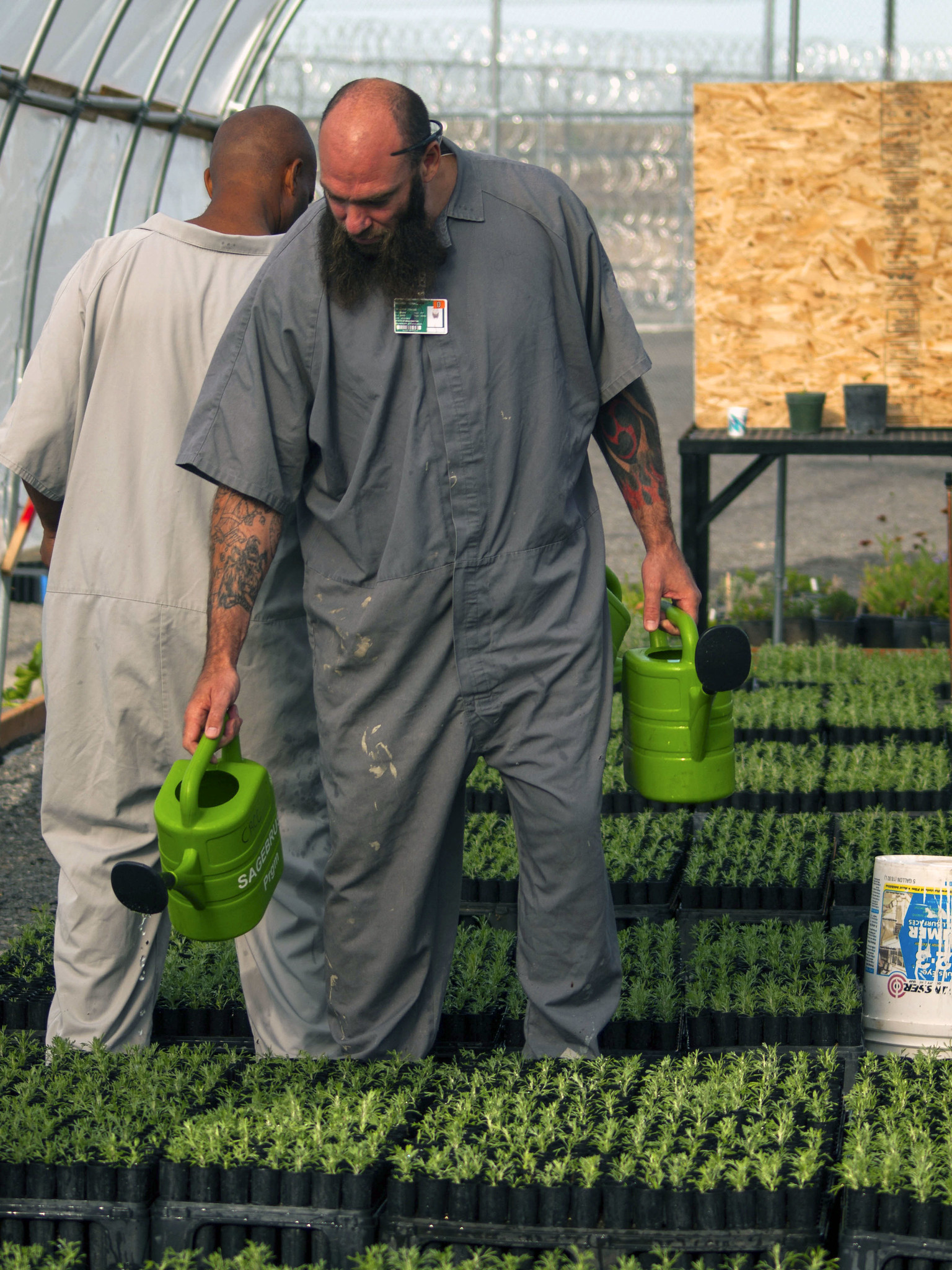
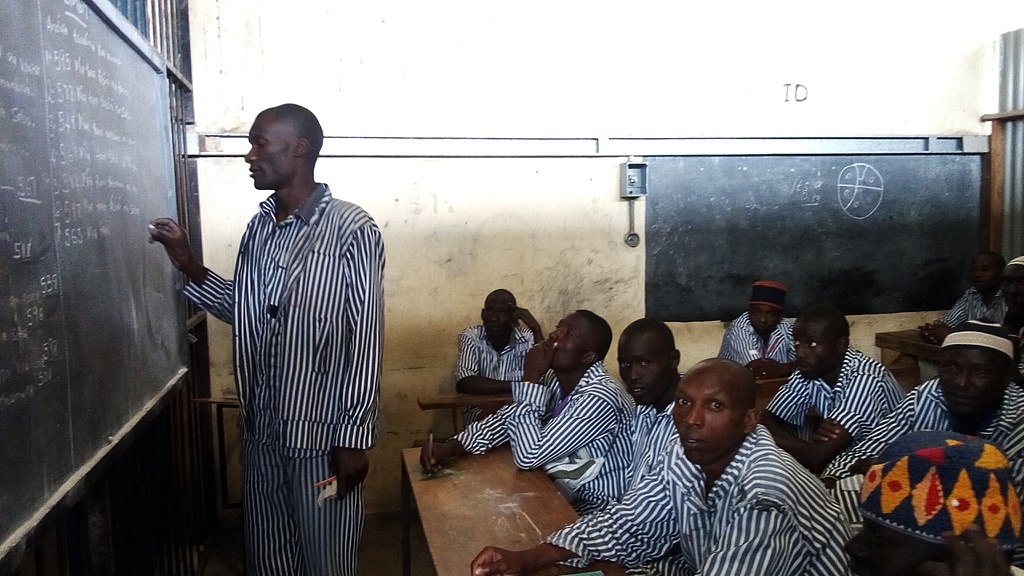
Prisoners have some of their human rights limited or removed while they are in prison. These include the right to liberty, and in some countries, such as the USA and the UK, the right to vote. Sometimes prisoners carry out work within the prison, for example in the kitchen or laundry. Some have the opportunity to train and work in paid jobs in prison workshops. Prisoners can usually keep in touch with their families and friends by phone, by writing letters or through visits. Supervised access to the internet is allowed in some countries, but not others. Sometimes, prisoners are allowed to leave prison for short periods of time to visit their families. But if prison staff decide that the risk to the public is too high, they will not allow it.
Prison cells
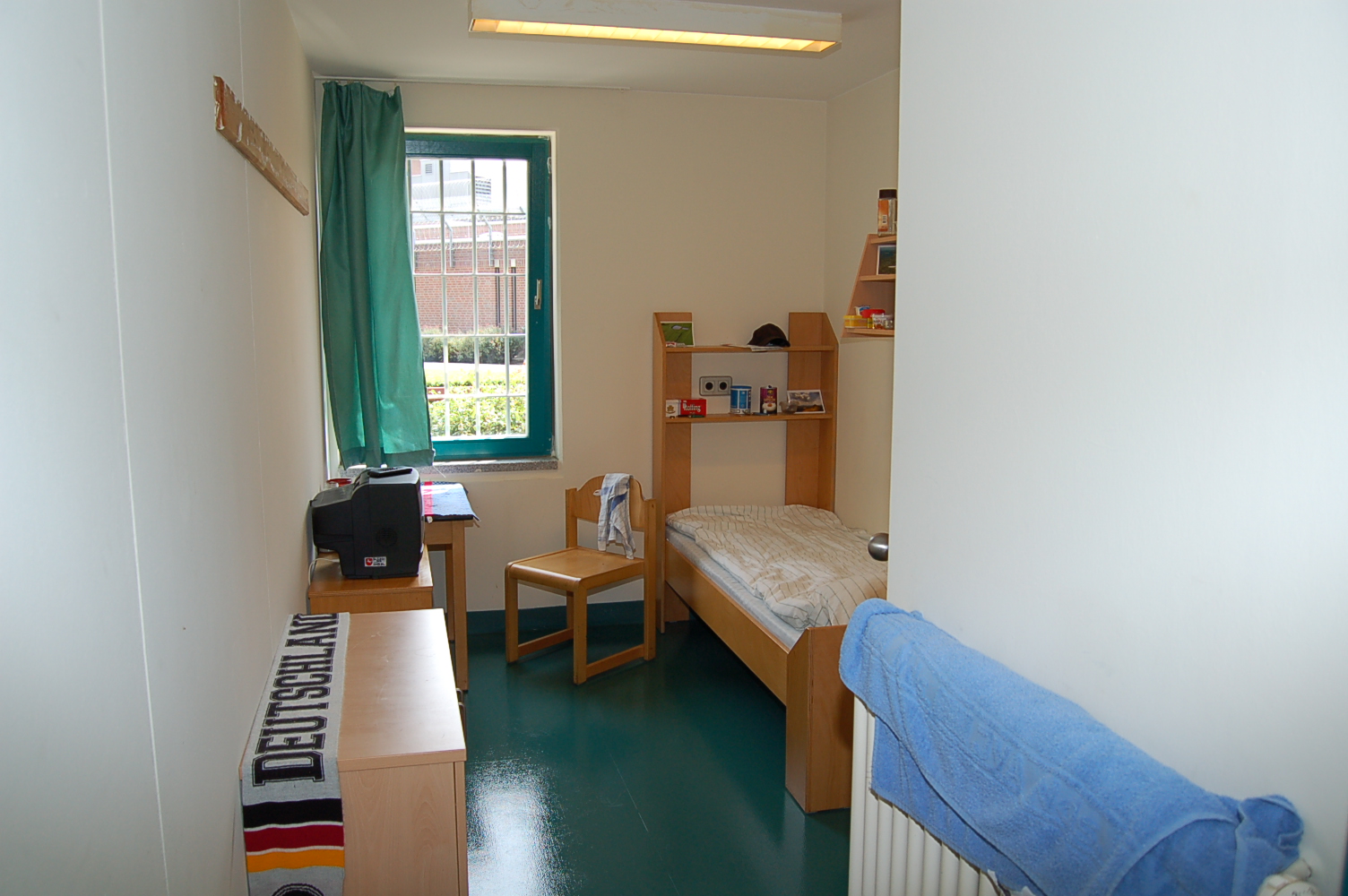
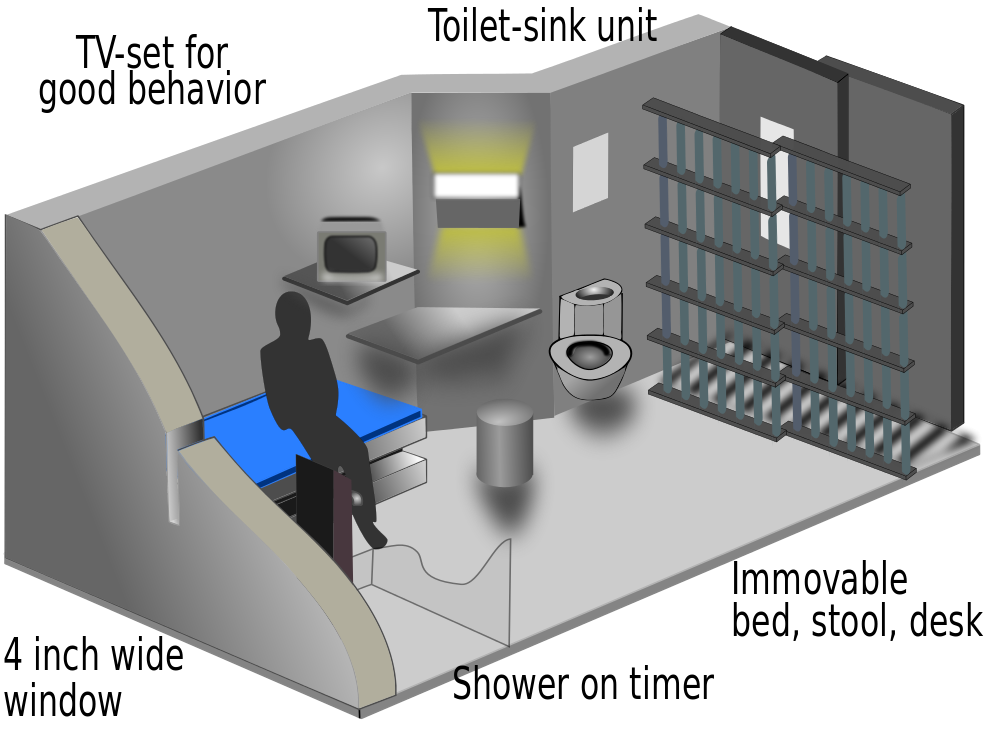
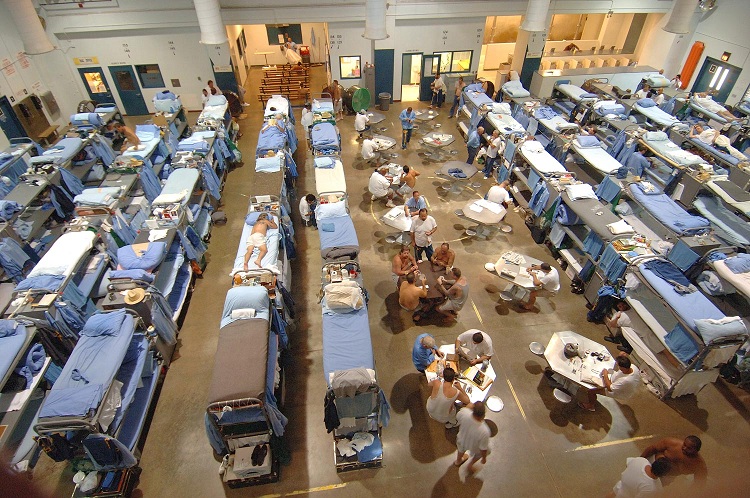
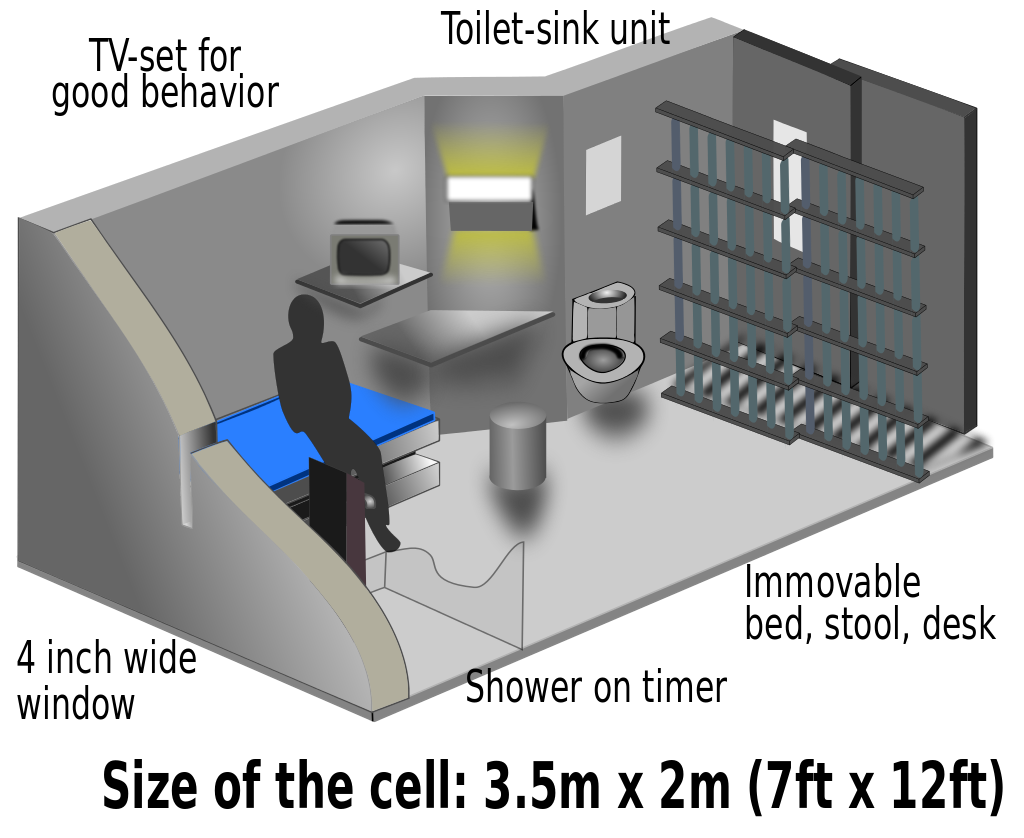
A prisoner’s room in prison is known as a cell. In some prisons, prisoners are allowed desks and televisions in their cells, while in others, cells are very basic with a toilet alongside the bed. Cells may be shared with several other prisoners, or can be more like large dormitories, with 50 or 60 bunks. Unless they are in a maximum security prison, prisoners usually have access to facilities such as places to socialize and study. Most prisoners are allowed to spend time outside in an exercise yard for a short time every day. Prison staff patrol the prisons to make sure prisoners are safe and not breaking any rules.


Open prison
In an open prison, a prisoner is sometimes allowed to leave the prison to go to work. There is usually a rule (called a curfew) that requires them to be back in the prison by a certain time each day. Open prisons offer training courses to prepare prisoners for life in the community once they leave prison.
Maximum security prison
Maximum security prisons hold prisoners who are judged to be the most dangerous to others or most likely to escape. Inmates in these prisons are sometimes held in solitary confinement, alone in their cells for all but one hour a day.

Military prison
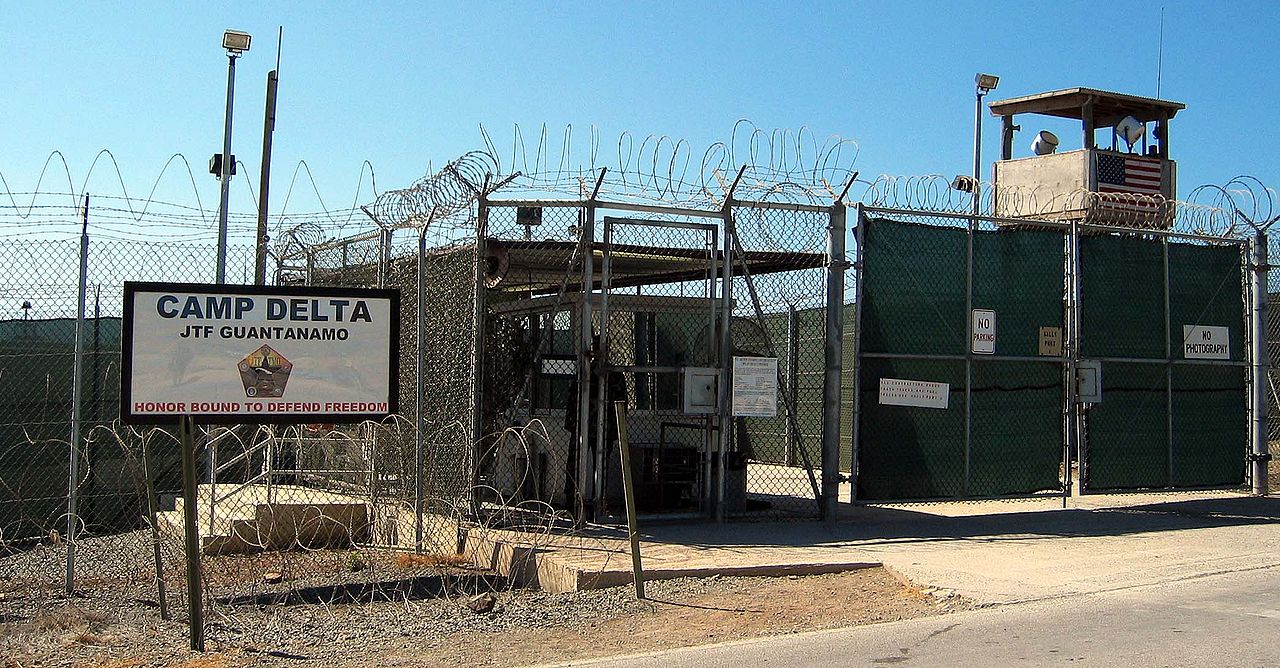
The armed forces run their own prisons, which are used to hold prisoners of war and prisoners who have committed war crimes. If members of the armed forces commit crimes, they are usually held at a military prison instead of a state prison.


Rehabilitation
Rehabilitation (or rehab) is an important part of the justice system. It is a way of trying to stop prisoners from re-offending (committing another crime) and returning to prison. One of the main rehabilitation techniques is to give prisoners the opportunity to improve their education and learn new skills, so that they can find a job and settle into the community when they are released. Rehabilitation can also involve treating prisoners who have addictions or mental health problems.
Early prisons
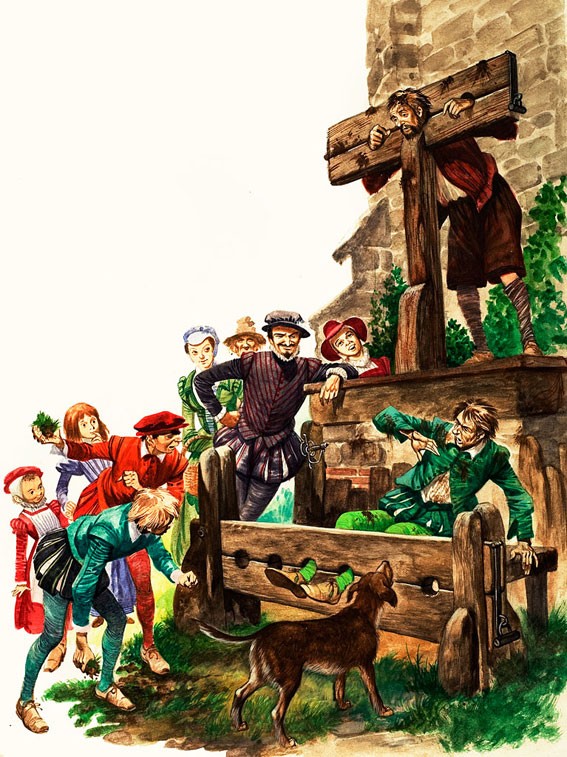
Before the 18th century, prisons were used not as form of punishment, but as as holding spaces for people who were waiting to be put on trial. Corporal (physical) punishments such as flogging or caning were more common, while those who committed the most serious crimes were punished with the death penalty (capital punishment).
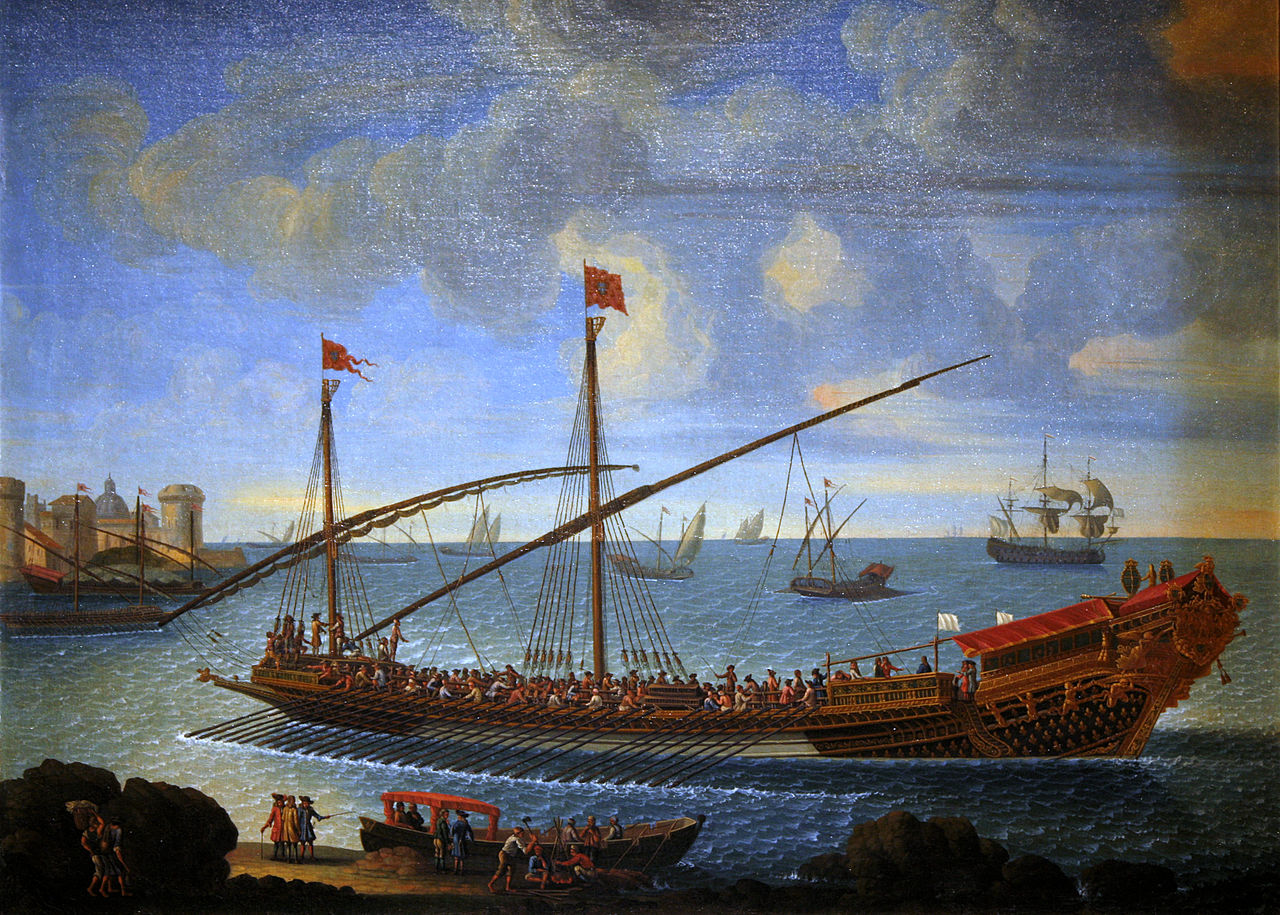
At the beginning of the 18th century, more than 200 criminal offences were punishable by death. Offenders who were not hanged for their crimes were transported to the colonies, a form of punishment introduced by an Act of Parliament in 1718. Transportation was considered a good punishment as the criminal was removed from the country and was a cheaper option than prison. The first transportations were to Britain's American colonies.
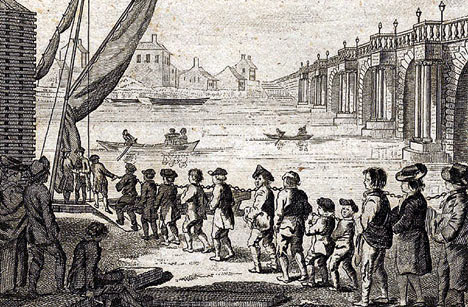
France also sent criminals to its overseas colonies, including Louisiana (the vast interior of what is now the US) in the early 18th century. Russia also established the Katorga prisons, harsh work camps in remote areas of Siberia, at this time.
Debtors' prisons
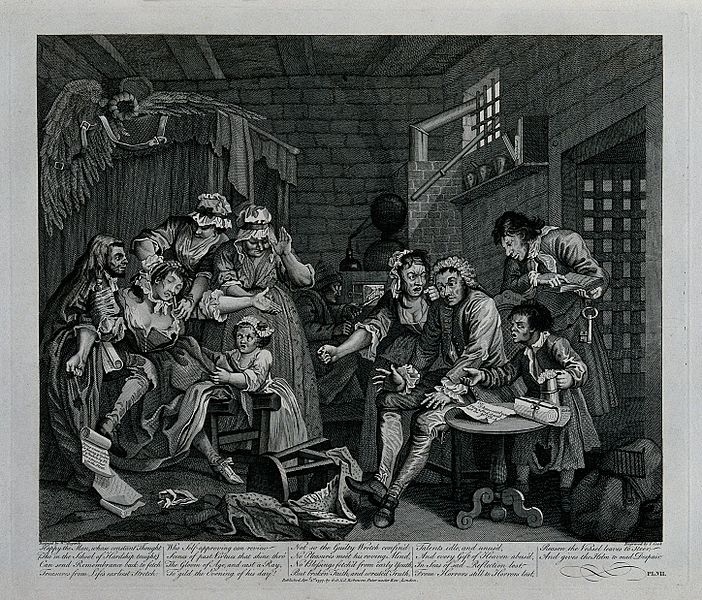
Despite mass transportations, there was a large prison population in the 18th century. Debtors—people who could not pay their debts—formed by far the largest proportion of prison inmates. In England during the 18th and 19th centuries, 10,000 people were imprisoned for debt each year. They were often unfortunate tradespeople who had fallen on hard times. They would stay in prison until they had worked off their debt (and the cost of imprisoning them) by labour, or somehow obtained the necessary funds. Prisons ranged from small village jails to the cellars of castles in towns. The largest prisons were in London, with the most important being Newgate Prison, which held around 300 prisoners.
Some debtor prisoners found themselves sharing a cell with vicious criminals, and many more were confined to a single cell. The father of the English author Charles Dickens was sent to one of these prisons (Marshalsea), which were often described in Dickens's novels.
Houses of correction
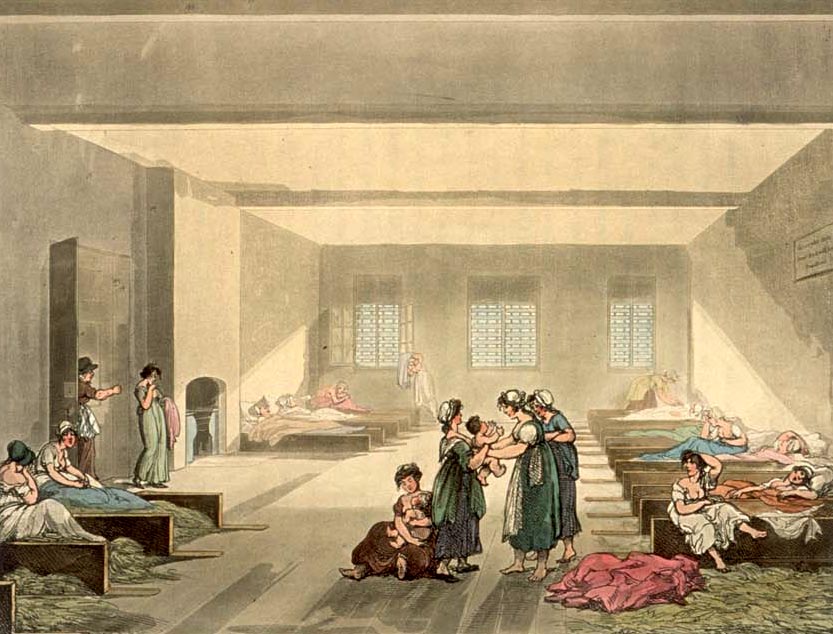
Houses of correction started to appear in 17th century Britain. They held petty thieves, vagrants (homeless beggars) and poor people given to "loose, idle and disorderly conduct". They were given labouring tasks in an attempt to turn them into hardworking, law-abiding citizens. Bridewell in London was a house of correction for women and children. It was the first institution to make medical services available to prisoners.

Prison hulks
The loss of Britain's American colonies in 1776 meant that places where prisoners could be held were suddenly needed urgently. Old, beached ships moored at London docks, known as hulks, were used to house prisoners who were due to transported on a temporary basis. But this temporary measure soon became a permanent arrangement; prisoners in the hulks were soon put to hard labour dredging the River Thames.
Living conditions inside these hulks were terrible: around a quarter of prisoners died each year from disease or violence. Meanwhile, transportation of convicts, this time to Australia, started up again in 1787. From then until 1868, 160,000 convicts were transported to Australia.
Prison reform
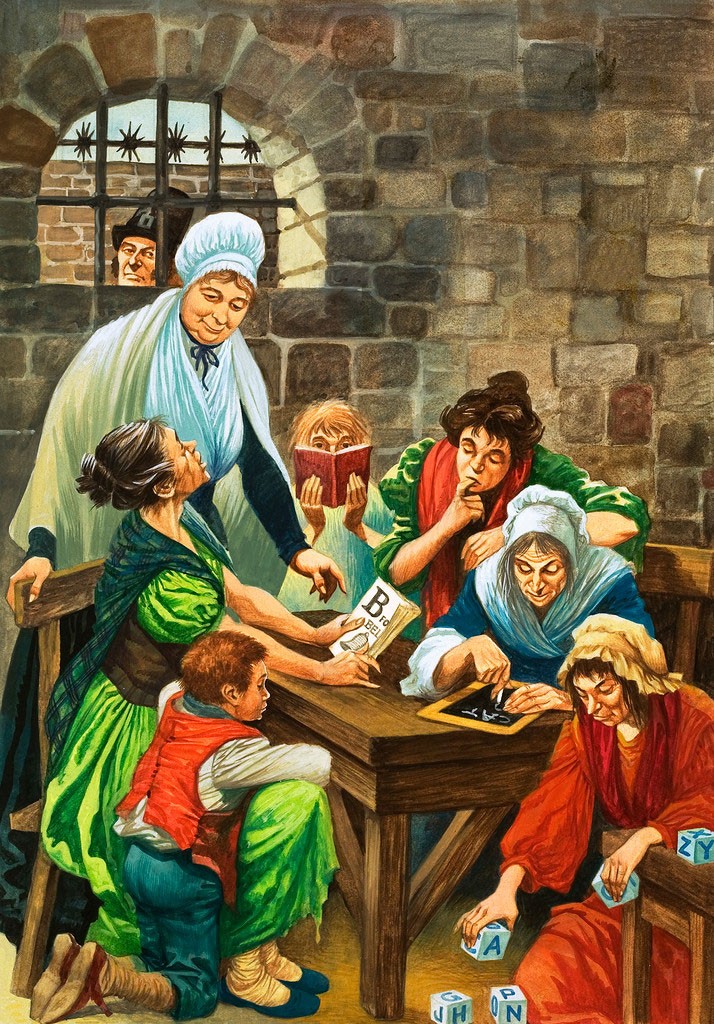
In 1777 John Howard visited prisons around Britain and wrote a report on the conditions he found them in. He argued for cleaner, safer prisons and the chance for prisoners to work. He was one of the first people to argue for prison reform: the chance for people to change their ways while they were in prison.
Another prison reformer was Elizabeth Fry, who in the early 1800s regularly visited female prisoners at Newgate Prison. She set about improving conditions for prisoners and teaching them new skills. Her ideas about how prisons should be run led to a new law in 1823, which made prisons safer, separated male and female inmates, and gave them opportunities to change their lives.
State prisons
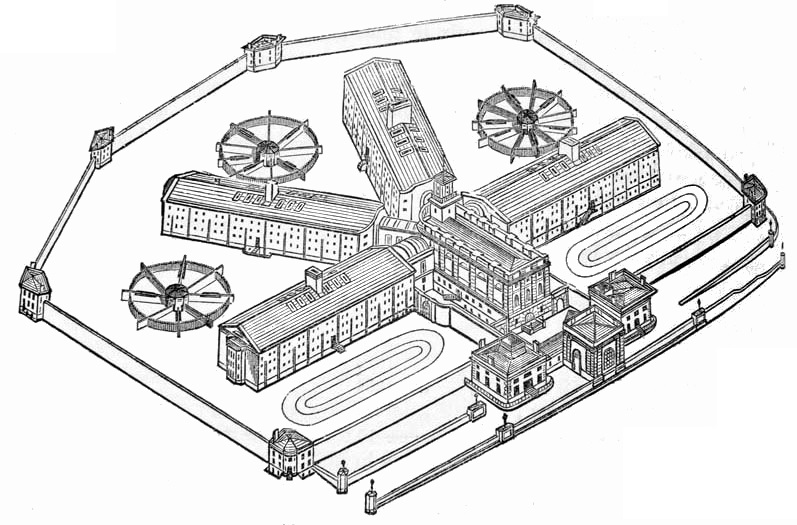
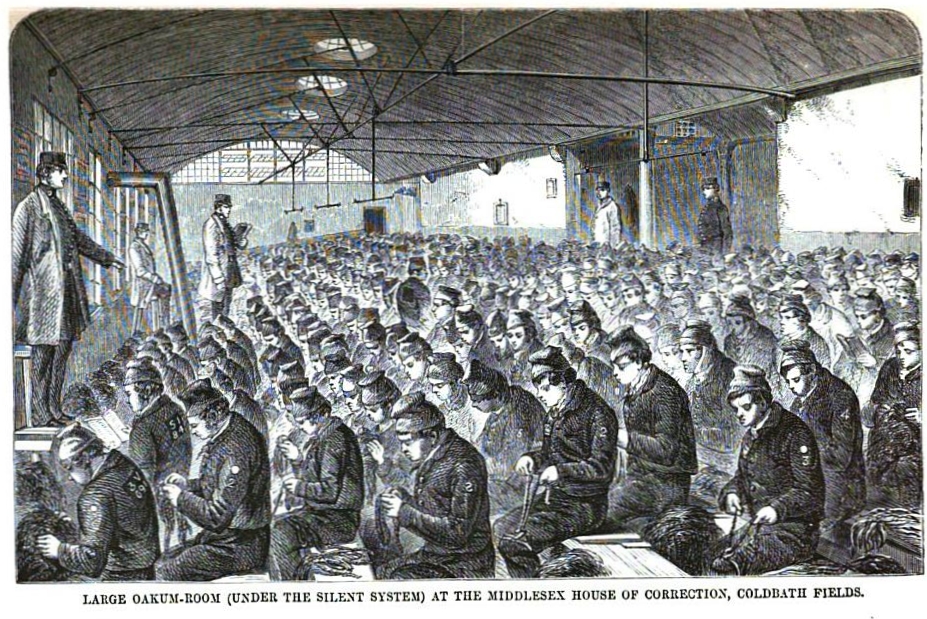
By the early 19th century, capital punishment was thought excessive for many crimes. Imprisonment therefore replaced the death penalty for the most serious offences, except murder. As transportation to the colonies and the use of hulks declined, the first state prisons (they had previously been run as private businesses) now appeared. Many new prisons built in the mid-19th century allowed for prisoners to have individual cells. Efforts were made to make them change their ways, either by keeping them alone in cells for weeks on end (the "separate system" or Pennsylvania system, named after the state where the practice first began), or forcing them to remain silent (the "silent system") in the hope that they would reflect on their crimes. Meanwhile, prison chaplains tried to encourage the prisoners to live crime-free lives.
Neither separation nor silence appeared to work, however. As a result the 1865 Prisons Act saw a re-introduction of the idea of prison as harsh punishment: prisoners were now made to do hard labour, sleep on hard beds and eat basic food like bread and water.

Changing attitudes
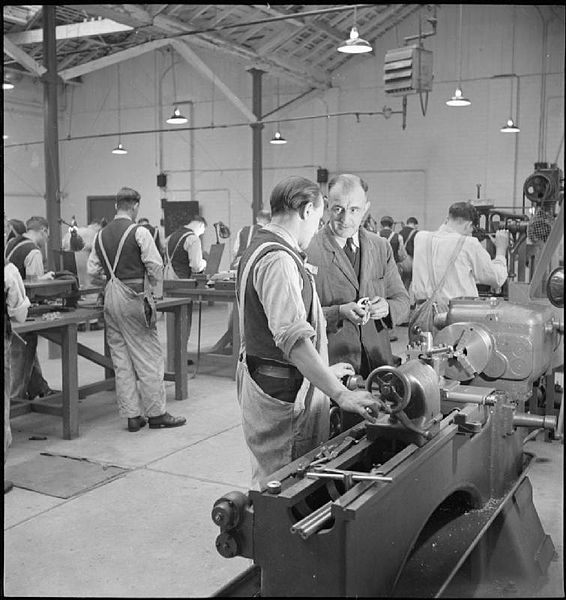
By the start of the 20th century, attitudes towards prisons began to change. Rather than inflict harsh conditions, the loss of liberty when in prison was considered enough of a punishment. Instead of being kept in silence or isolation, prisoners were allowed to socialize with one another. Improvements were made to prison food and education courses were made available inside prisons. These measured aimed to rehabilitate prisoners (restore them to a crime-free life) and give them skills to allow them to find useful employment after their release. After 1945, however, the rising crime rate led to a massive increase in the prison population. This has led to overcrowding and growing tensions inside prisons between prisoners and guards.
Prison camps
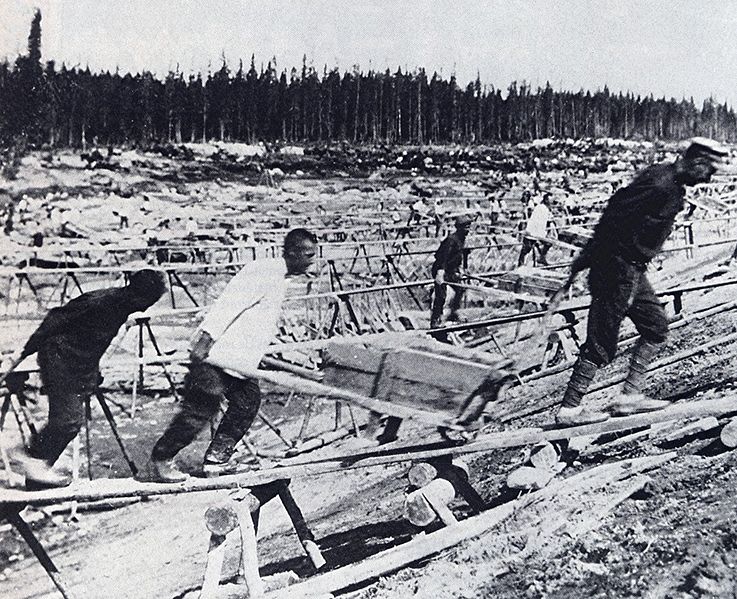
Punishment by forced labour continued in the 20th century when during World War II, the Nazis put millions of prisoners of war to work in concentration camps. Between the 1930s and 1950s, the Soviet government held prisoners in forced-labour camps known as gulags. The prisoners were set to work as manual labourers in construction, mining or logging. As many as six million prisoners died in the brutal conditions.
pics


Without in any way limiting Q-files Ltd’s exclusive rights under copyright, any use of this publication to “train” generative artificial intelligence (AI) technologies to generate text is expressly prohibited. Q-files Ltd reserves all rights to license use of this work for generative AI training and development of machine learning language models.