
British history

CITE
We have made every effort to follow citation style rules, but there may be some minor differences. If in doubt, please refer to the appropriate citation style manual.
Stuarts. (2026). In Q-files Encyclopedia, History, British history. Retrieved from
https://www.q-files.com/history/british-history/stuarts
"Stuarts." History, British history, Q-files Encyclopedia, 30 Mar. 2026.
https://www.q-files.com/history/british-history/stuarts.
Accessed 2 Sep. 2026.
Stuarts 2026. History, British history. Retrieved 2 September 2026, from
https://www.q-files.com/history/british-history/stuarts
History, British history, s.v. "Stuarts," accessed September 2, 2026.
https://www.q-files.com/history/british-history/stuarts


Stuarts
After the death of Elizabeth I in 1603, the English throne passed to James VI of Scotland. As James I of England, he became the first of the new line of Stuart kings that ruled both countries until 1714. During this period, the entire country became engulfed in major civil wars that led to the death of a king and the establishment of a republic. The monarchy was later restored and Protestantism was firmly established as the country's religion. The period also saw the Gunpowder Plot of 1605, the Great Plague of 1665–66 and the Great Fire of London in 1666.
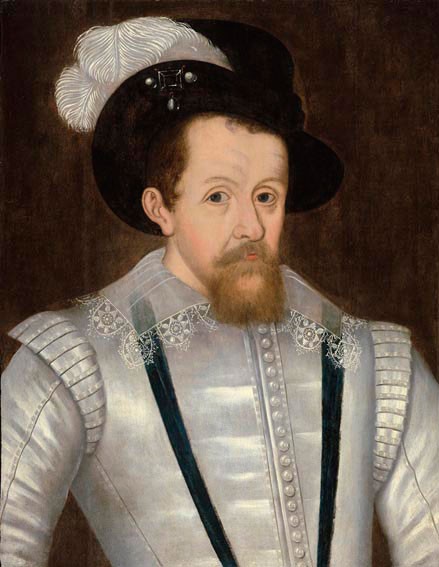
James I
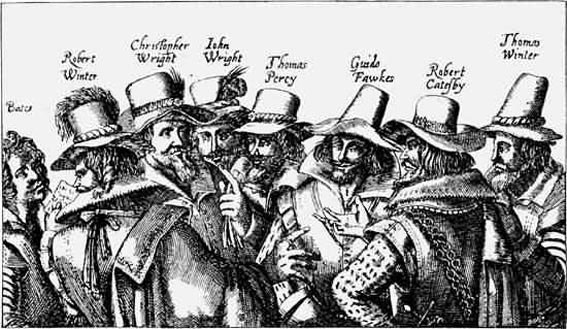
James I held a strong belief in the Divine Right of Kings: a king had absolute freedom to rule and his only responsibility was to God. As a result of this and his constant need to raise money, he often came into conflict with Parliament. He was no supporter of the Puritans (devout Protestants who believed in greater "purity" of worship in their religion) and also disappointed the Catholics, who had hoped to be given more freedoms than during Elizabeth I's reign. In 1605, a Catholic plot to blow up the Houses of Parliament, known as the Gunpowder Plot, to be carried out by Guy Fawkes and others, was uncovered. During James's reign, a new version of the Bible, the King James Bible (1611), was published.
Colonies overseas
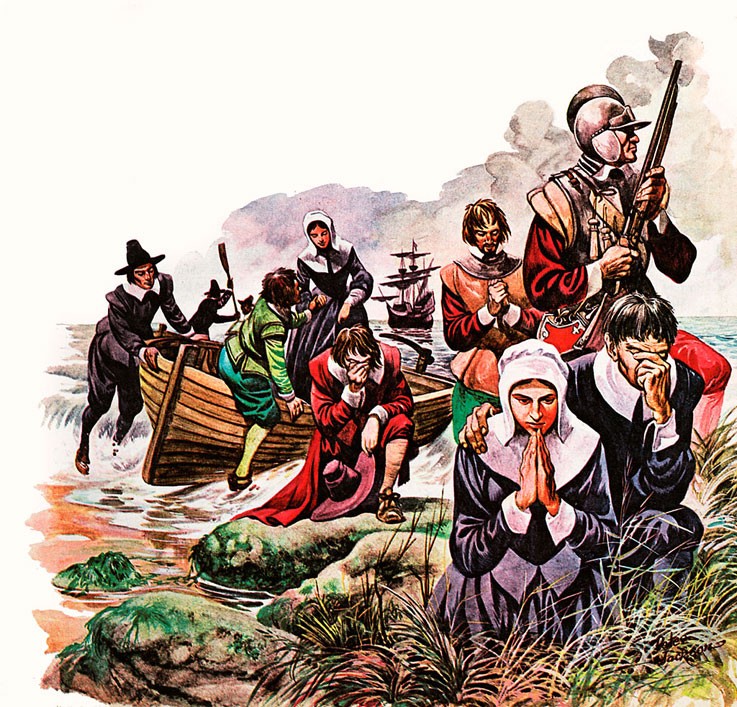
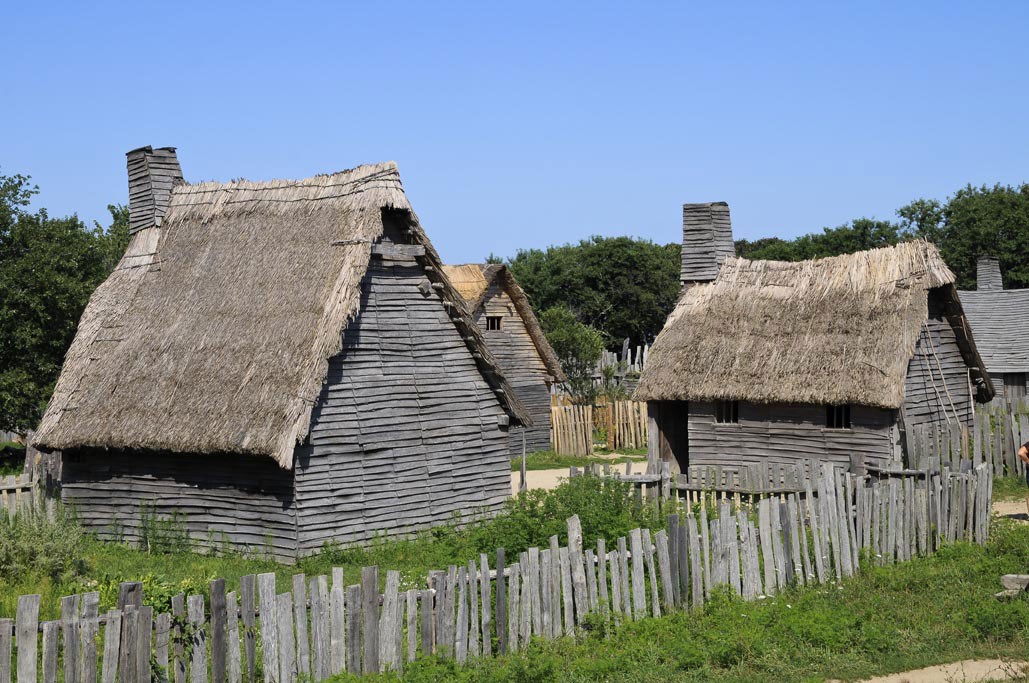
In 1583, England had acquired its first overseas colony: in Newfoundland, off the east coast of Canada. The first American settlement was established at Jamestown in 1607. In 1620, the Pilgrim Fathers, or Pilgrims, a Protestant sect who wanted to establish a separate church, set up a colony at Plymouth in what is now Massachusetts. Further British colonies and trading posts were then founded along the eastern coast of North America, in Canada, on various Caribbean islands including Jamaica, and in West Africa.
In India, the British East India Company set up a base in Bombay in 1668 and soon expanded its operations throughout the country. Slowly but surely, England was building a worldwide empire.
Civil War
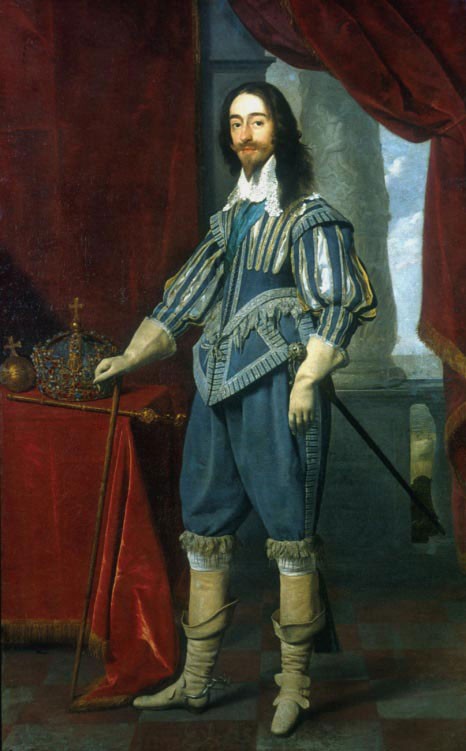
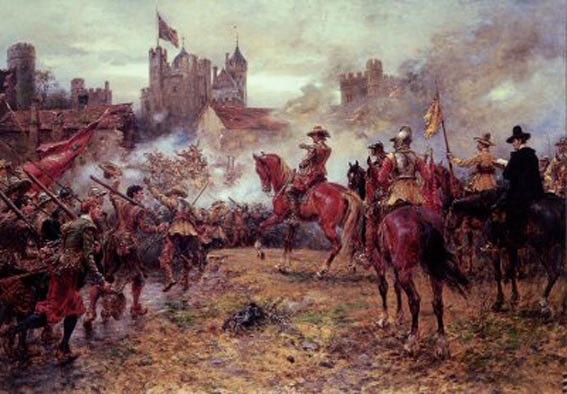
Charles I came to the throne in 1625 as king of England, Scotland and Ireland. Rebellions against his religious policies broke out in Scotland in 1639 and Ireland in 1641. In England, Charles’s disagreements with Parliament over the right to levy taxes and his refusal to consult Parliament led to war in 1642 after Charles tried to arrest five MPs. These three separate wars, in Scotland, Ireland and England, were once known as the English Civil War but are better called the Wars of the Three Kingdoms.
In England, the war was fought between the Cavalier supporters of the king and the Parliamentarians, known as Roundheads. By 1649, the English Parliament, supported by the New Model Army under the command of Oliver Cromwell (1599–1658), had defeated Charles in a series of battles, most notably Naseby in 1645, but Charles refused to negotiate to end the war. In January 1649, the English Parliament tried and executed Charles for waging war against his own country.
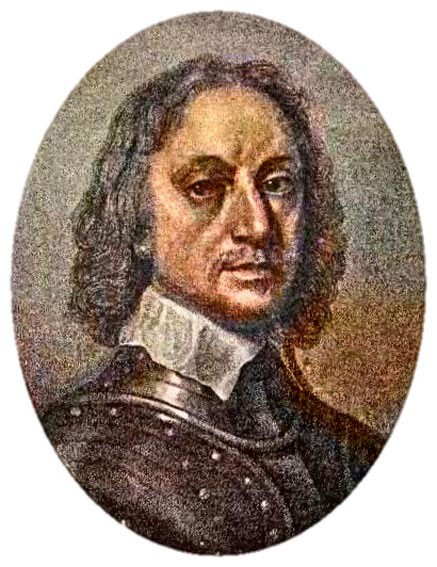
Oliver Cromwell
A Commonwealth, or republic, was set up after the death of Charles in 1649. The Irish and Scots both objected to the fact that the English Parliament had killed their king, so they rebelled against English rule. Defeating the Irish in 1649–50, the Scots in 1650 and a royalist army led by the future Charles II in 1651, Oliver Cromwell then became the most powerful man in Britain. In 1653, power passed to a Protectorate run by Cromwell as Lord Protector, who in 1655 appointed 11 Major-Generals to run the country. Some people wanted to make Cromwell king, but he refused. By the time of his death in 1658, Cromwell had also managed to defeat the Dutch, gain the island of Jamaica in the Caribbean, and promote foreign trade with European countries.
The Restoration
After Cromwell's death, his son Richard took over but could not hold on to power. So in 1660 the monarchy was restored and Charles’s son, Charles II, became king. The Restoration did not return all the powers to the king that his father had had, and Charles was often short of money. However, he was a fun-loving king who kept his throne in difficult times, and he was also a great patron of the arts and sciences.
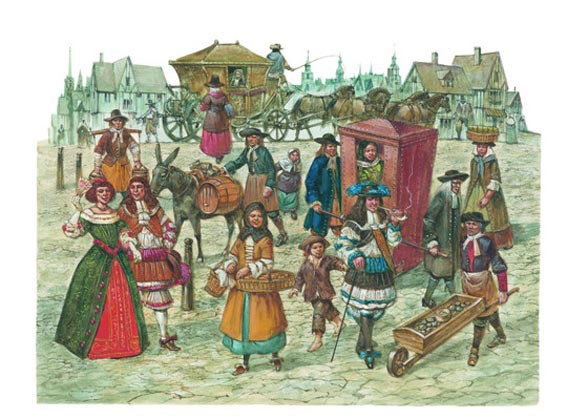
The Great Fire of London
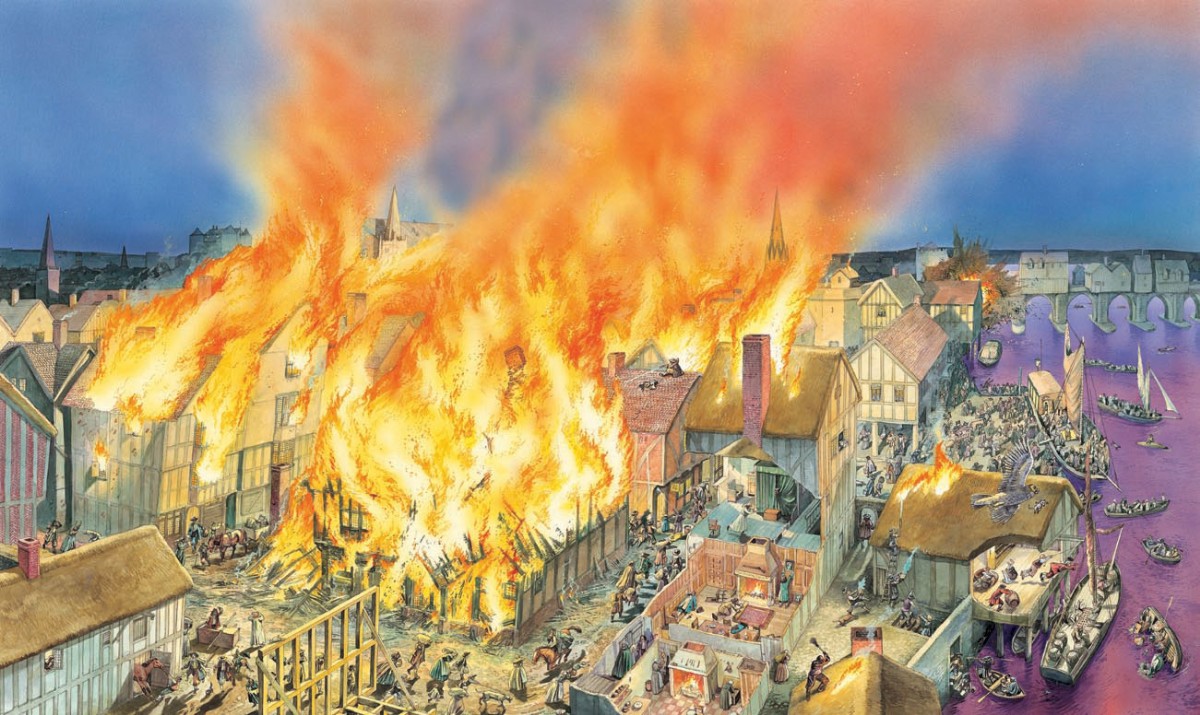
In April 1665, London was struck by the Great Plague, which killed more than 100,000 Londoners. Then, one year later, on 2nd September 1666, fire broke out in a bakery in Pudding Lane and spread throughout the whole city, burning for four days until it finally burned itself out. More than 13,000 buildings, including St Paul’s Cathedral, were destroyed. After the fire, many new churches were built by Sir Christopher Wren, including a new St Paul’s.
The Glorious Revolution
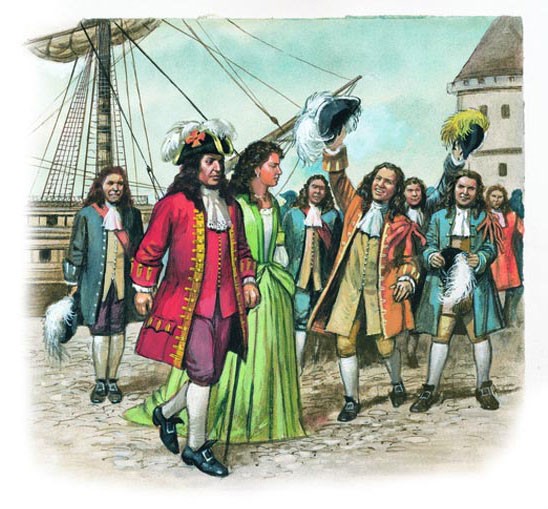
When Charles II died in 1685 he was succeeded by his Catholic brother, James II. He intended to restore Catholicism to Britain, and in 1688 his wife, Mary of Modena, gave birth to a Catholic son and heir, also called James. Alarmed at this prospect, Protestant lords rose in revolt and offered the crown to James’s son-in-law, a Dutchman called William of Orange. William landed with his army in Torbay and marched on London, gaining support on the way. James then fled to France, allowing William and his wife Mary to take the throne in 1689 as joint monarchs. A Bill of Rights was passed that forbade Catholics from ever again sitting on the throne, and gave control over taxes and laws to Parliament.
Wars against France
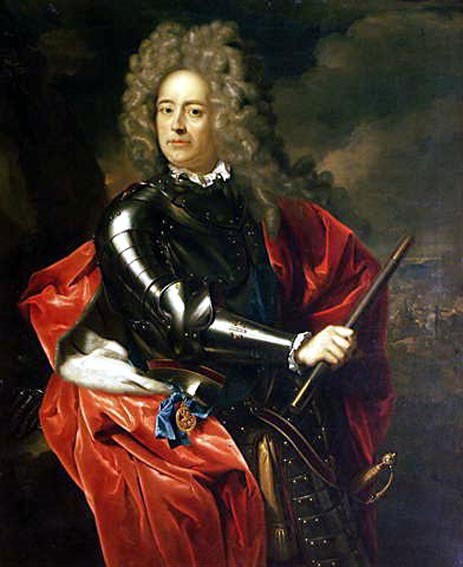
In 1701, war broke out in Europe to prevent France taking over the vacant throne of Spain. The War of the Spanish Succession, as it was known, was to last through almost the entire reign of Queen Anne (1702–14). As supreme commander of the Allied forces fighting Louis XIV of France, John Churchill, Duke of Marlborough, won a series of stunning victories at Blenheim (1704), Ramillies (1706), Oudenarde (1708) and elsewhere. He was rewarded with the royal estate of Woodstock, on which he built the splendid Blenheim Palace. The war with France came to an end with the Treaty of Utrecht in 1713, under which Britain gained Gibraltar from Spain.
Consultant: Philip Parker
pics
Without in any way limiting Q-files Ltd’s exclusive rights under copyright, any use of this publication to “train” generative artificial intelligence (AI) technologies to generate text is expressly prohibited. Q-files Ltd reserves all rights to license use of this work for generative AI training and development of machine learning language models.