
British history

CITE
We have made every effort to follow citation style rules, but there may be some minor differences. If in doubt, please refer to the appropriate citation style manual.
Campaign for women's suffrage. (2026). In Q-files Encyclopedia, History, British history. Retrieved from
https://www.q-files.com/history/british-history/campaign-for-womens-suffrage
"Campaign for women's suffrage." History, British history, Q-files Encyclopedia, 30 Mar. 2026.
https://www.q-files.com/history/british-history/campaign-for-womens-suffrage.
Accessed 6 Aug. 2026.
Campaign for women's suffrage 2026. History, British history. Retrieved 6 August 2026, from
https://www.q-files.com/history/british-history/campaign-for-womens-suffrage
History, British history, s.v. "Campaign for women's suffrage," accessed August 6, 2026.
https://www.q-files.com/history/british-history/campaign-for-womens-suffrage


Campaign for women's suffrage
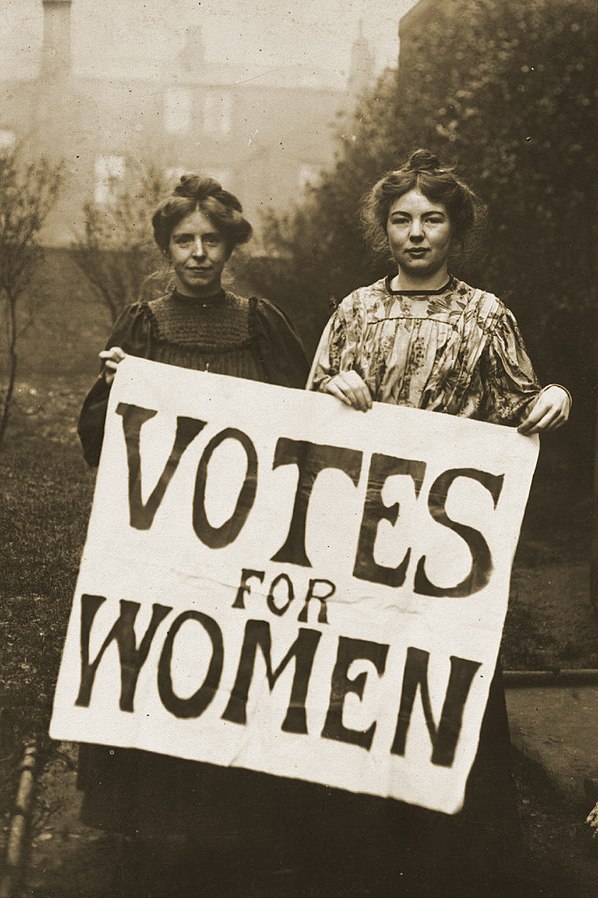
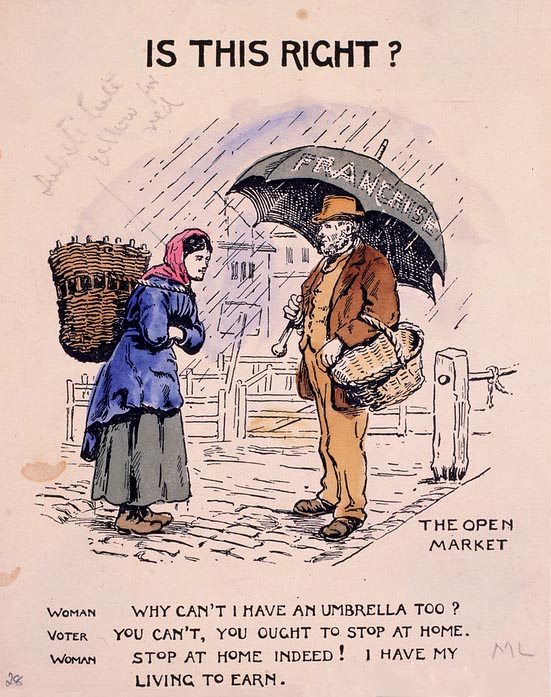
In 19th century Britain, women had fewer rights than men. When a woman married, she became her husband’s property, along with any money she earned. Most people considered politics to be men's business, and women were not allowed to vote in Parliamentary elections or stand as MPs, even though they worked and paid taxes. Many women worked in poor conditions, especially in the textile industries of northern England. With no chance for women to have their say in elections, it was difficult to improve their rights at work and at home. In 1832, a woman from Yorkshire named Mary Smith sent a petition to the Houses of Parliament, calling for women to be allowed to vote in general elections. It was the beginning of a campaign for women's suffrage—the right to vote—which would last for nearly a century.
Early protests
In the 1860s, campaigners for women's suffrage set up groups in most major towns. They focused their attention on Parliament—in the 1870s, debates in Parliament were held nearly every year to discuss women's suffrage. One of the campaign's supporters in Parliament was John Stuart Mill, who was elected MP in 1865.
Campaigners for the women's movement gradually won more rights for women as the century went on. From 1857, women had the legal right to end their marriages, and from 1882 they could legally keep their earnings and own property. From 1894, women could vote in some local elections, but only if they were married.
Suffragists
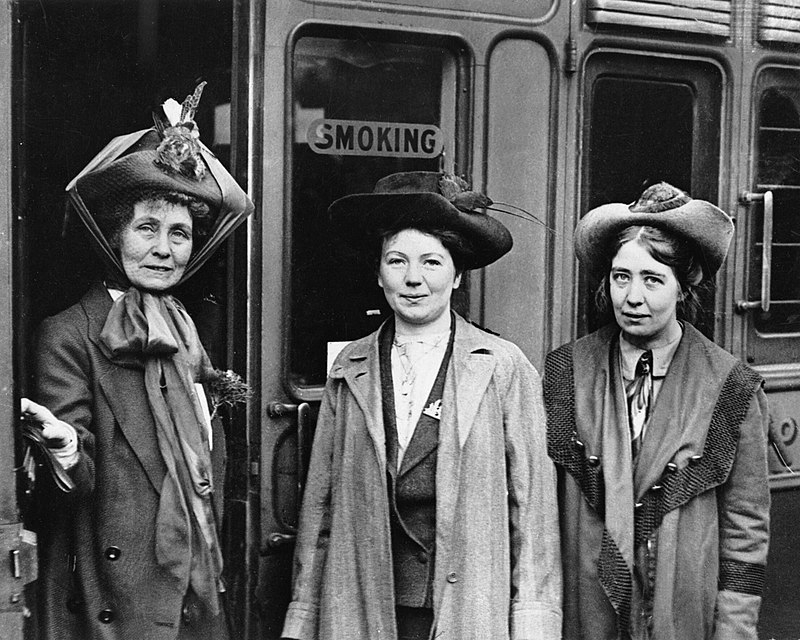
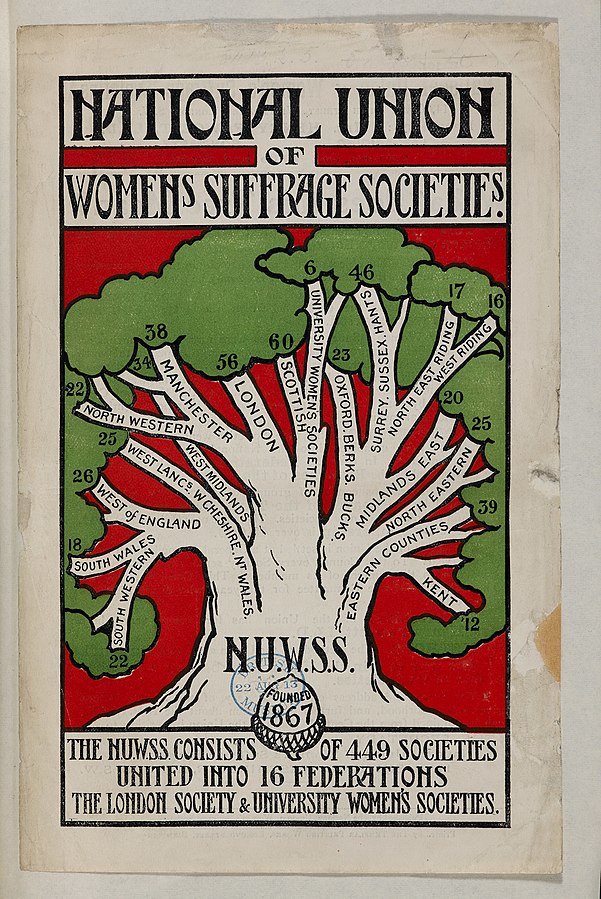
Groups from across Britain combined to form the National Union of Women’s Suffrage Societies (NUWSS) in 1897. Known as the Suffragists, they sought peaceful ways of achieving their aim, such as holding petitions and marches. In 1901 a mill-worker named Selina Cooper presented a petition from female textile workers to the House of Commons with 30,000 signatures. A few years later, in 1907, Millicent Fawcett became the Suffragists’ leader. She was one of Britain’s leading campaigners for equal rights for women. She led the movement's largest peaceful protest yet: the "Mud March", in which 3000 women marched through Central London in support of women's suffrage.


Deeds Not Words
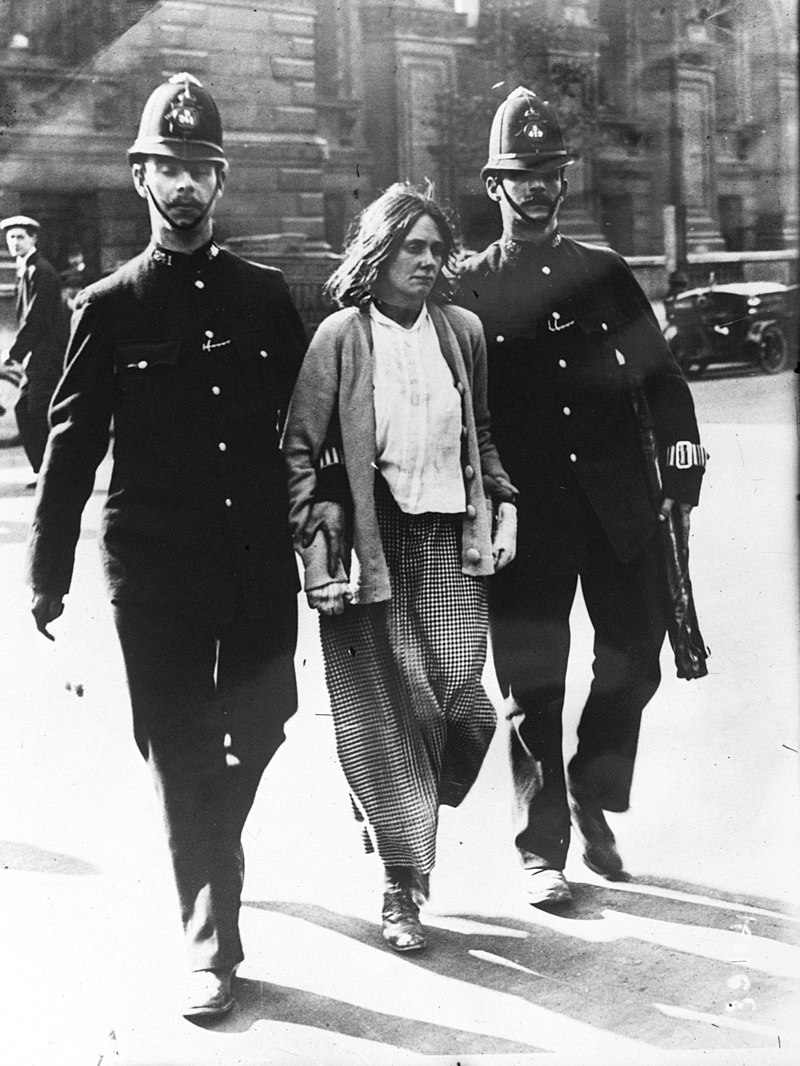
In 1903 a new organization campaigning for women’s suffrage was set up in Manchester. The Women’s Social and Political Union (WSPU) was led by Emmeline Pankhurst and her daughter Christabel. Its members called themselves the Suffragettes, and adopted the motto “Deeds Not Words”. While the Suffragists used peaceful methods of protest, the Suffragettes began using any means necessary, including violence, to get their message across. They chained themselves to railings, burned down buildings, broke shop windows, and attacked paintings in the National Gallery in London. Many went to prison where they went on hunger strike and were force-fed.
A divide
The Suffragettes' willingness to resort to violence opened a deep divide in the women’s movement. Millicent Fawcett and the NUWSS remained committed to achieving the vote through peaceful means. They argued that militancy (using violence) would actually harm women's chances of gaining the vote by discouraging the government from allowing the issue to be raised in Parliament. Violence might also turn public opinion against them.
Despite the publicity gained by the WSPU, the NUWSS (who called themselves "Law-Abiding Suffragists”) retained the majority of the support of the women's movement. By 1913, the NUWSS had 50,000 members compared with the WSPU’s 2000.


Emily Davison
In 1913 came one of the most famous and violent moments of the Suffragettes’ campaign. Emily Davison was killed when she ran in front of the King’s horse on Derby Day. Some people thought that she meant to be knocked down, while others suggested that she was only trying to disrupt the race.
At the outbreak of World War I in 1914, the suffragettes suspended their campaign. Emmeline Pankhurst declared the WSPU’s support for the government, and encouraged women to sign up for war work.
Votes for women
After World War I things changed. The new prime minister David Lloyd George supported women’s suffrage, while his pre-war predecessor, Herbert Henry Asquith, had not. Aware that women had been actively working in industry to support the war effort, public opinion also shifted behind the women’s cause. Led by Millicent Fawcett, campaigners continued to call for equal voting rights for women and men.


In February 1918, the Representation of the People Act was passed, giving all women over the age of 30 the right to vote. Later the same year, the Parliament (Qualification of Women) Act 1918 was passed, allowing women to be elected to Parliament. Only one woman was elected in the 1918 general election, but she represented Sinn Fein in Ireland and did not take her seat (as Sinn Fein were calling for Irish independence, their MPs refused to take their seats at Westminster). The next year, Nancy Astor became the first woman elected to serve as an MP in the House of Commons.
In 1928, the government passed the Representation of the People (Equal Franchise) Act, giving every man and woman over 21 the vote. Finally, women had equal voting status with men in Britain.
Consultant: Philip Parker
pics

Without in any way limiting Q-files Ltd’s exclusive rights under copyright, any use of this publication to “train” generative artificial intelligence (AI) technologies to generate text is expressly prohibited. Q-files Ltd reserves all rights to license use of this work for generative AI training and development of machine learning language models.