
Famous women

CITE
We have made every effort to follow citation style rules, but there may be some minor differences. If in doubt, please refer to the appropriate citation style manual.
Emily Davison. (2025). In Q-files Encyclopedia, History, Famous women. Retrieved from
https://www.q-files.com/history/famous-women/emily-davison
"Emily Davison." History, Famous women, Q-files Encyclopedia, 22 Aug. 2025.
https://www.q-files.com/history/famous-women/emily-davison.
Accessed 1 Sep. 2026.
Emily Davison 2025. History, Famous women. Retrieved 1 September 2026, from
https://www.q-files.com/history/famous-women/emily-davison
History, Famous women, s.v. "Emily Davison," accessed September 1, 2026.
https://www.q-files.com/history/famous-women/emily-davison


Emily Davison
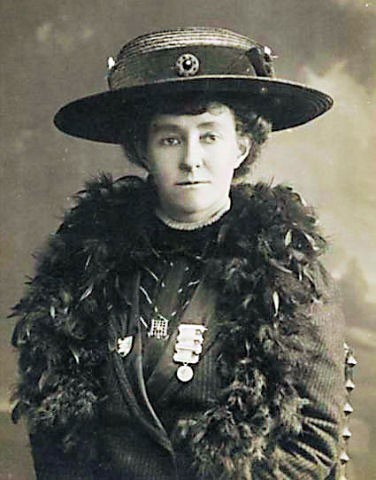
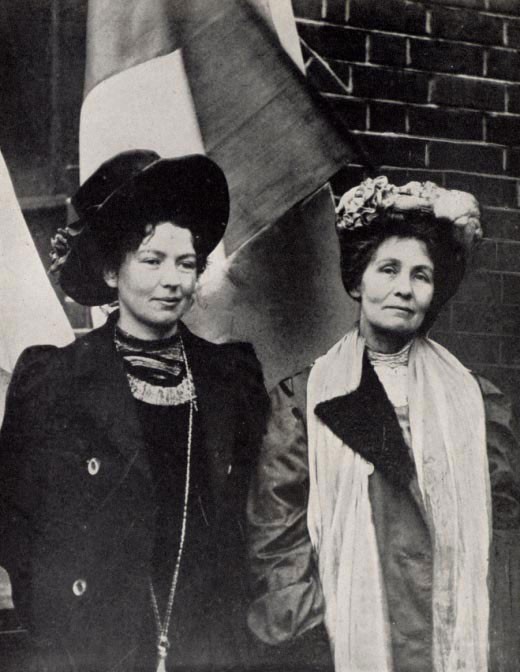
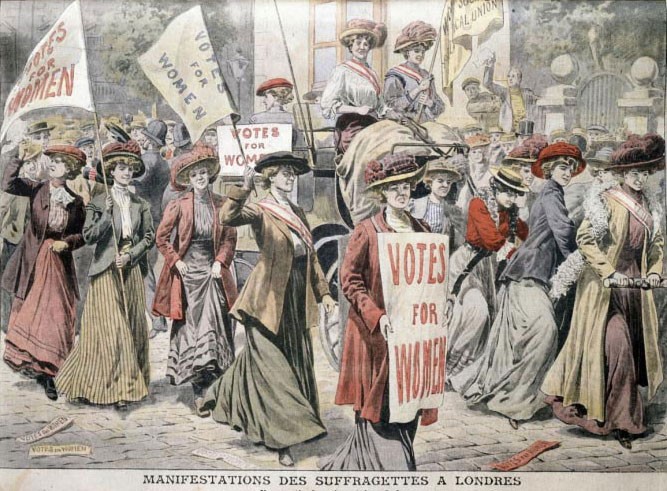
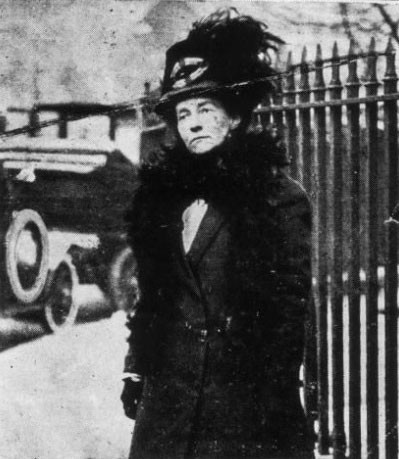
Emily Davison (1872–1913) was an English suffragette who was fatally injured at the Epsom Derby in 1913 when she stepped out on to the racetrack and collided with King George V’s horse. In Britain at the start of the 20th century, women could not vote in parliamentary elections or stand as MPs. Campaigners for women’s suffrage—the right to vote—had set up groups in most major towns. In 1903 a new militant organization, the Women’s Social and Political Union, was founded in Manchester led by Emmeline Pankhurst and her daughter Christabel. Members of this new group were called suffragettes and would use any means necessary, including violence, to get the vote. Some women, for example, chained themselves to railings, broke shop windows and attacked paintings in the National Gallery in London. Many, including Emily Davison, went to prison.
Education
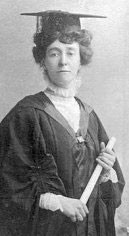
Emily Wilding Davison was born on 11th October 1872 in Greenwich, Kent. She was a clever student, but was limited by the educational opportunities offered to women at that time. She won a scholarship to Royal Holloway College, and then attended Oxford University where she achieved first-class honours in her final exams. She could not graduate, however, because Oxford did not award degrees to women. She found work as a teacher, before taking a degree at the University of London.
Activism
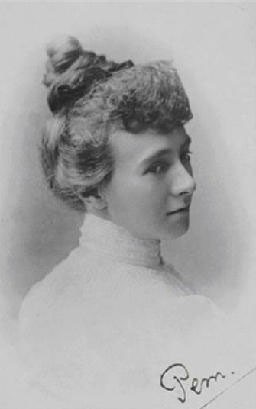
Emily began to devote her spare time to political and social activism. She was angry at the lack of opportunities for women, and particularly that women were denied the opportunity to vote. In 1906 she joined the Women’s Social and Political Union (WSPU), which had been founded three years before by the suffragettes Emmeline and Christabel Pankhurst to fight for the right to vote. In 1909, she gave up her teaching completely to focus on the suffrage campaign.
Violent tactics
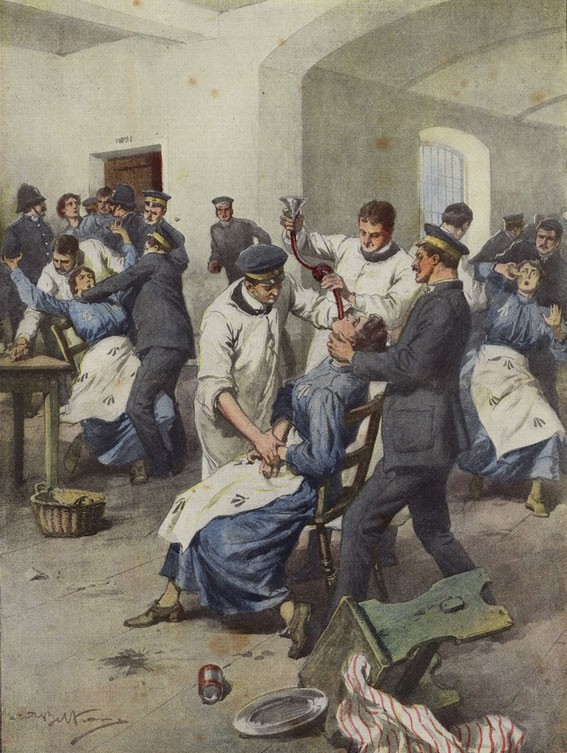
Emily was a fearless campaigner, and from 1909 she and other suffragettes began to employ increasingly violent tactics to get their message across. In 1909 she was arrested several times for stone-throwing and arson, and spent a month in Strangeways Prison in Manchester. In protest at the government’s refusal to treat suffragettes as political prisoners, she followed the policy adopted by other jailed suffragettes of going on hunger strike as soon as she entered prison. The prison guards attempted to force-feed her. On one occasion when she barricaded herself into her cell to try to escape the force-feeding, the guards flooded the cell with freezing cold water.
Emily was arrested again in 1910 for breaking windows in the House of Commons, and in 1912 for setting fire to a pillar box. Once again she and her fellow suffragettes were brutally force-fed. In the belief that a death might put an end to the suffering of her fellow suffragettes, Emily threw herself down an iron staircase. She was left with extensive injuries, but not enough to kill her.
Epsom Derby
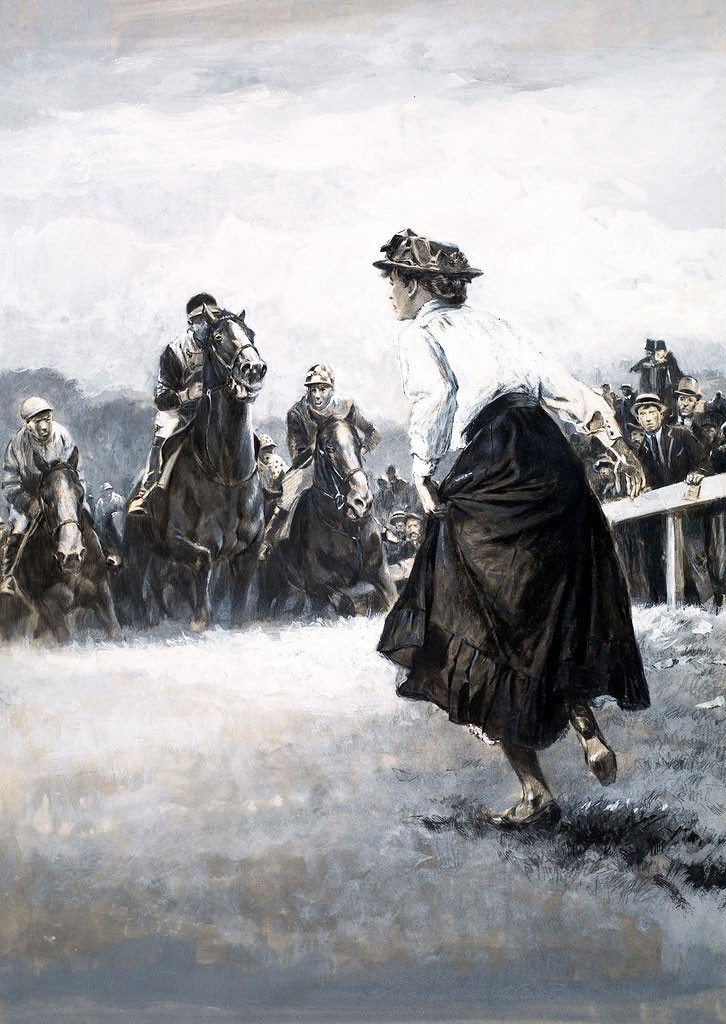
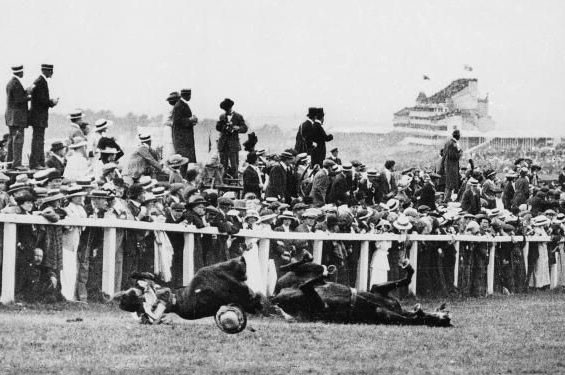
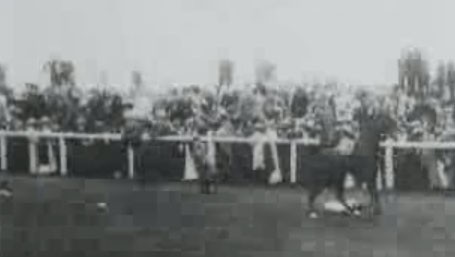
On 4th June 1913, Emily Davison attended one of the biggest meetings in the horse-racing calendar, the Epsom Derby, with the intention of causing some disruption. As the horses rounded the racetrack close to where she was standing, Emily ran out and attempted to grab the bridle of Anmer, a horse owned by King George V. The horse collided with her and trampled her as she fell to the ground. The jockey fell, and the horse ran free. Both Emily and the jockey were taken to hospital. The jockey survived, but Emily died from her injuries four days later.
"Deeds not Words"
Emily Davison’s intentions have been disputed since that day. Some say that she wanted to kill herself as a martyr for the suffragette cause. But a return rail ticket and a ticket to a dance later that day, both found in her purse, suggest that she had plans for the future. According to the police report, she was carrying suffragette flags, and a scarf was found close to her injured body on the track. The whole incident was captured on film, and recent (2013) analysis has suggested that Emily was trying to attach the scarf to the horse’s bridle.
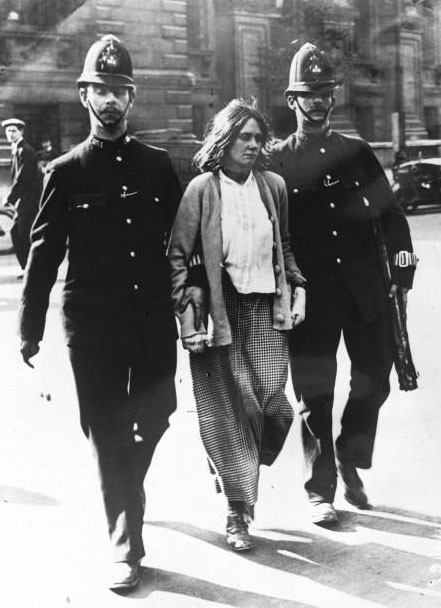
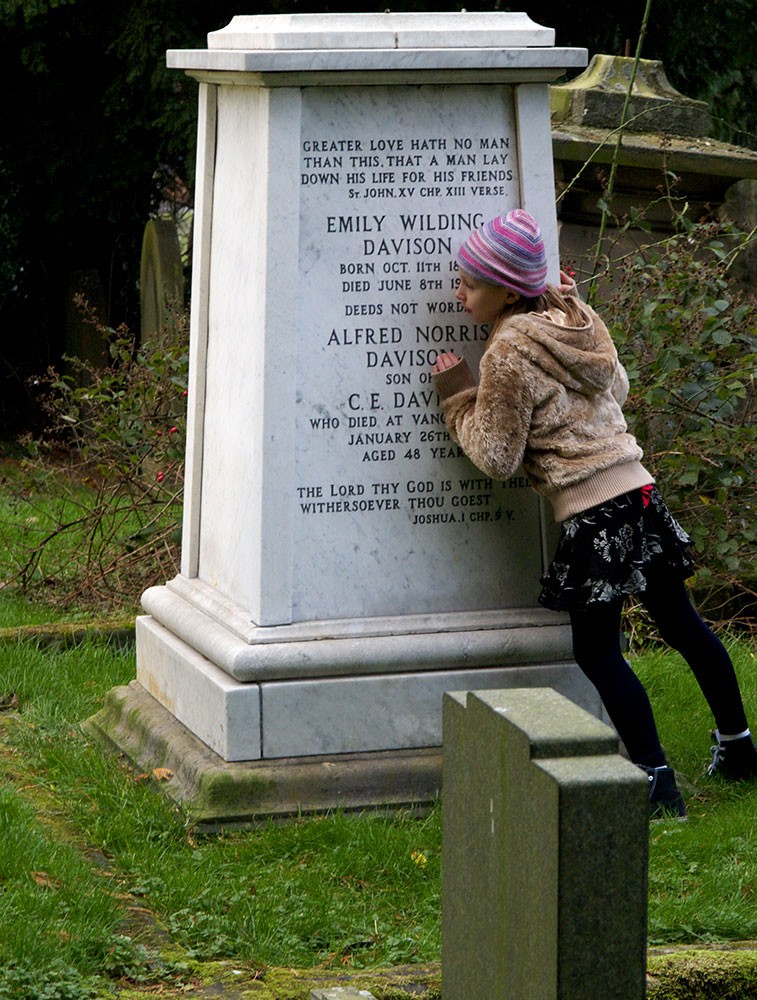
Whatever her intention, Emily’s actions divided public opinion: some people admired her courage, others were appalled at her behaviour and the perceived slight to the king. Thousands of supporters turned out for her funeral, and she was buried in Morpeth, Northumberland (her father’s home). The text on her gravestone reads: "Deeds not Words".
Consultant: Philip Parker
pics
Without in any way limiting Q-files Ltd’s exclusive rights under copyright, any use of this publication to “train” generative artificial intelligence (AI) technologies to generate text is expressly prohibited. Q-files Ltd reserves all rights to license use of this work for generative AI training and development of machine learning language models.