
Britain in World War I

CITE
We have made every effort to follow citation style rules, but there may be some minor differences. If in doubt, please refer to the appropriate citation style manual.
Britain after World War I. (2023). In Q-files Encyclopedia, History, Britain in World War I. Retrieved from
https://www.q-files.com/history/britain-in-world-war-i/britain-after-world-war-i
"Britain after World War I." History, Britain in World War I, Q-files Encyclopedia, 4 Oct. 2023.
https://www.q-files.com/history/britain-in-world-war-i/britain-after-world-war-i.
Accessed 6 Aug. 2026.
Britain after World War I 2023. History, Britain in World War I. Retrieved 6 August 2026, from
https://www.q-files.com/history/britain-in-world-war-i/britain-after-world-war-i
History, Britain in World War I, s.v. "Britain after World War I," accessed August 6, 2026.
https://www.q-files.com/history/britain-in-world-war-i/britain-after-world-war-i


Britain after World War I
After World War I ended in 1918, most soldiers returned to civilian life. But for many this was not an easy time. Some were suffering from physical disability, including amputations, lung problems or blindness. Training centres were set up to support disabled ex-servicemen and retrain them in new trades. The war also had a lasting effect on the former soldiers' mental health: it was difficult to forget about their experiences, the horrors of the war. Ten years or more after the war had ended, a number of ex-servicemen were still being treated for shell shock. This is a psychological condition we now call post-traumatic stress disorder (PTSD), but which was poorly understood at the time. For many ex-soldiers and their loved ones who took on the burden of caring for them, their lives would never the same again.


1918 general election
Prime Minister David Lloyd George called a general election immediately after the Armistice, and it was held in December 1918. For the first time, the suffrage (right to vote) was extended to all adult males (as long as they were over 21 years old and were resident householders) and to women over 30 who met minimum property qualifications. This decision, enacted in the Representation of the People Act 1918, was accepted as recognition of the effort and sacrifice made by ordinary men and women (up until then no woman was entitled to vote) to the war effort. During the election campaign, Lloyd George asked "What is our task? To make Britain a fit country for heroes to live in."
The government, a coalition of Conservatives and Coalition Liberals under Lloyd George, "the Man Who Won the War", swept to victory over the Liberal Party led by Herbert Asquith and the newly emerging Labour Party.
Spanish flu
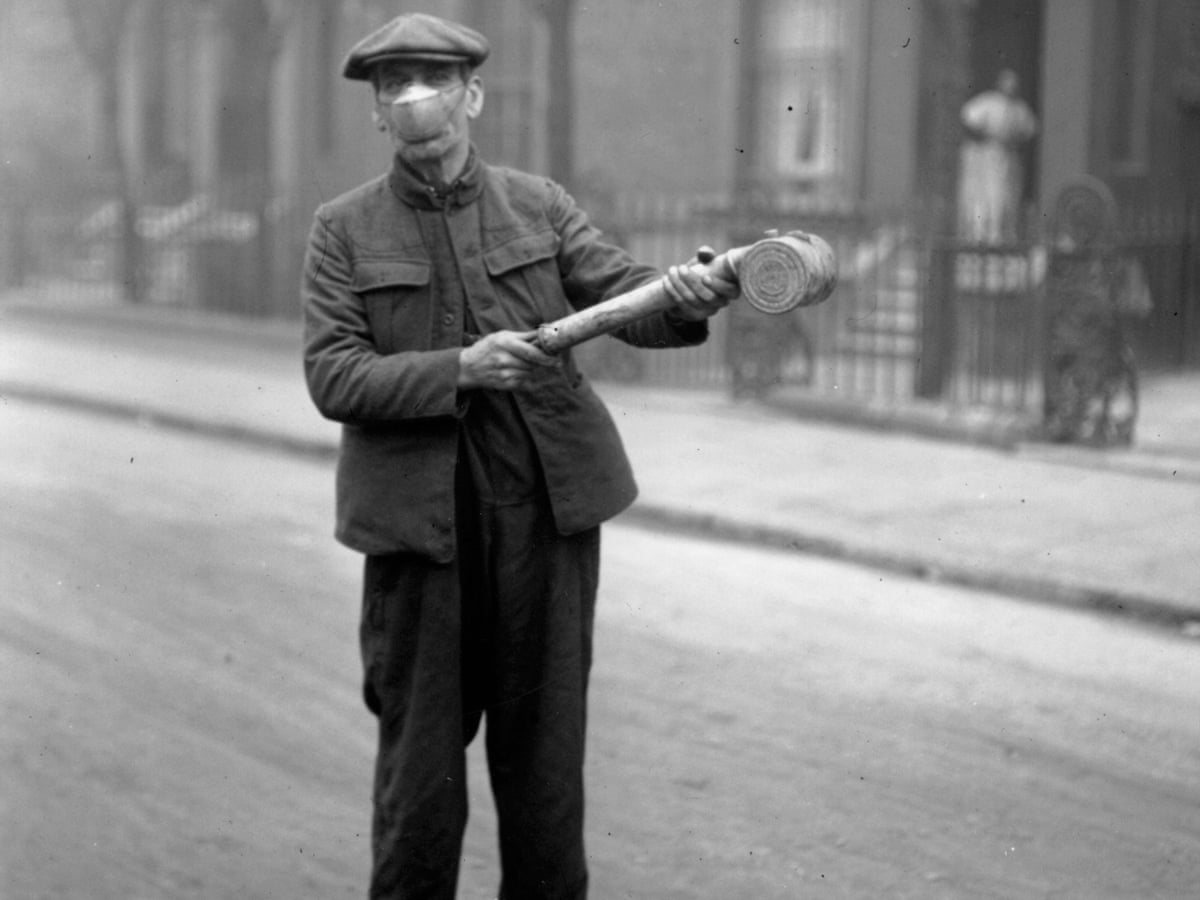
The influenza (flu) outbreak of 1918–19 was one of the most devastating pandemics (diseases which affect large regions of the world) in human history. It became known as Spanish flu. This was because Spain was neutral during the war, which meant newspapers there were not restricted in what they could report. They duly covered the deadly pandemic in detail, whereas those the warring powers, for fear of harming morale, did not.
Spanish flu is believed to have infected 500 million people around the world—nearly a third of the global population at the time. Over 50 million people perished, more than double the number of those who were killed during the war itself. In Britain, around 250,000 people died. Many of the pandemic's victims were young adults.


First reported in March 1918, a much deadlier wave began to spread in August of that year. It is not known where Spanish flu originated, but is likely to have spread amongst the men packed together in the trenches and crowded field hospitals of the Western Front.
From there, the virus quickly fanned outwards across Europe and the rest of the world. This was because many soldiers who were suffering from the disease were, instead of being made to stay put and remain isolated, sent away on crowded trains. They went first to hospitals behind the lines, and from there back to their home countries, taking the deadly mutated strain of the virus with them.
Demobilization
Although the Armistice of November 1918 ended the fighting on the Western Front, most of the millions of men who were serving there did not immediately return home. The British government knew that had they all returned at once—with shortages and rationing still part of life on the home front—chaos would result. It was also feared that there would be labour unrest.


A demobilization ("demob") scheme was put into action, to ensure the gradual release of men from military service. Servicemen were graded according to their peacetime occupation into a number of groups. Priority groups, for example miners and agricultural workers, were demobbed first. Some men had to wait several months for their turn. The long wait caused not only resentment, but in some cases strikes, mutiny (see below) and even riots. Concern over this rising discontent eventually made the authorities to speed up demobilization. In November 1918, the British Army had numbered almost 3.8 million men. A year later, it had been reduced to less than 900,000 and by 1922 to just over 230,000.

Many ex-servicemen—promised a "land fit for heroes" by Lloyd George—suffered hardship when unemployment rose rapidly. Some white men came to the mistaken belief that they were not getting jobs or houses because black people were taking priority. These led to race riots breaking out across Britain in 1919. Black sailors and black-owned businesses were targeted and attacked by white crowds in cities including Glasgow, London, Liverpool, South Shields, Cardiff and other seaports across Britain.


For many men who had spent months or years overseas found that their homecoming was an anti-climax. Looking forward to being greeted as returning heroes, many reported being given somewhat less than an enthusiastic welcome. Some men were stationed at army camps where they were given neither food nor money—and found their cramped conditions enabled the Spanish Flu to spread rapidly, leading to thousands of deaths.
Unemployment and poor living standards at home led some to think that staying in the army was a better option, and many re-enlisted for short periods of service. Some signed up to fight in the Russian Civil War (1918–21) on the side of the White Army, while others headed for Ireland where they were recruited into the Royal Irish Constabulary (RIC) to fight the Irish Republican Army (IRA) during the War of Independence (1919–21).

Calais mutiny
In the closing months of the war, and on into 1919, there were widespread mutinies, strikes and riots amongst the rank-and-file soldiers. The uprisings were provoked by delays to demobilization, but these came on top of a number of grievances—including poor food, substandard accommodation, low wages and brutal mistreatment by officers. Protests and rebellions broke out both in Britain and in France in late 1918 and early 1919, the most serious taking place at British army camps surrounding Calais.


Unrest amongst the men stationed there had been building for several months over issues such as cruel and humiliating punishments, the censorship of news from home and bad working conditions. There was also discontent over the harsh 10-year sentences imposed on five teenage soldiers for relatively minor breaches of discipline. In January 1919 these grievances erupted into mutiny, with eventually around 20,000 troops (including women’s units of the Queen Mary's Army Auxiliary) walking out. The mutineers even secured the support of local French railway workers who prevented the movement of all British military traffic.
The British Army brought in troops to put down the mutiny, but the men were reluctant to act against their fellow soldiers and many joined the rebellion themselves. The army chiefs were forced to give in to the soldiers’ demands for improved food, new barracks, greater freedom of leave and the abolition of weekend work.
Consultant: Philip Parker
pics
Without in any way limiting Q-files Ltd’s exclusive rights under copyright, any use of this publication to “train” generative artificial intelligence (AI) technologies to generate text is expressly prohibited. Q-files Ltd reserves all rights to license use of this work for generative AI training and development of machine learning language models.