
Britain in World War I

CITE
We have made every effort to follow citation style rules, but there may be some minor differences. If in doubt, please refer to the appropriate citation style manual.
Battles of the Western Front. (2023). In Q-files Encyclopedia, History, Britain in World War I. Retrieved from
https://www.q-files.com/history/britain-in-world-war-i/battles-of-the-western-front
"Battles of the Western Front." History, Britain in World War I, Q-files Encyclopedia, 17 Oct. 2023.
https://www.q-files.com/history/britain-in-world-war-i/battles-of-the-western-front.
Accessed 6 Aug. 2026.
Battles of the Western Front 2023. History, Britain in World War I. Retrieved 6 August 2026, from
https://www.q-files.com/history/britain-in-world-war-i/battles-of-the-western-front
History, Britain in World War I, s.v. "Battles of the Western Front," accessed August 6, 2026.
https://www.q-files.com/history/britain-in-world-war-i/battles-of-the-western-front


Battles of the Western Front
The Western Front was one of the main theatres (regions where fighting occurs) of World War I and it was where most British servicemen fought. Following the outbreak of war in August 1914, the German army invaded Belgium and northern France. Their advance was halted by French and British forces at the Battle of the Marne. Both sides then dug in along a meandering line of fortified trenches stretching from the North Sea to the Swiss frontier: the Western Front. Despite a number of offensives made along the front between 1915 and 1917, no significant advances were achieved by either side. It was not until the German Spring Offensive of 1918 that a decisive breakthrough was made. The Allies' Hundred Days Offensive, beginning that August, pushed the Germans back, eventually causing their military to collapse. The Germans surrendered in November and the terms of peace were settled in the Treaty of Versailles the following year.
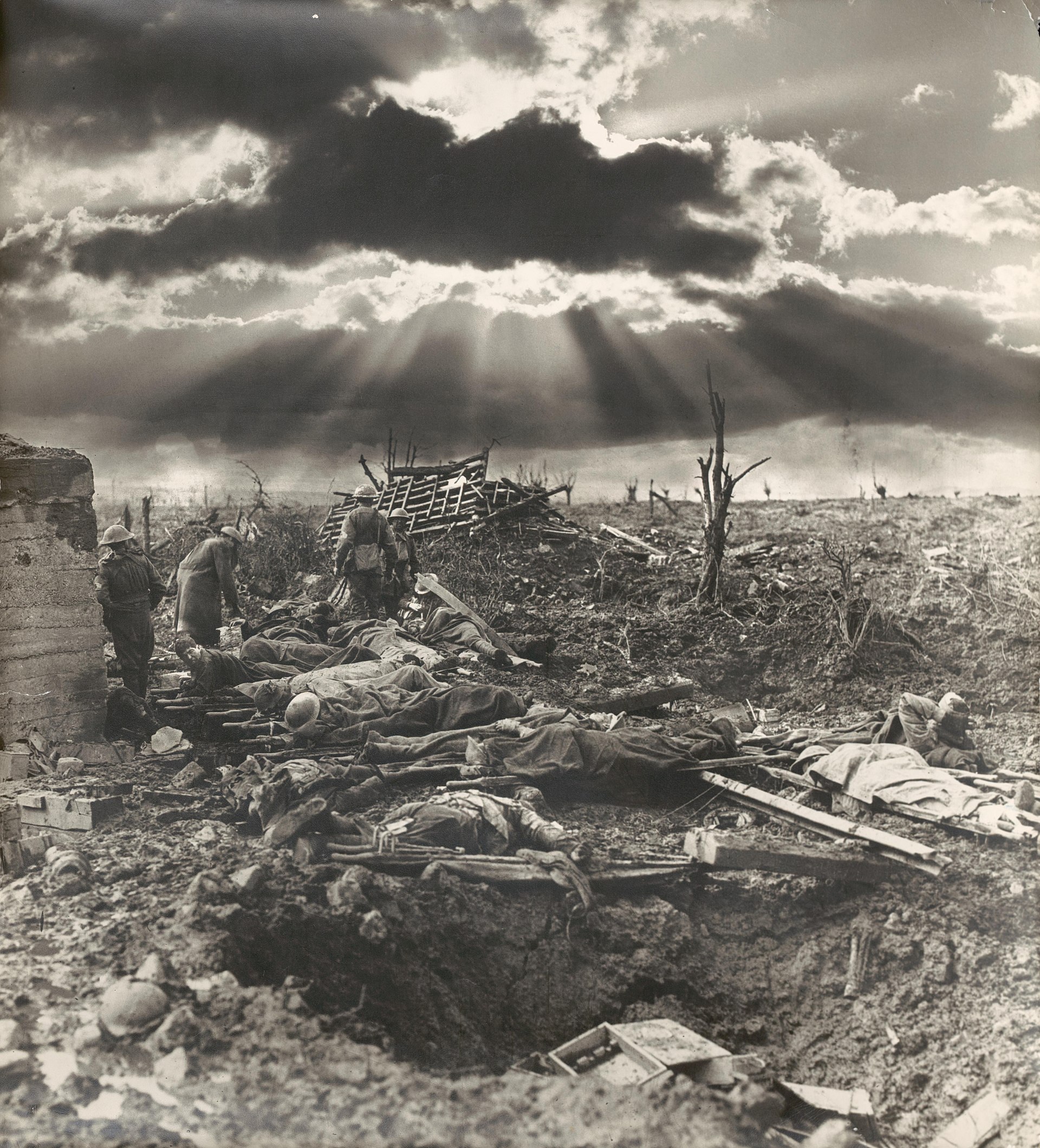

1914
At the outbreak of war, Germany's intention was to defeat France quickly, enabling it to divert its full forces to the Eastern Front against Russia. Following what was called the Schlieffen Plan, the German army would sweep through northern France before turning south to take Paris, in so doing forcing the French government to surrender. But the German commander, General Helmuth von Moltke, decided to alter the plan and send his forces east of Paris to attack the French army.
The German advance was delayed by the resistance put up by combined forces of the French army and the British Expeditionary Force (BEF) in the Battle of the Frontiers, so-called because the conflict was fought along the eastern frontier of France and the southern frontier of Belgium. The BEF met the Germans at the Battle of Mons on 23rd August 1914. It was the first battle fought by British soldiers in Western Europe since the Battle of Waterloo, 99 years earlier.
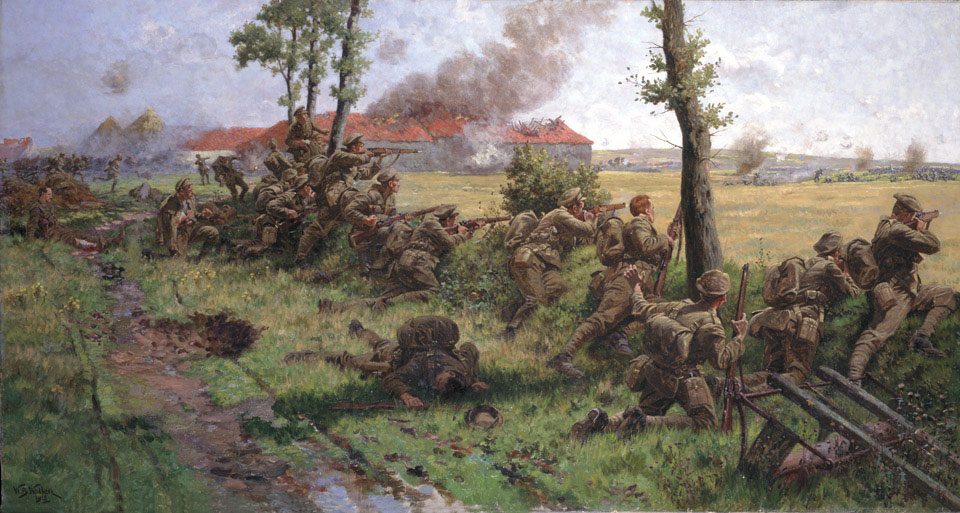
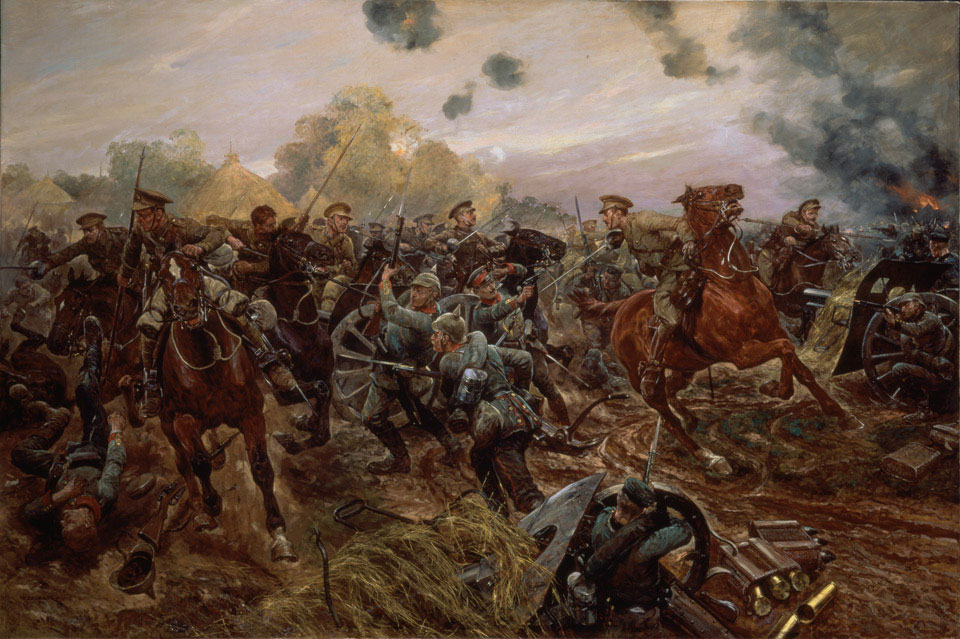
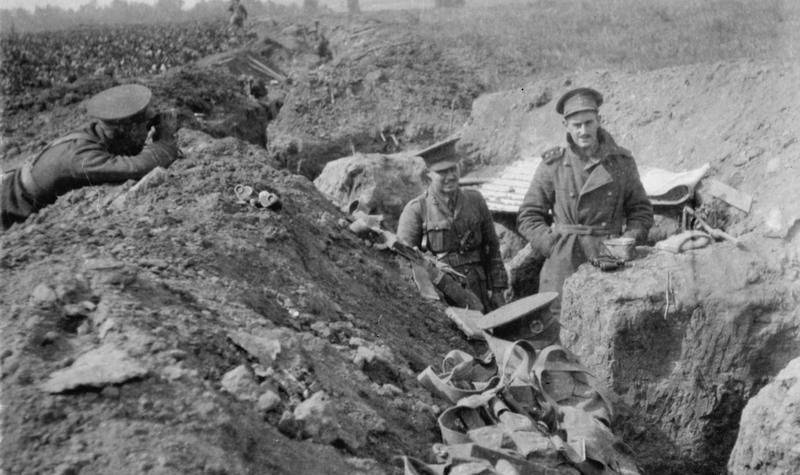
Forced into retreat by the superior strength of the German army, the BEF took up a new position on the outskirts of Paris. There, they and the French forces counter-attacked the Germans at the First Battle of the Marne, 6th–10th September 1914. With both sides suffering huge casualties, the battle ended in stalemate: no gains were made by either side. But the Allies did succeed in halting the advance of the Germans, who retreated to an area of high ground above the River Aisne. The Allies attempted to push the Germans farther back, launching an attack under cover of fog on 13th September in the First Battle of the Aisne. The Germans resisted the onslaught before inflicting heavy losses on Allied troops. During the battle, both sides dug trenches to protect themselves against enemy fire.
The battles of the Marne and Aisne saw the end of "mobile" warfare (the use of rapid movement of forces). Terrible casualties, brought about by the use of machine guns and artillery against infantry and cavalry fighting in the open, were suffered during the opening months of the war.
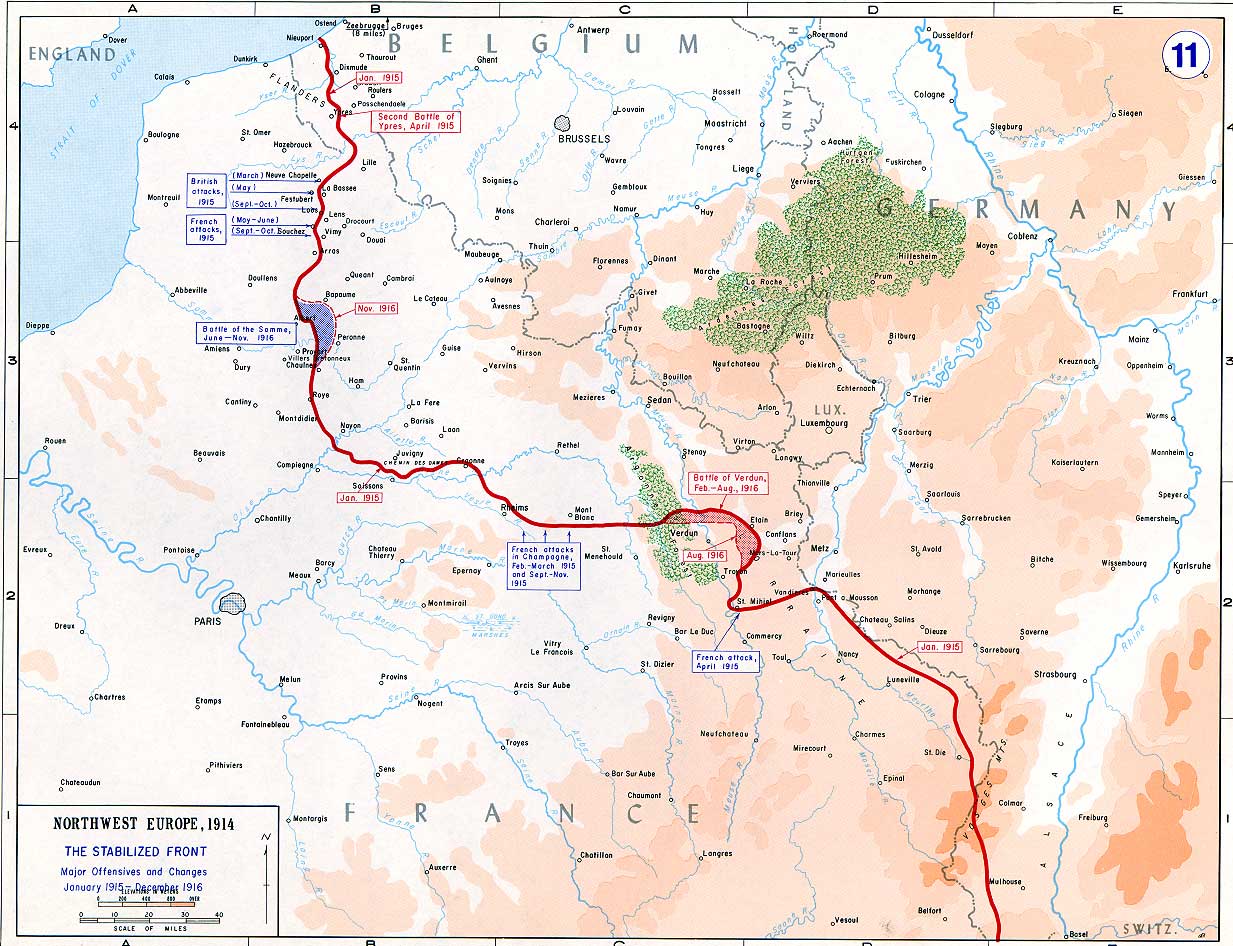
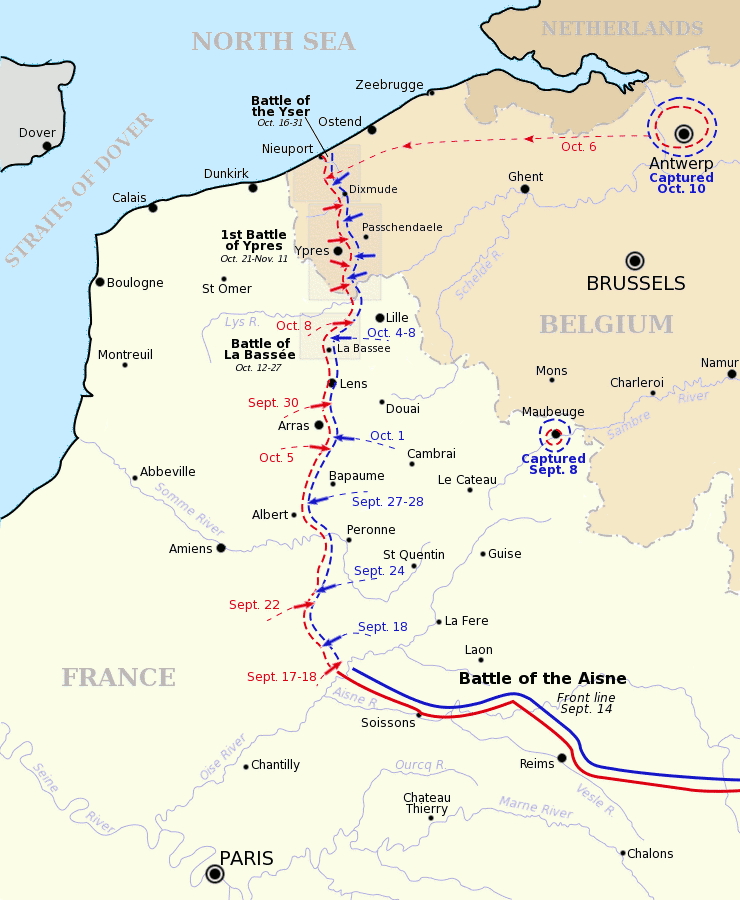
Both sides now gave up launching head-on attacks and began instead to try and move their forces around their opponents' northern flank in an attempt to surround them. This period, lasting between late September and early October 1917, is called the Race to the Sea. Both armies pushed further and further northwards towards the North Sea coast of Belgium as they attempted to outflank their opponents. The trenches they dug as they pressed northwards eventually formed a continuous line stretching about 640 kilometres (400 miles) from the Belgian coastal town of Nieuwpoort southeastwards to the border with neutral Switzerland. This was the Western Front.


The Race to the Sea ended with the First Battle of Ypres, which took place between 19th October and 22nd November in 1914. It saw the British, Belgian and French forces repulse attacks made by German forces in Flanders (northern Belgium) over a period of four weeks. Britain lost around 8000 men in the battle, with a further 50,000 injured. But Allied defences—entrenched infantry armed with artillery and machine guns—held.
1915
The first major British offensive of World War I took place on 10th March 1915 when they attacked the German lines midway between Bethune and Lille in the Battle of Neuve Chapelle (10th–13th March). The plan was to break through the German lines, and advance to the Aubers Ridge, then on as far as the city of Lille if possible. The infantry attack went well, and by nightfall the village of Neuve Chapelle had been captured. But lack of reinforcements and artillery saw the British beaten back by a German counter-offensive. Eventually only a small area of land had been gained at a cost of over 7000 British and 4000 Indian casualties.

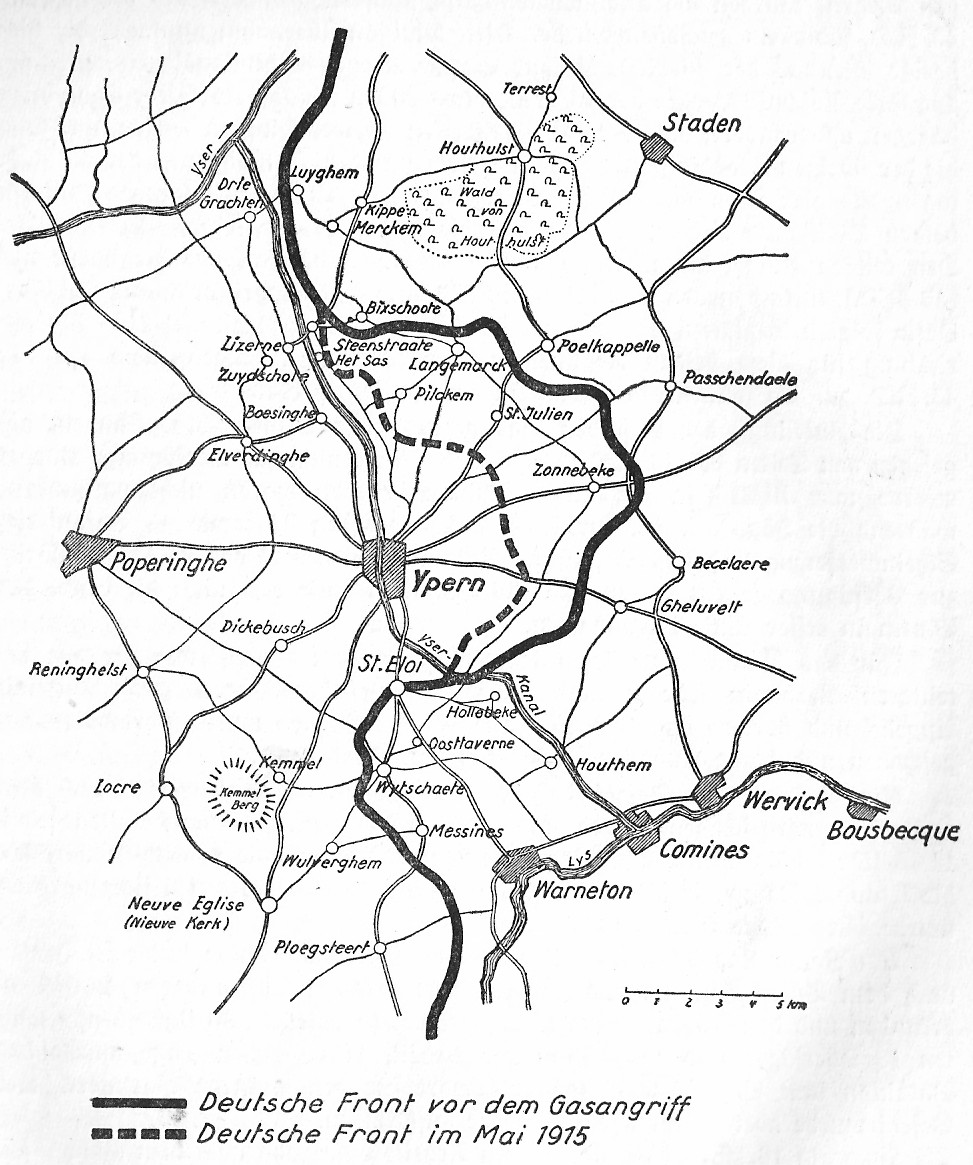
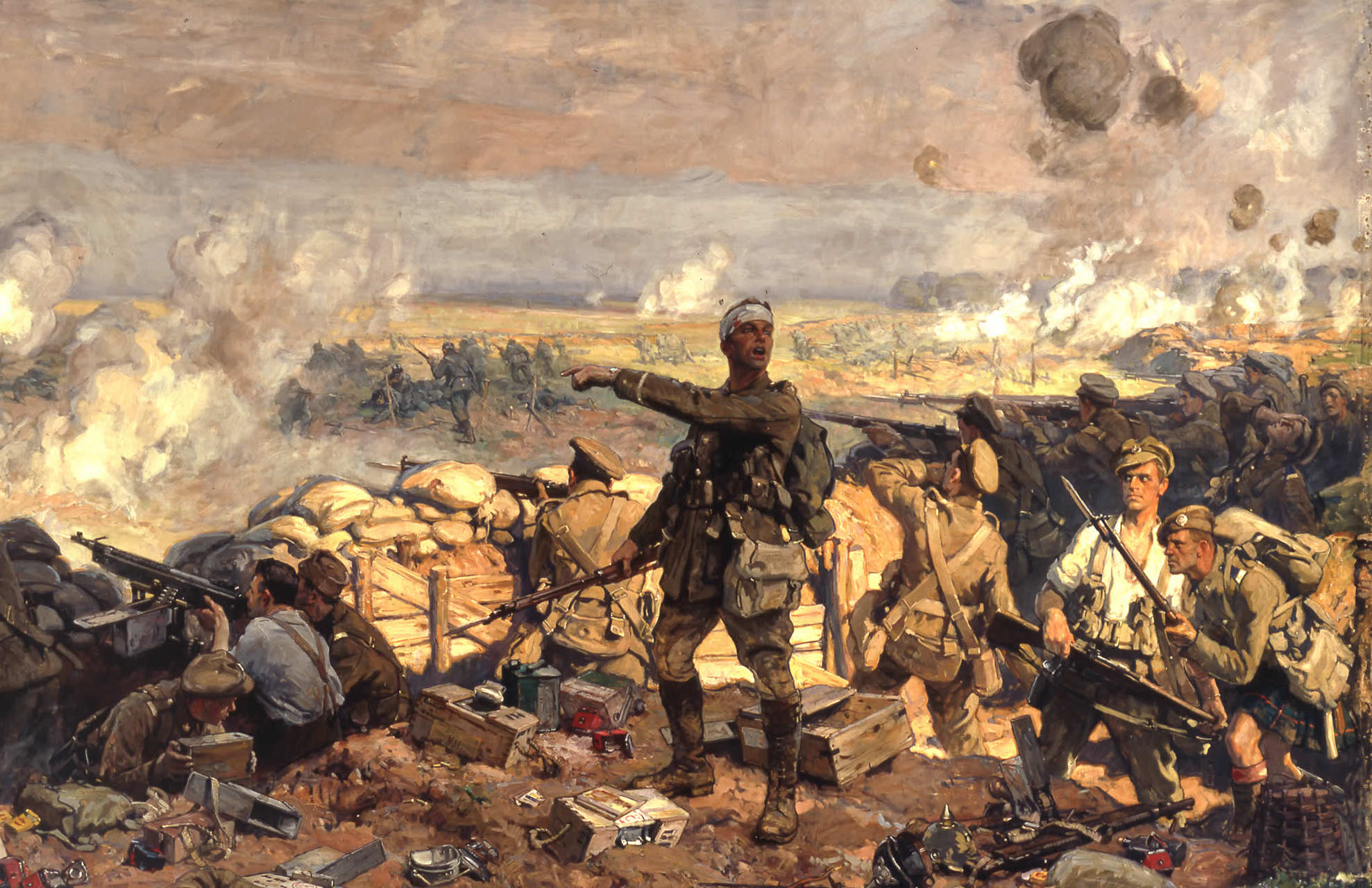
The next major conflict for the British forces was the Second Battle of Ypres, which lasted from 22nd April to 25th May. Supported by the Canadian Expeditionary Force (CEF) and soldiers from India, British troops fought alongside French and Belgium forces against the German army. This particular battle is remembered today for the first use of poison gas on the Western Front. German forces introduced chlorine gas canisters into the battle on the first day of fighting. Despite this, the Allies were able to prevent the Germans making inroads into their territory.
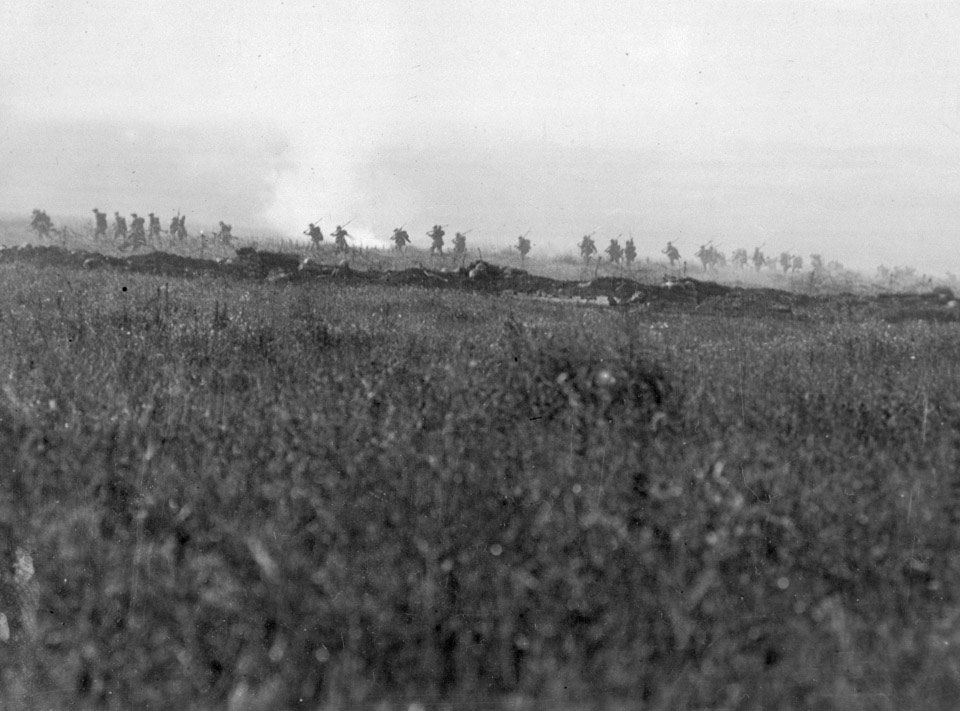
At the Battle of Loos (25th September–13th October 1915), the British launched a poison gas attack of their own, as the Allies tried once more to break through the German defences. The artillery bombardment that preceded the infantry advance fell too short, however, failing to destroy the barbed wire or machine gun nests. The German defences were far superior to the Allies' offensive weaponry, and the attack was thwarted. The Battle of Loos is also notable as the first engagement of New Army units made up of Kitchener's volunteers.

1916
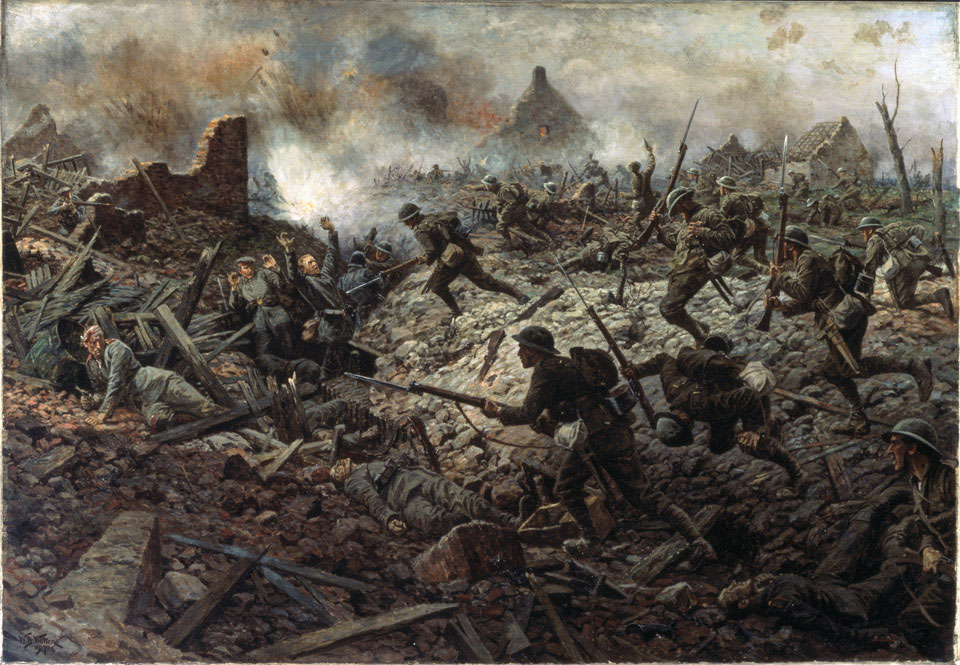
The Battle of the Somme, which took place in the farmland near the River Somme in northern France between 1st July and 18th November 1916, is remembered today as one of the bloodiest battles in human history, with more than a million casualties suffered on both sides. Allied commanders hoped that an assault on this stretch of the Western Front would relieve pressure on the French struggling to hold back a German attack at the Battle of Verdun. That 302-day conflict, fought between German and French armies, raged from 21st February and 18th December. It saw German territorial gains eventually overturned by determined French counter-offensives at the cost of roughly 150,000 soldiers dead on both sides.
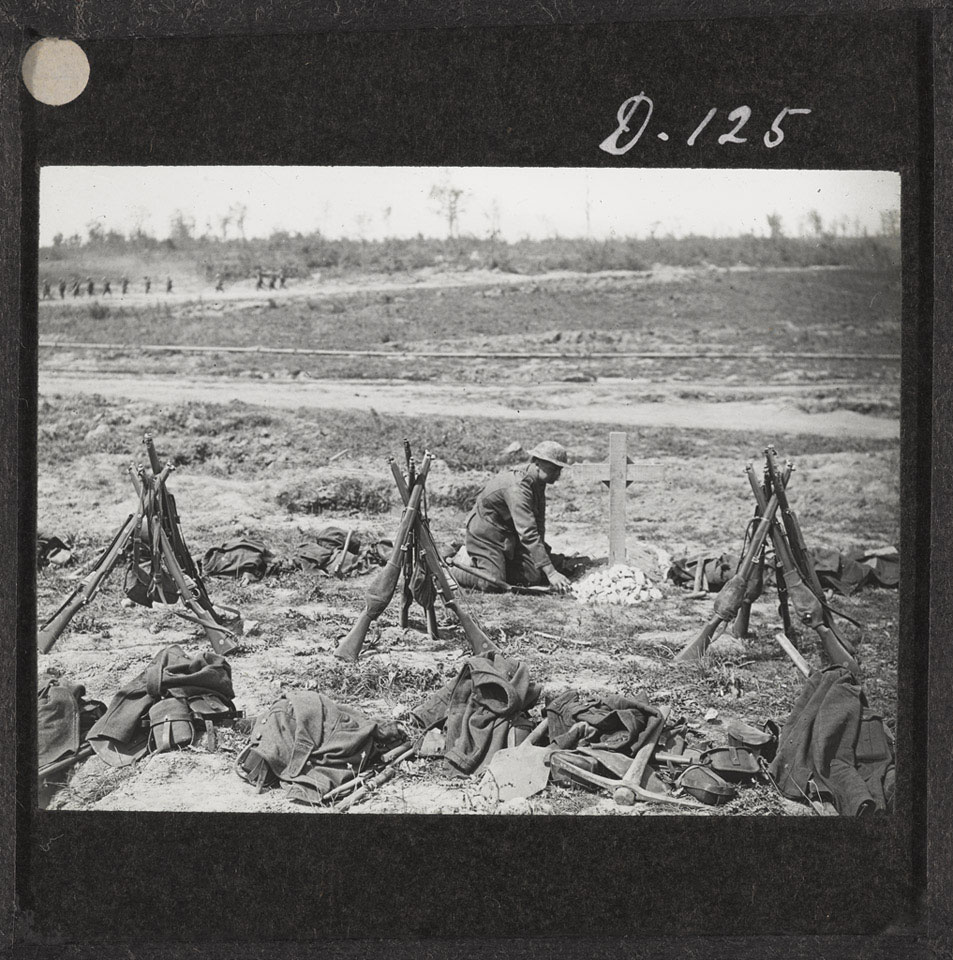
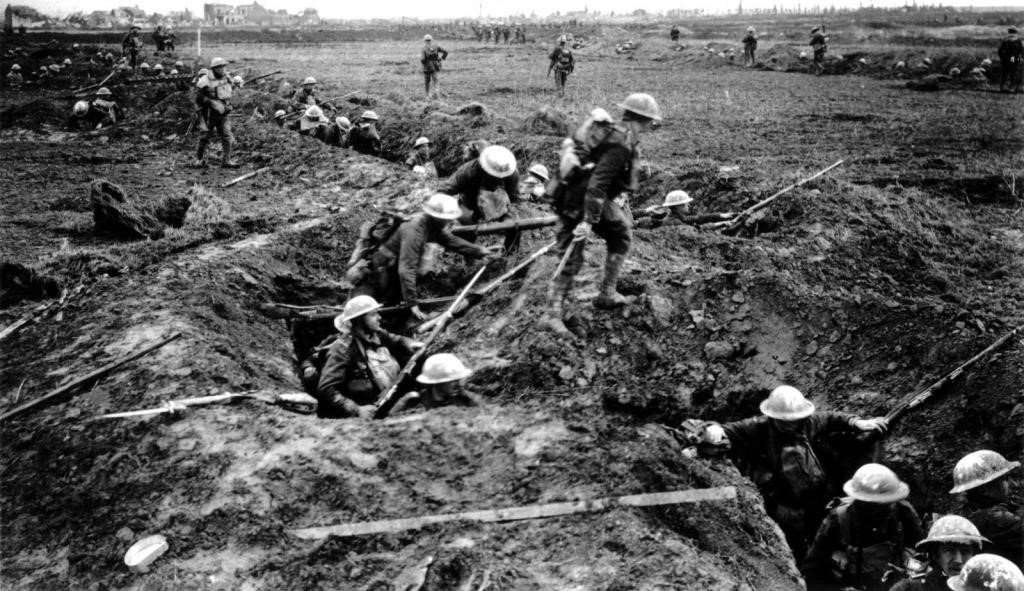
At the Somme, British artillerymen bombarded German lines with shells for seven days and then, on 1st July, sent 100,000 infantry over the top to attack them. But the Germans, protected by their own deep trenches, managed to weather the bombardment. As the British soldiers advanced across No Man's Land they were mown down by German machine gunfire. Many thousands of British soldiers were killed, with only a tiny amount of territory gained. Yet in spite of these heavy losses, Army commander General Douglas Haig decided to press on with more attacks. Even with the introduction of tanks to the battlefield in September, British forces failed to break through the German defensive lines decisively, and continued to endure terrible casualties. (You can read more about the Battle of the Somme here).
1917
The Battle of Arras was fought from 9th April to 16th May 1917. British troops attacked German defences near the French city of Arras. The plan was for the Canadian Corps to capture Vimy Ridge, then advance towards Cambrai, so diverting German reserves from the French front. But as the Allied advance slowed and the German defence recovered, the battle became a costly stalemate for both sides. After a long bombardment, the Canadians eventually captured Vimy Ridge.
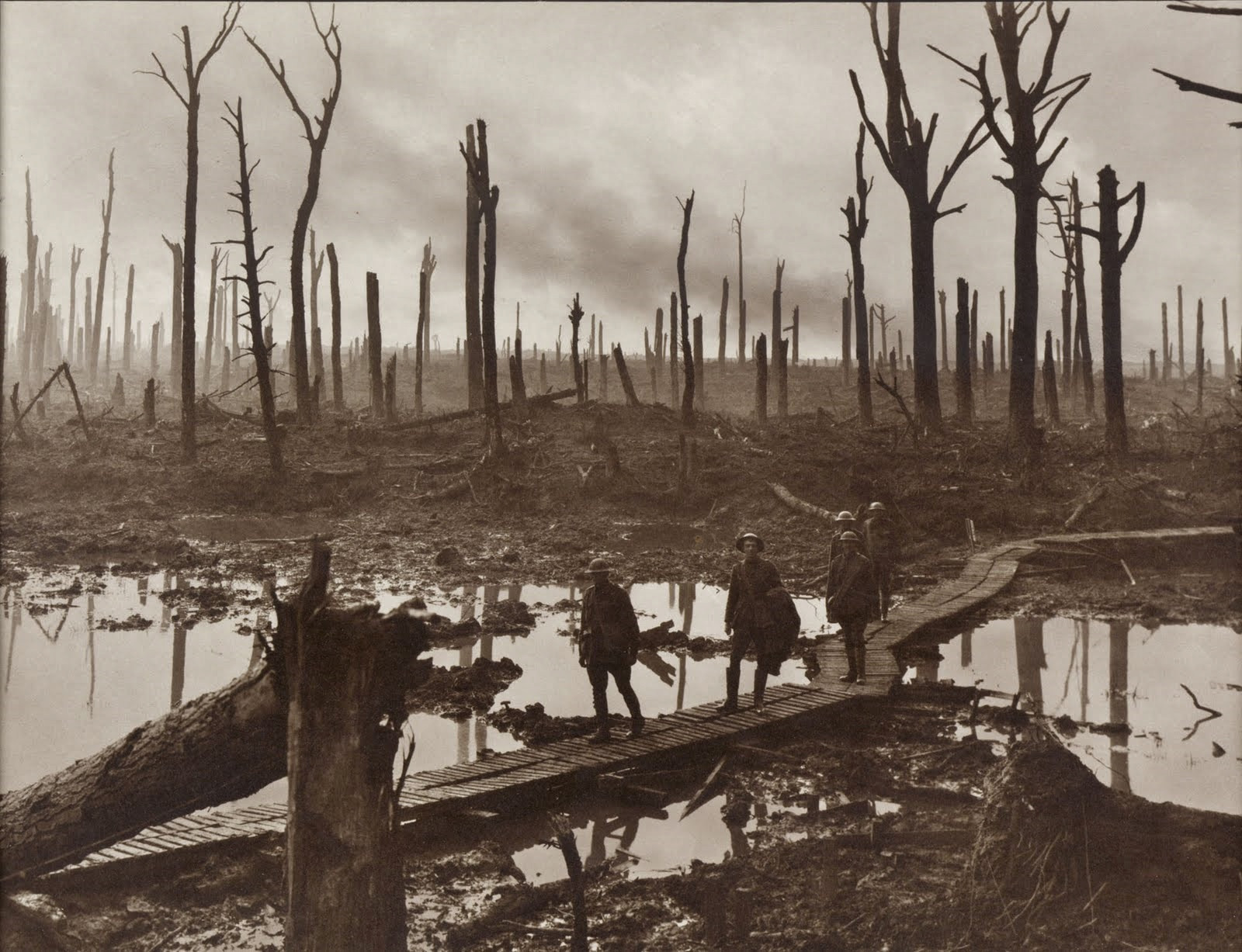
More often known as the Battle of Passchendaele, the Third Battle of Ypres was fought between the Allies and Germany from 31st July to 10th November. Both sides once again suffered heavy casualties and endured appalling conditions. The Germans held the area of higher ground that surrounded the Ypres Salient (see map above). Haig wanted to push their forces back and break through to capture the German-occupied Belgian ports used by U-boats north of the region.
On the first day, British and French forces made some significant gains—but then it began to rain heavily. The rain continued on and off for three weeks, turning the battlefield into a quagmire. Soldiers, horses and tanks struggled to get through the heavy, sticky mud. It was almost impossible to manoeuvre artillery into new positions to support the troops. The Allies were soon pushed back by German counter-attacks and lost much of the territory they had gained.
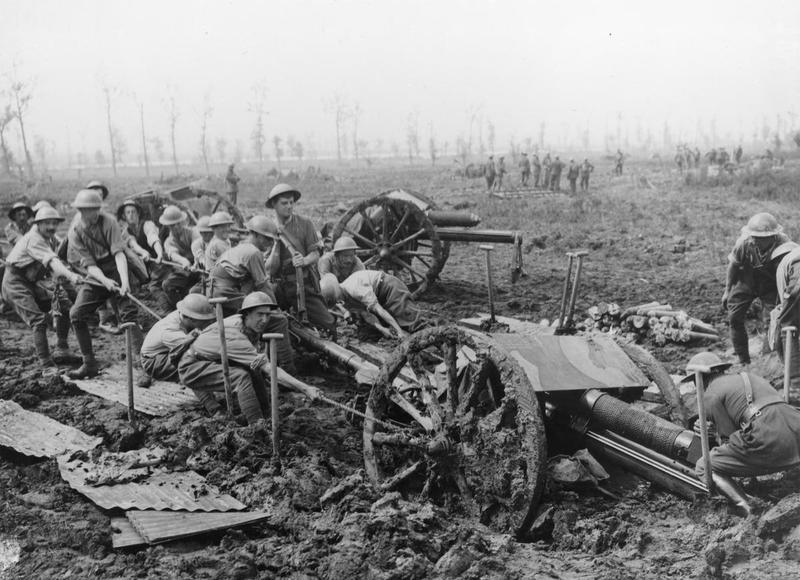
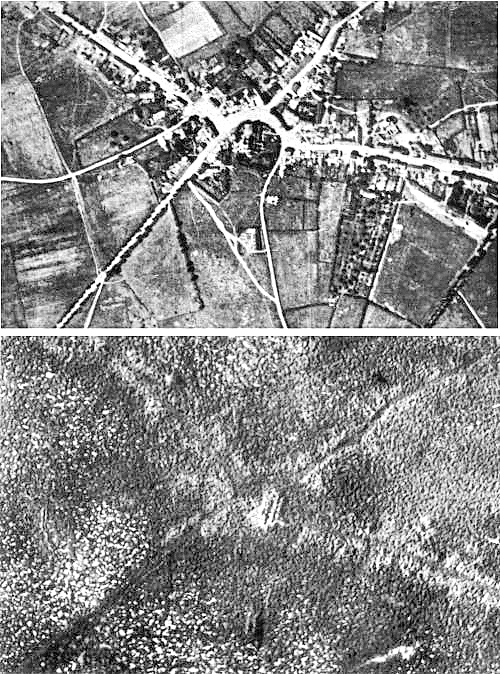
Helped by drier weather, Canadian troops were finally able to capture the village of Passchendaele on the ridge above Ypres on 10th November. The vital railway to the ports still lay several kilometres away, however. With heavy rain once again creating terrible conditions, the offensive was finally called off. In the three and half months, the Allied forces had advanced barely 8 kilometres (5 miles), suffering horrendous casualties, estimated at around 250,000 British soldiers killed or injured and 16,000 Canadian losses.
Haig was later severely criticized for continuing the offensive long after the operation had lost its strategic purpose. Today, Passchendaele has come to symbolize the horrors associated with the war on the Western Front.
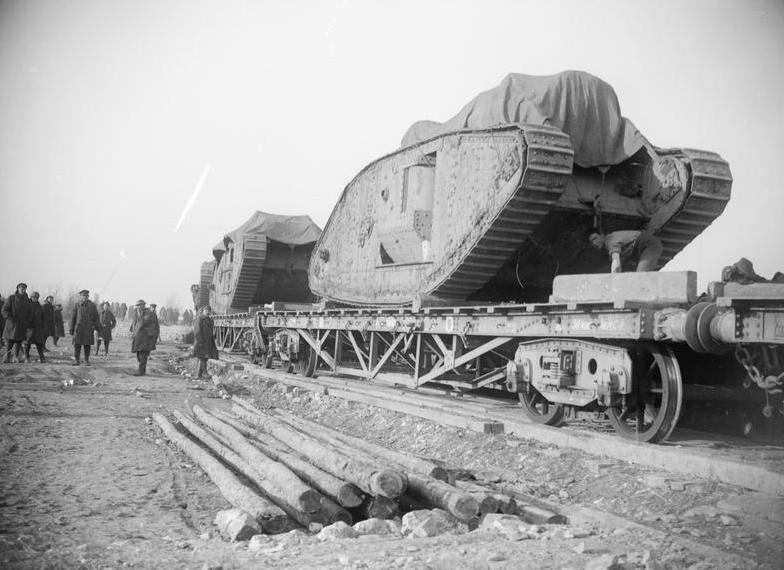
In the Battle of Cambrai (20th November–6th December) the British mounted an attack using some 378 tanks. But after a successful advance on the first day, the tanks' unreliability meant that only half that number could be used the next day, limiting progress. German artillery and infantry defences drove the British back. The Germans then mounted their own counter-offensive, using "stormtrooper" tactics (men rushing forward in small groups using whatever cover was available). As usual, little ground was gained by either side while many thousands of casualties were suffered.

1918
The Eastern Front was a major battleground between the armies of Germany and Austria-Hungary on one side and Russia on the other. Large numbers of German troops fought there, but when Russian involvement in the war ended at the Treaty of Brest-Litovsk on 3rd March, these men could now be transferred to the Western Front. On 21st March, the reinforced German army duly launched a major attack against the Allies. Known as the Spring Offensive, its purpose was to win the war before the full might of the American army—the US had declared war on Germany in April 1917—had arrived.
The German attack was, to begin with, hugely successful, with gains of up to 100 kilometres (60 miles) into previously-held Allied territory—massive progress compared to previous offensives. But the advances stalled as the lines between front-line troops and their supplies, artillery and reserve troops became too stretched. Meanwhile, the Allies—British, British Dominion, French and Belgian armies, now reinforced by US troops—rallied and launched a counter-attack involving hundreds of tanks at the Second Battle of the Marne (15th July–18th July). The Germans were overwhelmed on their right flank, suffering severe casualties.
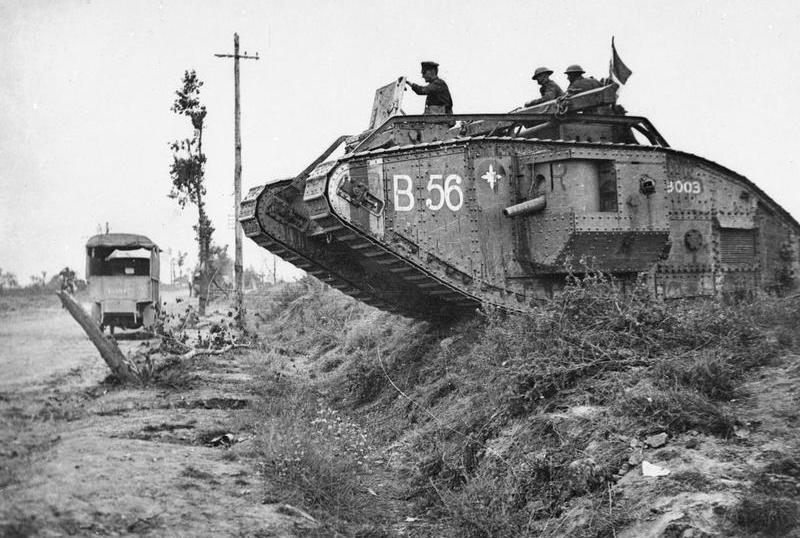
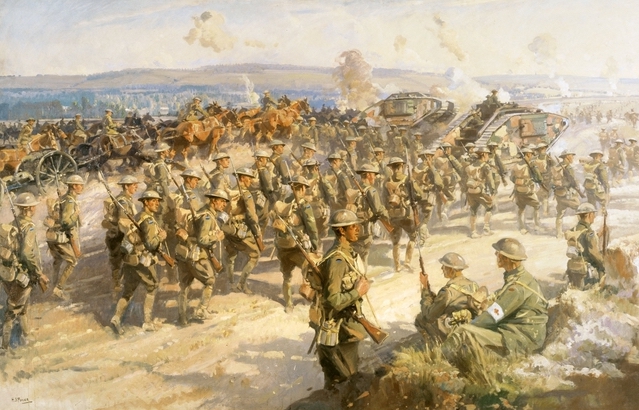
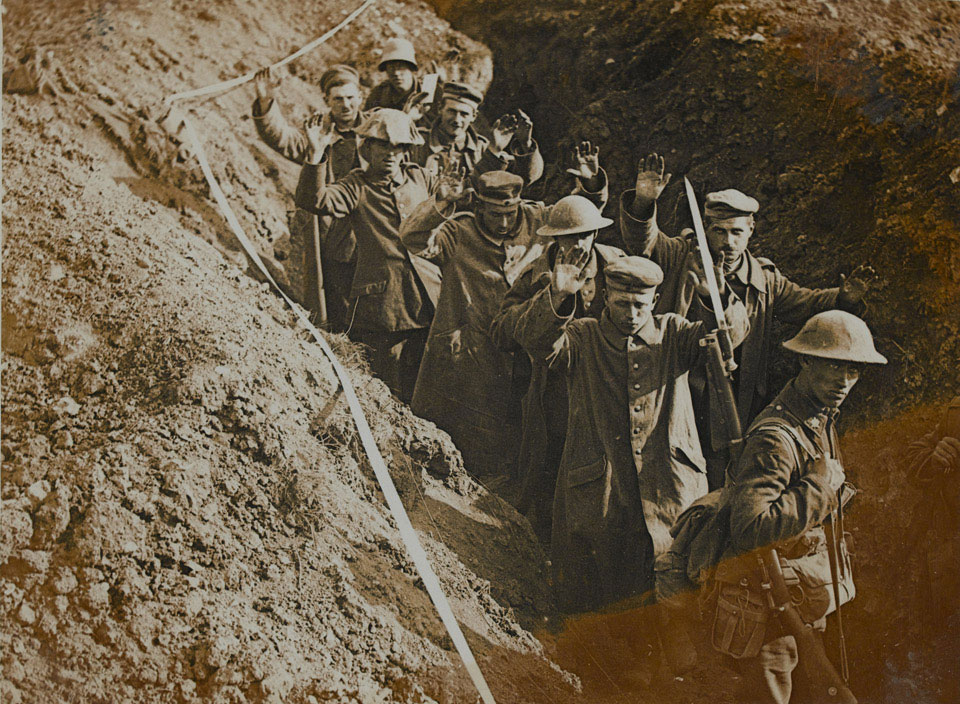
Having pushed the Germans back to the positions from which they had started their Spring Offensive, Allied forces under the command of Marshal Ferdinand Foch launched their own offensive. The string of victories they achieved was later called the Hundred Days Offensive.
In their opening assault, at the Battle of Amiens on 8th August, the Allies forced a gap in the German lines. In a surprise attack, massed artillery targeted German gun batteries and other key positions with great accuracy (meaning they did not have to give away their positions by firing preliminary shots to test the range). Behind this barrage, Allied infantry advanced in support of 552 tanks, while overhead, RAF planes carried out artillery spotting, ground attacks and strategic bombing.
The German defenders at Amiens had no response to this onslaught. By the end of the battle, the Allies had advanced 13 kilometres (8 miles), while the Germans lost 27,000 men and 400 guns. It was, the German commander General Erich Ludendorff admitted, a "Black Day of the German Army". Military experts today say that Amiens was the first modern battle, broadly similar to the way armies fight today.
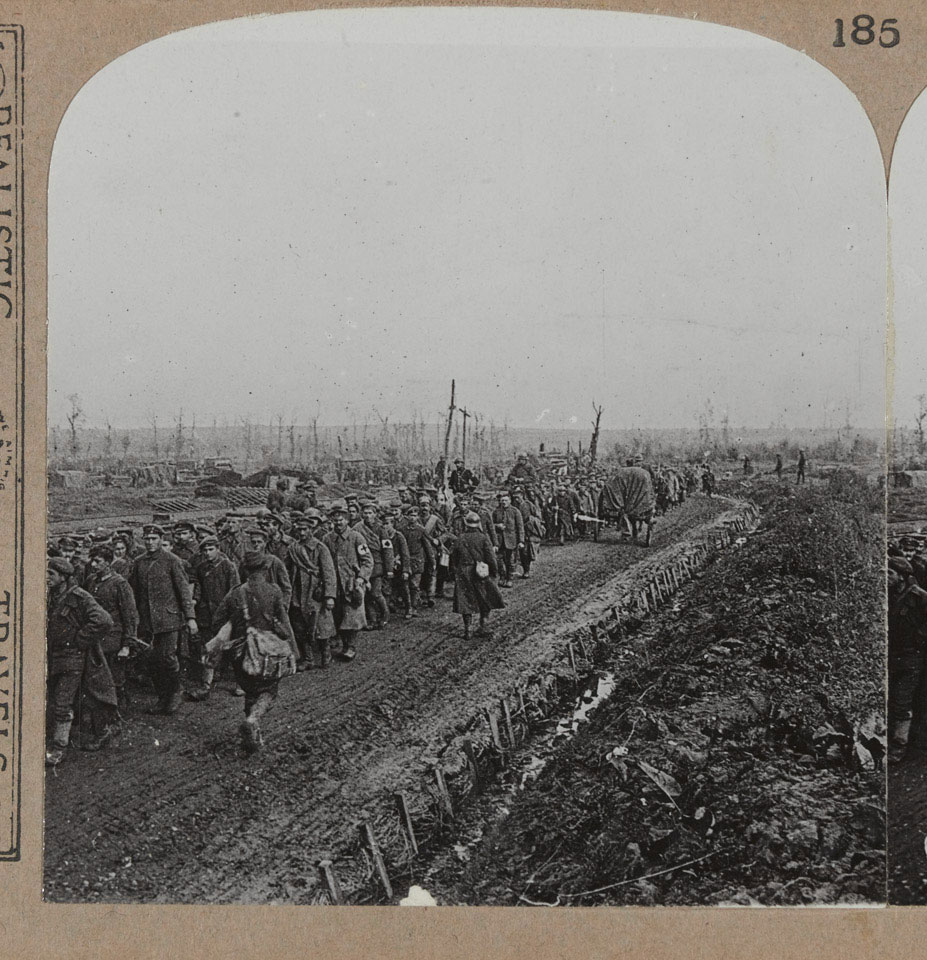
On into September, the Allies built on their success at Amiens with further advances, forcing the Germans to retreat. Casualties mounted up—the British lost 412,000 dead or injured—but the gains they made were decisive. With more than 100,000 prisoners taken and Germany's allies dropping out of the war, the German High Command realised that they were losing the war. On 29th September, Ludendorff asked for a ceasefire: the Armistice. This came into force at 11 a.m. on 11th November 1918. The war was over.
Consultant:Philip Parker
pics
Without in any way limiting Q-files Ltd’s exclusive rights under copyright, any use of this publication to “train” generative artificial intelligence (AI) technologies to generate text is expressly prohibited. Q-files Ltd reserves all rights to license use of this work for generative AI training and development of machine learning language models.