
Britain in World War I

CITE
We have made every effort to follow citation style rules, but there may be some minor differences. If in doubt, please refer to the appropriate citation style manual.
What does Remembrance Day commemorate?. (2023). In Q-files Encyclopedia, History, Britain in World War I. Retrieved from
https://www.q-files.com/history/britain-in-world-war-i/what-does-remembrance-day-commemorate
"What does Remembrance Day commemorate?." History, Britain in World War I, Q-files Encyclopedia, 27 Feb. 2023.
https://www.q-files.com/history/britain-in-world-war-i/what-does-remembrance-day-commemorate.
Accessed 21 Sep. 2026.
What does Remembrance Day commemorate? 2023. History, Britain in World War I. Retrieved 21 September 2026, from
https://www.q-files.com/history/britain-in-world-war-i/what-does-remembrance-day-commemorate
History, Britain in World War I, s.v. "What does Remembrance Day commemorate?," accessed September 21, 2026.
https://www.q-files.com/history/britain-in-world-war-i/what-does-remembrance-day-commemorate


What does Remembrance Day commemorate?
On Sunday 11th November, Remembrance Day services are held in villages, towns and cities across the Commonwealth of Nations (an association of states, nearly of which are former members of the British Empire). Including a two-minute silence held at 11 a.m. precisely, the services commemorate the contribution of Commonwealth military and civilian servicemen and women involved in both World War I (1914–18) and World War II (1939–45), as well as later conflicts. Remembrance Day falls on the anniversary of the Armistice, 11th November 1918, the day on which fighting in World War I came to an end. What led to the end of hostilities? Why does the two-minute silence begin at 11 a.m.? And why do we wear red poppies to mark the event?
World War I
World War I began with a German advance into northern France in August 1914. This was halted by British and French troops at the Battle of the Marne in September. By the end of the year, fighting along the Western Front had turned into stalemate, with neither side able to make headway.
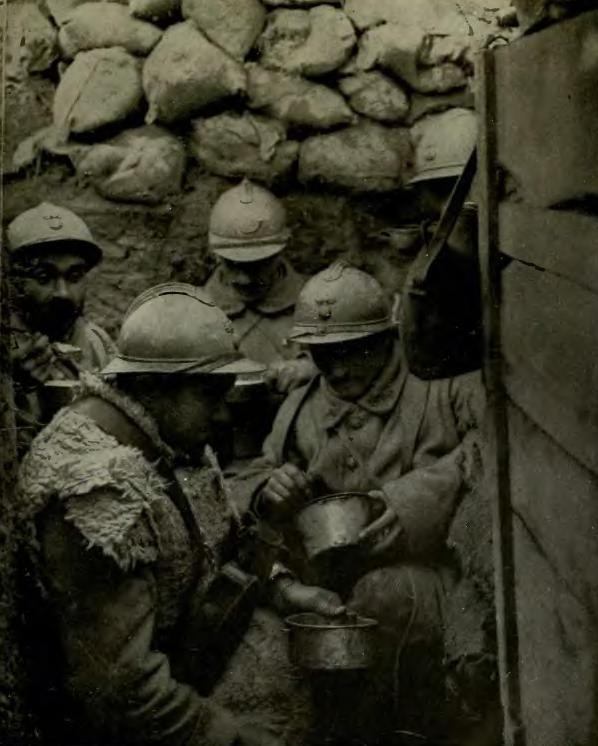
Weapons such as machine guns, grenades and long-range artillery (field guns and mortars) proved devastatingly effective. As a defence against them, soldiers on both sides dug deep ditches in the ground, which expanded into a system of trenches that stretched from the English Channel to Switzerland.
Other fronts in the war opened as more countries joined the war. The Eastern Front was a major battleground between the armies of Germany and Austria-Hungary on one side and Russia on the other. The Germans were forced to divert troops from the Western Front, but when Russian resistance collapsed in early 1918, large numbers of German troops could now be transferred to the Western Front.
Hundred Days Offensive
In March 1918, the Germans launched a major attack against the Allies on the Western Front. It was initially successful, but the Allies—British, British Dominion, French and Belgian armies, now reinforced by US troops—rallied and launched what was known as the Hundred Days Offensive. Following the Battle of Amiens on 8th August, they opened up a gap in the German lines. During August and September, the Allies built on their success with further advances, forcing the Germans to retreat.
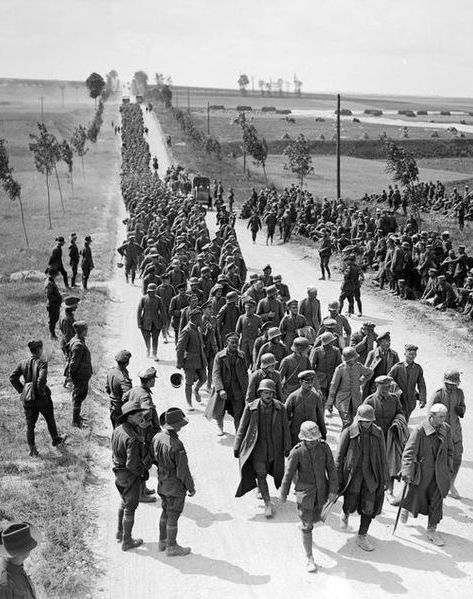
With more than 100,000 German prisoners taken and its allies dropping out of the war, the German High Command realised that the war was lost. On 28th September, General Erich Ludendorff asked for a ceasefire: the Armistice.
Armistice


The Armistice of 11th November 1918 ended fighting on land, sea and air between the Allies and Germany. Signed in a railway carriage in Compiègne, northern France, at 5 a.m., it came into force at 11 a.m., Paris time ("the eleventh hour of the eleventh day of the eleventh month"). It marked a victory for the Allies and a defeat for Germany, although not formally a surrender.
During the six hours between the signing of the Armistice and its taking effect, opposing armies on the Western Front began to withdraw from their positions, but fighting continued in some places to the very end. The last soldier, American Henry Gunther, died at 10.59 a.m.
The terms, set out by the Allied Supreme Commander, Marshal Ferdinand Foch, ensured that it would be impossible for the Germans to recommence fighting. They included the withdrawal of German forces to east of the River Rhine, Allied occupation of the Rhineland (the area of Germany either side of the Rhine), the surrender of German aircraft and warships and the release of Allied prisoners of war. In addition, the Allies insisted that Kaiser Wilhelm II of Germany abdicate (give up the throne) and a democratic government be established.
Although the Armistice ended the fighting, the official end of the war came with the signing of the Treaty of Versailles on 28th June 1919.

Remembrance Day
Remembrance Day is a memorial day observed in the Commonwealth of Nations since the end of World War I. It is observed on the nearest Sunday to 11th November to recall the Armistice, the end of hostilities of World War I on that date in 1918.
The memorial day began as Armistice Day, which continues to be marked in many countries on 11th November itself. Armistice Day was first observed by King George V, hosting a "Banquet in Honour of the President of the French Republic". The date is a national holiday in France. Armistice Day is not celebrated in Germany, but a German national day of mourning, Volkstrauertag, has been observed on the Sunday closest to 16th November since 1952.

In 1919, South African politician Sir Percy Fitzpatrick proposed a two-minute silence and the idea caught on rapidly. People observe this at 11 a.m. (the "eleventh hour") local time. It is a sign of respect both for the millions people who died in the war, as well as for those family members left behind.
Since World War II, most member states of the Commonwealth of Nations moved Armistice Day events to the nearest Sunday and officially began to commemorate both world wars. They also adopted the name Remembrance Day or Remembrance Sunday.
The National Service of Remembrance in Britain is held annually on Remembrance Sunday at the Cenotaph in Whitehall, London.
Poppies
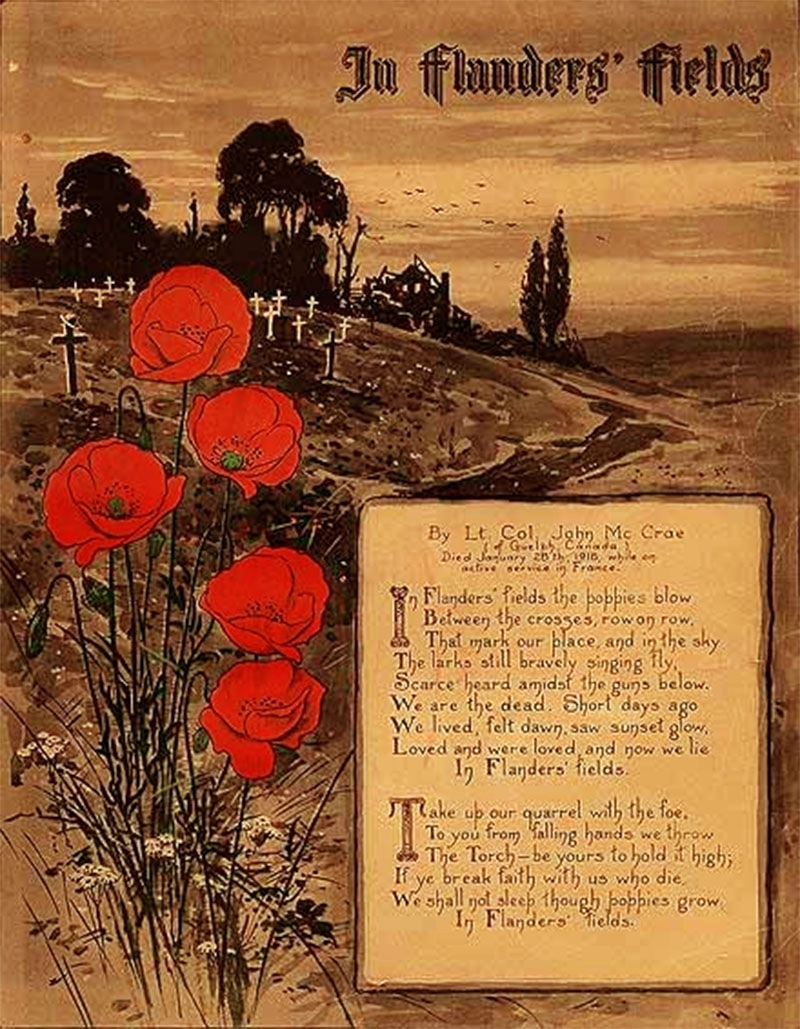
The red poppy has become the emblem of Remembrance Day. Poppies were a common sight on the Western Front, where the flowers flourished in the soil churned up by the fighting. Their bright red colour symbolized the blood spilled in the war. The poppy inspired Canadian doctor John McCrae to write his poem In Flanders Fields while serving in Ypres in 1915.
On reading McCrae's poem in 1918, Moina Michael, an American professor, decided to campaign for wearing a poppy on the anniversary of the Armistice. First adopted by the American Legion to commemorate US soldiers killed in the war, the custom quickly spread to Britain. Poppies were worn for the first time at the 1921 ceremony.
Today, remembrance poppies are mostly used in Britain, Canada, Australia and New Zealand—countries which were formerly part of the British Empire—to commemorate their servicemen and women killed in all conflicts.
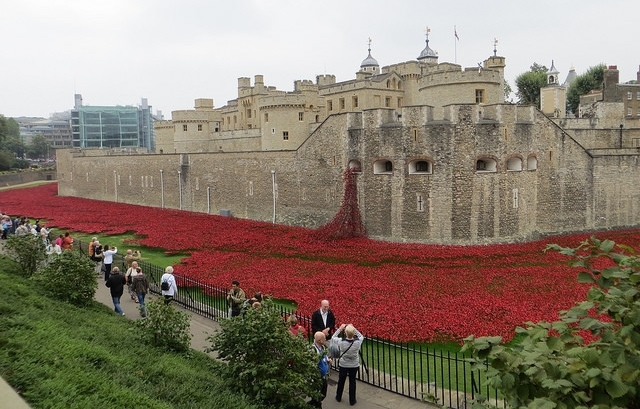
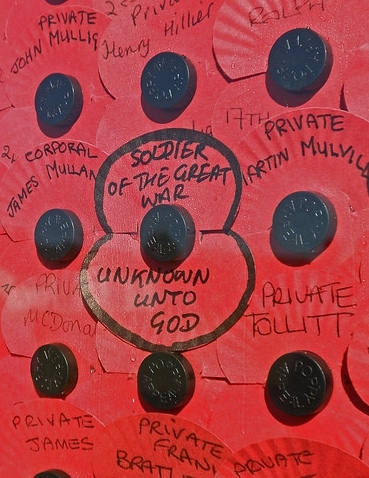
Blood Swept Lands and Seas of Red was created in the moat of the Tower of London, England, between July and November 2014. It commemorated the centenary (100 years) of the outbreak of World War I. The artwork consisted of 888,246 ceramic red poppies, each one representing a British or Commonwealth serviceman or woman killed in the war.
Consultant: Philip Parker
Other Q-&-As to explore:
For a full list of all our Q&As, please click here.
If you have a question that you would like to see answered on Q-files, please send us an email to info@Q-files.com or use the contact us page.
pics
Without in any way limiting Q-files Ltd’s exclusive rights under copyright, any use of this publication to “train” generative artificial intelligence (AI) technologies to generate text is expressly prohibited. Q-files Ltd reserves all rights to license use of this work for generative AI training and development of machine learning language models.